DbcultAccessing Vault...
6.2/10
Senior Film Conservator
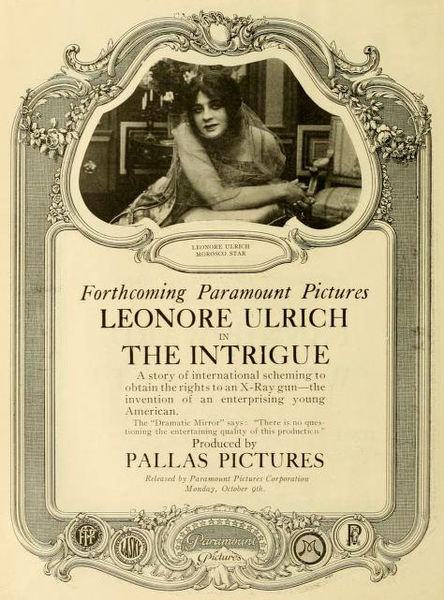
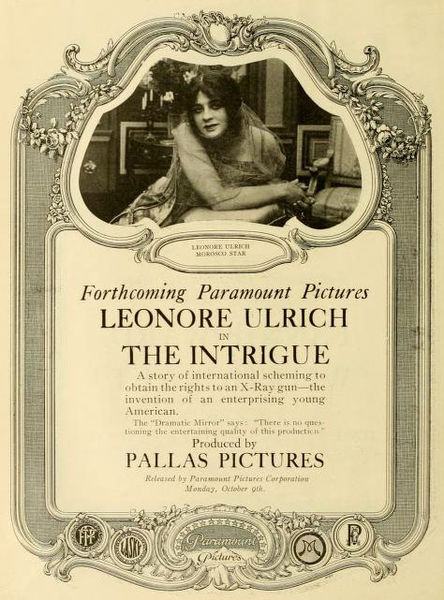
A definitive 6.2/10 rating for a film that redefined the boundaries of cult cinema. The Intrigue remains a cornerstone of transgressive art.
In the flickering twilight of 1916, as the world bled out in the trenches of Europe, the fledgling medium of cinema began to grapple with the terrifying implications of modern warfare. The Intrigue, written by the formidable Julia Crawford Ivers, stands as a haunting monolith from this era—a film that manages to be simultaneously a relic of Victorian melodrama and a startlingly prescient ancestor to the modern techno-thriller. It is a work that doesn't merely depict war; it interrogates the very soul of invention in an age of mechanical slaughter.
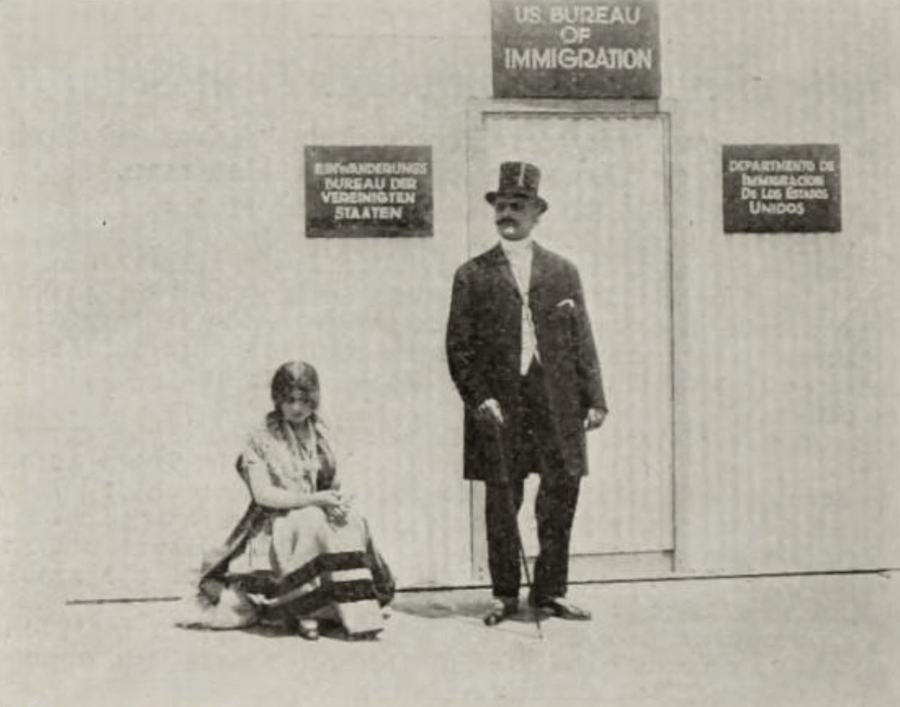
While many contemporary films of the period, such as Hearts United, focused on the sentimental or romanticized aspects of conflict, The Intrigue pivots toward the cold, hard edge of scientific advancement. The 'death ray'—a trope that would later become a staple of pulp science fiction—is treated here with a sobriety that is almost chilling. Guy Longstreet (Cecil Van Auker) is not your typical mad scientist; he is a man of business and intellect, a figure who reflects the American industrial spirit of the early 20th century. His invention is an electromagnetic force that can strike down an enemy at a distance, a concept that must have felt like pure sorcery to an audience still adjusting to the existence of the airplane and the tank.
The narrative structure is remarkably tight for a silent feature. Ivers’ screenplay avoids the sprawling, episodic nature common in 1910s cinema, opting instead for a focused, high-stakes progression. We see the influence of the 'mystery' genre, perhaps best exemplified by The Moonstone, but here the 'jewel' is a weapon of mass destruction. The tension is palpable as Longstreet enters the den of lions, navigating a world where national identity is a mask and loyalty is a commodity.
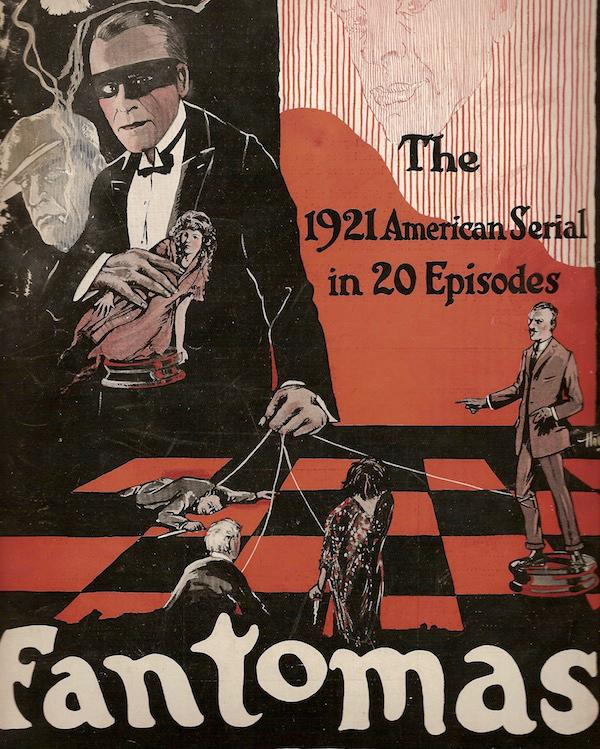
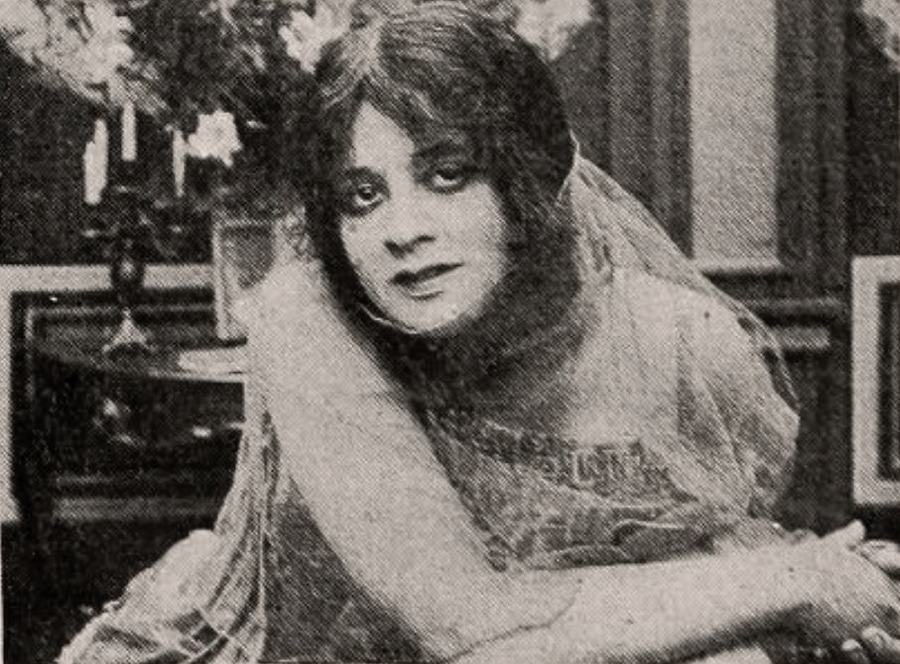
Lenore Ulric, portraying the Countess Sonia, delivers a performance of remarkable nuance. In an era often criticized for its broad, theatrical gestures, Ulric utilizes her eyes and subtle shifts in posture to convey a woman trapped between her patriotic duty and her burgeoning conscience. She is the emotional fulcrum of the film, a character whose complexity rivals the multifaceted villains found in Fantomas: The Man in Black. Her interactions with Howard Davies and the rest of the cast create a tapestry of suspicion that never unravels until the final, explosive moments.
"The film's visual language is one of claustrophobia and shadow. Every drawing room feels like a battlefield, and every telegram is a potential death warrant."
The supporting cast is equally impressive. A young King Vidor appears here, long before he would become one of Hollywood's most celebrated directors. Even in this early role, one can sense the gravitas he brought to the screen. Florence Vidor, too, adds a layer of grace to a story that is otherwise dominated by the grim machinations of war-hungry men. The presence of Gustav von Seyffertitz, an actor who would go on to define the 'Prussian villain' archetype, adds an authentic layer of menace to the proceedings.
Directed by Frank Lloyd (though the script by Ivers is the true star), the film utilizes lighting in a way that feels ahead of its time. The 'death ray' sequences are handled with a clever use of double exposure and lighting effects that, while primitive by today's standards, evoke a genuine sense of awe. There is a specific scene involving the demonstration of the ray that uses stark contrasts—chiaroscuro techniques that wouldn't be fully codified until the rise of German Expressionism. This visual flair places it in the same league of technical experimentation as The Sable Lorcha or the atmospheric The Mystery of the Black Pearl.
The set design also deserves mention. The transition from the utilitarian laboratories of the United States to the opulent, albeit decaying, grandeur of European estates mirrors the film's thematic shift from innovation to corruption. It is a visual shorthand for the 'Old World' consuming the 'New World's' ingenuity for its own destructive ends. This is a far cry from the more domestic or period-specific settings of Mistress Nell or King Charles II: England's Merry Monarch.
It is impossible to discuss The Intrigue without centering the contribution of Julia Crawford Ivers. As a woman writing high-concept science fiction and political espionage in 1916, she was a true anomaly. Her script avoids the common pitfalls of the 'woman's picture' of the time, opting instead for a gritty, intellectual exploration of power. She doesn't shy away from the moral ambiguity of her characters. Much like the complex familial dynamics explored in Fatherhood or the social critiques found in Deti veka, Ivers imbues her characters with motivations that are rarely black and white.
Her dialogue (via intertitles) is punchy and devoid of unnecessary fluff. She understands the rhythm of a thriller—the need to withhold information just long enough to keep the audience off-balance. This narrative precision is something we see in other strong scripts of the period, like The Banker's Daughter, but Ivers applies it to a much larger, more global stage.
The concept of the 'Death Ray' in 1916 was not merely a fantasy; it was a reflection of the genuine fear of the unknown. The public had recently seen the introduction of poison gas and the first aerial bombardments. The idea that a scientist could harness the invisible forces of the universe to kill was a logical, if terrifying, extension of current events. In this regard, The Intrigue shares a certain DNA with the tragic historical weight of Beatrice Cenci or the moral dilemmas of Hans Faders Ære. It asks: at what point does the cost of victory become too high?
The film’s climax is a masterstroke of tension. As the various factions converge on the device, the pacing accelerates. We see the influence of the 'chase' films and the early action-adventure tropes found in The Mutiny of the Bounty or the rugged exteriority of Chimmie Fadden Out West. However, the resolution of The Intrigue is far more cynical and thought-provoking than its contemporaries. It suggests that as long as there is power to be had, there will be men willing to burn the world to possess it.
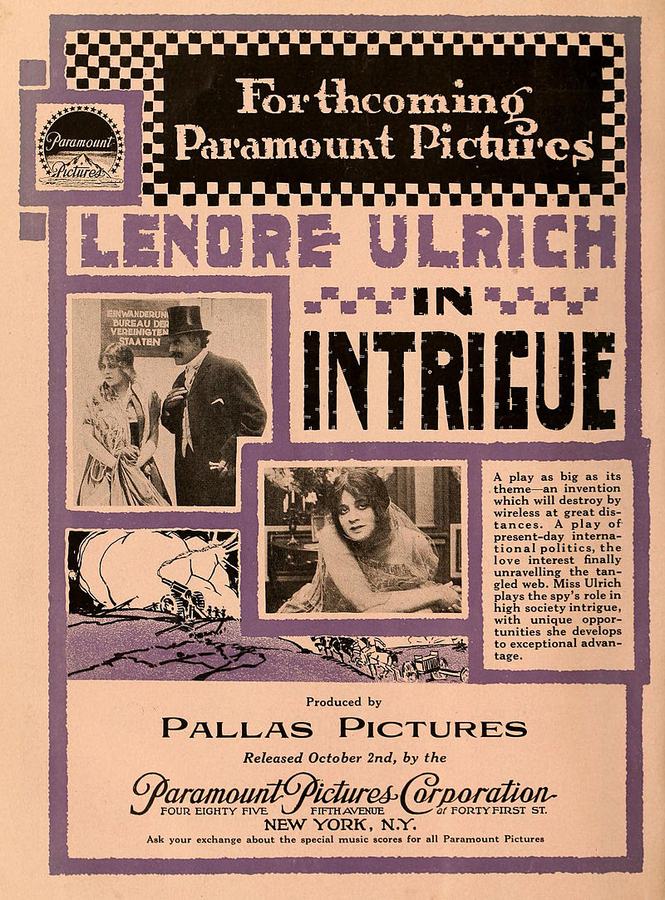
Why is The Intrigue not more widely discussed in the pantheon of great silent films? Perhaps it is because its genre—sci-fi espionage—was so far ahead of the curve that it didn't fit neatly into the established categories of the time. It lacks the overt sentimentality that often preserves silent films in the public consciousness, such as Out of the Darkness. Yet, for the modern viewer, this is precisely what makes it so fascinating. It feels contemporary. Its anxieties about technology, its depiction of the moral vacuum of international politics, and its strong, capable female lead are all elements that resonate deeply today.
In conclusion, The Intrigue is a vital piece of cinematic history. It is a testament to the creative power of Julia Crawford Ivers and a showcase for a cast that was defining the language of screen acting in real-time. It is a film that demands to be watched not as a curiosity of a bygone era, but as a vital, breathing piece of art that still has much to say about the world we live in. It is a dark orange flame flickering in the sea blue darkness of history, a reminder that the most dangerous weapon in any war is not a ray of light, but the heart of the person who wields it.
© 1916 Cinema Archive - A Deep Dive into the Foundations of the Seventh Art.

IMDb 6.4
1925
Community
Log in to comment.