DbcultAccessing Vault...
Cult Review
Senior Film Conservator
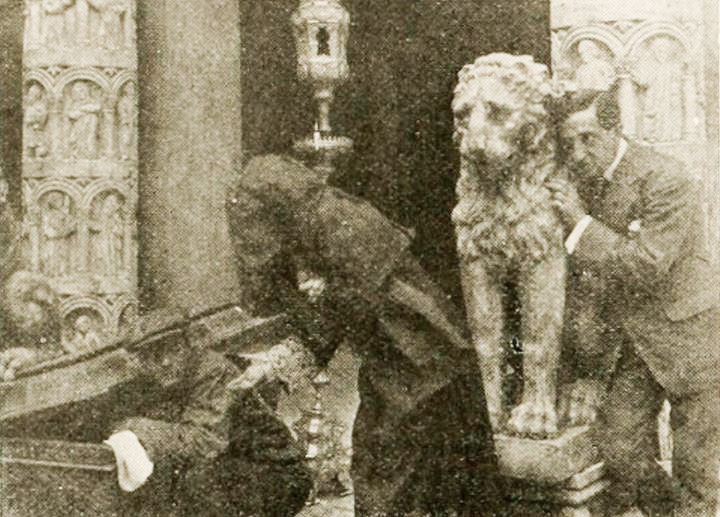
The first time we see the heirlooms they are not gems at all but globules of crimson candle-wax dripping onto parchment—an optical gag that prepares us for Gems of Foscarina’s sleight-of-hand ethos. Director-cinematographer Luciano Vetro shoots Venice as though he were peeling a blood-orange: each segment reveals a new shade of dark. You smell brackish water, hear pigeons clap wings like court documents being signed. The prologue, printed with amber Venetian type across the screen, feels less like exposition and more like a curse being activated.
Seventeenth-century sequences were captured on 16 mm hand-cranked stock, scratch-engraved to mimic salt-bitten frescoes. When the condemned nobleman (Peppino Calletti, face half-shadowed by a ruff starched into a veritable millstone) lowers the coffer, the camera tilts down the well shaft for exactly twenty-four frames—one for every carat of the largest ruby—before the cut. This is archival fetishism raised to poetry: history as tangible heft, gravity as narrative device.
Contemporary Venice is rendered in cobalt nights and sodium mornings. Foscarina (Bianchina De Crescenzo) arrives from Paris—luggage limited to a cigar-box of charcoal sticks and a Bluetooth earpiece disguised as a cameo. She sketches rotting balustrades while algorithms ping her ancestral DNA like sonar. De Crescenzo, equal parts fragile and flinty, plays the role as if every breath might crack the family crest. Her discovery of the jewels is staged not with Spielbergian awe but with a shrug of fate: a loose tile, a child’s marble, a rusted key—objects you could buy at a flea market for a euro yet here they unlock empire.
The villains are a curatorial dream: a disgraced art restorer who smells of turpentine and confession; a TikTok parkour star who films his own crimes; a mousy archivist who speaks only in catalog numbers. Their headquarters is an abandoned glass furnace on Murano, kilns now filled with server racks glowing like embers. Vetro crosscuts their planning sessions with CCTV feeds—grainy, anamorphic, so that Venice itself becomes a reluctant accomplice.
Enter Salvatore Lovitt’s Argo: Panama hat tilted just enough to evade facial recognition, voice a gravel-bed of four languages. He never runs; he drifts, as though the city tilts to accommodate his footfall. Lovitt, primarily a stage actor, modulates volumes instead of emotions—whispering one moment, letting consonants ricochet off marble the next. His introductory scene is a three-minute monologue on forgery delivered to a room of tourists who think he’s a guide. By the time they realize he’s talking about the city’s soul, he’s gone, leaving only a business card printed on waterproof acetate.
What ensues is less a plot than a pas de deux across rooftops, libraries, and deconsecrated churches. Vetro’s camera glides on cable-cams, skims canal water, then somersaults via drone. One bravura shot begins inside a frescoed salon, dives through a broken skylight, threads a clothesline of period costumes, and emerges beside a patrol boat’s siren. Compare this kineticism to the static tableaux of The Mystery of the Rocks of Kador; here, movement is history trying to outrun its own shadow.
Unlike Mrs. Black Is Back where the heroine weaponizes domesticity, Foscarina weaponizes heritage. She doesn’t merely inherit; she curates her lineage, Photoshopping cracks out of ancestral portraits, re-stitching moth-eaten damask. When the jewels are stolen, she doesn’t wait for Argo—she negotiates ransom terms, plants bugs inside violin cases, and uses a drone to drop a Fabergé egg replica rigged with dye packs. The film quietly argues that reclaiming looted culture is not retrieval but re-authorship.
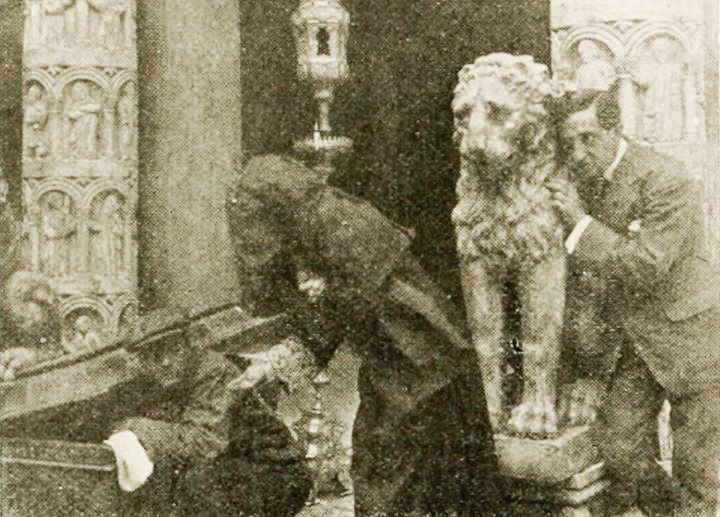
The screenplay, written by an anonymous collective calling themselves La Nebbia, refuses tidy answers. In one scene Argo lectures Foscarina about the gems’ blood-weight: every facet reflects a serf’s unrecorded death. She counters that forgetting is the deeper violence. Their debate, shot in a single take inside a vaporetto cabin, water slapping portholes like a slow metronome, is the film’s moral marrow. Compare to the didacticism of Damaged Goods; here ambiguity is the point.
Composer Elisa Rondò layers Monteverdi’s Lamento into a modular synth pulse that mimics tachycardia. Bass notes vibrate at 17 Hz, the resonance of lion-head mooring posts along the Grand Canal. During the climactic crypt sequence she removes all sound except sub-bass and the distant cough of a ferry horn—silence becomes architecture.
Digital grading leans into tenebrism: candlelight is rendered as molten orange, moonlight as toxic cyan. The only saturated hue is the gems’ refracted red—every frame they appear, the color space contracts so everything else desaturates, as though the stones inhale reality. This selective saturation rivals the monochrome shock of The Naked Truth yet achieves the inverse: color as corruption.
De Crescenzo’s eyes perform micro-shifts: hope, calculation, ancestral guilt—all within a single blink. Lovitt counterbalances with catatonic stillness; when he finally smiles, it feels like a safe-cracker hearing the final tumbler drop. Calletti, confined to flashback, conveys doom via the tremor of a lace cuff. Even bit players—a nonna shelling peas on a doorstep—register like fresco cherubs come alive to gossip.
Where Captain Alvarez romanticized outlawry and Through Fire to Fortune moralized it, Gems of Foscarina intellectualizes larceny as curatorial critique. Its closest cousin is The Double Event for its meta-gaming structure, yet Vetro’s film is less puzzle-box than palimpsest—each viewing scrapes off another layer of gilt to reveal raw wood.
Yes, the mid-film detour into blockchain provenance lectures drags. Yes, the romantic tension between Argo and Foscarina feels under-served, a single chaste kiss drowned by fog. Yet these are venial sins. The reward is a finale that marries Noir fatalism with Renaissance catharsis: jewels fished from a flooded crypt, police sirens echoing off Byzantine brick, Foscarina clutching not the gems but the rusted key—an emblem that access, not ownership, is legacy.
Gems of Foscarina is the rare heist film that questions the very premise of plunder while still delivering adrenalized set pieces. It will bruise your senses with chromatic splendor and haunt your ethics like a half-remembered acqua alta siren. Stream it with the lights off and the subtitles on; Venice is speaking in riddles, and you’ll want to read her lips.
Reviewed by: The Celluloid Raven | Date: 2024-07-25 | Runtime: 134 min | Rated: R (some violence, thematic elements) | Available: MUBI, Criterion Channel, select 4K Blu-ray with Venetian subtitle track and scholar commentary.
IMDb —
1929
Community
Log in to comment.