DbcultAccessing Vault...
Cult Review
Senior Film Conservator
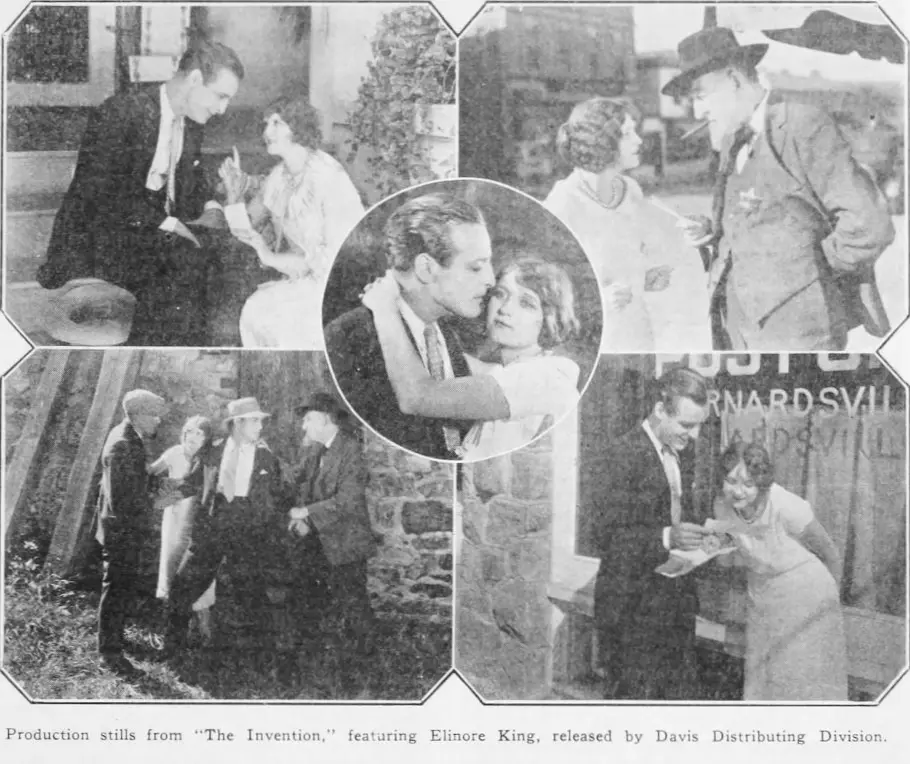
Is 'The Invention' worth watching today? Short answer: yes, but with significant caveats that frame its historical rather than its universal appeal. This film is an absolute must-see for ardent silent film historians and those fascinated by the nascent stages of narrative cinema, yet it will likely test the patience of viewers accustomed to modern pacing and storytelling sophistication.
This film works because of its charmingly simplistic narrative economy, which, despite its flaws, manages to deliver a complete story arc in an impressively concise manner. It’s a delightful snapshot of early cinematic ambition, showing how compelling a story could be with minimal resources.
This film fails because its plot hinges on an almost comically high number of convenient coincidences, sacrificing character depth and logical progression for expediency. The lack of detailed character motivation leaves much to be desired, making some resolutions feel unearned.
You should watch it if you appreciate cinematic archaeology, enjoy the quaint charm of early 20th-century storytelling, or are a film student keen to observe foundational narrative techniques before the full bloom of Hollywood’s golden age. It’s a historical document as much as it is entertainment, offering a window into a bygone era of moviemaking.
'The Invention', told entirely without intertitles—a bold, almost experimental choice for its time—presents a narrative that is both refreshingly direct and surprisingly convoluted. The core conceit, an inventor struggling with a revolutionary color photography process, is immediately engaging. Simpson (Reginald Simpson) isn't just a scientist; he's a dreamer, his ambition palpable even through the grainy black and white.
The plot, however, swiftly veers into a realm of improbable coincidences that would make a modern screenwriter wince. The mere act of showing a shotgun to his sweetheart, Elinor (Eleanore King), is enough to brand Simpson a suspect in a bank robbery. This leap of logic, while jarring to contemporary sensibilities, is a fascinating artifact of early cinematic shorthand. The film expects its audience to bridge these gaps with a generous suspension of disbelief, a common practice in an era where visual storytelling was still finding its footing.
What truly elevates 'The Invention' beyond mere historical curiosity is its culminating irony. The tramp, initially a destructive force, accidentally completes Simpson's invention while simultaneously being revealed as the true bank robber. This isn't just a plot twist; it's a profound, if unintended, commentary on the chaotic nature of progress and justice. The greatest breakthrough comes not from meticulous effort, but from unforeseen chaos. It's a delightful mess, frankly, a narrative machine powered by serendipity.
The pacing is brisk, a necessity given the lack of explanatory text. Scenes transition quickly, relying on visual cues and the actors' exaggerated expressions to convey emotion and plot points. The chase sequence, while rudimentary by today’s standards, builds a surprising amount of tension, driven by the sheer urgency of Elinor’s warning and the sheriff’s relentless pursuit. This efficiency in storytelling is a testament to the early filmmakers' ingenuity in making every frame count, pushing the boundaries of what could be communicated visually.
The film’s greatest strength, paradoxically, lies in its simplicity. It doesn’t overthink its premise; it simply presents it. This directness, coupled with the bizarrely satisfying resolution, makes 'The Invention' a unique viewing experience. It reminds us that storytelling can thrive even when it eschews realism for sheer narrative propulsion. It’s a charming anachronism, a testament to the raw, untamed spirit of nascent cinema.
The acting in 'The Invention' is quintessential silent-era performance: broad, gestural, and often melodramatic. Reginald Simpson, as the inventor, embodies the earnest, almost naive protagonist with a perpetually hopeful, yet worried, expression. His movements are precise, designed to convey thought and emotion without words. When he proudly presents his unfinished work, his posture radiates a quiet confidence that quickly dissolves into frantic anxiety during the chase.
Eleanore King, as Elinor, is the heart of the film. Her performance is perhaps the most nuanced, her concern for Simpson palpable. Her frantic dash to warn him, a sequence of hurried strides and desperate hand gestures, is a standout moment of genuine urgency. She’s not just a love interest; she’s an active participant in the unfolding drama, a woman of quick wit and unwavering loyalty. Her expressive eyes convey more than any intertitle ever could, a common trait among the most effective silent film actresses.
William Calhoun, likely playing the determined sheriff, presents a figure of unwavering authority. His pursuit is relentless, his facial expressions shifting from suspicious observation to stern resolve. There’s a particular scene where he squints suspiciously after seeing Simpson with the shotgun, a moment that succinctly establishes his character’s role as the suspicious lawman. His physicality is key to conveying the relentless nature of the chase, often leaning forward as if pushing against an unseen force.
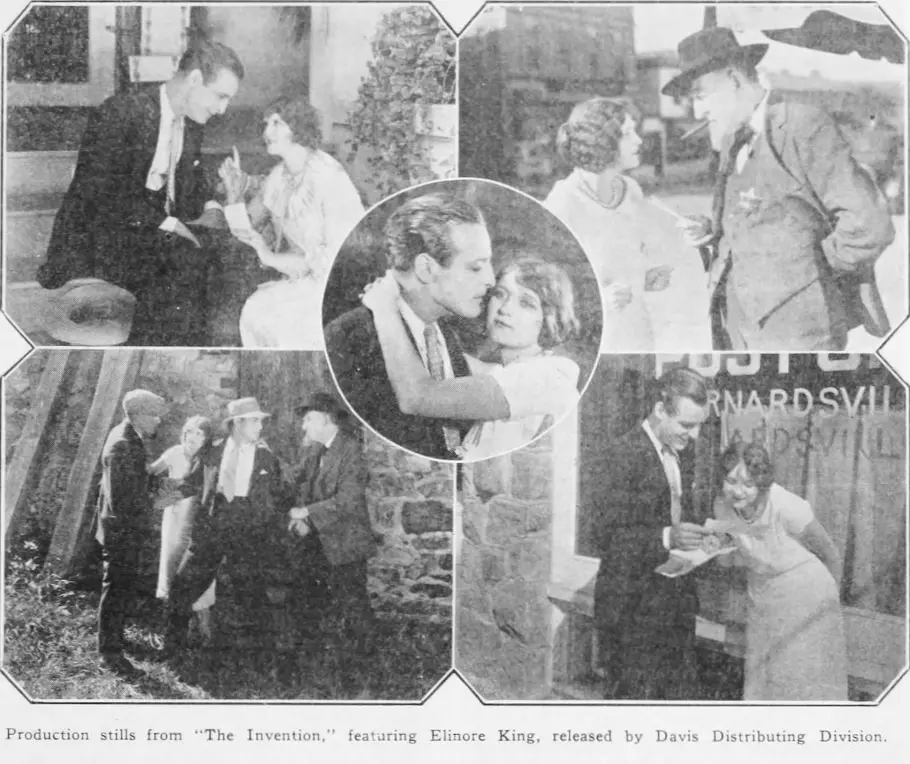
Harry Stone, presumably the tramp/bank robber, delivers a performance that oscillates between comedic disruption and villainous cunning. His initial breaking into the lab is portrayed with a rough, almost comical clumsiness, only to be punctuated by the surprising revelation of his true nature. The sheer audacity of his accidental completion of the invention, followed by his capture, relies heavily on Stone’s ability to switch gears, making the audience believe in both his accidental genius and his criminal intent.
The performances, while undeniably dated in their theatricality, offer a valuable lesson in non-verbal communication. Every tilt of the head, every rapid movement, every wide-eyed stare was a deliberate choice to transmit meaning across a silent canvas. They are a window into an acting tradition that prioritized clarity and immediate emotional impact over subtle realism. It works. But it’s flawed.
The direction in 'The Invention' is characterized by its straightforward approach, prioritizing clarity of action over complex visual stylings. The camera is largely static, framing scenes in a way that allows the audience to observe the full scope of the action, much like a theatrical stage. This isn't a criticism, but rather an observation of the prevalent cinematic grammar of the era. The focus is on the actors and their movements within the frame, ensuring the plot remains comprehensible without dialogue.
Despite this simplicity, there are moments of clever visual storytelling. The initial scene, for instance, where Simpson shows Elinor the shotgun, is framed to include the sheriff in the background, subtly establishing the conflict without a single spoken word or explanatory title. This kind of visual economy is a hallmark of early cinema, demonstrating an innate understanding of the medium's power to convey information through juxtaposition.
Cinematography, while basic by modern standards, is effective in its purpose. The lighting is functional, ensuring the subjects are visible and the actions clear. There are no elaborate tracking shots or complex camera movements; the camera serves as an impartial observer. However, the use of depth in certain shots, such as the sheriff pursuing Simpson and Elinor through the streets, adds a dynamic layer to the chase, making the space feel larger and the pursuit more urgent.
The editing is brisk and purposeful, cutting between scenes to maintain momentum. The rapid transitions during the chase, interspersing shots of the fleeing couple with the determined sheriff, effectively builds suspense. This rhythmic cutting, even in its rudimentary form, showcases an understanding of how to manipulate time and space for dramatic effect, a foundational principle that would evolve into sophisticated editing techniques.
The tone of the film shifts deftly from romantic aspiration to tense chase to comedic resolution, all without losing its stride. It's a testament to the director's ability to orchestrate these disparate elements into a cohesive, if somewhat far-fetched, whole. The accidental nature of the tramp's discovery, for example, is handled with a light touch that prevents the film from becoming overly serious, leaning into the absurdity of its own plot. This tonal flexibility is a surprising strength, allowing the audience to enjoy the ride without getting bogged down in the logical inconsistencies.
Yes, 'The Invention' is worth watching today, primarily for its historical significance and unique silent storytelling. It offers a fascinating glimpse into early cinematic techniques and narrative ingenuity. However, modern audiences should approach it with an appreciation for its era, as its pacing and reliance on coincidence may challenge contemporary viewing expectations. It's a valuable piece of film history, not a universally thrilling entertainment experience.
For those who appreciate the foundational elements of cinema, this film is a treasure. It showcases how much could be conveyed through visual action alone, pushing the boundaries of what was thought possible in motion pictures. It’s a compelling study in narrative economy, proving that a compelling story doesn't always need dialogue or elaborate special effects.
However, if your preference leans towards intricate plots, deep character development, or high-octane action, 'The Invention' might feel slow and simplistic. Its charm lies in its quaintness and its accidental brilliance, not in its ability to compete with the polished narratives of later eras. It’s a film that asks for patience and rewards curiosity.
'The Invention' is not a film for everyone, nor does it pretend to be. It’s a delightful, if deeply flawed, relic of early cinema, a testament to the raw ingenuity and experimental spirit that defined the medium's formative years. Its narrative, while reliant on a series of breathtakingly convenient accidents, manages to tell a complete and surprisingly satisfying story without the crutch of intertitles. This alone makes it a fascinating watch.
While it lacks the sophisticated artistry of later silent masterpieces like 'The Golem' or the narrative complexity of crime dramas like 'Time Locks and Diamonds', 'The Invention' offers its own unique charm. It’s a film that celebrates the unexpected, where chaos inadvertently leads to discovery and justice. It’s a film that demands you meet it on its own terms, appreciating its historical context and its audacious narrative choices.
Ultimately, 'The Invention' is more than just a forgotten film; it's a vibrant, if quirky, piece of cinematic archaeology. It reminds us that sometimes, the greatest discoveries happen by accident, both within the story and in the experience of watching it. A recommended viewing for the curious and the historically minded. Skip it if you're looking for blockbuster thrills; embrace it if you're seeking a unique piece of film history.

IMDb —
1920
Community
Log in to comment.