DbcultAccessing Vault...
Cult Review
Senior Film Conservator
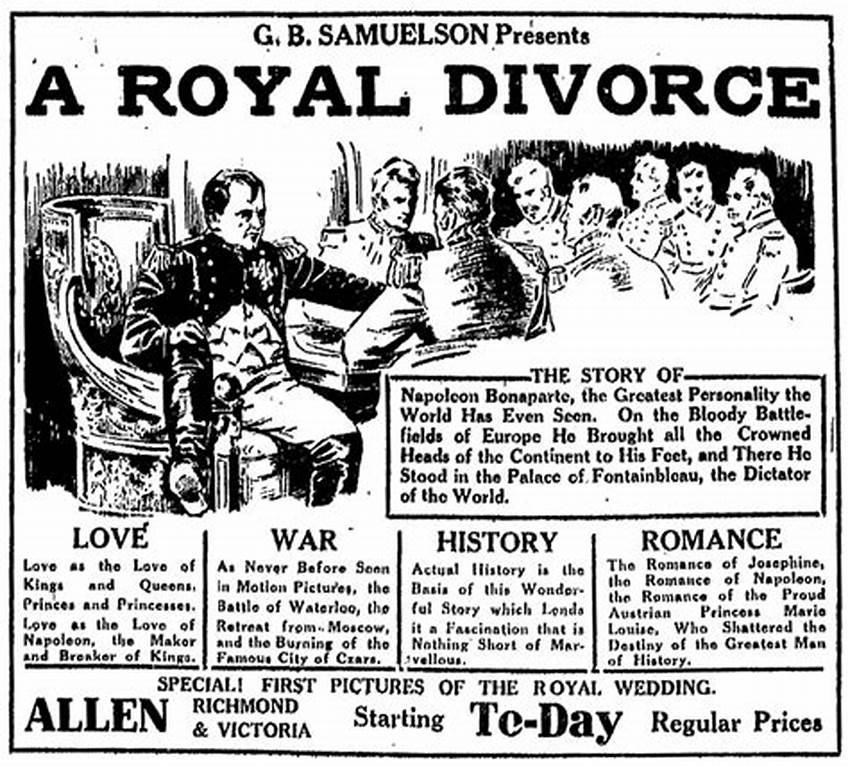
The silent canvas of A Royal Divorce (1923) unfolds like a chiaroscuro portrait, where the stark silhouettes of power clash against the tender, almost invisible brushstrokes of devotion. Director Walter Summers, aided by the pen of G.G. Collingham and W.G. Wills, orchestrates a tableau that is at once grandiose and intimate, a rare feat for a film of its epoch.
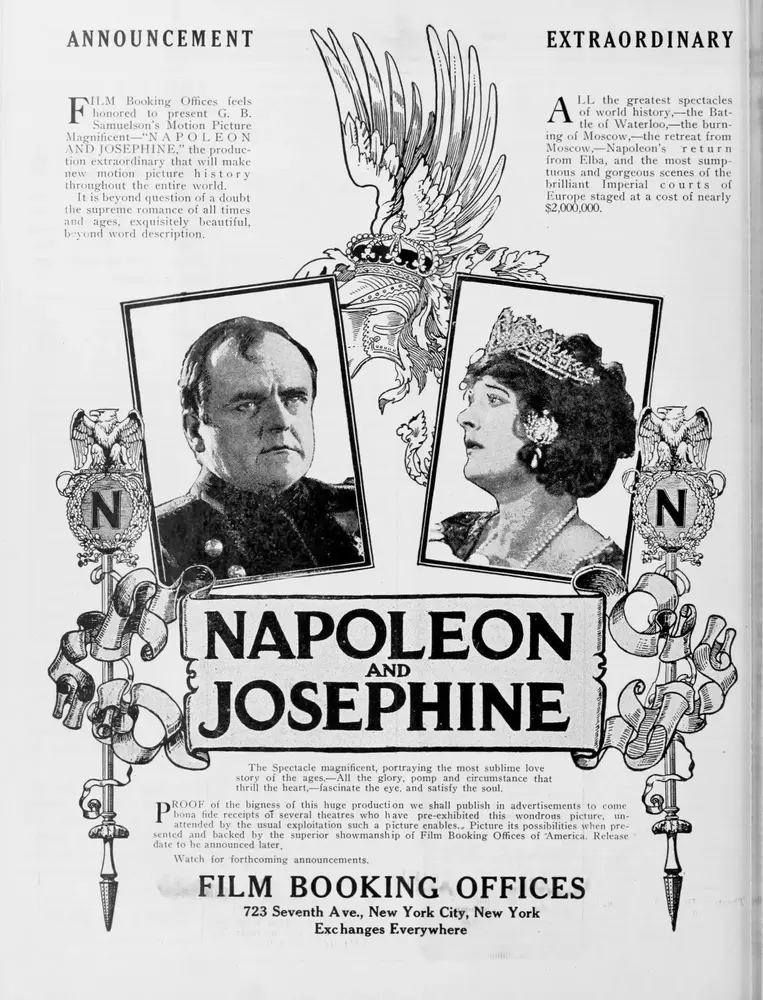
Gwylim Evans inhabits Napoleon with a ferocious intensity that borders on theatrical excess, yet never descends into parody. His gaunt visage, framed by the austere set pieces of imperial chambers, conveys a ruler whose inner turmoil is as palpable as the clatter of marching boots. In stark contrast, Gertrude McCoy’s Josephine radiates a quiet resilience; her eyes, often caught in the amber glow of candlelight, betray a soul that has weathered both adulation and abandonment.
The plot, though rooted in historical events, is rendered with a lyrical elasticity that elevates it beyond mere chronicle. Napoleon’s decision to divorce Josephine—motivated by dynastic ambition rather than affection—is depicted not as a cold calculation but as a tempestuous rupture, a splintering of destiny that reverberates through every subsequent scene. The Austrian princess, portrayed with regal detachment by Lillian Hall‑Davis, becomes a symbol of political expediency, her porcelain demeanor a foil to Josephine’s earthy tenacity.
De Beaumont, the scheming antagonist, is brought to life by Robert Lang with a sly, almost serpentine menace. His machinations—intrigue whispered behind velvet drapes, letters slipped beneath doors—serve as the narrative’s dark undercurrent. It is within this web of treachery that Josephine’s loyalty shines brightest; she becomes the unlikely guardian of the empire, a figure who, despite personal heartbreak, intervenes to foil the conspirators’ designs. This act of redemption is staged with a visual elegance reminiscent of the climactic confrontations in Officer 666 (1920), where suspense is built through shadow play rather than dialogue.
The supporting cast—Myrtle Peter as the scheming court lady, Jerrold Robertshaw as the stoic general, and Mercy Peters as the confidante—populate the film with a richness that prevents the central drama from feeling isolated. Each character is afforded a moment of visual poetry: a lingering glance, a hand placed upon a trembling shoulder, a silent exchange that speaks louder than any intertitle could.
Cinematographically, the film employs a palette that, while limited by the technology of the era, exploits contrast to striking effect. The use of deep blacks punctuated by flashes of sea‑blue (#0E7490) in the river scenes creates a visual metaphor for the tumultuous currents of fate. The occasional burst of dark orange (#C2410C) during moments of heightened passion mirrors the flickering flames of ambition that consume Napoleon’s heart.
One cannot discuss A Royal Divorce without acknowledging its place within the silent era’s fascination with historical epics. The film’s pacing, deliberately measured, allows viewers to linger on the opulent costumes—silks that rustle like whispers, uniforms that gleam under chandelier light—and on the meticulously crafted set pieces that evoke the grandeur of the French court. In this respect, it shares a kinship with Odette, another silent masterpiece that balances spectacle with emotional depth.
The narrative’s thematic core—love versus duty, personal sacrifice versus political necessity—resonates with contemporary audiences, despite the century‑long gap. Josephine’s unwavering fidelity, even after being cast aside, challenges modern conceptions of agency, prompting viewers to reconsider the nature of devotion in a world where power often trumps sentiment.
The film’s intertitles, though sparse, are crafted with a literary flair that complements the visual storytelling. Phrases such as “The empire trembles at the edge of a blade” and “A heart once bound now seeks its own horizon” echo the poetic sensibilities of early twentieth‑century drama, adding a layer of intellectual intrigue.
From a structural standpoint, the screenplay adheres to a three‑act configuration that feels both classical and innovative. The opening act establishes the emotional stakes: Napoleon’s restless ambition, Josephine’s quiet devotion, and the looming presence of De Beaumont. The middle act escalates the tension through the divorce ceremony—a sequence shot with a deliberate, almost ceremonial rhythm—followed by the Austrian marriage, which is rendered in cold, austere tones. The final act culminates in Josephine’s covert intervention, a sequence that intercuts her clandestine movements with the frantic preparations of the conspirators, culminating in a crescendo of visual and emotional payoff.
Musically, while the film itself is silent, contemporary screenings often pair it with a live piano accompaniment that underscores the drama’s emotional arcs. A somber, minor‑key motif accompanies Josephine’s solitary moments, while a brisk, martial march underscores Napoleon’s public appearances, reinforcing the dichotomy between private sorrow and public triumph.
The film’s legacy, though somewhat eclipsed by later, more technologically advanced epics, remains significant for its daring portrayal of a historical figure in a morally ambiguous light. It eschews the hagiographic tendencies of many biopics of its time, opting instead for a nuanced exploration of Napoleon’s humanity—a choice that aligns it with modern reinterpretations of historical narratives.
Critically, the performances merit particular attention. Gerald Ames, as the loyal aide, delivers a subtle performance that anchors the film’s emotional gravity, while Tom Reynolds’ portrayal of a youthful officer adds a layer of generational perspective, hinting at the future ramifications of Napoleon’s personal choices.
In terms of pacing, the film avoids the pitfalls of melodramatic excess that plague many silent dramas. Each scene is meticulously edited to preserve narrative momentum, allowing the audience to remain fully engaged without feeling rushed or, conversely, languid.
The production design, overseen by C.C. Collingham, showcases an impressive attention to historical detail. The imperial throne room, with its gilded arches and towering columns, feels authentic, while the modest interiors of Josephine’s private chambers convey an intimate atmosphere that underscores her vulnerability.
Comparatively, the film’s handling of political intrigue bears resemblance to the narrative mechanics observed in The House of Bondage, where personal relationships intersect with broader societal upheavals. Both films employ a delicate balance of character-driven drama and macro‑historical context, creating a layered viewing experience.
The thematic resonance of A Royal Divorce extends beyond its historical setting, offering a meditation on the cost of ambition. Napoleon’s relentless pursuit of empire, juxtaposed with his emotional detachment, serves as a cautionary tale about the sacrifices demanded by power. Josephine’s steadfastness, in turn, raises questions about the limits of loyalty when faced with personal betrayal.
From a technical perspective, the film’s use of close‑ups—particularly during moments of emotional revelation—was innovative for its time. The camera lingers on Josephine’s trembling hand as she reads a secret missive, allowing the audience to feel the weight of her internal conflict without the need for spoken words.
The interplay of light and shadow, especially in scenes set within the palace’s labyrinthine corridors, evokes the chiaroscuro techniques popularized by German Expressionism. This visual strategy not only heightens tension but also metaphorically reflects the moral ambiguities at play.
The film’s climax, wherein Josephine thwarts De Beaumont’s plot, is staged with a masterful blend of suspense and catharsis. The sequence employs rapid intercutting between Josephine’s stealthy infiltration and the conspirators’ frantic preparations, culminating in a silent but potent confrontation that resolves the narrative’s central conflict.
In the aftermath, the film offers a poignant denouement: Napoleon, momentarily humbled, gazes upon Josephine’s silhouette as she departs, a visual echo of the opening tableau that suggests a cyclical return to the themes of loss and redemption.
Overall, A Royal Divorce stands as a testament to the silent era’s capacity for sophisticated storytelling. Its amalgamation of compelling performances, meticulous production design, and thematic depth ensures its relevance for both historians and cinephiles alike. For those seeking a film that intertwines personal drama with grand historical narrative, this work remains an essential viewing experience.
For further exploration of period dramas that navigate similar emotional terrain, consider the nuanced portrayal of love and duty in Only 38, or the intricate courtly intrigues of A Modern Salome.

IMDb —
1923
Community
Log in to comment.