DbcultAccessing Vault...
Cult Review
Senior Film Conservator
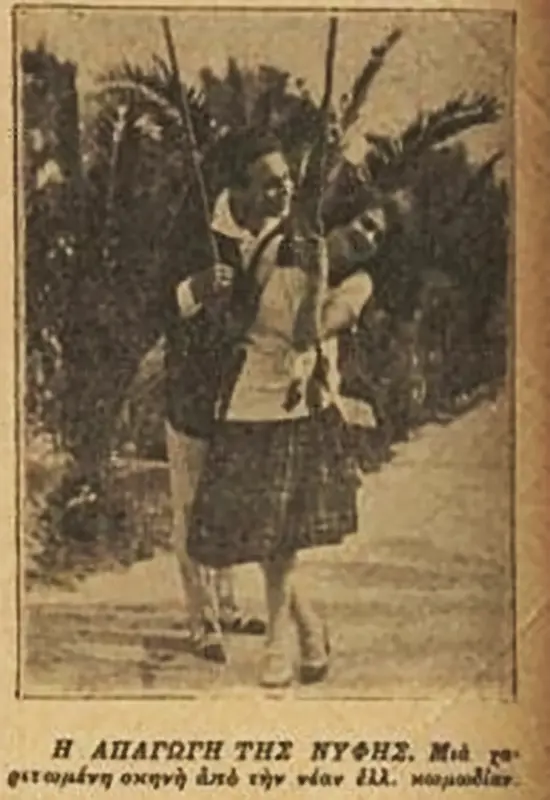
Is 'Stealing the Bride' a film worth watching today? Short answer: yes, but with significant caveats that demand a critical eye. This is a fascinating, if problematic, piece of cinematic history that offers a window into cultural practices and societal norms that feel profoundly alien, even shocking, to a modern audience.
It’s a film for those interested in the evolution of storytelling, the exploration of challenging themes, and the nuances of historical context, particularly within specific cultural traditions. However, it is absolutely not for viewers seeking lighthearted romance, straightforward moral clarity, or a narrative that aligns with contemporary ethical standards regarding consent and personal autonomy.
Aristomenis Didikas’s 'Stealing the Bride' presents a narrative steeped in a practice that, from a modern vantage point, is inherently disturbing: the titular act of a man kidnapping his future wife. Yet, the film frames this not as a crime, but as a 'popular practice,' suggesting a cultural context where such an act, while extreme, carried a different social weight. This immediately positions the film as a challenging artifact, forcing viewers to confront a past where lines of consent, love, and tradition were drawn very differently.
The film’s audacity lies not just in its premise, but in its apparent lack of judgment towards it. It invites us to observe, rather than condemn, the mechanics of a deeply patriarchal custom. This approach, while potentially unsettling, is also what makes it a compelling, if uncomfortable, watch for those willing to engage with historical and cultural relativism.
Does it work? Yes. But it’s flawed. Deeply flawed.
Director Aristomenis Didikas, also the writer, navigates this treacherous thematic landscape with a surprising degree of straightforwardness. There’s a certain observational quality to the direction that avoids overt sensationalism, yet simultaneously sidesteps deep psychological exploration. The camera often acts as an impassive observer, documenting the events rather than interrogating them.
This directorial choice is a double-edged sword. On one hand, it prevents the film from descending into melodrama or exploitation, lending it an almost documentary-like feel regarding the custom itself. On the other, it leaves the emotional core of the characters, particularly the 'stolen' bride, frustratingly unexplored. We see the action, but rarely feel the profound internal conflict or despair that such a situation would undoubtedly engender.
Consider the scene where the 'kidnapping' itself occurs. It's depicted with a brisk efficiency, almost like a well-rehearsed ritual, rather than a moment of terror or desperate struggle. This choice, while perhaps historically accurate to the 'popular practice' aspect, undeniably softens the impact and ethical weight of the act for a contemporary viewer.
The cast, including Nitsa Filosofou, Dora Doranti, Emmanouil Kadiotis, Ioannis Drys, Georgios Antoniadis, and Elli Melissaki, delivers performances that are largely constrained by the script's focus on the external. Nitsa Filosofou, presumably in the role of the bride, has the unenviable task of portraying a character whose agency is severely curtailed by the plot. Her performance is subtle, relying on unspoken expressions of resignation, confusion, and perhaps a burgeoning, Stockholm Syndrome-esque acceptance.
It's a performance that speaks volumes in its quietude, but one wishes the script had allowed her more overt moments of defiance or emotional breakdown. The character is a vessel for the plot, rather than an active participant in her own destiny, which is a significant narrative failing.
The male protagonist, likely portrayed by Emmanouil Kadiotis or Ioannis Drys, plays the 'love-struck man' with a conviction that, again, feels culturally specific. His intensity is palpable, driven by a blend of passion and adherence to a tradition he believes will secure his happiness. There’s no hint of malice, only a single-minded determination that, to him, is entirely justified. This lack of self-doubt in his character is perhaps the most unsettling aspect of the film, highlighting how normalized such actions might have been.
The supporting cast, including Dora Doranti and Georgios Antoniadis, provides the necessary societal backdrop, embodying the community's reaction – a mixture of surprise, gossip, and eventual acceptance. Their reactions ground the film in its specific social milieu, reinforcing the idea that this 'practice' was indeed part of the fabric of life, however contentious it might seem to us now.
The visual style of 'Stealing the Bride' is utilitarian, capturing the period with a straightforward realism that serves its semi-documentary approach to the custom. There are no grand, sweeping shots designed to romanticize the landscape or the act itself. Instead, the cinematography focuses on the interactions, the faces, and the immediate environments that define the characters' lives.
The film's visual language is, by modern standards, unadorned. It prioritizes function over flourish, which paradoxically lends it an authenticity. The starkness of certain frames, often depicting the bride in confined or isolated settings, subtly communicates her predicament without explicit dialogue. For instance, a shot of Filosofou framed by a window, looking out at a world she is temporarily cut off from, speaks more than any dialogue could.
This unpretentious aesthetic reinforces the notion that the film is less about artistic grandeur and more about presenting a slice of life, however uncomfortable that slice may be. It avoids the trap of glorifying the act through overly dramatic or beautiful imagery, which is a commendable restraint given the subject matter.
The pacing of 'Stealing the Bride' is deliberate, mirroring the inexorable nature of the custom it portrays. It’s not a film that rushes to its conclusion; rather, it allows the events to unfold organically, giving weight to the social processes that follow the initial 'kidnapping.' This measured pace can feel slow to viewers accustomed to modern narrative velocity, but it’s crucial for establishing the film’s tone.
The tone is largely observational and, at times, surprisingly matter-of-fact. There's a notable absence of overt judgment or moralizing, which is both its strength and its most controversial aspect. This neutrality forces the audience to bring their own ethical frameworks to bear on the narrative, rather than being guided by the filmmakers.
The lack of strong emotional cues or overt condemnation can be jarring. It creates a detached viewing experience that some might find frustrating, especially when confronting such a sensitive topic. However, this very detachment is what makes the film a potent historical document, reflecting a time when such practices were viewed through a different cultural lens. The film doesn't preach; it simply shows.
At its core, 'Stealing the Bride' is a stark examination of the interplay between consent, tradition, and power dynamics within a specific cultural context. The film doesn't explicitly define consent as we understand it today, instead relying on the implicit consent granted by societal custom and the eventual, often resigned, acceptance of the 'stolen' woman.
The subtext is rich with questions: What constitutes a legitimate marriage? How much agency can an individual truly possess when faced with overwhelming social pressure? Is 'love' an excuse for coercive actions? The film doesn't offer easy answers, which is precisely why it remains relevant for discussion.
One could argue that the film, inadvertently, becomes a powerful critique of patriarchal structures, even if it doesn't explicitly frame itself as such. By simply presenting the practice, it exposes the inherent inequalities and the limited choices afforded to women in such societies. This is where its true value lies – not in endorsing the practice, but in documenting it for critical reflection.
“The film’s greatest strength is its unflinching gaze at a practice that defies modern ethics, forcing a confrontation with the uncomfortable realities of historical consent.”
Absolutely, but with a clear understanding of what you're getting into. This is not a film for passive consumption. It demands active engagement, a willingness to grapple with uncomfortable themes, and an appreciation for cinema as a historical and cultural mirror. It's a challenging viewing experience that will undoubtedly spark debate.
For those who appreciate the historical significance of films like Kohlhiesel's Daughters or even the darker undertones of Marriage in Transit, 'Stealing the Bride' offers a similarly potent, if more disturbing, look at matrimonial customs. It provides a unique lens through which to examine how our understanding of human rights and personal autonomy has evolved.
It’s a film that will stay with you, not necessarily for its artistic brilliance, but for the profound questions it raises about humanity, tradition, and the enduring struggle for individual freedom.
'Stealing the Bride' is a cinematic artifact that demands engagement. It is not an easy watch, nor is it one that offers comfortable resolutions. Instead, it serves as a powerful, albeit ethically ambiguous, mirror reflecting a past where the boundaries of love, consent, and tradition were drawn in ways that are profoundly at odds with contemporary values. Its value lies less in its narrative prowess or emotional depth, and more in its capacity to provoke thought, challenge assumptions, and initiate crucial conversations about cultural evolution and human rights.
For the discerning viewer, one prepared to confront the uncomfortable truths of history and engage with a film that prioritizes documentation over judgment, 'Stealing the Bride' is an undeniably significant, if imperfect, piece of cinema. It’s a stark reminder of how far, and in some ways, how little, we have come in understanding the complexities of human relationships and the power dynamics that shape them. It works because it forces you to think. But it’s flawed because it doesn’t always help you feel.
IMDb 6.4
1922
Community
Log in to comment.