DbcultAccessing Vault...
6.9/10
Senior Film Conservator
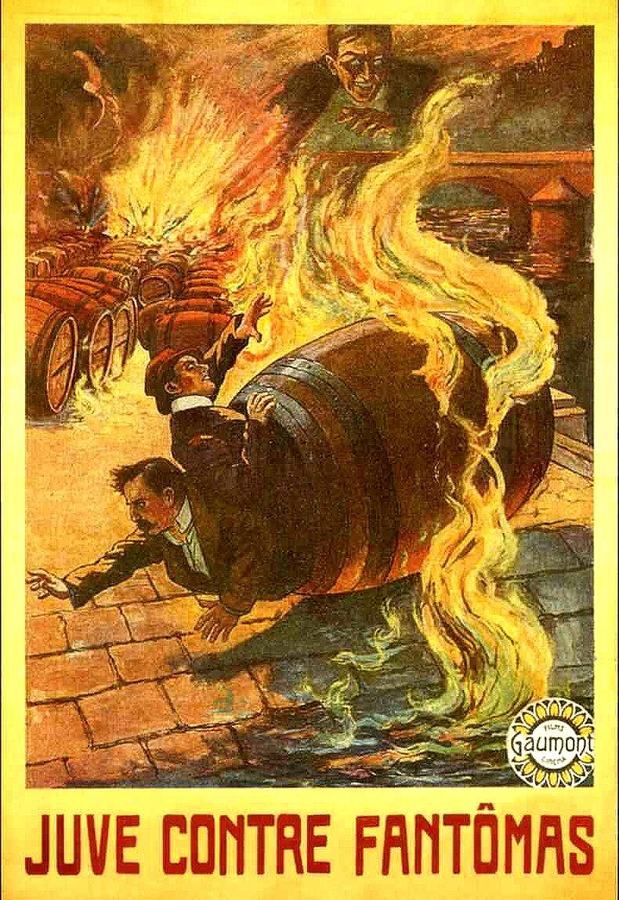
A definitive 6.9/10 rating for a film that redefined the boundaries of cult cinema. Fantomas: The Man in Black remains a cornerstone of transgressive art.
Paris, 1913: electric lamps buzz like trapped cicadas, the Exposition’s newfangled Ferris wheel turns against a bruised sky, and in the flicker of a nickelodeon a gentleman in impeccable evening dress removes a mask—only to reveal the same cruel smile underneath. Welcome to Feuillade’s universe, where modernity itself is the perfect accomplice.
There is a moment—wordless, uncanny—when René Navarre’s Fantômas, framed in iris-shot silhouette, lifts a top-hat toward the camera as though saluting our century-wide remove. The gesture lasts maybe three seconds, yet it detonates across 110 years of cinema history. In those silent frames you can hear the birth of the thriller, the DNA of The Cheat’s chiaroscuro guilt, the template for Lang’s arch-villainy in Dr. Mabuse, even the Joker’s anarchic grin. Feuillade, working with the pulp fever of Allain & Souvestre’s newspaper serials, understood that true terror is not in what we see but in the sudden intimation that the frame itself cannot be trusted.
Forget CGI cities stitched from binaries; this Paris is breathing limestone exhaling gaslight. Feuillade shoots on location—Gare de Lyon’s iron ribs, the catacombs’ skull-lined arteries, rooftop balustrades where gargoyles mimic human posture. The camera seldom moves, yet space implodes: a door in a respectable bourgeois flat swings inward to disclose an abyss where policemen are swallowed whole. In episode two, titled The Man in Black, a simple cut transforms a moving train into a funeral parlor—no dissolve, no lap-dissolve trickery, just the hard honesty of a door sliding open. The effect is so disarming it makes today’s hyperbolic smash-cuts feel like nervous tics.
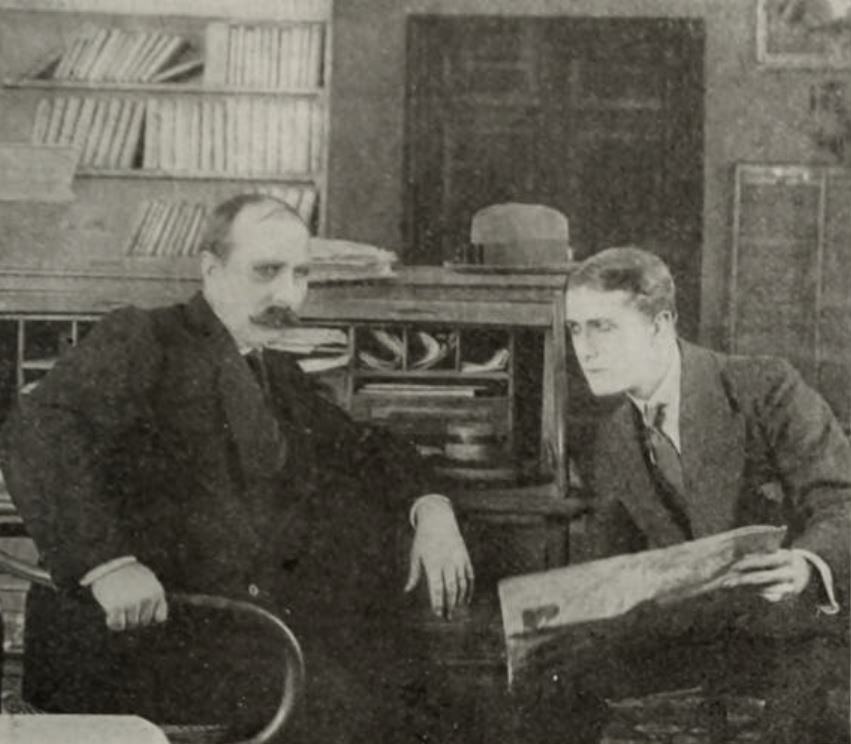
Compare this spatial wizardry to the pastoral tableaux of Glacier National Park or the biblical pageantry in From the Manger to the Cross: where they seek transcendence, Feuillade plunges us into immanence, into the tactile dread of modern urban life.
Renée Carl’s Princess Sonia embodies the film’s unstable identity. One instant she glides through soirées in tulle and diamonds; the next she’s bound in a broom closet, mouth sealed with a black glove. Her performance is all micro-gestures: a fluttering eyelid telegraphs complicity, a knuckle whitening around a cigarette holder betrays terror. Silent-era acting is often caricatured as semaphore histrionics, but Carl operates in the register of Kuleshov’s montage—her face is an open cipher onto which Feuillade pastes contradictory emotions.
Navarre’s Fantômas, by contrast, is minimalism incarnate. A tilt of the head, a gloved hand emerging from darkness—nothing is superfluous. When he peels away a false beard in close-up, the act feels surgical, as though identity were merely epidermal. The viewer’s gasp is Pavlovian; we have been conditioned by modern thrillers to expect exposition. Instead we get the void.

Watch this film on 35 mm at the Cinémathèque and you’ll notice scratches dancing like fireflies—each mark a temporal fingerprint. Yet the narrative feels eerily post-postmodern: surveillance culture, deep-fakes, ransomware—Feuillade anticipates them all. Fantômas’ ability to forge signatures, to stage deaths that aren’t deaths, to hack the social contract itself, aligns him less with Moriarty than with today’s crypto-ghosts who weaponize anonymity.
The editing rhythms, too, feel contemporary. Feuillade cross-cuts between Juve’s investigation and Fantômas’ preparations with a precision that rivals The Corbett-Fitzsimmons Fight’s documentary immediacy, yet he injects something new: the anxiety of simultaneity, the sense that evil is always one splice ahead.
Viewed without accompaniment, the film acquires a ghost frequency—the creak of your seat, the thrum of the projector, your own pulse. Add a live avant-garde score (try prepared-piano and looped typewriter clicks) and the images mutate again: the locomotive’s pistons become techno drums, the police sirens morph into glitch. Silence, paradoxically, renders Fantômas omnipresent; he slips between the notes, between the frames.
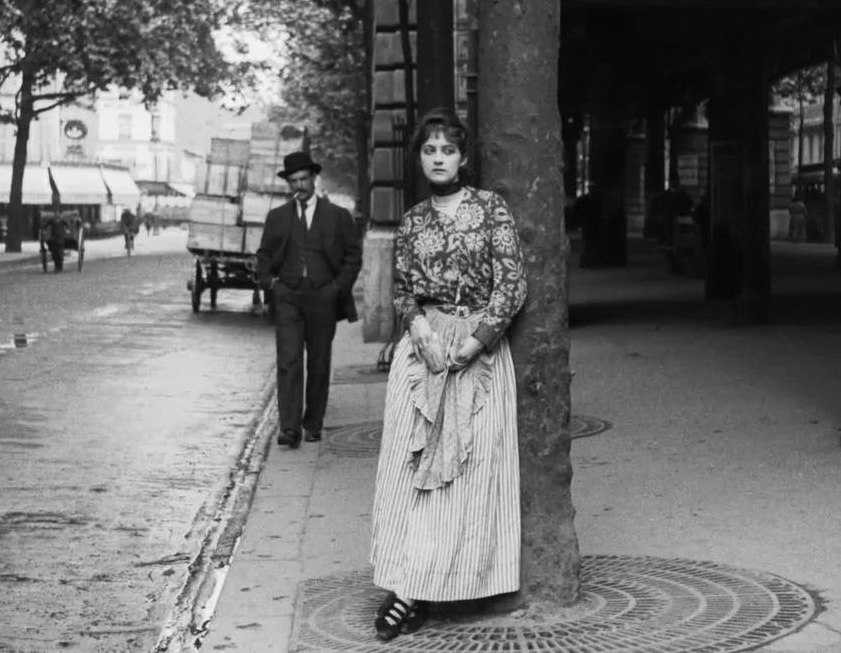
Where Oliver Twist sentimentalizes the waif and The Redemption of White Hawk mythologizes the fallen woman, Feuillade offers something rawer: female complicity as survival tool. Sonia’s alliances shift like fog; she is at once damsel and decoy, lover and lethal witness. The film refuses to punish her for promiscuity; instead it exposes the patriarchal scaffolding that forces her into perpetual performance. In a startling iris-close-up, her pupils reflect a miniature Fantômas—suggesting the villain may be projection as much as person.
Shot during France’s imperial apex, the film exudes colonial anxiety. Fantômas’ disguises include a Moroccan rug-dealer, a Vietnamese cook, a sepia-toned Sikh manservant—each caricature hinting at the empire’s fear of reverse infiltration. Juve’s headquarters display looted tribal masks on the wall; when the camera lingers, the artifacts seem to judge their plunderers. Thus the thriller smuggles in post-col critique decades before academic theory caught up.
Film theorists love invoking the male gaze, yet here the gaze itself is criminalized. Fantômas’ eyes, frequently isolated in insert shots, are empty sockets of 35 mm film—he sees without being seen. Juve counters with binoculars, magnifying lenses, a proto-fax machine that spits out grainy mugshots. The two form a dyad of voyeurism battling voyeurism, leaving us, the spectators, complicit in each snoop. When the final card reads “To be continued,” it implicates our desire for more carnage, more mystery.
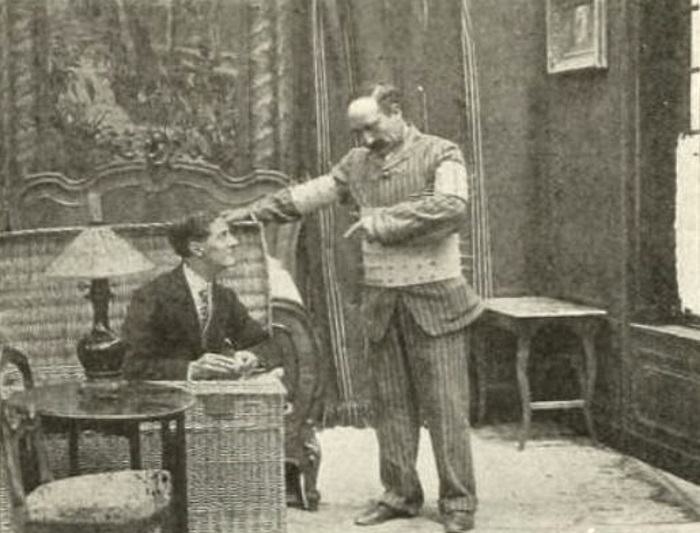
Unlike Life and Passion of Christ or The Independence of Romania, which survive in single battered prints, Fantômas: The Man in Black floats through the ether in multiple versions: a hand-tinted Pathé, a 1970s Eastman with French intertitles, a 4K Gaumont restoration that renders pores and cobblestones alike in hyperreal clarity. Each iteration reshuffles the tone; color turns violence into ballet, high-definition renders greasepaint into uncanny valley. The film, like its villain, refuses definitive capture.
Contemporary prefects tried to ban the series, claiming it “glorified anarchy.” Police unions picketed cinemas; priests preached against its “diabolical nihilism.” Such hysteria, of course, only burnished its legend. In Montmartre, apocryphal tales sprouted: a woman fainted during the train sequence; a pickpocket used the screenings as cover. Whether myth or marketing, the uproar cemented Fantômas as the first multimedia anti-hero—merchandise, feuilleton, shadow-puppet revue.
Fast-forward a century: Fincher’s Se7en lifts the killer-as-concept; Nolan’s Joker quotes the anarchy; Killing Eve flips the pursuer-pursued gender axis. Yet none match the primal jolt of watching a 1913 audience scream when a wall pivots and a gloved hand snakes out. Modern thrillers explain, psychoanalyze, humanize; Feuillade presents evil as weather—irrational, amoral, beautiful.
I first encountered The Man in Black on a 16 mm print, university basement, projector rattling like a tin cough. Midway through, the bulb burnt out; in the pitch darkness I sensed the audience’s collective heartbeat—a metronome for Fantômas’ footsteps. When emergency lights flickered on, the screen was blank yet the terror lingered, as though the villain had escaped the celluloid and now prowled among us. That is the film’s miracle: it makes the dark outside the theater an extension of its narrative.
Unlike the static tableaux of With Our King and Queen Through India, Feuillade’s frames secrete details that blossom only on repeat viewings: a poster for Les misérables in a background street scene, a child’s chalk drawing of a guillotine on a courtyard wall. Each rewatch tilts the moral kaleidoscope; sometimes Juve seems the fascist, sometimes Fantômas the resistance.
To praise Fantômas: The Man in Black merely as “influential” is to stuff a hurricane into a snow globe. It is the moment when cinema realized its capacity to map the unconscious, to render paranoia as geography. Long before marketers coined “transmedia,” Feuillade created a universe that spilled off the screen into newspapers, gossip, nightmares. Today, when algorithms predict our cravings and deep-fakes counterfeit truth, the film feels less antique than prophetic. Fantômas wins the second round, the third, the nth. He is out there—between pixels, beneath neon, inside the buffering spiral of your streaming queue—laughing at the notion that any story ever ends.

IMDb 7.4
1935
Community
Log in to comment.