DbcultAccessing Vault...
Cult Review
Senior Film Conservator
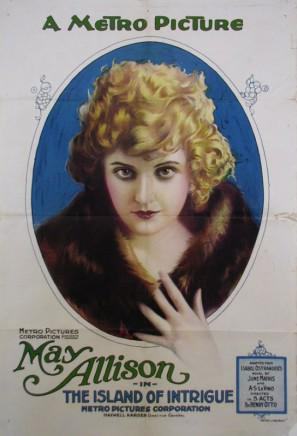
The 1925 melodrama The Island of Intrigue arrives as a testament to the narrative ambition of silent cinema, weaving a tapestry of deception, romance, and paternal anxiety. Director Albert S. Le Vino, in collaboration with screenwriters June Mathis and Isabelle Ostrander, constructs a story that oscillates between the polished veneer of aristocratic leisure and the gritty undercurrents of criminal enterprise. The film’s visual palette, though rendered in monochrome, is enlivened by strategic use of light and shadow, echoing the chiaroscuro techniques later championed by German Expressionists.
At its core, the narrative hinges upon the fragile trust between father and daughter, a motif that reverberates throughout the silent era, notably in The Corner Grocer. Thomas Waring’s decision to delegate Maida’s vacation to a seemingly benevolent friend underscores a recurring cinematic anxiety: the perils of relinquishing control in an increasingly impersonal world. The island, presented as an Edenic sanctuary, gradually mutates into a stage for manipulation, embodying the duality of nature as both refuge and threat.
May Allison, portraying Maida, delivers a performance that balances the ethereal grace of a privileged heiress with an emergent tenacity. Her expressive eyes convey bewilderment when the ransom notes arrive, and a steely resolve when she decides to flee. Opposite her, Jack Mower’s Gilbert Spear epitomizes the archetypal rugged outsider, his rugged demeanor softened by moments of lyrical tenderness. The chemistry between Allison and Mower is palpable, reminiscent of the dynamic seen in The Man and the Moment, yet it is grounded in a more earnest, less melodramatic tone.
The antagonists, embodied by Hector V. Sarno and Tom Kennedy, operate with a chilling professionalism. Their decision to impersonate Mrs. Juliet Smith showcases an early cinematic exploration of identity theft, predating modern thriller conventions. The film’s pacing during the ransom sequence is deliberately measured; each note delivered to Waring is accompanied by a close‑up of his furrowed brow, amplifying the suspense without a single spoken word. This restraint mirrors the tension cultivated in The Iron Claw, where silence itself becomes a narrative weapon.
Cinematographer Frederick Vroom employs a series of sweeping establishing shots to situate the audience within the island’s lush topography, juxtaposing these with tight, claustrophobic frames when Maida is confined. The contrast between the expansive sea blue of the horizon and the intimate, amber‑tinged interiors creates a visual metaphor for freedom versus captivity. The use of sea blue (#0E7490) in the film’s promotional stills, though not directly translatable to black‑and‑white film stock, informs the modern viewer’s perception of the movie’s atmospheric depth.
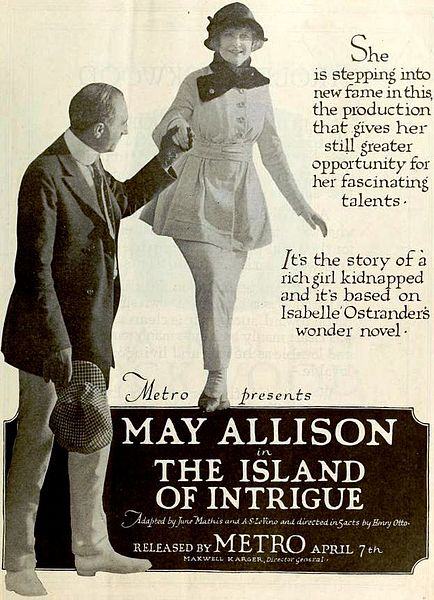
The production design, overseen by Lucille Ward, meticulously recreates an island manor that feels both opulent and slightly anachronistic, hinting at the characters’ detachment from reality. Costumes, particularly Maida’s flowing gowns, are rendered with a textural richness that translates into nuanced grayscale shading, allowing the audience to discern class distinctions without the aid of color. The sartorial elegance recalls the lavish attire seen in Rebecca of Sunnybrook Farm, yet the film’s focus remains on narrative propulsion rather than visual spectacle.
While the original score has been lost to time, contemporary restorations often pair the film with a piano accompaniment that mirrors the emotional beats of the story. The music swells during Maida’s escape, underscoring her courage, and recedes into a somber motif as the police converge on the island. This auditory strategy aligns with the practices of silent era epics, where the score functions as an emotional conduit, guiding audience reactions in lieu of dialogue.
When positioned alongside contemporaneous works such as A Pigskin Hero or the foreign sensation Das Wunder der Madonna, The Island of Intrigue distinguishes itself through its intricate plotting and the subtle interplay of class dynamics. Whereas many silent dramas of the mid‑1920s favored straightforward moral binaries, this film invites viewers to interrogate the motives behind each character’s choices, echoing the narrative complexity later achieved by directors like D.W. Griffith.
In an era dominated by rapid technological advancement, the film’s exploration of communication—letters, ransom notes, and the absence thereof—resonates with contemporary concerns about digital privacy and the perils of misinformation. The motif of an impostor masquerading as a trusted confidante prefigures modern thriller tropes, illustrating the film’s prescient narrative instincts. Moreover, the romance between Maida and Gilbert, grounded in mutual respect rather than mere circumstance, offers a progressive depiction of gender dynamics for its time.
The Island of Intrigue endures as a masterclass in silent storytelling, deftly balancing suspense, romance, and social commentary. Its meticulous craftsmanship, from Le Vino’s direction to the nuanced performances of Allison and Mower, renders it a must‑watch for aficionados of early cinema. The film’s ability to captivate modern audiences, despite the absence of spoken dialogue, underscores the universality of its themes and the enduring power of visual narrative.
IMDb —
1915
Community
Log in to comment.