DbcultAccessing Vault...
5.2/10
Senior Film Conservator
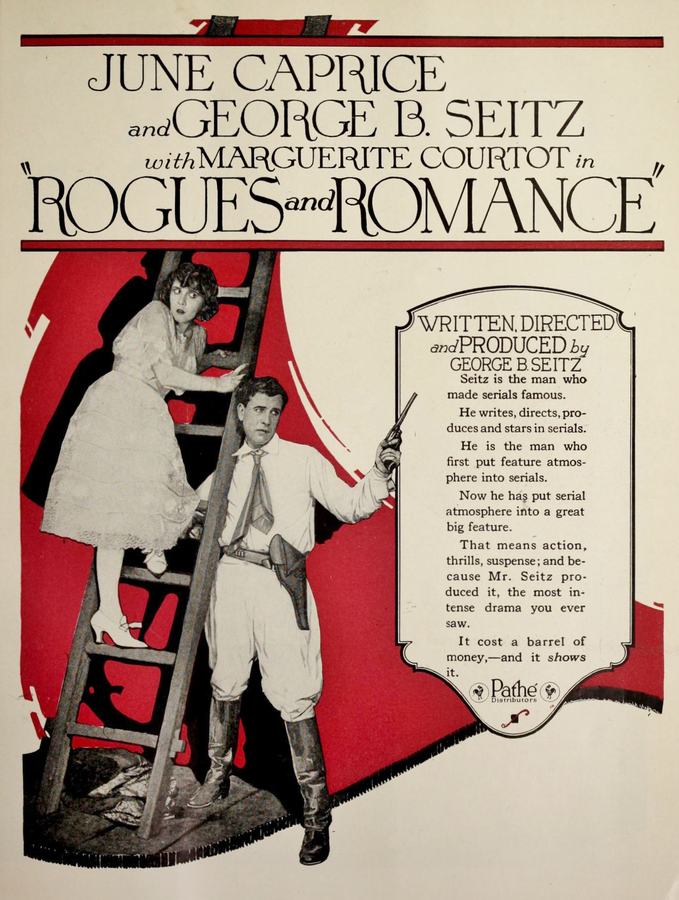
A definitive 5.2/10 rating for a film that redefined the boundaries of cult cinema. Rogues and Romance remains a cornerstone of transgressive art.
In the flicker of nitrate that survives, Rogues and Romance is less a love story than a geopolitical palpitation: a 1920 postcard from a Europe still coughing up monarchist dust while Hollywood began to manufacture its own aristocracy of faces. Sylvia, played by June Caprice with the tremulous curiosity of a schoolgirl who has secretly read the racier passages of Les Cendres, lands in Seville armed with nothing mightier than a Kodak and a chaperone aunt who vanishes whenever the plot remembers passion requires solitude.
Enter Pedro Pezet—William P. Burt in a sash and a smirk—part torero, part pamphleteer, all pheromones. His introductory close-up is so aggressively back-lit that every cigarette exhale becomes a halo of insurrection. The camera adores the angular arrogance of his brows; the intertitles adore the word revolución spelled with a flickering ó that feels like a thrown rose.
Contrasted against this sulphuric charisma is Reginald, sketched by Harry Semels as the sort of American who says “I dare say” unironically and believes a Panama hat suffices as personality. One expects him to produce stock certificates instead of love letters. Yet the film’s subversive wit lets him evolve from caricature to casualty: his final dissolve—eyes wide while a Spanish flag burns in the street behind him—carries the hush of empires quietly swapping masks.
Director George B. Seitz, moonlighting from his serial-slinging day job, borrows the chiaroscuro grammar of early crime shorts but stains it with Romantic pigments. Note the sequence where Sylvia wanders the Alhambra at twilight: superimposed rose petals drift across the frame like bleeding confetti, each petal a surrogate for Pedro’s promise of mañana. When she clutches Reginald’s telegram moments later, the image cuts to a low-angle of cathedral bells; their bronze becomes a visual metronome counting down her loyalty.
The tinting strategy—amber for interiors, viridian for nocturnal conspiracies, crimson for the bullring—turns emotional temperature into chromatic aria. Restorationists at MoMA have resurrected these hues, though one reel stubbornly remains in funeral cobalt, as though the celluloid itself were bruised by indecision.
Caprice, often dismissed as a moon-faced ingenue, weaponizes that very softness here. Her Sylvia stammers in English, simpers in Spanish, and lets silence scream louder than both languages. In a key medium-shot she stands between two arc-lamps; the resultant double shadow suggests a woman already split into futures. Critic Hermione Lister once wrote that “Caprice acts with her collarbone,” and indeed the slight flare of her clavicle when Pedro murmurs “mi vida” functions like a barometer of moral barometric pressure.
If Caprice weaponizes fragility, Burt detonates bravura. His Pedro is every European archetype American melodrama fantasized: part Rudolph Valentino, part Bakunin with pomade. The performance rides the razor between satire and seduction; when he declaims “Tyrants fall, but kisses endure,” one cannot decide whether to enlist or laugh. Yet that instability is precisely the film’s thesis: ideology as erotic costume-change.
The surviving score, recomposed by Judith Rosen for the 2018 Pordenone premiere, interpolates Andalusian palmas with Wurlitzer sighs. During the secret-tunnel sequence, percussion drops out; we hear only the click-shuffle of Sylvia’s heels against damp flagstones—an aural analogue for the heartbeat she claims Pedro has stolen.
Intertitles, meanwhile, flirt with modernist fragmentation. “Love—like a cartridge—can misfire,” reads one card, the letters jittering as though freshly discharged. Another simply states “Dawn,” white on black, long enough for the viewer to furnish their own emotional footnote.
Between the rose and the rifle, the film asks, where does agency reside? In the hand that pulls the trigger or the eye that blinks first?
Seitz’s earlier Come on In trafficked in Jazz-Age whimsy, yet here he mines the same structural hinge—outsider enters closed ecosystem, desire upends protocol. The difference is body count: where Come on In ends in a splash of bathtime farce, Rogues and Romance leaves bodies metaphorical but nonetheless strewn.
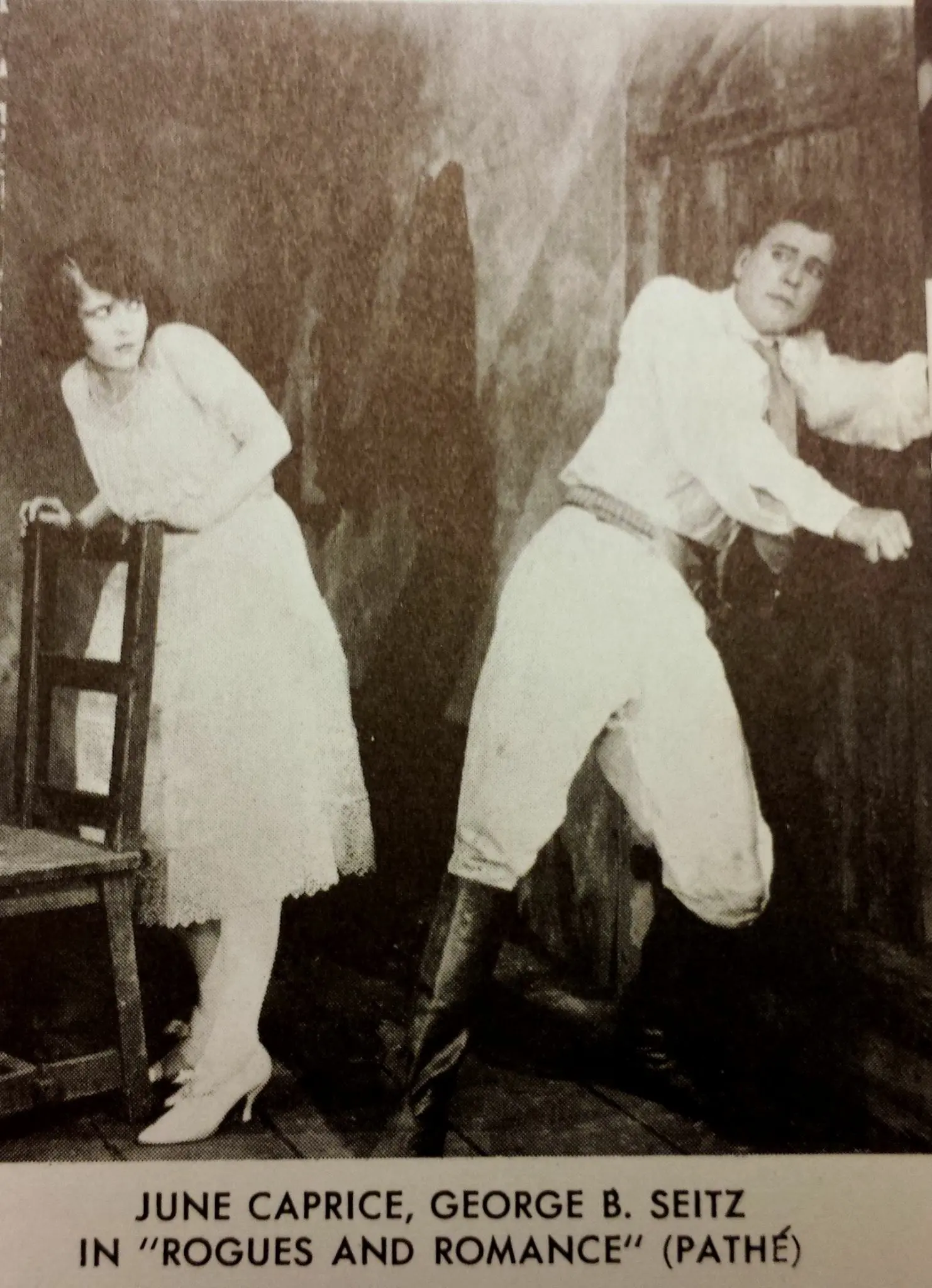
Viewers schooled in Rich Man, Poor Man will recognize the class-sex nexus, yet that 1918 potboiler resolves its tensions through inheritance; Seitz refuses such capitalist absolution. Likewise, the Gothic corridors of The House of Whispers echo in Pedro’s subterranean hideouts, but instead of guilt-sick aristocrats we find proletarians who weaponize shadows.
Sylvia’s trajectory inverts the pilgrim’s progress of Pilgrim’s Progress: she begins in the Celestial City of American certainty and descends into a Slough of Passion, only to discover salvation is self-invented. The camera charts this via spatial politics: early scenes frame her against rigid verticals (train windows, customs desks); later, she melts into curved Moorish arches that refuse linear closure.
Reel 5—believed lost in the 1965 MGM vault flood—contained the fabled “letter-burning” scene. Production stills show Sylvia crouched over a brazier, hair unmoored, cheeks lacquered by nitrate flames. Without this footage, modern prints splice in a still-card with a violin cadenza, creating an accidental Brechtian rupture: we are reminded we are watching ghosts negotiate desire.
Contemporary theorists fault the film for exoticizing Andalucía—gypsy extras reduced to folkloric furniture, torero clichés recycled for touristic frisson. Fair. Yet within the same frame, Seitz allows Spanish extras to stare back at the camera, their gaze a quiet indictment of Sylvia’s imperial naïveté. The resultant tension—who is voyeur to whom?—energizes every composition.
Reginald’s wealth is never enumerated; we infer it via absences—he never queues for visas, never counts pesetas before ordering sherry. Pedro’s poverty, conversely, is text. The contrast climaxes in a bull-ring tableau where Reginald occupies a front-row palco upholstered in crimson velvet while Pedro, somewhere below in the callejón, sharpens a dagger whose destiny is never clarified. The arena becomes a diorama of class stratification scored to bugle fanfare.
The 4K restoration scanned the 35mm Czech print discovered in 2014, plagued by vinegar syndrome along perforations. Digital regrain married to wet-gate photochemical salvage yielded a paradoxical crispness: every cigarette burn now glows like a solar flare, yet the image retains the tremulous flutter endemic to 1920s hand-cranking. Color grading hewed to the original Desmet method—amber embers, viridian nocturnes—while HDR pass amplified highlight detail in Sylvia’s white lace without blooming the embroidery into oblivion.
1920 trade papers hailed the film “a torrid torrent of tropics and treason,” code for profitable prurience. Post-war French critics rediscovered it via Cahiers, claiming Seitz as proto-New-Wave for his jump-cutting crowd scenes. In the 90s, feminist scholars debated whether Sylvia’s final rail-platform walk constitutes liberation or patriarchal ventriloquism. Today, in the glare of post-colonial studies, Rogues and Romance reads as both artifact and warning: tourism of the heart exacts tariffs no customs office lists.
I first saw the film at a seaside cemetery cinema—yes, projectionists perched between marble angels—during a squall. Every time the Mediterranean wind rattled the tarp, Pedro’s cloak seemed to ripple in synchrony. Sylvia’s tears became indistinguishable from rain on the polyester screen. At that moment theory dissolved; what remained was the primal throb of choice, the vertigo of roads forking in darkness. When the bulbs blew during the climax, the audience exhaled as one organism, grateful for the dark that let us keep our secrets.
That is the enduring witchcraft of Rogues and Romance: it converts viewers into co-conspirators, accomplices after the fact in every revolution ever dreamed beneath a stranger’s bedsheets.
For further context, pair this viewing with The Old Maid’s Baby for its treatment of spinster stigma, or Sweetheart of the Doomed to witness how war reframes erotic fatalism.
IMDb —
1921
Community
Log in to comment.