DbcultAccessing Vault...
Cult Review
Senior Film Conservator
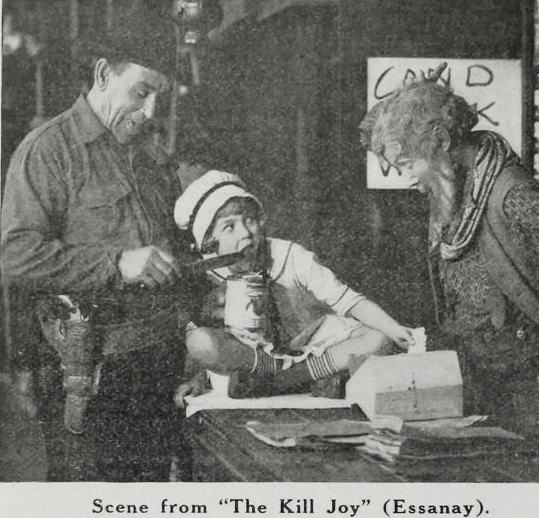
In the annals of early cinema, certain narratives stand as enduring testaments to the power of human connection and the transformative potential of innocence. Charles Mortimer Peck’s 'The Kill-Joy,' a film featuring the evocative performances of Ullrich Haupt, James F. Fulton, and the captivating Mary McAllister as the titular Billie, emerges as one such profound artifact. It is not merely a story; it is a meticulously crafted parable, a cinematic sermon on the redemptive grace found in the most unexpected places. This silent masterpiece, though perhaps less frequently celebrated than some of its contemporaries, offers a compelling exploration of community, prejudice, and the often-overlooked strength of a child's unwavering spirit.
The film opens with a stark, almost primordial scene: Billie and her father, two solitary figures, traversing the vast, indifferent plains. Their destination, 'Contentment,' is introduced with a sardonic epithet: an 'Eyeless Eden.' This immediately establishes a thematic tension – a promised land that, by its very description, implies a profound lack of vision, an inability to perceive true worth or beauty. The father's desperate search for water, a quest for life in a landscape that relentlessly threatens it, culminates in a tragic fall and his untimely demise. This initial sequence is a brutal reminder of the unforgiving nature of the frontier, a place where survival is tenuous and loss is an ever-present specter. The harshness of the environment mirrors the emotional desolation that often characterized these nascent settlements, a theme subtly echoed in films like The Chechako, where newcomers confront the rugged realities of an untamed land.
Billie, now an orphan, is discovered by Bob, a pragmatic merchandise wagon driver. His act of rescue, though born of simple human decency, sets in motion a chain of events that will expose the latent prejudices and a profound capacity for transformation within Contentment. Bob’s decision to secrete Billie in his cabin, motivated by a desire to protect her from the harsh realities of the frontier town, is tragically misconstrued. The townspeople, accustomed to a life devoid of tender domesticity, interpret his furtive actions as evidence of a clandestine affair. This immediate leap to suspicion, this readiness to condemn based on superficial observation, paints a vivid picture of a community starved of genuine connection, quick to judge, and slow to understand. It’s a powerful commentary on the dangers of rumor and the swift descent into mob mentality, a narrative device that still resonates today.
The scene where the eavesdroppers witness Bob stroking Billie’s hair, only to see the back of her head, is a masterclass in visual storytelling and dramatic irony. The camera’s deliberate framing, denying the townsmen—and initially, the audience—a full view, creates a palpable sense of unease and misunderstanding. Their minds, already primed for scandal, confirm their worst fears. This collective misjudgment culminates in the formation of a vigilance committee, a chilling manifestation of self-appointed justice that often characterized the lawless frontier. The procurement of a rope signals their deadly intent, a stark reminder of how quickly suspicion can morph into lethal action. This particular narrative thread, where a community’s prejudices lead to a near-fatal misjudgment, finds its echoes in various cinematic explorations of mob rule, highlighting the timeless human flaw of acting on incomplete information. One might draw parallels to the societal scrutiny often depicted in films like The Social Pirates, where public perception dictates fate, albeit in a different social context.
The moment of truth, when the committee bursts into Bob's cabin, expecting to find a woman of ill repute, only to discover little Billie, is a powerful moment of dramatic revelation. Their 'consternation is overwhelming,' not merely at their error, but at the realization that their rigid worldview has been challenged by the most innocent of figures. Yet, their initial reaction is not one of remorse, but of annoyance. Billie's presence is still perceived as an inconvenience, a disruption to their established, albeit joyless, order. This speaks volumes about the entrenched cynicism of Contentment, a place where even a child's arrival is met with jaded resistance rather than welcoming warmth. The 'Eyeless Eden' truly lives up to its name, incapable of seeing the inherent value and beauty that Billie embodies.
It is here that the film truly begins its profound exploration of transformation. Billie, utterly unaware of the danger she has narrowly escaped, begins to exert a quiet, irresistible influence. Her 'smile and childish confidence' are not weapons, but rather conduits of pure, unadulterated humanity. Day by intervening day, she chips away at the hardened exteriors of the townsmen. Figures like 'Sure Shot Mike,' 'The Denver Kid,' 'Rattlesnake Pete,' and 'Death Valley Joe' – names that evoke the rough, unforgiving nature of their lives – slowly succumb to her charm. She doesn't preach or persuade; she simply *is*. Her innocence acts as a mirror, reflecting back to them the joy and hope they had long suppressed. This gradual thawing of cynical hearts is a beautifully rendered process, showcasing the quiet power of empathy and unconditional affection. It’s a narrative arc reminiscent of stories where a single pure soul brings light to darkness, a theme seen in various forms across cinematic history, perhaps even in the moral awakenings depicted in films like The Evangelist, though through a different, more overt, form of persuasion.
Contentment begins to live up to its name, not through external prosperity, but through an internal shift. The community, once quick to judge and condemn, now finds itself united by a shared affection for Billie. They celebrate her adoption as 'The Darter of the Camp,' a title that encapsulates her vibrant, life-affirming spirit. This joyous occasion, however, is tragically juxtaposed with the insidious machinations of 'The Crab.' A character whose very moniker suggests bitterness and a grasping nature, 'The Crab' remains stubbornly resistant to Billie's influence. He embodies the last vestige of Contentment's former 'eyeless' state, unable or unwilling to embrace the burgeoning warmth. His plot to have Billie kidnapped by Indians is an act of desperate malice, an attempt to reassert the old order of cynicism and despair.
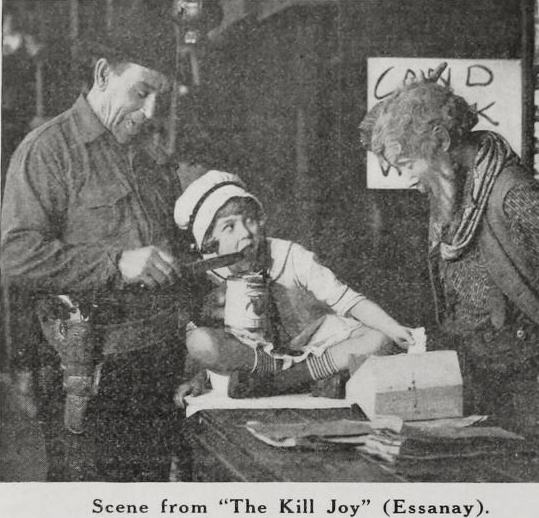
The abduction, occurring while Bob and his companions are reveling in Billie’s embrace, is a cruel twist of fate. It shatters the nascent contentment, plunging the town back into a state of furious despair. But 'The Crab's' act, intended to be his ultimate triumph, becomes his undoing. Witnessing the genuine anguish of the town, and perhaps, more profoundly, the emptiness of his own victory, he experiences a moment of profound clarity. He sees the 'mistake in his plot,' a realization that transcends mere tactical error and delves into a moral awakening. This pivotal shift in 'The Crab's' character is crucial to the film’s thematic core. It suggests that even the most hardened hearts are not beyond redemption, that even the deepest cynicism can be pierced by the light of innocence. His desperate journey to the Indian camp to retrieve Billie is not merely an act of damage control, but a nascent act of atonement.
Meanwhile, the town's reaction to Billie’s disappearance is a powerful testament to her transformative impact. The former 'Eyeless Eden,' now fully awakened, vows 'death to her abductor.' The mob, once ready to lynch Bob, is now united in its protective fury for Billie. This reversal underscores the depth of their conversion and highlights the film's central message: true community is forged not in shared prejudice, but in shared love and concern. The dramatic climax unfolds as 'The Crab' is overtaken while bringing Billie back. The noose, once prepared for Bob, is now tightened around his own neck. The irony is palpable, the poetic justice seemingly complete. Yet, it is precisely at this moment of ultimate peril that Billie's extraordinary power manifests most profoundly.
Her 'smiles also have won his heart,' a subtle yet powerful transformation that occurred off-screen during their journey back. 'The Crab's' pleas to her, uttered with the noose around his neck, are not just for his life, but for the recognition of his changed heart. Billie's interference, her unwavering belief in his newfound goodness, and her defiant challenge that 'she loves her Crab' are the film's emotional crescendo. This declaration, from a child who has every reason to fear him, disarms the mob more effectively than any plea for mercy. It is an act of pure, unconditional love that shatters the cycle of vengeance and judgment. The crowd desists, not out of fear, but out of recognition of a higher truth revealed through Billie's innocent wisdom.
The resolution is deeply satisfying and profoundly optimistic. 'Contentment' is 'made a real place of contentment,' not by the absence of conflict, but by the embrace of empathy and forgiveness. 'The Crab' is not merely pardoned; he is 'included in the list of her fathers,' a symbolic adoption that signifies his full integration and redemption within the community. This ending transcends simple happy-ever-after; it speaks to the ongoing work of building a compassionate society, one where even the 'kill-joy' can find a place and contribute to the collective well-being. The film, through Billie’s journey, illustrates that true joy and contentment are not found in isolation or judgment, but in the willingness to open one’s heart to others, even the most unlikely of individuals.
Mary McAllister, as Billie, delivers a performance that, even in the silent era, must have resonated deeply. Conveying such profound emotional impact without dialogue requires an extraordinary subtlety of expression, a mastery of gesture and facial nuance. Her ability to project innocence, resilience, and unwavering affection is central to the film's success. Ullrich Haupt, as 'The Crab,' must similarly navigate a complex arc, from bitter antagonist to redeemed figure, relying on visual cues to communicate this internal metamorphosis. The film's writer, Charles Mortimer Peck, crafted a narrative that, while ostensibly simple, delves into complex psychological and social dynamics, proving that early cinema was far from simplistic in its thematic ambitions.
'The Kill-Joy' stands as a powerful testament to the transformative power of innocence and the enduring human capacity for change. It reminds us that appearances can be deceiving, that judgment often blinds us to truth, and that sometimes, the smallest among us possess the greatest power to heal and unite. In an 'Eyeless Eden,' it took a child to open the eyes of a community, transforming it from a place of mere survival to a genuine haven of shared humanity. This film, though a product of its time, offers timeless lessons, making it a valuable piece of cinematic history that continues to resonate with its message of hope and redemption.
In an era where many films focused on dramatic societal conflicts or individual quests, 'The Kill-Joy' offers a more nuanced, almost spiritual, narrative of communal healing. It challenges the viewer to look beyond the surface, to question snap judgments, and to believe in the possibility of profound change. Its enduring appeal lies not just in its dramatic tension but in its heartfelt affirmation of humanity’s better angels. For those interested in the evolution of cinematic storytelling and the timeless themes explored in early film, 'The Kill-Joy' is not just a historical curiosity but a vital narrative that continues to speak to the human condition. It’s a compelling example of how silent cinema, through evocative imagery and powerful performances, could convey messages of profound social and personal significance, much like the intricate character studies found in films such as John Glayde's Honor or the moral dilemmas explored in The Better Woman.

IMDb 5.7
1931
Community
Log in to comment.