DbcultAccessing Vault...
Cult Review
Senior Film Conservator
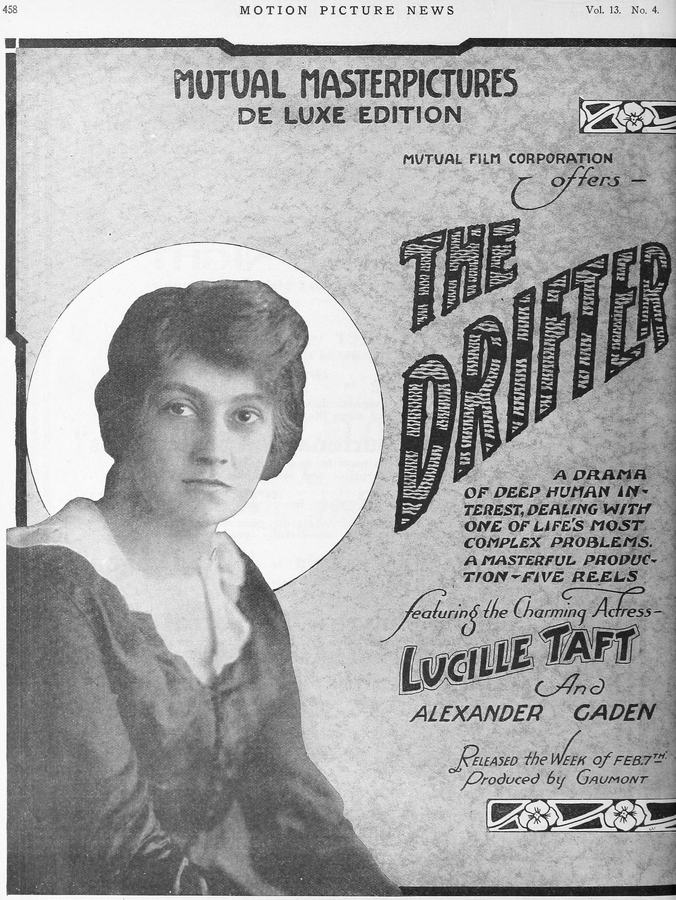
The flickering shadows of early cinema often danced with narratives of profound moral quandary and societal masquerade, themes that resonate with remarkable clarity in the 1914 production, The Drifter. This film, a true artifact from the nascent days of storytelling on screen, plunges viewers into the tumultuous life of Harold Derwent, a character whose journey is less a linear progression and more a dizzying descent and arduous ascent through the labyrinthine corridors of temptation, identity, and, ultimately, redemption. It's a testament to the enduring power of human drama, even when presented through the lens of a century-old medium.
Harold, initially presented as a Divinity School senior, embodies a fascinating dichotomy. On one hand, he is deeply enamored with Faith Willis, a relationship that hints at a conventional, righteous future. On the other, he harbors a clandestine passion for gambling, a vice he rationalizes with the convoluted logic that future ministerial earnings, supplemented by his racetrack winnings, will be dedicated to charity. This internal conflict, a simmering cauldron of piety and profligacy, forms the bedrock of his character. His expulsion from college, a consequence of a fellow student's betrayal, serves as the initial cataclysm, shattering his academic aspirations and, cruelly, his perceived worthiness of Faith. It is a moment of profound rupture, severing him from a path he ostensibly desired, yet perhaps was never fully committed to.
The narrative then propels us forward, several years into Harold's transformation. The erstwhile divinity student has shed his former identity, emerging as the formidable 'Pittsburgh Pa.,' a figure of almost mythical status on the American turf. His success in 'beating the bookies' paints a vivid picture of a man who has mastered the art of chance, albeit at the cost of his soul. This phase of his life is characterized by a conspicuous opulence, an outward display of triumph that, we sense, masks an inner void. Accompanying him is Madge, a woman whose affections are as ephemeral as Harold's fortunes, a mercenary siren who clings to him only while his star shines brightest. This portrayal of Madge as a purely transactional figure provides a stark contrast to the pure-hearted Faith, highlighting the moral degradation Harold has undergone.
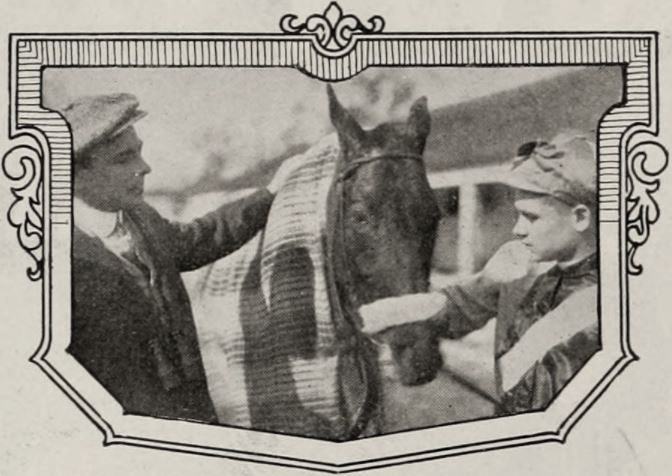
The inevitable reversal of fortune is depicted with a certain poetic justice. As Harold's luck wanes, his wealth dissipates, and Madge, true to her opportunistic nature, abandons him without a backward glance. This moment of utter desolation, stripped of both riches and companionship, serves as Harold's rock bottom. It is here that the embers of his former self, the Harold who once aspired to ministry, begin to faintly glow. His symbolic act of giving his last horse to his faithful jockey and declaring an end to his gambling career marks a pivotal turning point, a nascent step towards self-redemption. He buys a train ticket, allowing fate to dictate his destination, a poignant relinquishing of control after a life defined by attempts to master it.
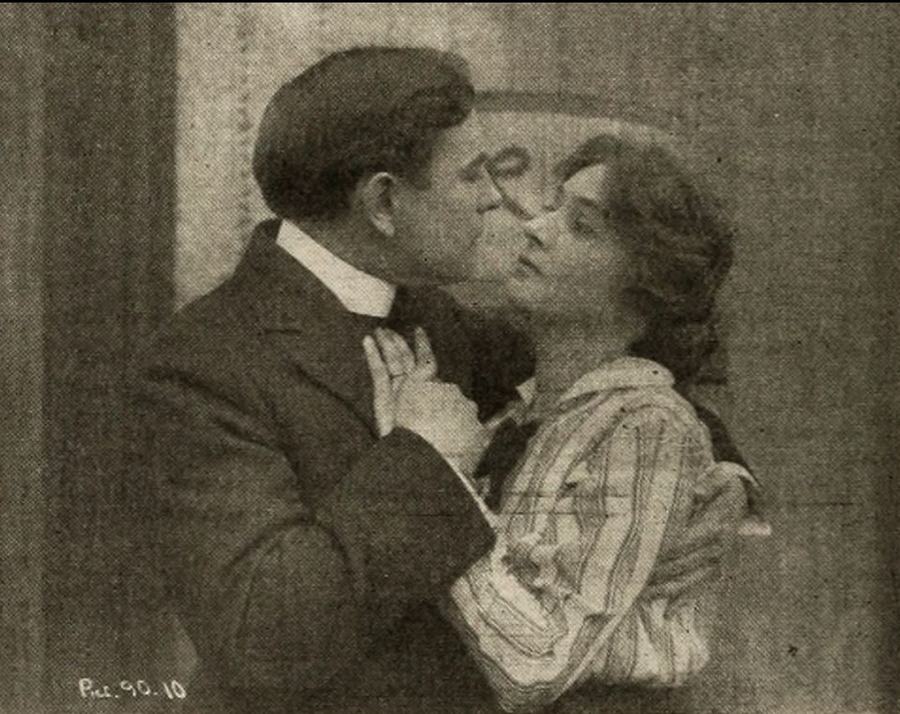
On the train, destiny intervenes with a twist that would become a staple of dramatic storytelling: a doppelgänger. Harold encounters William Ashton, a minister bound for Royalton to lead the 'Church of Our Faith.' Their uncanny resemblance sets the stage for the film's central deception. The subsequent train wreck, a brutal and sudden act of fate, claims Ashton's life, presenting Harold with an unthinkable opportunity. In a moment of profound moral ambiguity, he seizes the minister's identity, stepping into a life of spiritual leadership for which he is utterly unprepared, yet paradoxically, a life that aligns with his long-abandoned aspirations. This dramatic pivot immediately brings to mind the intricate identity swaps and moral quandaries found in classics like The Ticket-of-Leave Man, where characters grapple with assumed identities and the inescapable shadows of their pasts. Like Bob Brierley, Harold finds himself inhabiting a role that demands a righteousness he may not possess, yet yearns for.
Harold's new life as Reverend Ashton is fraught with peril and irony. He receives a letter from Ashton's wife, a chilling reminder of the depth of his deception. The true test comes with the arrival of Faith, his former beloved, who, in a cruel twist of fate, has married the real William Ashton. Her immediate recognition of Harold, and her subsequent silent complicity in his charade, introduces a profound layer of emotional complexity. Faith's decision to maintain the deception, to outwardly play the role of his wife for the sake of his newfound position, speaks volumes about her unwavering love and her hope for his redemption. It's a sacrifice of personal truth for a greater, perceived good, a narrative choice that elevates her character beyond mere romantic interest to a moral anchor in Harold's turbulent existence.
The plot thickens with the confession of a local thief. Harold, in his capacity as minister, accompanies the penitent to the hiding place of stolen jewels. A startling familiarity washes over him as he handles the pilfered items. The revelation that they are Madge's jewels is a masterstroke of dramatic irony, a thread from his past weaving itself into the fabric of his meticulously constructed present. This re-entry of Madge into his life is less a coincidence and more a narrative inevitability, a karmic reckoning. Her immediate recognition of her former lover, now disguised as a man of God, sets in motion a ruthless blackmail campaign. Madge, ever the opportunist, systematically strips Harold of his remaining funds, exposing the fragility of his new identity and the persistent specter of his past transgressions.
The climax of Madge's manipulation arrives when she coerces Harold into betting a substantial $15,000 trust fund on a race at the Royalton meet. This act forces Harold back into the very arena he had vowed to abandon, a cruel twist of fate orchestrated by the woman who once shared his gambling glory. The trust fund, a sacred obligation, becomes a pawn in her game, pushing Harold to the brink of moral collapse. In a further irony, the jockey to whom he entrusts the money is none other than Eddie, his loyal former rider, whom Harold fails to recognize. The stakes are raised even higher when Madge introduces a child, falsely claiming it to be Harold's son, a desperate, last-ditch effort to solidify her hold over him. Harold, caught in this web of deceit and desperation, hopes against hope that a win will secure Madge's silence and allow him to reclaim his life.
The race itself becomes a crucible. Harold's horse loses, and Eddie, the jockey, is injured, necessitating a call for a minister. Harold, still playing the part, responds, only to find himself at Eddie's hospital bedside. Here, the final pieces of the puzzle fall into place. Eddie, in his weakened state, reveals that he did not bet the money, but prudently hid it in a stall. This revelation, a moment of profound relief for Harold, is swiftly followed by the arrival of Eddie's mother, who comes to reclaim the baby Madge had 'borrowed,' revealing it to be Eddie's younger brother. Madge's elaborate scheme unravels with spectacular swiftness, her final, desperate gambit to secure her future through blackmail collapsing entirely.
Cornered and defeated, Madge plays her ultimate card, publicly exposing Harold as the notorious 'Pittsburgh Hal.' The denouement hinges on Faith's unwavering loyalty. She stands by Harold, her word, imbued with the integrity of her character and the unspoken truth of their shared secret, is believed over Madge's venomous accusations. This act of profound faith, both in name and in deed, secures Harold's position within the community and fully redeems him in the eyes of the audience. It underscores the film's central message: that true redemption is not merely the absence of vice, but the presence of unwavering love and moral support. The narrative then concludes with Harold and Faith quietly marrying in a distant city, a symbolic shedding of their complicated pasts, before returning to the 'Church of Our Faith' in Royalton. Harold, now genuinely cured of his gambling addiction, dedicates himself to his ministry, his journey from drifter to dedicated spiritual leader complete. This arc, from moral failing to a hard-won peace, resonates with the thematic depth explored in films like In the Hour of Temptation, which similarly grappled with individuals confronting their inner demons and seeking spiritual solace.
The performances, though constrained by the stylistic conventions of early cinema, manage to convey the emotional gravitas of the story. Albert Macklin as Harold Derwent navigates the character's complex psychological landscape with commendable skill, transitioning from the tormented student to the audacious gambler, and finally to the conflicted, then redeemed, minister. His portrayal of Harold's internal struggle for authenticity against the backdrop of his assumed identity is particularly compelling. Iva Shepard, as Faith Willis, imbues her character with a quiet strength and an enduring compassion, making her a sympathetic and pivotal figure in Harold's journey. Her silent sacrifice and ultimate vindication of Harold are among the film's most powerful moments. Alexander Gaden, as the manipulative Madge, delivers a performance that perfectly captures the character's avarice and ruthlessness, making her a formidable antagonist whose schemes drive much of the plot's tension. The supporting cast, including Stockton Quincy and Lucile Taft, provide solid foundations for the dramatic structure, each contributing to the rich tapestry of the Royalton community.
John B. Clymer's screenplay is a masterclass in early cinematic narrative, weaving together disparate elements into a cohesive and emotionally resonant whole. The pacing, though perhaps deliberate by modern standards, allows the audience to fully immerse themselves in Harold's predicament, escalating the tension with each new revelation and twist. The use of dramatic irony, particularly with Faith's unexpected arrival and Madge's continued appearances, is expertly handled, keeping the audience engaged and invested in the outcome. The film's resolution, while providing a satisfying sense of closure, also leaves a lasting impression regarding the nature of forgiveness and the transformative power of love. It suggests that even the most profound deceptions can be overcome through genuine repentance and the unwavering support of those who believe in one's capacity for good.
The Drifter is more than just a melodramatic tale of mistaken identity and moral awakening; it is a nuanced exploration of the human condition, an examination of the choices we make, the consequences we face, and the arduous path towards self-acceptance and spiritual peace. It delves into the societal pressures that can lead individuals astray and the profound impact of second chances. The film's enduring appeal lies in its timeless themes: the struggle between vice and virtue, the search for authentic identity, and the redemptive power of love and faith. It reminds us that even when one has drifted far from their intended course, the possibility of return, of finding true north, always remains. This cinematic gem, over a century old, continues to offer a compelling reflection on the intricate dance between fate, free will, and the persistent human yearning for redemption.
IMDb 6.8
1920
Community
Log in to comment.