DbcultAccessing Vault...
5/10
Senior Film Conservator
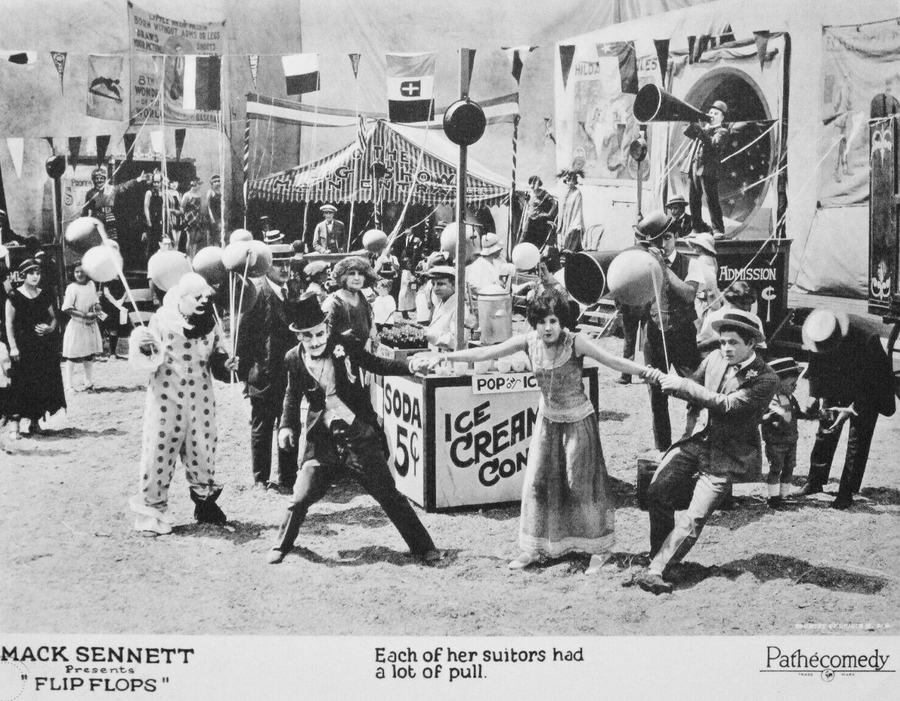
A definitive 5/10 rating for a film that redefined the boundaries of cult cinema. Flip Flops remains a cornerstone of transgressive art.
In the pantheon of silent cinema, the Mack Sennett 'Fun Factory' occupies a space of pure, unadulterated kineticism. Flip Flops (1923) arrives not as a somber reflection on the human condition, but as a vibrant, saltwater-sprayed celebration of the absurd. While the era was certainly capable of producing gravitas—seen in the heavy thematic weight of films like The Path Forbidden—Sennett’s vision was always more preoccupied with the physics of a pratfall than the psychology of a protagonist. In this specific short, we witness a confluence of 1920s tropes: the bathing beauty, the bumbling suitor, and the inexplicable inclusion of circus animals, all orchestrated with the precision of a Swiss watchmaker who has had one too many gins.
Evelyn Francisco, a name perhaps less whispered today than those of Gish or Pickford, carries this production with a luminous, athletic grace. In Flip Flops, she represents the quintessential 'Sennett Girl'—a figure of modern liberation and physical capability. Unlike the tragic figures found in Sins of Her Parent, Francisco’s character is not a victim of her circumstances but a participant in the chaos. Her comedic timing, particularly during the titular footwear confusion, reveals a performer who understood the subtle language of the camera. She navigates the shifting sands of the plot with a poise that contrasts beautifully against the frantic energy of Lewis Sargent.
The film’s focus on the beach environment allows for a visual texture that was revolutionary for its time. The high-contrast sunlight of Southern California creates a stark, almost surreal stage for the action. While contemporary dramas like The Woman Who Dared relied on moody interiors and shadows, Flip Flops embraces the overexposure of the sun, turning the coastline into a playground of high-key lighting. This aesthetic choice reinforces the film's levity, ensuring that even when the elephants begin their rampage, the atmosphere remains one of infectious joy rather than genuine peril.
The inclusion of Anna May and Mary Ann, two of the most prolific animal actors of the silent era, elevates Flip Flops from a standard seaside romp to a surrealist masterpiece. There is a specific kind of cinematic magic that occurs when a 1920s comedy decides to introduce an elephant into a domestic or leisure setting. It disrupts the social order in a way that feels far more visceral than the narrative conflicts of Your Friend and Mine. The elephants aren't merely props; they are agents of entropy. Their interaction with the cast—particularly the way they navigate the cramped logic of the slapstick set-pieces—adds a layer of unpredictability that modern CGI simply cannot replicate.
John J. Richardson and Andy Clyde provide the necessary human friction for these animal antics. Clyde, in particular, demonstrates why he would go on to become a staple of the short-subject format. His ability to react to the gargantuan presence of the elephants with a mixture of terror and indignation is a highlight of the film’s second act. This interplay between the massive and the minuscule is a recurring theme in Sennett’s work, a visual metaphor for the individual’s struggle against an increasingly complex and oversized world.
To dismiss Flip Flops as a mere collection of jokes is to ignore the sophisticated editing techniques employed by John A. Waldron and the writing team. The film’s pacing is relentless, yet it never feels hurried. There is a rhythmic pulse to the sequence of events that mirrors the ebb and flow of the tide. We see a similar, though more dramatic, control of pacing in The Shoes That Danced, where movement is used to convey emotional transition. In Flip Flops, movement is the emotion. The chase sequences are edited with a precision that predates the sophisticated montages of the Soviet school, proving that the 'low' art of comedy was often the testing ground for 'high' art techniques.
Consider the sequence where the footwear mix-up leads to a cascading series of social embarrassments. This is not unlike the comedic misunderstandings found in The Man from Mexico, but here it is stripped of its theatrical origins and translated into pure visual storytelling. The 'flip flop' is not just a shoe; it is a symbol of the instability of identity in the roaring twenties. One moment you are a dignified beachgoer, the next, you are a barefoot fugitive fleeing from a pachyderm. This fluidity of status is a hallmark of the era’s comedy, reflecting a society in the midst of rapid technological and social upheaval.
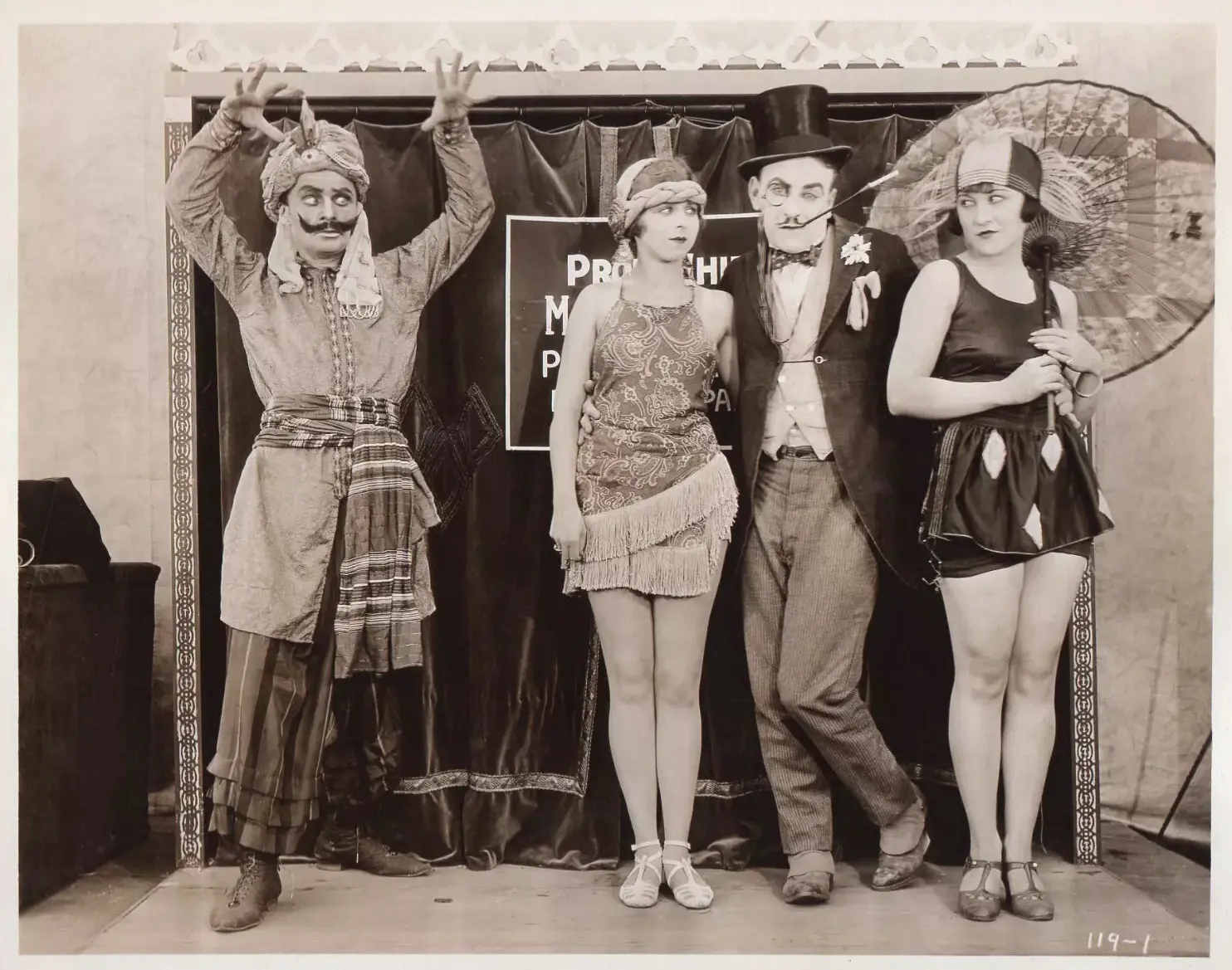
When we look at Flip Flops alongside its contemporaries, its unique flavor becomes even more apparent. While What Women Will Do explored the shifting roles of gender through a more traditional narrative lens, Sennett’s film does so through the medium of the 'Bathing Beauty'—a trope that was simultaneously exploitative and empowering. The women in Flip Flops are active, visible, and central to the mayhem. They are not the delicate flowers of The Sunbeam; they are the architects of the fun.
Furthermore, the film’s unpretentious nature stands in stark contrast to the burgeoning 'prestige' pictures of the time. While some films were attempting to prove that cinema could be 'literature'—see the thematic density of Ruined by Love—Sennett was content to prove that cinema was, first and foremost, a visual experience. The lack of heavy intertitles in Flip Flops allows the physical performances to speak for themselves. It is a testament to the cast's ability that the story remains perfectly coherent despite the escalating absurdity of the situations. It shares a certain primal energy with The Primitive Woman, though it trades the jungle for the boardwalk.
The cinematography in Flip Flops deserves a closer look. The use of wide shots to capture the full scope of the elephant-induced carnage demonstrates an understanding of spatial relationships that many directors of the period lacked. By keeping the camera at a distance, Sennett allows the viewer to appreciate the choreography of the chaos. This is a sharp departure from the intimate, character-focused framing of Kiss Me, Caroline. In Flip Flops, the individual is often secondary to the spectacle, a tiny gear in a massive, hilarious machine.
The location shooting also provides a fascinating historical record. The beaches of 1923, before the onset of massive commercial development, have a raw, open quality. This sense of space is essential for the film’s climax. Just as Desert Gold used the vastness of the American West to frame its drama, Flip Flops uses the expanse of the shoreline to maximize its comedy. The sight of an elephant chasing a man across a wide-open beach is inherently funnier than the same chase in a confined alleyway; the sheer scale of the absurdity requires a large canvas.
As we look back from a century's distance, Flip Flops remains a potent reminder of the pure joy that early cinema could evoke. It lacks the cynicism of modern comedy and the melodramatic excess of films like A Man's Country. Instead, it offers a window into a time when the world was expanding, and the possibilities of the moving image seemed limitless. The cast, from the Francisco sisters to the Cooper brothers, perform with a dedication to the craft of the gag that is nothing short of heroic.
While it may not have the rugged philosophical undertones of Sundown Slim or the harrowing realism of War Is Hell, it succeeds perfectly at what it sets out to do. It is a twenty-minute burst of sunshine, a dizzying array of movement and mirth that reminds us why the world fell in love with the movies in the first place. Mack Sennett and John A. Waldron crafted a piece of entertainment that, like the elephants it features, is impossible to ignore and difficult to forget. It is a quintessential artifact of the 1920s, a decade that, much like the characters in this film, was constantly losing its shoes and finding its soul in the most ridiculous of places.
Ultimately, Flip Flops is a testament to the endurance of the physical gag. It proves that while technology and tastes may change, the sight of a well-timed stumble—especially one involving a 5,000-pound elephant—is a universal and timeless language of laughter.

IMDb 6.3
1923
Community
Log in to comment.