DbcultAccessing Vault...
6.6/10
Senior Film Conservator
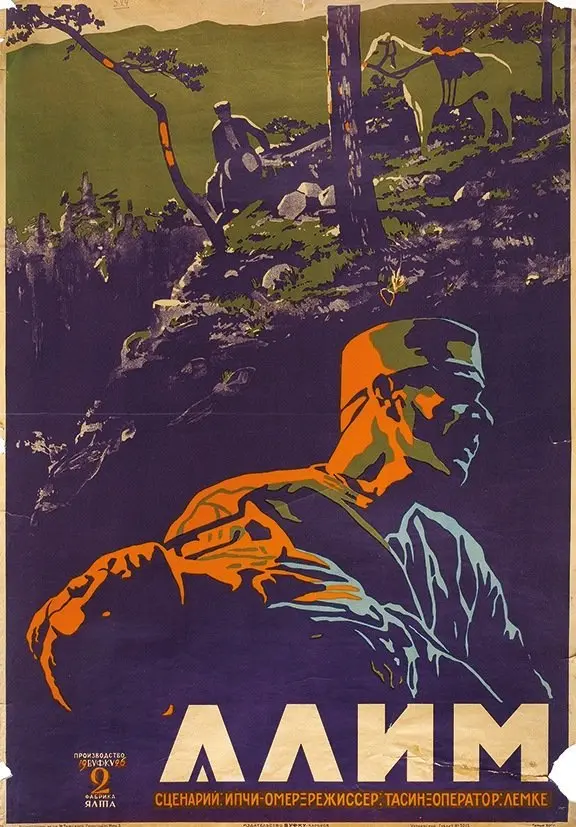
A definitive 6.6/10 rating for a film that redefined the boundaries of cult cinema. Alim remains a cornerstone of transgressive art.
Is the 1926 silent film Alim worth your attention in the modern era? Short answer: yes, but only if you view cinema as a window into lost cultures rather than a source of fast-paced entertainment. This is a film for students of history, lovers of ethnographic detail, and those who appreciate the raw, unpolished power of early Soviet regional cinema. It is emphatically not for anyone who requires a traditional three-act structure or a high-frame-rate sensory experience.
This film works because it captures a specific cultural identity—the Crimean Tatar—at a moment before the Soviet machine fully homogenized regional storytelling. It fails because its pacing is often glacial, anchored by a script that prioritizes ideological points over character nuance. You should watch it if you are interested in the evolution of the 'noble outlaw' archetype in film, or if you want to see how early directors utilized natural landscapes to mirror internal rebellion.
Alim is an ethnographic action-drama that serves as a bridge between folk legend and political manifesto. It matters because it is one of the few surviving representations of Crimean Tatar life from this era, directed by Heiri Emirzade, who also plays the titular hero. Unlike the polished Hollywood outlaws seen in Davy Crockett, Alim is a figure of grit and soil, deeply rooted in the socioeconomic grievances of his people.
The screenplay, penned by Nikolay Bazhan, is a fascinating study in transition. Bazhan doesn't just adapt a folk tale; he re-engineers it. The story of Alim could have been a simple revenge flick, but under Bazhan’s pen, it becomes a structural critique of 19th-century feudalism. We see this early on when Alim is pushed to the brink by the arrogance of the wealthy. The dialogue—delivered through intertitles—is punchy and devoid of the flowery prose often found in silent melodramas.
Consider the scene where Alim first defies a local official. It isn't a moment of grand theatricality. It is a quiet, simmering rejection of a system that views him as livestock. This grounded approach makes the later 'heroic' acts feel earned. It avoids the glossy myth-making of A Prince of India and instead opts for something that feels uncomfortably real, even through the flicker of a century-old print.
The cinematography by Georgi Drobin is the film’s greatest asset. Drobin treats the Crimean mountains not as a backdrop, but as a participant in the rebellion. The wide shots of the limestone cliffs and the dusty valley roads do more than set the scene; they explain why Alim was able to evade capture for so long. The terrain is a labyrinth that only the oppressed truly understand.
There is a specific shot where Alim stands atop a ridge, looking down at a caravan of the elite. The camera doesn't zoom—it lingers. It captures the vastness of the land and the smallness of the men who claim to own it. This visual hierarchy is a recurring theme. The film uses the verticality of the landscape to represent the social hierarchy being overturned. It is a stark contrast to the urban, claustrophobic settings of Sherlock Jr., where the environment is a playground for gags. Here, the environment is a weapon.
Heiri Emirzade’s performance is a masterclass in silent-era restraint. While many of his contemporaries were still relying on the exaggerated gestures of the stage, Emirzade uses his eyes. He portrays Alim with a stoic intensity that suggests a man who has run out of words. His physicality is impressive; he moves with the confidence of a man who knows every stone in the valley.
However, the supporting cast is a mixed bag. The villains are often played with a mustache-twirling villainy that borders on caricature. This is a common flaw in early Soviet cinema—the 'class enemy' must always look the part. Compared to the nuanced character work in Blind Chance, the antagonists here feel like cardboard cutouts designed to be knocked down. It works for the myth, but it fails the drama.
The pacing is where modern viewers will struggle most. Alim does not rush. It takes its time establishing the rhythms of village life, the mechanics of agricultural labor, and the slow-boil frustration of the peasantry. This isn't a film about a series of bank robberies; it’s a film about the erosion of patience. The middle act, in particular, feels repetitive as Alim carries out various raids that all follow a similar visual pattern.
The tone oscillates between ethnographic documentary and revolutionary thriller. One moment, we are watching a detailed depiction of a traditional wedding; the next, we are in the middle of a high-stakes mountain chase. This tonal shift can be jarring. It lacks the cohesive, breathless energy of The Kelly Gang, which remains the gold standard for early outlaw cinema. Alim is more contemplative, more concerned with the 'why' than the 'how.'
Yes, Alim is worth watching if you want to understand the roots of regional Soviet cinema. It offers a rare glimpse into Crimean Tatar culture before the massive displacements of the mid-20th century. While the propaganda elements are clear, the film’s heart lies in its depiction of a man who refuses to be a victim. It is a rugged, beautiful, and deeply flawed piece of history.
Pros:
- Exceptional use of natural lighting and landscape.
- A strong, understated lead performance by Heiri Emirzade.
- Valuable ethnographic record of Crimean Tatar traditions.
- A script that avoids unnecessary melodrama.
Cons:
- Pacing that feels sluggish by modern standards.
- Heavy-handed ideological messaging.
- Some supporting performances are overly theatrical.
While Alim is categorized as a historical drama or a 'Red Western,' there is a proto-noir quality to its fatalism. Alim knows he is doomed. There is no version of this story where he retires to a quiet life. The way the shadows fall across the cavern walls during his hideout scenes feels like a precursor to the moody lighting of the 1940s. He is a man trapped by his own legend. It’s a tragedy dressed up as a triumph. It works. But it’s flawed.
Alim is a fascinating relic that survives on the strength of its visuals and its cultural significance. It lacks the polish of later Soviet epics, but it possesses a raw, sun-baked honesty that is hard to find in the studio-bound films of the same era. If you can handle the slow pace, you will find a story that is as much about the land as it is about the man. It is a essential viewing for anyone trying to map the DNA of the social justice film. Just don't expect a happy ending.
IMDb —
1928
Community
Log in to comment.