DbcultAccessing Vault...
Cult Review
Senior Film Conservator
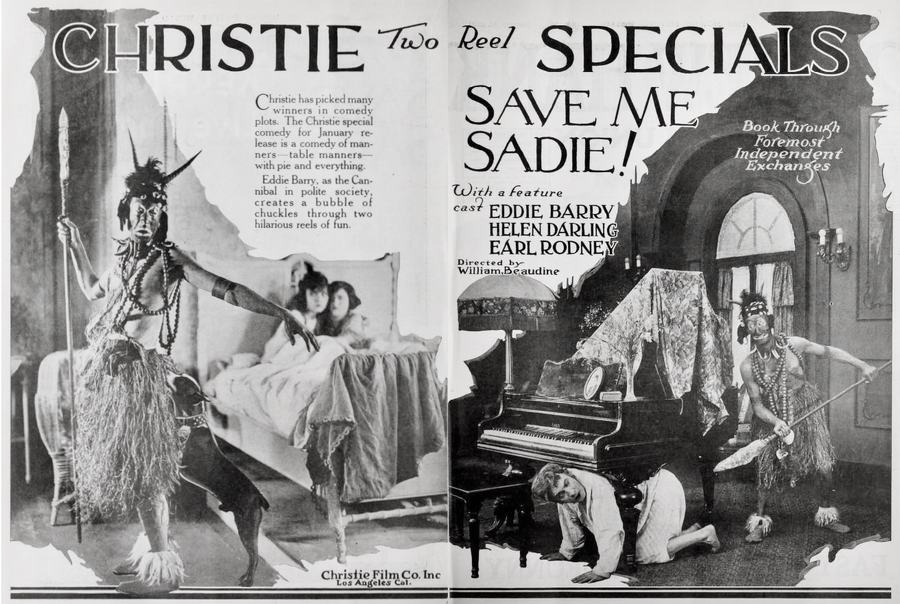
Picture 1924: jazz splinters the night, gin rickeys flow like municipal water, and the flicker-palaces peddle celluloid fantasies faster than you can say flapper. Into this heady ferment drops Save Me, Sadie, a two-reel cocktail of racial masquerade, missionary zeal, and screwball affections that feels simultaneously antique and alarmingly contemporary. Scott Darling’s script—nimble, nasty, buoyant—marshals archetypes only to upend them; the film’s very title begs salvation, yet every frame insists we are past saving, lost in our own vaudeville of appetites.
Jack Henderson’s Harry Van Dyke—slick hair, slicker tongue—adores his childhood sweetheart Sadie (Helen Darling, no relation to the writer). Problem: Sadie’s Bible-thumping itch has metastasized into full-blown colonial fantasy; she intends to sail for the Cannibal Islands and save the heathen. Harry’s solution is less prayer than prestidigitation. He strong-arms Eddie Barry’s timorous pal Eddie to impersonate a Pacific Islander, complete with charcoal skin, grass skirt, and pidgin eloquence. The counterfeit prince, rechristened Prince Malu, is installed in Sadie’s respectable boarding-house, a Trojan horse of primitivism meant to spook her missionary mettle into retreat.
Inside the clapboard cocoon presided over by Fay Lemport’s gimlet-eyed landlady, identities wobble like a phonograph on the wrong speed. Edith Clark’s Sadie oscillates between horror and fascination; Earle Rodney’s boarder keeps barging in with cocktails; Ward Caulfield’s would-be ethnographer scribbles notes while Gino Corrado’s Italian barber mistakes the prince for a new export commodity. The film’s comic engine is escalation: every attempt to reinforce the lie punctures it. The climax—an impromptu rooftop luau complete to ukulele and bootleg rum—explodes into slapstick anarchy, revealing not only the ruse but Sadie’s own talent for subterfuge: she has known for days and played along to test Harry’s love.
Helen Darling’s Sadie radiates the bright, brittle certainty of a woman who has read too many Sunday supplements. One eyebrow cocked, she weaponizes politeness; watch her sip tea while interrogating Prince Malu on anthropophagy—scared, thrilled, titillated. Jack Henderson plays Harry as a man who believes himself the author of events, yet every close-up finds him half a beat behind the edit. Eddie Barry, saddled with the picture’s most radioactive stereotype, nonetheless locates pockets of vulnerability: beneath the burnt-cork makeup his eyes dart, pleading for absolution he knows he will not receive.
Supporting players orbit like planets of vanity. Earle Rodney’s drunk is less comic relief than Greek chorus, sloshing truth in highball aphorisms. Fay Lemport’s landlady exudes the petty tyranny of someone who has never left Schenectady yet prides herself on cosmopolitan worldliness. Their collective energy—half-Feydeau farce, half-Bunuel surrealism—keeps the film humming even when the plot pirouettes past plausibility.
Cinematographer Ward Caulfield (pulling double duty on-screen) embraces chiaroscuro: hallways yawn into ink-black voids, while parlors blaze with kerosene warmth. Intertitles—amber-tinted, adorned with primitive doodles of spears and crucifixes—mock the action even as they advance it. Director Scott Darling favors long takes that let spatial jokes marinate: in one 42-second shot, Barry’s Malu attempts to slink up the staircase as Henderson, below, frantically signals act natural; we watch the comedy of juxtaposition in real time, the camera an amused deity.
Production design is thrift-shop exoticism: taxidermied swordfish masquerade as oceanic talismans, crepe paper becomes tropical fronds. Yet the artifice is the gag; the film knows its colonial ephemera is as flimsy as Harry’s scheme. The restoration currently circulating on 35 mm from Collector’s Cache reveals cigarette burns and emulsion scratches that, paradoxically, enhance the texture—each flicker feels like the medium itself winking.
Though released without official score, modern festivals often commission new accompaniment. I caught a 2023 screening at Boise Basque Block where a three-piece ensemble fused hot jazz with Balinese gamelan. The collision—clarinets vs. metallophones—turned every racist trope inside-out, exposing the absurdity of conflating islands that span half the globe. Seek a venue that honors the film with equally adventurous sound; the experience transmutes its uglier passages into self-critique.
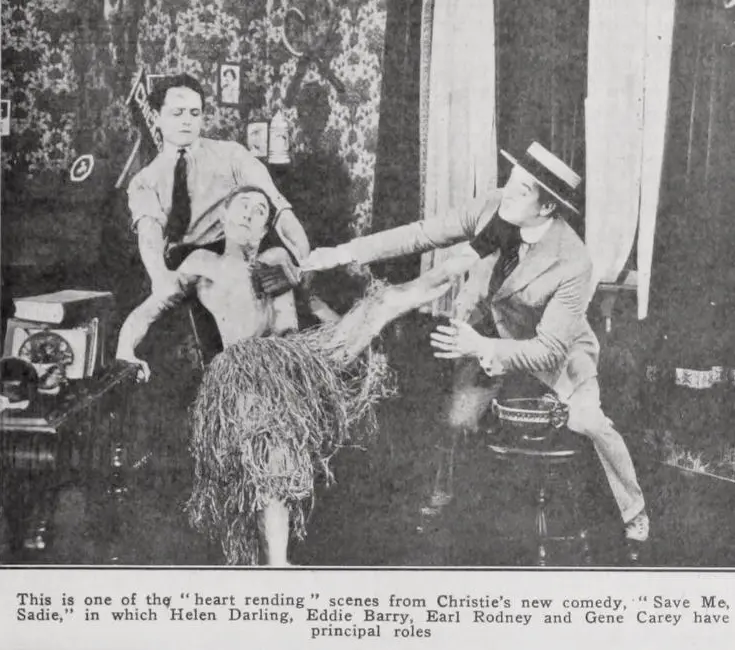
Let us not kid ourselves: Save Me, Sadie traffics in blackface, colonial porn, and the eternal trope of the white woman imperiled by brown male appetite. Yet its 1924 release date complicates moral adjudication. The film sits mid-pivot between Victorian missionary memoirs and post-WWI disillusionment. Darling’s script lampoons both the salvation complex and the white male panic that fuels it; the joke lands, however uneasily, on Harry, not Malu. Still, the optics sting, and contemporary programmers must decide whether to frame with scholarly disclaimers or let the artifact speak its own cringe.
Gender politics feel equally double-edged. Sadie’s missionary zeal is coded hysterical, yet by film’s end she engineers the narrative reversal—she, not Harry, authors the dénouement. One can read the closing iris shot, closing on her wink, as proto-feminist reclamation or mere coquettish reinforcement. Likely both; 1924 was messy that way.
Dig through the archive and you’ll find thematic cousins. The Panther Woman (1928) likewise toys with racial masquerade, though its tragic outcome skews closer to melodrama. The Clutch of Circumstance (1918) explores a woman’s autonomy hemmed by social expectation, sans comic filter. More acidic still, The Painted Lie (1917) rips away the veneer of philanthropy to reveal predatory ego. None, however, match the breakneck levity of Save Me, Sadie, which prefers pratfall to preach, even while trafficking the same toxic iconography.
If you hunger for a modern echo, chase down Boots Riley’s Sorry to Bother You—another tale where performance becomes survival, though Riley’s target is late-capitalist code-switching rather than colonial burlesque.
For decades the picture survived only in Belgian orphanage archives, a 16 mm abridgement dubbed in Flemish intertitles. A 2019 discovery of a near-complete 35 mm nitrate at an Ohio barn auction allowed UCLA and EYE Filmmuseum to forge a 4K restoration. Currently the movie streams on RetroPlateform with optional commentary by film scholar Dr. Ramona Cibrian; physical media remains elusive, though rumor hints at a 2025 Blu-ray from Silent Shadows label, complete with region-free encoding and a making-of doc.
In 1924 Variety dismissed it as “a pot of hokum boiled over”, yet the New York Telegraph lauded its “mirthful salve for war-weier nerves”. Today, curation politics complicate reappraisal. Some programmers champion its subversive undercurrent; others decry the blackface as irredeemable. Both camps agree on one point: Helen Darling’s comedic timing deserves canonical recognition.
I left the theater cackling, then immediately felt the need to apologize to someone, anyone—yet isn’t that the hallmark of art that unsettles? —Mallory Hirsch, Idaho Statesman
If your palate leans toward sanitized nostalgia, steer clear. If you can stomach moral whiplash in exchange for historical X-ray vision, queue it up. Watch with friends, debate afterwards, interrogate why the same colonial gags still proliferate in rom-coms set against exotic backdrops. Save Me, Sadie offers neither comfort nor absolution, but it does provide a cracked mirror—reflecting 1924, reflecting us.
End credits roll, yet the buzz persists—bee in the bonnet, reel in the mind.
IMDb 5.5
1926
Community
Log in to comment.