DbcultAccessing Vault...
Cult Review
Senior Film Conservator
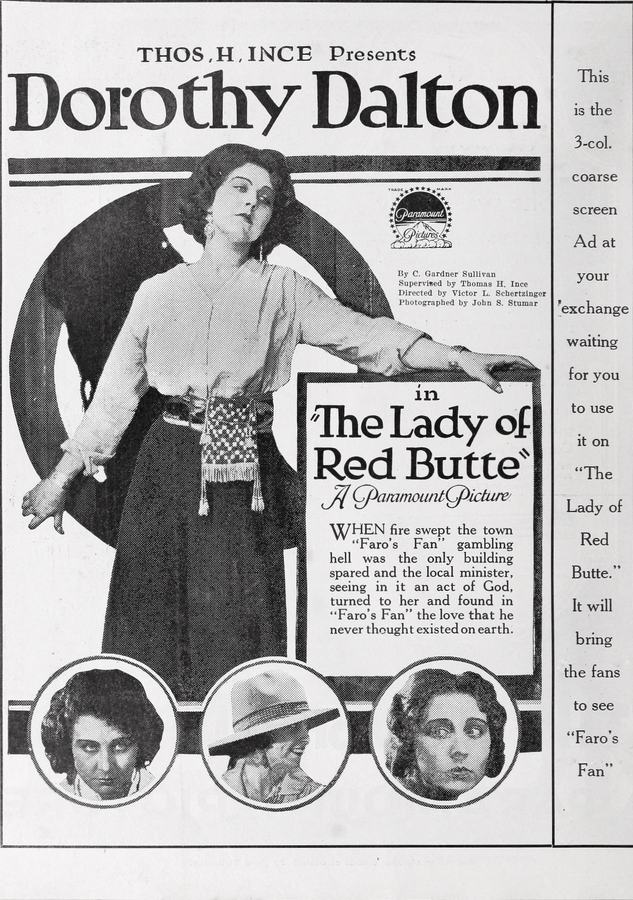
In the vast, untamed expanse of the American frontier, where civilization's fragile tendrils grasp at the rugged earth, silent cinema often found its most fertile ground for exploring the extremes of human nature. "The Lady of Red Butte" stands as a compelling testament to this era's capacity for profound allegorical storytelling, a narrative that plunges into the depths of spiritual delusion and emerges, unexpectedly, with a glimmer of profound human connection. This isn't merely a tale of the Old West; it's a searing psychological drama cloaked in dust and grit, where the very landscape mirrors the fractured psyche of its protagonist.
The film introduces us to Webster Smith, portrayed with a compelling intensity by Thomas Holding, a theology student whose intellectual fervor has curdled into a dangerous strain upon his sanity. The academic rigors, perhaps coupled with an innate predisposition, push him over the precipice, transforming him from a scholar of the divine into a self-proclaimed savior, journeying across a desolate desert under the delusion of a sacred mission. His arrival in Red Butte, a small, sun-baked mining town, is less a homecoming and more a collision of fractured idealism with harsh reality. Weakened, disoriented, he is a figure of pitiable conviction, his internal turmoil writ large against the stark backdrop of the wilderness. This initial portrayal immediately establishes the film's thematic core: the perilous tightrope walk between faith and fanaticism, a theme echoed in other intense dramas of the period, such as "The Unpardonable Sin" (1919), which similarly grappled with moral absolutism and its devastating consequences.
It is in Red Butte that Smith encounters Faro Fan, a character embodied by Dorothy Dalton with a nuanced strength that belies her seemingly contradictory profession. Faro is the proprietor of the town's saloon and gambling establishment, a business often synonymous with vice, yet she operates it with an uncommon integrity, her establishment notably "cleanly" run. More strikingly, she extends her protective embrace to the town's homeless children, offering them succor and care in a world that has otherwise abandoned them. This immediate juxtaposition—the deluded man of God and the pragmatic woman of the world, both engaged in forms of salvation—sets the stage for the film's central conflict. Faro's actions, born of practical compassion rather than abstract dogma, immediately challenge Smith's rigid worldview.
Upon discovering the nature of Faro's livelihood, Smith's fragile sanity shatters further into condemnation. His self-righteousness, fueled by his theological training and exacerbated by his mental instability, leads him to curse her, unable to reconcile her genuine benevolence with the perceived sinfulness of her enterprise. This moment is crucial; it highlights the chasm between institutionalized morality and innate human kindness. While Smith embarks on a fervent, almost manic, endeavor to construct a church—a physical manifestation of his distorted spiritual aspirations—Faro continues her quiet work of mercy. She nurses the renegade Spanish Ed, a figure of external danger and internal disease, whose presence in her care inadvertently precipitates a fever among her young wards. The irony is palpable: Smith builds a monument to God, while Faro embodies divine charity, yet it is her acts that bring both healing and, through a twist of fate, further suffering.
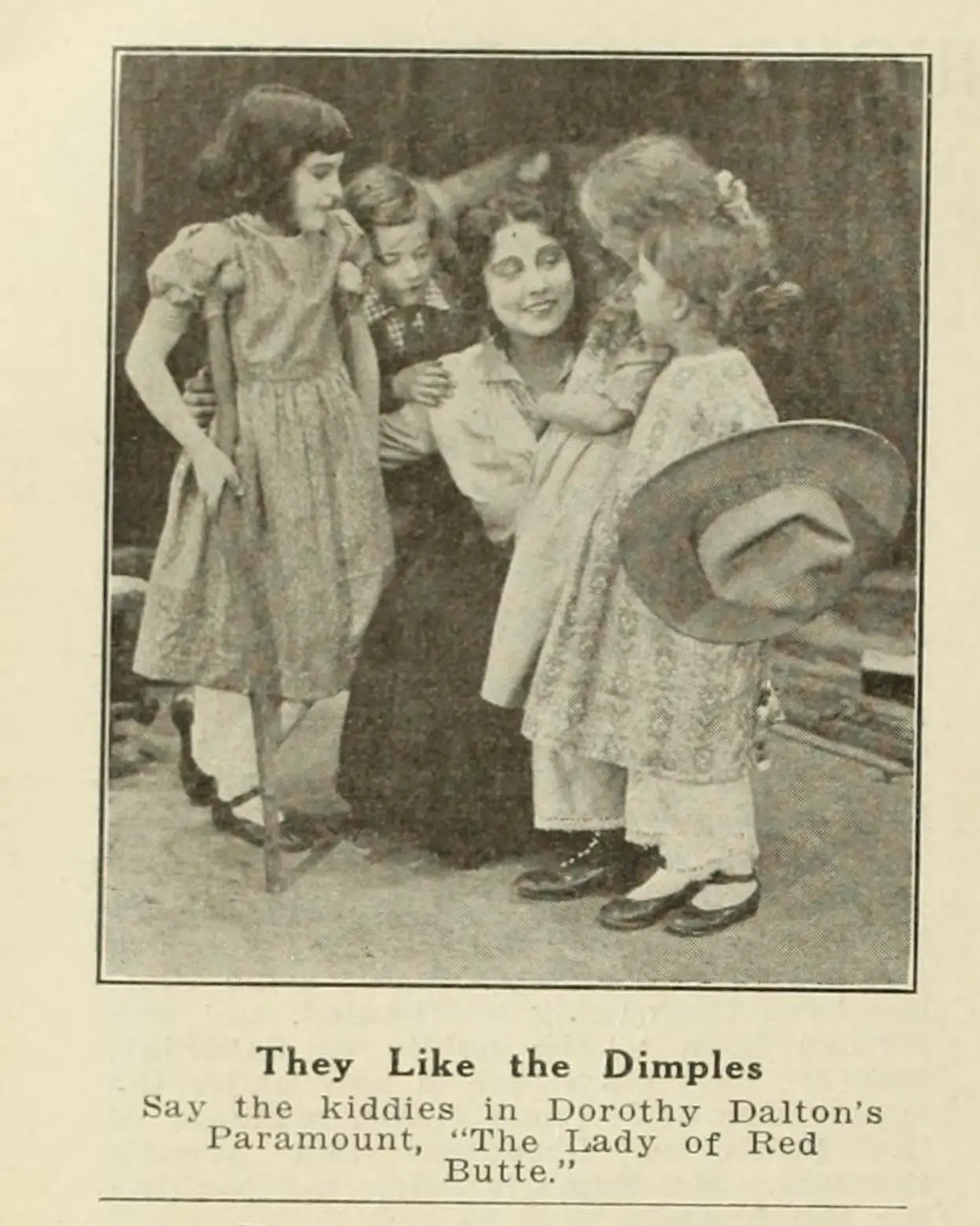
The narrative then escalates into a dramatic crescendo, a sequence that encapsulates the film's daring symbolic ambition. In the throes of his profound delusion, Smith offers a prayer for divine retribution, for a cleansing fire to purge Red Butte of its perceived iniquity, sparing only his newly erected church. The universe, or perhaps the screenwriters, responds with a chillingly ironic echo. Delicate Hanson, another saloon keeper, attempts to disinfect his own establishment by burning whiskey—a desperate, ill-conceived act that quickly spirals out of control. The ensuing conflagration engulfs the entire town, a literal trial by fire. Yet, in a twist of poetic justice that feels almost mythic, the flames consume Smith's church while leaving Faro's house, the sanctuary of practical compassion, miraculously untouched. This moment is a powerful visual metaphor, asserting the resilience of genuine human care over the brittle fragility of dogmatic zeal. It's a scene that resonates with the raw, elemental power seen in other silent epics, where nature itself often acted as a character, shaping destinies and revealing truths.
The aftermath of the fire is immediate and visceral. Furious, his divine mandate seemingly mocked by fate, Smith turns his rage upon Faro. In a pivotal act of self-preservation, and perhaps a desperate attempt to break through his madness, she strikes him with a club. This blunt force trauma, surprisingly, serves as a catalyst for his recovery. His sanity returns, a sudden, jarring awakening from his fervent dream. The immediate consequence of this restored lucidity is profound: he joins Faro, not as a judge or a prophet, but as an equal, helping her nurse the fever-stricken children. This shift in dynamic is the heart of the film's redemptive arc, demonstrating that true salvation often lies not in grand pronouncements or rigid doctrine, but in humble service and shared humanity. It’s a compelling argument for empathy over dogma, a timeless message conveyed with remarkable clarity through the silent medium.
With his sanity restored and a newfound purpose, Smith departs Red Butte to procure essential supplies, leaving Faro to contend with the aftermath of the epidemic and the lingering threat of Spanish Ed. The renegade, crazed by thirst and desperation, attempts to lure Faro, adding another layer of peril to her already burdened existence. This interlude builds tension, underscoring the constant vulnerability of life on the frontier and the ever-present shadow of lawlessness. The return of Smith is marred by a tragic misunderstanding: Faro, mistaking him for the menacing Spanish Ed in the dim light or through the fog of her exhaustion, shoots him. This act, born of fear and a desire to protect her charges, introduces yet another layer of suffering, but also sets the stage for the film’s ultimate resolution.
As Faro nurses Smith back to health, the intimate act of caregiving fosters an unexpected and deep connection. The roles are reversed: the one who once cursed her now lies vulnerable, and the one he condemned becomes his savior. In the quiet moments of recovery, a love blossoms between them, a bond forged in the crucible of shared adversity, mutual respect, and profound gratitude. It is a love that transcends societal expectations, a testament to the idea that true connection often arises from unexpected places and circumstances. This romance, subtle yet powerful in its depiction, offers a poignant resolution to the film's earlier conflicts, suggesting that human connection, rather than rigid ideology, is the ultimate balm for the soul. The development of Faro as a strong, independent woman who is both compassionate and capable of decisive action is particularly noteworthy for its era, echoing the nascent feminist undertones found in other silent films that championed resilient female characters, such as "A bánat asszonya" or even the more adventurous spirit of "Big Tremaine".
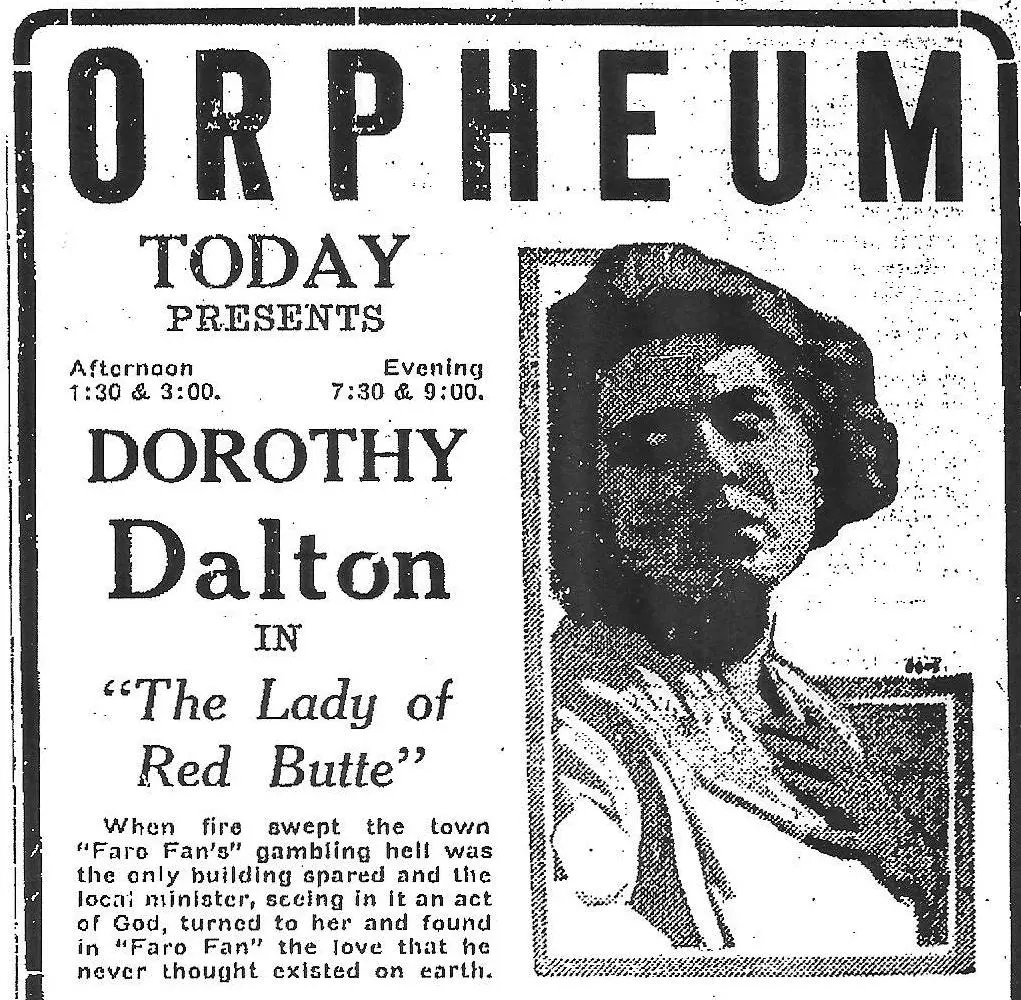
"The Lady of Red Butte," though a product of its time, speaks to enduring human themes with remarkable eloquence. The cinematography, even in its silent simplicity, would have been tasked with conveying the vastness of the desert, the claustrophobia of the fever-stricken shacks, and the dramatic sweep of the town in flames. The performances, particularly from Thomas Holding as the tormented Webster Smith and Dorothy Dalton as the resolute Faro Fan, would have relied heavily on expressionistic acting—grand gestures, exaggerated facial expressions—to communicate the complex emotional landscape of their characters. The silent screen, devoid of dialogue, demanded a heightened visual language, making every gesture, every flicker of an eye, a crucial piece of the narrative puzzle. The film's ability to convey such intricate moral and psychological quandaries without spoken words is a testament to the artistry of silent cinema.
C. Gardner Sullivan's writing crafts a narrative that is both deeply personal and broadly allegorical. It’s a story that asks profound questions about the nature of good and evil, the definition of piety, and the true meaning of charity. Is holiness found in rigid adherence to doctrine, or in the messy, often compromising acts of genuine human compassion? The film unequivocally leans towards the latter, presenting Faro Fan not as a fallen woman but as a beacon of practical grace. Her "cleanly" run saloon, her care for the children, her willingness to nurse a renegade, and ultimately, her act of saving Smith's life, all paint a picture of a woman whose actions are far more righteous than Smith's initial, misguided zeal.
The supporting cast, including Tully Marshall as Spanish Ed and Josef Swickard, along with Mae Giraci and William Courtright, undoubtedly contributed to the rich tapestry of Red Butte's inhabitants. Each character, however minor, would have served to populate this crucible of human experience, adding texture to the moral landscape against which Smith's redemption and Faro's steadfastness unfold. The film masterfully uses its frontier setting not merely as a backdrop but as an active participant, its harshness mirroring the internal struggles and its isolation forcing characters into profound self-reliance and unexpected alliances.
In an era when films like "A Child of God" explored spiritual awakening through more conventional religious narratives, "The Lady of Red Butte" offers a refreshing counter-narrative. It suggests that divinity manifests not necessarily in miracles or grand pronouncements, but in the quiet, often unacknowledged acts of kindness and resilience performed by ordinary people in extraordinary circumstances. The fire, which Smith prayed for as an act of divine judgment, ultimately serves as an instrument of his own humbling and a testament to Faro's unyielding spirit. The subsequent healing of Smith, both physically and mentally, under Faro's care, solidifies this theme, presenting a powerful argument for the restorative power of human connection over rigid ideology.
The film’s conclusion, with the blossoming romance between Smith and Faro, is not merely a conventional happy ending but a profound statement on redemption and acceptance. It signifies Smith's complete transformation, his ability to see beyond the superficial trappings of "sin" and recognize the inherent goodness and strength in Faro. For Faro, it represents the recognition of her own worth, not in spite of her profession, but perhaps even because of the deep well of compassion it has required her to cultivate. Their union is a symbol of a more inclusive, more humane understanding of faith and love, one that is forged in the fires of adversity and cemented by shared vulnerability.
Ultimately, "The Lady of Red Butte" transcends its genre. It is more than just a Western, more than just a melodrama. It is a timeless exploration of the human spirit's capacity for both profound error and remarkable recovery. It challenges viewers to look beyond superficial judgments and to find grace in the most unlikely of places. The film's enduring power lies in its nuanced portrayal of morality, its refusal to cast characters in simplistic black and white, and its ultimate affirmation of love and compassion as the most potent forces for healing and transformation. It reminds us that sometimes, the path to true enlightenment is paved not with sermons, but with the quiet, unwavering dedication of a "lady" in a desolate town, whose light shines brightest when all around her is consumed by fire and despair. This cinematic gem, though perhaps overshadowed by more famous contemporaries, holds a mirror to the soul, reflecting the complex interplay of human frailty and indomitable spirit. Its narrative arc, from delusion to devotion, serves as a poignant reminder of the transformative power inherent in genuine human connection, a narrative as potent and relevant today as it was in the silent era.
IMDb —
1916
Community
Log in to comment.