DbcultAccessing Vault...
Cult Review
Senior Film Conservator
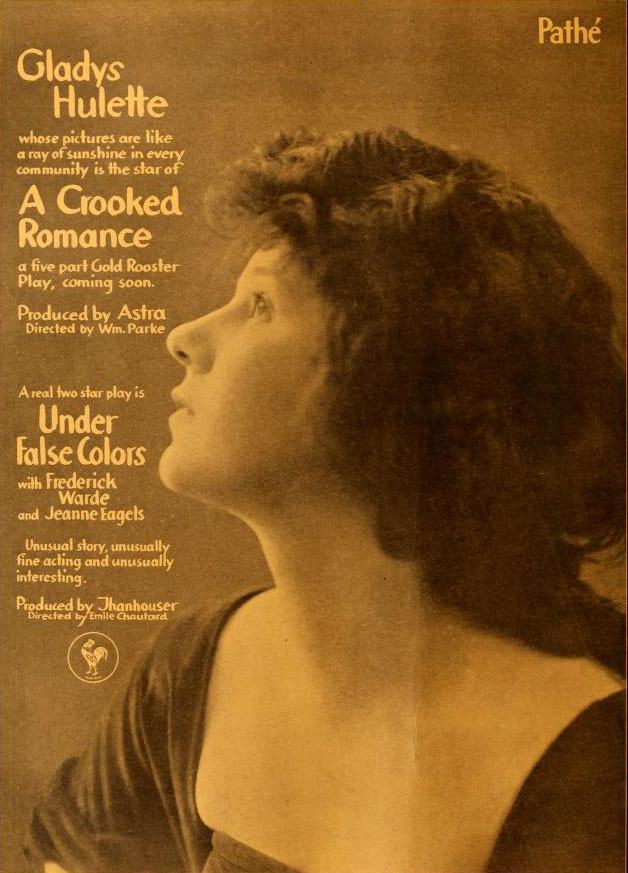
Stepping back into the flickering shadows of early cinema, one often encounters narratives that, despite their age, resonate with an astonishing contemporaneity. Such is the case with 1917's 'A Crooked Romance', a film that deftly navigates the treacherous waters of morality, identity, and the elusive quest for redemption. Directed with an understated hand and penned by the collaborative talents of Tom Cushing, Will M. Ritchey, and Marc Edmund Jones, this picture offers far more than a simple tale of crime and consequence; it presents a nuanced psychological study wrapped in the dramatic conventions of its era. It's a testament to the power of visual storytelling, even in its nascent form, to explore the complexities of human nature.
At the heart of 'A Crooked Romance' lies the deeply unsettling relationship between Mary and her supposed father, Syd. From the outset, the film establishes Syd not merely as a guardian, but as a Svengali-like figure, meticulously molding Mary's perception of right and wrong. His worldview is a perverse inversion of societal norms, where theft is not merely justifiable but an almost righteous act, a necessary rebalancing of an inherently unfair world. This isn't just about survival; it’s about an indoctrination, a philosophical conviction that permeates every aspect of Mary's formative years. Syd's teachings are a subtle venom, poisoning her moral landscape, convincing her that the acquisition of wealth through illicit means is a logical, even commendable, response to systemic inequality. This character dynamic is reminiscent of the moral ambiguity explored in films like On Dangerous Paths, where characters are often led astray by external pressures or misguided mentors, blurring the lines between victim and perpetrator. The film asks us to consider the profound impact of one's upbringing, especially when the very foundations of ethical conduct are deliberately undermined by a trusted figure.
The narrative's inciting incident is a dramatic home invasion, a clandestine operation where Mary, under Syd's guidance, attempts to relieve a wealthy man of his valuables. The tension in these scenes, conveyed through the expressive performances of the silent era, must have been palpable. Gladys Hulette, as Mary, likely uses her wide, expressive eyes and subtle body language to convey a mixture of apprehension and the deeply ingrained compulsion to follow Syd's directives. However, fate, as it often does in such tales, intervenes. The robbery goes awry, and in the ensuing chaos, Mary's quick thinking and agility allow her to make a narrow escape. Syd, less fortunate or perhaps less nimble, is apprehended and subsequently jailed. This pivotal moment is the narrative's true catalyst. Syd's incarceration is not just a legal consequence; it's an abrupt severing of Mary's primary influence, forcing her to confront the world on her own terms for the first time. It's a narrative device seen in many morality plays of the time, where a harsh reality shatters a character's preconceived notions, much like the sudden turns of fortune in The Third Degree, where characters are often forced to reckon with the consequences of their actions under duress.
With Syd removed from her life, Mary embarks on a remarkable transformation. She seeks not merely a new profession, but a new identity, one that stands in stark contrast to her criminal past. Her choice to become a locksmith is imbued with a delicious, almost poetic irony. From illicitly opening doors, she now dedicates herself to securing them, a symbolic act of seeking to lock away her past transgressions and build a legitimate future. This shift highlights her inherent desire for a life of honesty, a testament to her resilient spirit despite her upbringing. The film, through its visual cues and intertitles, would have meticulously depicted her journey of learning the trade, her struggles, and her eventual proficiency. This period of self-reinvention is crucial, showcasing Mary's agency and her yearning for a life unburdened by deceit. It’s a journey of self-discovery, common in cinema, where characters like those in Liberty or Unjustly Accused strive to clear their names or escape the shackles of their past, seeking a fresh start against overwhelming odds. The audience is invited to root for Mary, hoping her efforts to reform are met with success and understanding.
The narrative's central dramatic tension ignites when Mary, now a respected locksmith, encounters the very man whose house she once robbed. This reunion is a masterstroke of dramatic irony and suspense. The audience is privy to Mary's secret, creating an almost unbearable anticipation: will he recognize her? Will her past come crashing down, destroying the fragile new life she has painstakingly built? The film cleverly uses this premise to explore profound questions of forgiveness, perception, and the possibility of true change. Can a person truly escape their history, or does it forever cling to them, a specter waiting to resurface? The man, unaware of her former transgression, presents Mary with an agonizing moral dilemma. Does she confess, risking everything, or does she maintain the facade, living under the constant threat of exposure? This kind of high-stakes personal encounter, where hidden identities threaten to unravel, is a timeless cinematic device, often seen in thrillers and dramas alike, forcing characters to confront their deepest fears. The film's strength here lies in its ability to generate suspense not through overt action, but through the delicate interplay of recognition and concealment, a psychological drama unfolding silently on screen.
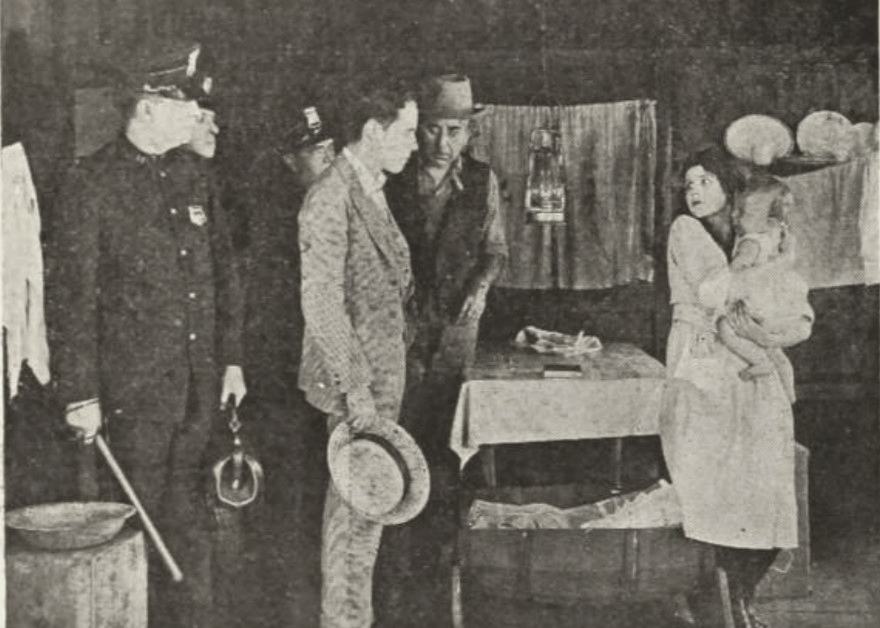
The success of 'A Crooked Romance' undoubtedly rests heavily on the shoulders of its lead, Gladys Hulette. In an era where dialogue was absent, an actor's ability to convey complex emotions through facial expressions, gestures, and overall physicality was paramount. Hulette, known for her expressive performances in films such as Madcap Madge, would have been tasked with portraying Mary's journey from impressionable protégé to remorseful reformer with nuanced precision. Her portrayal of Mary’s internal conflict—the struggle between the ingrained lessons of Syd and her burgeoning moral conscience—would have been critical. The silent film actor’s craft was a delicate balance of theatricality and subtlety, needing to project emotions to the back row while maintaining a believable human core. Hulette's performance likely transcended mere melodrama, imbuing Mary with a genuine sense of vulnerability, determination, and quiet desperation. Her ability to convey Mary's fear of exposure, her hope for a new beginning, and the profound guilt she carries without uttering a single word would have been the film's emotional anchor, drawing the audience into Mary's precarious world. The silent screen demanded an extraordinary level of physical and emotional articulation, and Hulette, by all accounts, was a master of this demanding art form.
Beyond the immediate plot, 'A Crooked Romance' delves into a rich tapestry of thematic concerns that remain pertinent today. The central question of redemption is explored with earnestness: can a person truly atone for past wrongs, especially when those wrongs were committed under the influence of another? The film challenges the audience to consider the nature of guilt and culpability. Mary, though complicit, was also a victim of Syd's manipulative teachings. This raises questions about the extent to which one is responsible for actions dictated by a corrupted moral compass. Furthermore, the film implicitly examines societal judgment. Even if Mary has genuinely changed, will society, represented by the man she wronged, ever truly forgive her? This struggle for acceptance, the desire to shed the stigma of a criminal past, is a powerful and enduring theme in cinema, echoing narratives found in films like The Wharf Rat, where characters grapple with their pasts in a society quick to condemn. The 'romance' in the title, then, might not solely refer to a conventional love story, but perhaps to Mary's arduous courtship with a new, honest life, or even the possibility of a romantic connection built on truth, if she dares to reveal it. The film subtly critiques the rigid social structures of its time, where a single misstep could irrevocably brand an individual, making true rehabilitation an uphill battle. It suggests that true change must come from within, but also that societal compassion is crucial for that change to flourish.
The collaborative effort of Tom Cushing, Will M. Ritchey, and Marc Edmund Jones in crafting the screenplay for 'A Crooked Romance' is evident in its tightly wound plot and compelling character arc. Their collective vision for Mary's journey from a life of crime to one of legitimate labor, only to be confronted by her past, speaks to a sophisticated understanding of dramatic structure. They understood the power of irony and suspense, allowing the narrative to unfold with a sense of inevitability while maintaining a gripping uncertainty about its resolution. In an era dominated by often simplistic morality tales, this film strives for a more complex psychological portrait, delving into the motivations and transformations of its protagonist. The writers effectively use the silent film medium's strengths, relying on visual cues and concise intertitles to advance the story and reveal character. Their ability to infuse a seemingly straightforward plot with layers of moral ambiguity and emotional depth is a testament to their skill. The narrative's careful construction ensures that every encounter and every decision Mary makes feels significant, contributing to the overall tension and emotional weight of the film.
While specific directorial credits for many early films can be elusive, the execution of 'A Crooked Romance' would have relied heavily on the director's ability to guide performances and orchestrate visual storytelling. In silent films, the director was essentially the orchestrator of emotion and narrative clarity, using camera placement, editing rhythm, and actor blocking to convey meaning without spoken words. The supporting cast, including J.H. Gilmour (likely as Syd), Paul Clerget, William Parke Jr., and James E. Sullivan, would have contributed to the film's texture, each playing a crucial role in Mary's journey. Gilmour's portrayal of Syd, for instance, would have required a nuanced performance to make his manipulative philosophy believable, yet ultimately reprehensible. The visual language of silent film, with its reliance on exaggerated gestures and close-ups to convey emotion, was a unique art form. Directors like those behind Zigomar contre Nick Carter, though in a different genre, understood how to build tension and character through purely visual means. The pacing, the use of light and shadow, and the composition of each shot were all vital tools in shaping the audience's experience and conveying the inner turmoil of the characters. The film's ability to communicate Mary's transformation and the suspense of her predicament without dialogue is a testament to the sophisticated cinematic techniques being developed during this period.
Released in 1917, 'A Crooked Romance' emerged during a fascinating period of cinematic and social evolution. The First World War was raging, and societal norms were in flux. Films of this era often served as both escapism and a reflection of contemporary anxieties and moral debates. The themes of crime, poverty, and the struggle for a better life were prevalent, resonating with audiences grappling with rapid industrialization and shifting social structures. Films like Money or The Night Workers often explored the harsh realities faced by the working class, while others, like Help Wanted, touched upon the search for opportunity. 'A Crooked Romance', through Mary's story, implicitly comments on the societal pressures that could lead individuals down a path of crime, and the immense difficulty of breaking free from that cycle. It offered audiences not just a thrilling narrative, but also a moral lesson, packaged within the nascent artistry of the moving picture. The film's ability to entertain while prompting reflection on issues of ethics and social justice speaks to its enduring power as a piece of cultural history.
In conclusion, 'A Crooked Romance' stands as a compelling example of silent cinema's capacity for intricate storytelling and profound character exploration. It is more than just a historical artifact; it is a vibrant narrative that continues to provoke thought and stir emotion. The film's exploration of moral ambiguity, the arduous path to redemption, and the indelible mark of one's past are themes that transcend the limitations of its silent medium. Gladys Hulette's performance, alongside the thoughtful writing and direction, would have created a memorable cinematic experience for audiences of its time, and continues to offer valuable insights for modern viewers interested in the roots of dramatic storytelling. It reminds us that the fundamental human struggles—the desire for acceptance, the burden of guilt, and the hope for a second chance—are timeless, eloquently conveyed even without a single spoken word. For enthusiasts of early film, or anyone fascinated by the enduring power of narrative, 'A Crooked Romance' is a journey worth undertaking, a testament to the silent era's often underestimated depth and artistry, a true diamond in the rough of cinematic history.
IMDb —
1916
Community
Log in to comment.