DbcultAccessing Vault...
Cult Review
Senior Film Conservator
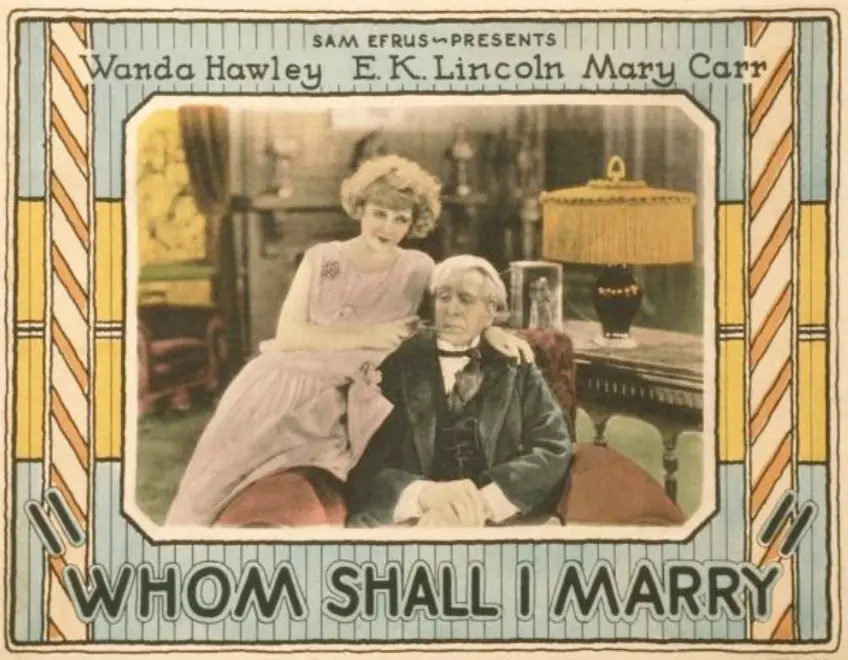
Is the silent film 'Whom Shall I Marry' worth watching today? Short answer: yes, but with significant caveats that demand a specific kind of viewer.
This film is a fascinating, if sometimes frustrating, artifact best suited for silent film enthusiasts, early cinema historians, and those with a keen interest in the foundational elements of the melodrama and mystery genres. It is decidedly not for casual viewers seeking modern pacing, polished storytelling, or a straightforward viewing experience without historical context.
This film works because of its audacious plot twists and its surprisingly dark undercurrents, pushing the boundaries of what early cinema could convey in terms of human greed and deception.
This film fails because of its often simplistic characterizations, reliance on broad melodrama, and a pacing that can feel both rushed and drawn-out in equal measure, typical of its era but jarring to contemporary eyes.
You should watch it if you appreciate the historical context of filmmaking, enjoy piecing together narratives from a bygone era, and have a high tolerance for silent film conventions, especially those involving exaggerated performances and a somewhat fragmented narrative style.
'Whom Shall I Marry' plunges viewers into a narrative labyrinth from its opening frames, centered on the precarious fate of Cynthia. Her grandfather's initial will, a rather audacious attempt at posthumous matchmaking, sets a darkly comedic tone that quickly sours into genuine villainy.
The introduction of the conniving nurse and Cynthia's duplicitous stepfather elevates the stakes, transforming a familial eccentricity into a full-blown criminal conspiracy. This rapid shift from lighthearted premise to serious crime is a hallmark of early melodramas, often sacrificing nuance for dramatic impact.
The film's strength lies in its relentless piling on of deception. Just when you think the plot has reached its zenith of trickery with the forged will, the revelation of Jim Dutton's true identity as a man Cynthia has already been drawn to, adds a layer of romantic intrigue that feels almost accidental in its convenience.
However, the ultimate twist—the stepfather's murder of the grandfather—feels less like an organic development and more like a desperate narrative escalation. It's a jarring shift that pushes the film from melodrama into outright crime thriller territory, perhaps a step too far for the foundation laid.
This late-stage revelation, while certainly shocking, retroactively casts a shadow over the earlier, more whimsical elements of the plot. It forces a re-evaluation of characters and motivations that the film hasn't entirely earned, leaving a sense of narrative whiplash.
The plot, for all its twists, often relies on Cynthia's profound naivety, which, while necessary for the machinations to unfold, can strain credulity. Her unquestioning acceptance of the will's terms, despite their absurdity, is a crucial, if somewhat frustrating, engine for the story.
It’s a narrative that demands a generous suspension of disbelief, rewarding those willing to embrace its theatrical excesses. The underlying themes of greed, manipulation, and the desperate pursuit of inheritance resonate, even if their cinematic execution is overtly dramatic.
The performances in 'Whom Shall I Marry' are a fascinating window into silent film acting conventions, a style often characterized by exaggerated gestures and facial expressions designed to convey emotion without dialogue.
Wanda Hawley, as Cynthia, embodies the innocent, somewhat feckless heroine. Her portrayal is earnest, often relying on wide-eyed distress and frantic movements to communicate her character's predicament. While effective for the era, a modern viewer might find her performance occasionally veering into the overly theatrical, particularly during moments of heightened anxiety.
Mary Carr, playing the duplicitous nurse, delivers perhaps the most compelling performance. She manages to convey a chilling blend of false solicitude and underlying malice. Her subtle glances and calculating demeanor, even without dialogue, clearly establish her as the primary antagonist, a master manipulator.
Carr avoids the trap of cartoonish villainy for much of the film, making her treachery feel more insidious than outright evil, at least initially. This nuance is a testament to her skill in a medium that often demanded broader strokes.
Elmo Lincoln, as Jim Dutton, offers a more stoic, heroic presence. His character is shrouded in a certain mystery, which Lincoln conveys through a quiet confidence and understated reactions. He is the steadfast anchor in Cynthia's tumultuous world, a classic leading man archetype.
However, the reveal of his true identity doesn't entirely transform his performance; he remains largely consistent in his portrayal of a morally upright, resourceful individual. This consistency is both a strength and a limitation, as it offers little in the way of character arc.
The supporting cast, particularly the stepfather, often lean heavily into archetypes. Their villainy is less nuanced than Carr's, serving primarily as plot devices to further Cynthia's distress. This is typical for the period, where character depth often took a backseat to narrative propulsion.
Overall, the acting serves the story, guiding the audience through its twists with clear emotional signposts. It’s a style that requires a specific appreciation, but one that undeniably communicates the narrative's core conflicts.
The direction in 'Whom Shall I Marry' is functional, prioritizing clarity of plot over stylistic innovation. The camera is largely static, a common practice in early cinema, focusing on establishing shots and clear sightlines for the action.
This approach means that much of the storytelling relies on the actors' physical performances and the intertitles. Director George W. Hill ensures that the audience understands who is doing what and why, even if the 'why' is often driven by simplistic motivations.
Cinematography, while not groundbreaking, effectively uses available lighting to create mood. Interior scenes are often dimly lit, hinting at the secretive and conspiratorial nature of the nurse and stepfather's actions. Outdoor shots, conversely, tend to be brighter, reflecting Cynthia's initial innocence and the more open world she inhabits before the deception tightens its grip.
There are moments where the framing attempts to draw the viewer into the characters' emotional states, such as close-ups on a character's face during a moment of shock or revelation. These are sparingly used but effective, particularly when focusing on Mary Carr's expressions of cunning.
The use of sets is typical of the era, functional rather than elaborate. The hotel setting, for instance, serves as a backdrop for Cynthia's hasty marriage, but it's not explored in a way that adds significant depth or atmosphere to the scene. It's a stage for the action, nothing more.
The film's visual language is direct. It’s less about artistic flourish and more about ensuring the audience can follow the intricate plot threads. This approach, while perhaps uninspired by modern standards, was essential for communicating complex narratives in a silent format.
The pacing, largely dictated by the editing and intertitle frequency, can feel uneven. Some scenes linger, allowing the melodramatic performances to play out, while others rush through crucial plot points, particularly towards the climax.
The pacing of 'Whom Shall I Marry' presents a particular challenge for contemporary viewers. Silent films often operated on a different temporal logic, balancing lengthy exposition via intertitles with rapid-fire action sequences.
Here, the early setup of Cynthia's grandfather's will and her initial reluctance feels somewhat protracted. The film takes its time establishing the stakes, which can test the patience of an audience accustomed to faster narrative hooks.
However, once the nurse and stepfather's conspiracy takes hold, the plot accelerates. The forging of the will, Cynthia's desperate marriage, and Jim Dutton's undercover role unfold with a briskness that almost contradicts the earlier, slower moments.
The film's climax, with the detective uncovering the false will and the subsequent revelation of the murder, is particularly dense with information. It feels like several plot resolutions are crammed into a short timeframe, which can be disorienting.
This uneven pacing is a common characteristic of silent-era productions. Filmmakers were still experimenting with narrative flow and how to best convey complex stories without spoken dialogue. The result is a viewing experience that oscillates between deliberate exposition and hurried revelations.
For those unfamiliar with silent film conventions, this can be a hurdle. The need to read intertitles while simultaneously observing the exaggerated physical performances can break immersion. It demands a different kind of engagement from the viewer.
Yet, for enthusiasts, this very unevenness is part of the charm. It highlights the evolving grammar of cinema and allows for a deeper appreciation of how storytellers grappled with the limitations and opportunities of the medium.
The film's runtime, though modest by today's standards, feels longer due to these shifts in rhythm. It's a journey that requires patience, but one that ultimately delivers a satisfying, if somewhat convoluted, resolution.
Yes, 'Whom Shall I Marry' is worth watching, especially for specific audiences.
It offers a valuable glimpse into early 20th-century filmmaking.
The film's intricate plot and surprising twists are its main draw.
It's a strong example of silent melodrama and early mystery.
However, be prepared for silent film conventions, including pacing and acting styles.
It’s a historical artifact that still entertains if approached with the right mindset.
'Whom Shall I Marry' is a fascinating, if imperfect, relic from the silent era. It works. But it’s flawed.
Its strength lies in its relentless commitment to a convoluted, melodramatic plot, packed with enough twists and turns to keep even a jaded viewer engaged. The sheer audacity of its narrative, particularly the layered deceptions and the surprisingly dark murder subplot, is its most compelling feature.
However, its adherence to silent film conventions—exaggerated performances, often simplistic character motivations, and an uneven pace—will undoubtedly be a barrier for many. Wanda Hawley's Cynthia, while charming, stretches the bounds of credulity with her persistent naivety, making her more a plot device than a fully realized character.
The film's greatest strength, paradoxically, might also be its biggest narrative weakness: the final, brutal revelation of murder. While it injects a shocking dose of realism into the melodrama, it almost feels like a different film's ending, tacked onto a story that began with a more whimsical, if manipulative, premise.
Ultimately, 'Whom Shall I Marry' is a piece of cinematic history that offers genuine intrigue and a glimpse into the foundational elements of genre filmmaking. It demands patience and an appreciation for its historical context, but for those willing to lean into its quirks, it delivers a surprisingly dark and entertaining ride.
It's not a timeless classic in the vein of a Chaplin or Keaton, but it is a valuable, if sometimes clunky, example of early narrative ambition. Give it a watch if you're curious about the roots of cinematic mystery and melodrama; just don't expect a polished, modern viewing experience.
IMDb 4.5
1920
Community
Log in to comment.