DbcultAccessing Vault...
Cult Review
Senior Film Conservator
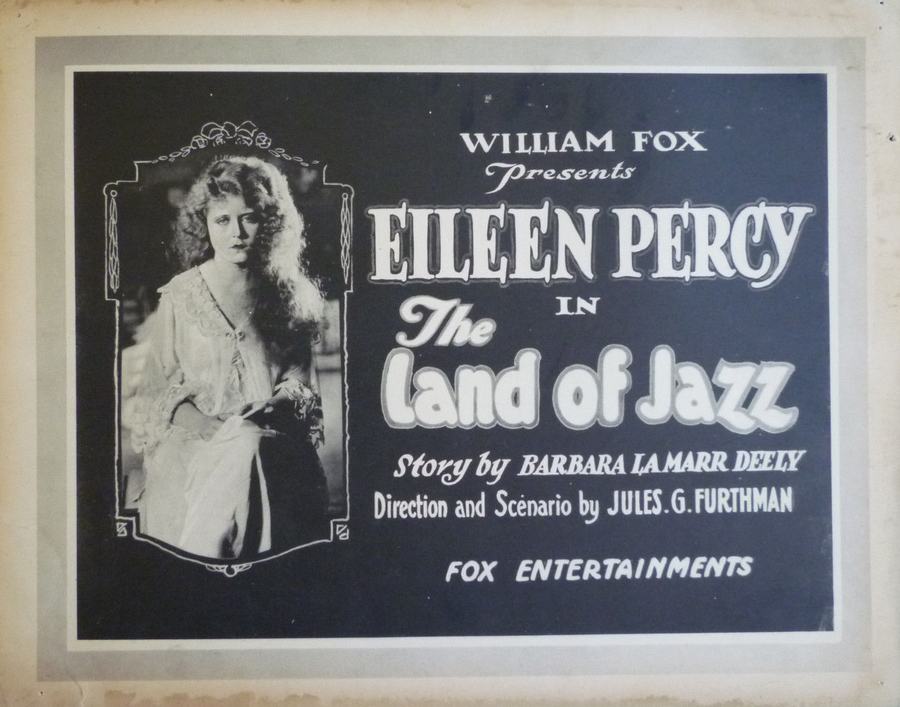
Picture, if you can, a celluloid speakeasy where the gin is replaced by nitrate stock and every title card snaps like a snare drum—welcome to The Land of Jazz, a 1920 one-reel firecracker that most historians misfile under ‘lost’ rather than ‘loose.’ Jules Furthman’s scenario barrels along like a taxi jump-cutting cobblestones, while Barbara La Marr—credited here as scenarist, not vamp—laces the absurdity with arsenic-laced sugar. The result is a champagne cocktail of sexual slapstick, asylum surrealism, and proto-screwball velocity that makes Lunatics in Politics look like a municipal budget hearing.
Franklyn Farnum’s Captain Renaud—equal parts military posture and bedroom eyes—plants the fateful peck on Nancy (Eileen Percy) amid confetti of a dockside send-off. The kiss is not mere osculation; it is a syncopated riff that upends two engagements and one island sanitarium’s census. Cinematographer George Barnes (uncredited but evident) captures the smooch in chiaroscuro close-up: lips lock, the harbor lights flare like brass cymbals, and the camera pirouettes away on a dolly that predates Ophuls by a decade. The doctor—Herbert Heyes in pince-nez so thick they refract morality—witnesses the betrayal and dissolves the engagement with the brisk efficiency of a man amputating a gangrenous limb. The narrative thus catapults from drawing-room farce to something darker, jazzier, anarchically American.
Enter Nina, played by Ruth Stonehouse with the darting eyes of a woman who has read every rulebook only to shred them into paper snowflakes. Instead of pleading or scheming from the outside, she elects to infiltrate the asylum as a faux patient—a reverse-elopement with lunacy. The sequence of her self-committal is a mini-masterpiece of montage: sign here, relinquish hatpin, inhale the camphor-saturated air of the ward where shadows waltz like Coleman Hawkins solos. Once inside, she trades her tailored coat for a shapeless muslin smock, yet the garment cannot suppress the fizz of her intelligence. She learns the choreography of delusion: how to fling pillows in 4/4 time, how to shimmy past orderlies with the fluid nonchalance of a Charleston champion.
What elevates the picture above mere bedroom burlesque is its insistence that the sanitarium itself is a speakeasy of the subconscious. Doors slam in syncopation; patients scat in lieu of dialogue; the doctor’s white coat becomes a conductor’s tuxedo as he pounds a Steinway in the day-room, hammering out ragtime while restraints double as percussion. The set design—expressionistic angles borrowed from Caligari but lacquered in art-deco gloss—creates corridors that elongate whenever desire spikes. In one delirious iris-shot, the camera spirals down a bathtub drain only to dissolve into a trumpet’s bell, implying that sanity and swing are merely different valves on the same horn.
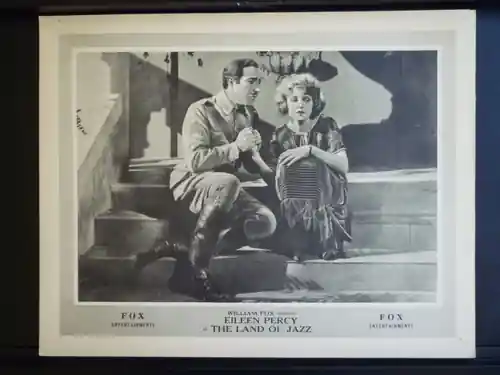
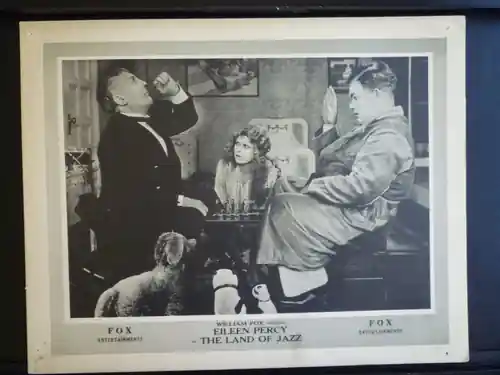
Farnum’s captain is less a cad than a brass instrument in human form—every smirk a glissando, every wink a mute-induced squeal. Opposite him, Herbert Heyes’ doctor oscillates between icy clinician and smitten schoolboy, sometimes within the same frame. The pivot arrives during a late-night consultation where Nina, feigning hallucinations, describes ‘blue monkeys playing hopscotch on her cerebellum.’ Heyes’ pupils dilate, not with diagnostic interest but with amorous vertigo; the stethoscope around his neck becomes a necklace of surrender. Meanwhile, Carrie Clark Ward as the matron delivers reaction shots so elastic they could score a rubber-band symphony.
Though not onscreen, La Marr’s fingerprints smudge every intertitle. Her prose crackles with the same insouciant eroticism that would later make her the ‘girl too beautiful to live.’ Witness the card that reads: "Love is a saxophone solo—if you don’t run out of breath, you’re not playing it right." That line, superimposed over footage of Nina chasing a fugitive beach ball through the ward, collapses the distinction between romantic advice and psychiatric evaluation. It also anticipates the psychosexual wordplay of The Fox Woman by half a decade.
Where Over Night treats manic pacing as a gag-delivery system, Jazz weaponizes tempo to interrogate gender roles. Unlike Bound in Morocco, which exoticizes North Africa to titillate, this film internalizes its exotic locale—an island off the continental shelf of reason. And while Sis Hopkins leans on rustic hayseed caricature, Jazz opts for urbane delirium, suggesting that modernity itself is the ultimate hayseed.
When Nancy finally storms the gates with a rescue squad of flappers and naval officers, the film stages a showdown not of fists but of orchestration. The doctor, now liberated from therapeutic detachment, commands the inmates to form a kickline that would shame the Ziegfeld girls. Nina, center stage, executes a shimmy that liquefies the doctor’s last vestige of professional distance. Their impending nuptials are announced via title card blazing in crimson tint: "The lunatics have taken the asylum—and the honeymoon suite!" Cue confetti cannons fashioned from shredded restraint straps, and a reprise of the Charleston that bookends the picture like a vinyl loop.
Surviving prints (thank you, Cinematheque Royale) alternate between amber for interiors, cerulean for seascapes, and fuchsia for moments of erotic tension. The tinting is not mere ornament but narrative syntax: when Nina confesses her ruse, the frame blushes rose, as though the film itself is embarrassed by its own candor. Meanwhile, intertitles jitterbug across the screen in fonts that swell or shrink to echo emotional crescendos—an ancestor of animated typography music videos by ninety years.
Though released during the early months of the Jazz Age, the film predates synchronized scores. Contemporary exhibitors were encouraged to hire a trio—piano, trap set, muted trumpet—to improvise alongside. Surviving cue sheets suggest breaks for "Tiger Rag," "Ain’t She Sweet," and, deliciously, "Everybody’s Jazzin’ It" during the climactic chase. One can almost hear the trumpet’s growl translating Nina’s heartbeat into brass phonemes.
Histories of screwball routinely cite It Happened One Night (1934) as ground zero, yet The Land of Jazz contains the genre’s embryonic DNA: rapid-fire courtship, class defiance, and the trope of sanity as negotiable. Its DNA resurfaces in Miss Mischief Maker and even echoes in Bringing Up Baby’s leopard-chaos. The asylum-as-playground motif reappears in The Heart of Rachael, albeit with heavier moral ballast.
To watch The Land of Jazz is to eavesdrop on the moment when American cinema first matched the tempo of its own century. It is a film that believes love is a psychiatric condition for which the only cure is a faster tempo. Ninety-odd years later, its cymbal-crash editing, gender-bending chutzpah, and conviction that lunacy is just another dance step feel less like relics and more like prophecies. So lower the needle on your imaginary Vitaphone, let the trumpet bleed through the cracks of time, and surrender to the asylum where the heart beats in 4/4 and the Straitjacket is haute couture.
IMDb —
1924
Community
Log in to comment.