DbcultAccessing Vault...
Cult Review
Senior Film Conservator
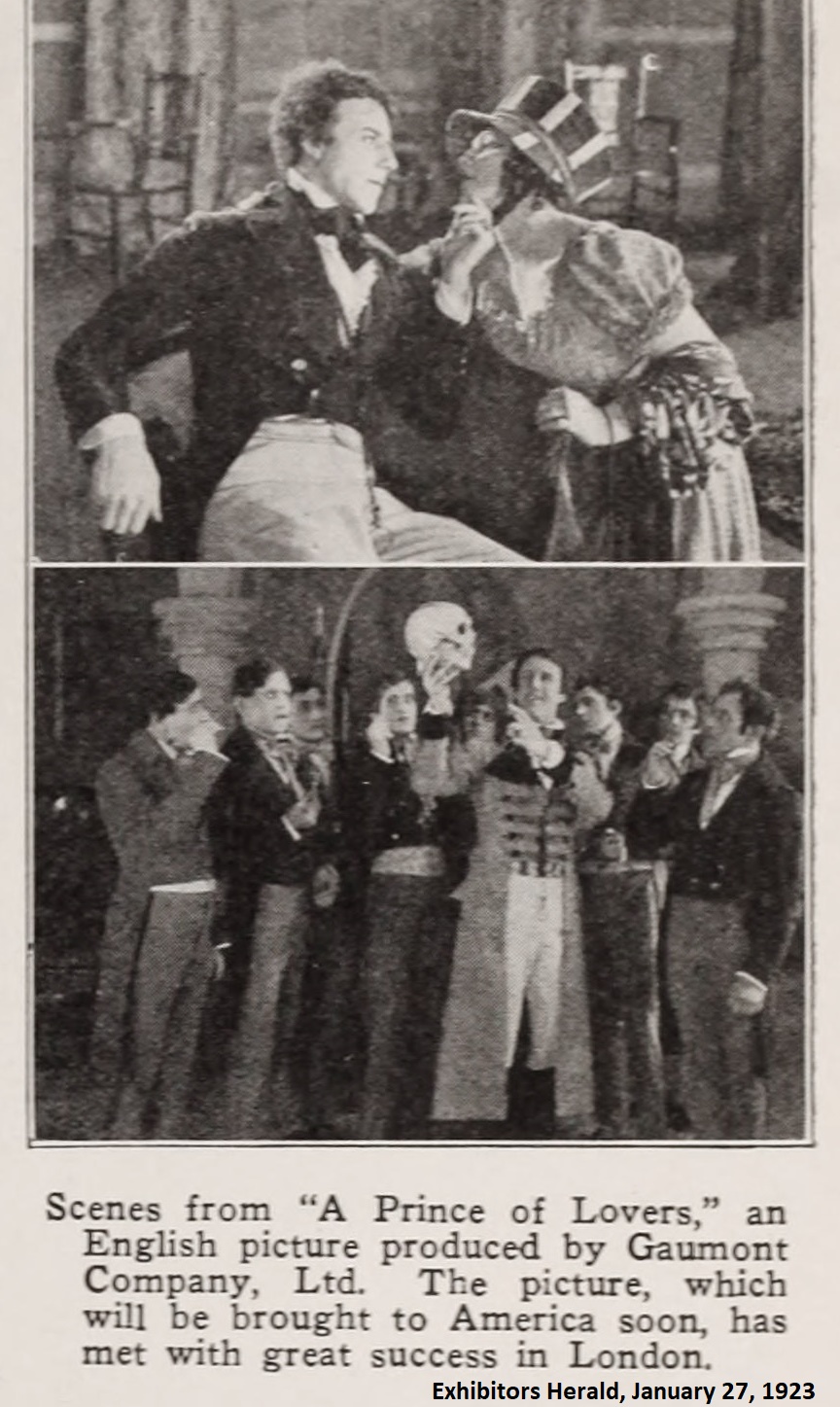
Scandal has always sold tickets, but seldom has it been rendered with such intoxicating chill as in The Life of Lord Byron. Ramsey’s screenplay, lean yet perfumed with decadent implication, strips the legend to muscle and nerve: a marital split in which the ink of gossip proves sharper than any scalpel. The camera, shy of histrionics, prefers the tremor of a glove sliding off a duchess’s wrist or the hush that follows a slammed harpsichord lid. These micro-fractures accumulate until the viewer feels the marriage implode by sonic resonance rather than spectacle.
Director G.B. Samuelson bathes interiors in umber pools; tapers sputter like gossip itself. Byron’s Newstead Abbey becomes a labyrinth of echoing staircases where busts stare with the blankness of those who know they will outlive the poet. Exterior shots, by contrast, open onto Venetian lagoons shimmering like molten coin. The film’s most haunting tableau arrives when Byron, framed through a broken lattice, watches his wife’s gondola recede—her silhouette dissolving into a copper dawn, the screen iris-closing until only his eye haunts the void.
Intertitles, letter-pressed on parchment backdrops, adopt Byron’s own cadence: “I am so changeable, being everything by turns and nothing long.” Each card flutters forward like a confession half-retracted, a stylistic tic that predates the more flamboyant typographic play in Sapho by several seasons yet feels subtler, almost embarrassed by its own eloquence.
George Foley’s Byron slouches with predatory grace, his half-smile an eyelid over despair. He never begs for sympathy; instead he courts our complicity, winking at the lens as though we too have dallied in borrowed drawing-rooms. Opposite him, Marjorie Day’s Annabella pivots from porcelain composure to surgical dignity; her final renunciation lands harder for being whispered—an anti-climax that scalds. H.R. Hignett’s scheming Lady Melbourne, eyes flicking like lizard tongues, supplies the reptilian pulse beneath the drawing-room civility. Meanwhile Viva Birkett’s maidservant—a minor role inflated by reaction shots—mirrors our own voyeuristic thrill.
Compare this nuanced triangulation with the broader comedic triangles in Love and Lunch, where betrayal is but a soufflé fallen flat; Ramsey’s stakes feel existential, not culinary.
No musical cue survives archival decay, yet the film’s metronome persists in rustling taffeta, the clack of a quill, the hush between church bells. Contemporary critics compared its aural absence to “hearing snow settle on a coffin”—a silence that bruises. Restoration houses have experimented with scoring, but I side with purists: let the vacuum roar; let us eavesdrop on our own heartbeats.
Byron’s catastrophism is inseparable from Regency circuitry: men write history, women circulate it. Ramsey’s script weaponizes epistolary culture; letters become grenades wrapped in sealing wax. Annabella’s ultimate weapon is not a courtroom plea but a prudent exit—she who leaves first frames the narrative. The film thus anticipates second-wave feminist readings decades ahead of academic jargon, yet never succumbs to pamphleteering; its polemic hides behind fans and flirtation.
Contrast this with the more patriarchal rescue fantasies of Your Obedient Servant, where a gallant male reforms the fallen woman; Ramsey refuses such absolution. Byron’s ruin is autogenous—his charisma both coin and counterfeit, tendered once too often.
Rather than cradle the viewer, the film fractures chronology, anticipating Resnais by four decades. We open on a gaunt Byron dictating to a scribe in Genoa, then lurch backward to a ballroom where he first courts Annabella. The strategy risks vertigo, yet the emotional algebra checks out: loss first, context later—grief without exposition.
British censors excised two pivotal cards referring to incestuous whispers; the only surviving print, housed at EYE Filmmuseum, splices Dutch intertitles that flatten the poetry. Nitrate deterioration gnaws the edges—faces blister like frescoes in damp chapels. Still, absence becomes text: the very incompleteness rhymes with Byron’s fragmented identity.
Situate this brittle masterwork beside the pastoral optimism of Fresh from the Farm and the mythic Orientalism of A Daughter of the Gods. Both showcase the era’s technical exuberance, yet neither probes the diseased psyche of celebrity with Ramsey’s clinical tenderness. Meanwhile the Acropolis reveries of La montée vers l’Acropole offer transcendence; Byron offers the guttering candle of self-awareness, guttering yet gorgeous.
Swap quills for Qwerty and the plot could headline today: a viral lie, a marriage deleted, the poet’s brand diluted to punchline. Ramsey’s insight—that public image devours private truth—prefigures our curated lives, though Byron at least wrote his own mythos, however self-immolating.
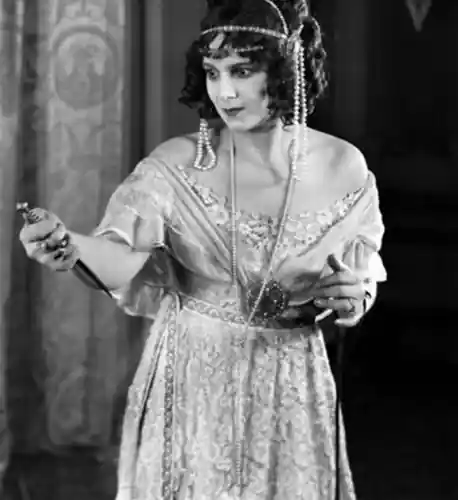
The film straddles the divide between Victorian stage tableaux and emergent cinematic naturalism. Gestures contract: a fingertip tapping a teaspoon trumps flailing arms. Note Emmeline Ormsby’s Lady Caroline Lamb—she enters in a blur of tulle, freezes, then exhales once, a sigh so slight it could be wind through muslin. Such restraint contrasts with the broader swagger of the same year’s Castles in the Air, proving that British cinema could be introspective while Hollywood flexed its biceps.
Byron’s alleged crimes are never verified onscreen; culpability dissolves into hearsay. The film thus anticipates Kurosawa’s Rashomon thesis: truth is contingent on the teller’s appetite. Clergymen in the periphery clutch prayer books yet trade gossip—salvation marketed like saltcellars. The real sin, Ramsey insists, is not adultery but the delight in exposing it.
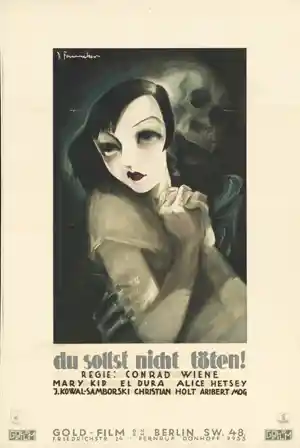
Initial posters promised “A Pageant of Passion Unparalleled!”—lurking yellow text over a crimson chaise longue. Critics recoiled at the dissonance between ad and art, prompting exhibitor rebrand: “The Genius You Love, The Story You Never Knew.” Box-office returns were modest, yet the film played Oxford’s Assembly Rooms for five weeks—an eon in itinerant programming—proving intellect could court profit if properly perfumed.
Beyond the Dutch print, fragments linger: a 30-second outtake at the BFI’s Bits & Pieces collection (catalog #417), a continuity script at the Bison Archives in L.A., and a souvenir program recently digitized by the University of Texas. No complete domestic version survives; nitrate combustion devoured the negative in a 1931 warehouse blaze. Each shard invites forensic fetishism—researchers aligning emulsion like dinosaur bones.
Purists note: Ramsey rhymes with “clammy,” not “champagne.” Lead George Foley rhymed his surname with “polly,” angering correspondents who preferred faux-Oxford elongation. Such pedantry amuses; the film itself resists fixity, a text that evaporates while you pronounce it.
Without this film there is no Henry & June, no Total Eclipse, no hip-hopera of Rimbaud. Ramsey demonstrated that poetic biography need not kneel at the altar of dusty reverence; it can flirt, lash, and limp. When Jane Campion lensed Keats in Bright Star, she cited Byron’s “brittle fragility” as tonal compass—proof that shadows propagate.
As of this month, EYE uploads a 2K scan to their Forum portal every Friday 19:00 CET, geoblocked outside the EU. VPN sleight-of-hand is ethically grey yet cinephile gospel. Physical media remains elusive; a Blu-ray petition circles among silent-film societies, but rights tangle with an estate that fears fresh scandal. If stranded, request an interlibrary loan of the 16 mm print at MoMA—mention research, not popcorn night.
Some films sermonize; others seduce. The Life of Lord Byron haunts—an unconsummated séance where every viewer leaves bearing a shard of the poet’s mirrored ego. Watch it vanish, then try to forget the perfume of snuffed candles. You will fail, and that failure is the picture’s final, tender victory.
IMDb —
1930
Community
Log in to comment.