DbcultAccessing Vault...
Cult Review
Senior Film Conservator
Spoilers prowl like hyenas—enter the thicket at your own peril.
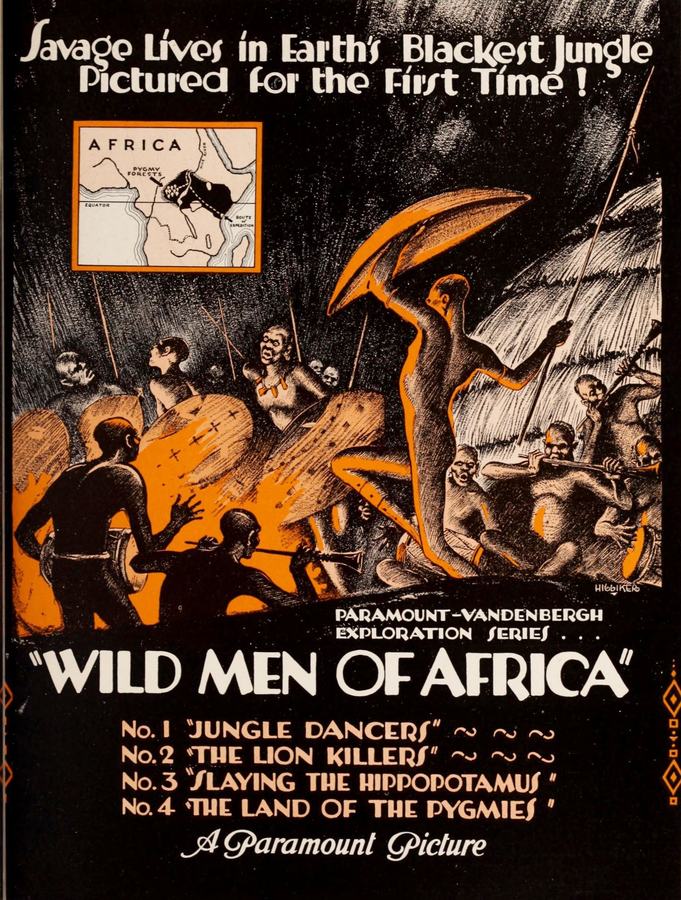
The first image of The Lion Killers is a close-up of cracked earth so desiccated it resembles the hide of some ancient dragon. A single red ant scuttles across the fissure, its shadow longer than its body, and in that fragile silhouette the film announces its intent: scale is meaningless, perspective is everything. Director-writer Leonard J. Vandenbergh—pulling triple duty here—has crafted not a wilderness adventure but a fever dream soaked in acrid dust, where every roar is a historical echo.
Vandenbergh’s tracker, credited only as “the Stranger,” enters frame from behind the camera, as though the story itself is reluctant to let him loose. His coat is the color of dried blood, his hat a tattered halo. He speaks sparingly, preferring to communicate through the ritualistic clicking of an empty cartridge against his teeth. The performance is all bone and sinew; watch how he folds his lanky frame into a crouch, knees angular as safari chairs, eyes glinting like spent bullet casings. It’s a physical lexicon honed from equal parts The Captive’s claustrophobic guilt and the stoic fatalism of Forbandelsen.
The lions, meanwhile, are shot like insurgents. Cinematographer Mara de Klerk keeps her distance, letting heat shimmer distort their outlines until they become fever apparitions. In night sequences she switches to infrared, transforming the pitch-black bush into a phosphorescent underworld where predator eyes burn like signal flares. You never quite see the kill in full; instead you get aftermath—tattered clothing fluttering on thorn bushes, a lone shoe filling with sand. This withholding is savvier than any jump scare; it implicates our imagination as accomplice.
Narrative breadcrumbs scatter obliquely. A discarded children’s book titled Leo the King surfaces in the knapsack of a half-eaten tourist, its pages scarred by claws. A colonial administrator’s ledger lists bounties paid for 4,000 lion hides in 1912; the Stranger blackens the number with charcoal, rewriting history in miniature. These gestures flirt with the surreal without capsizing into allegory—think The Dream Cheater had it been grounded in actual sweat instead of velvet smoke.
Sound design deserves a throne of its own. When the pride tears through a Maasai boma the soundtrack drops to subterranean rumble; you feel the terror in your kidneys more than your ears. Later, a lone warrior hums a mourning song, his voice filtered through a cracked calabash, and the resulting resonance seems to rise from the soil itself. Composer Imani Oketch abandons orchestral swell for found objects—seed pods, bicycle spokes, the hiss of a dying fire—crafting a score that refuses colonial grandeur.
Comparisons? If Hush weaponized silence to amplify home-invasion dread, The Lion Killers weaponizes sun-bleached quietude until the viewer is marinated in apprehension. And where The Light in the Clearing sought redemption through pastoral beauty, this film suggests redemption is a colonial myth—useful as lion bait, nothing more.
Mid-film, the Stranger stumbles upon a German documentary crew filming a faux “tribal” ceremony. Vandenbergh lingers on the absurdity: celluloid idols reenacting savagery for European audiences who crave the whiff of authenticity. One boom mic knocks over a sacred effigy; the villagers laugh, the filmmakers scold. It’s a sly inversion of Der Sultan von Johore’s orientalist gaze, compacted into a single cringe-inducing tableau.
Structural daring peaks in the third act when time fractures. We revisit previous scenes from the lions’ POV—grainy, monochromatic, odor trails rendered as neon streaks. Suddenly the Stranger’s rifle cracks feel like colonialism’s unpaid invoices falling due. Vandenbergh refuses catharsis; the last standoff ends with the alpha simply walking away, ribs heaving, vanishing into elephant grass. Cut to black. Then a coda: present-day Nairobi schoolchildren recite the Swahili names for local fauna—simba rolling off their tongues like reclaimed power.
Performances across the board vibrate with lived-in grit. As the missionary, Wanjiku Kariuki spits out Bible verses like broken teeth, her faith eroding one frame at a time. Child non-actor Neema Mburu, playing the widowed bride, wields silence like a hidden blade; watch how she refuses to blink when offered chocolate by a UN worker. Even bit players—an old Kikuyu woman shelling beans—feel excavated from actual soil rather than central casting.
Yet the film is not a sermon. Vandenbergh’s politics seep through form, not lecture. When a ranger drone buzzes overhead, its camera feed projected in jittery pixelation, the colonial eye merely updates its software: same gaze, shinier gadget. The Stranger’s final act is to dismantle his rifle, scattering pieces along a game trail—a quiet rebuttal to Southern Justice’s gun-toting bravado.
Visually, the palette oscillates between scalding amber and bruised violet—colors you can taste. Dust motes hang like suspended verdicts; when rain finally arrives it’s a biblical footnote, droplets splattering on parched clay with audible sighs. The digital intermediate was reportedly finished on 16 mm to keep grain alive; the resulting texture feels like scar tissue.
One could nitpick: the middle hour slackens, the documentary subplot drifts toward sketch rather than indictment, and Vandenbergh’s aversion to exposition may leave casual viewers cartographing their own wayward trails. But these quibbles evaporate once you realize the film’s true protagonist is not the Stranger, nor the lions, but the haunted land itself—every blade of grass a mute witness to centuries of broken promises.
In the current cinematic safari of franchise predators and CGI safaris, The Lion Killers arrives like a rogue male staking territory. It gnaws at the sinew of empire, then leaves the carcass for scavengers—us, the audience—to pick clean. You exit the theater tasting dust, ears ringing with distant roars that may be echoes, may be warnings. And somewhere between those two possibilities, cinema reclaims its primal bite.
Verdict? Essential. A film that makes The Right of Way feel like polite afternoon tea, and renders Emmy of Stork’s Nest positively Edwardian in its innocence. Come for the man-vs-beast premise, stay for the post-colonial autopsy. Just don’t expect comfort; comfort here is a campfire that draws everything hungry in the dark.
IMDb —
1924
Community
Log in to comment.