DbcultAccessing Vault...
Cult Review
Senior Film Conservator
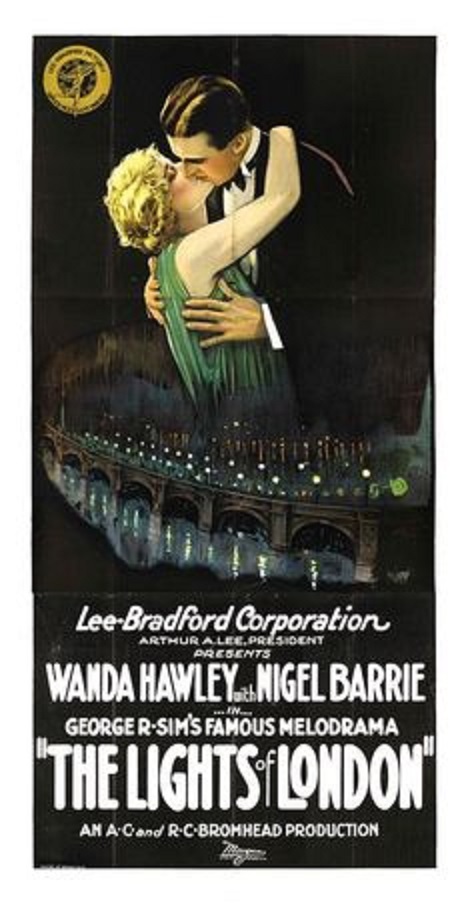
The 1923 iteration of The Lights of London stands as a fascinating relic of British silent cinema, a period where the transition from the histrionics of the Victorian stage to the nuanced visual language of the silver screen was still in a state of flux. Directed with a certain rugged efficiency, this film serves as a bridge between the moralistic certainty of the 19th century and the burgeoning technical sophistication of the 1920s. To watch it today is to witness a cultural artifact that breathes life into the smog-choked streets of a London that exists now only in the collective imagination of historians and cinephiles.
At its heart, the film is a study in chicanery and redemption. The plot, derived from the stage play by George R. Sims and Louis Stevens, utilizes the 'wronged man' trope with a fervor that modern audiences might find quaint, yet the execution possesses a raw, visceral power. Cecil Morton York delivers a performance characterized by a stoic desperation, a far cry from the slapstick antics seen in contemporary shorts like A Lady Bell Hop's Secret or the acrobatic absurdity of The High Sign. Here, the stakes are not merely comedic; they are existential.
Warburton Gamble, portraying the villainous cousin, embodies the archetype of the drawing-room serpent. His performance is a masterclass in silent-era villainy—subtle enough to avoid total caricature, yet sufficiently menacing to justify the audience's immediate disdain. The framing of Harold Armytage for patricide is handled with a swiftness that propels the viewer into the second act with breathless momentum. It is a narrative rhythm shared by other crime-focused dramas of the era, such as Number 99 or the legal entanglements of The Law Decides.
What elevates The Lights of London above its contemporaries is its atmospheric commitment. The cinematography captures the duality of the city—the 'lights' of the title representing both the allure of the metropolis and the scorching reality of its underbelly. Unlike the whimsical chaos of Monkey Business, this film anchors itself in a social realism that, while heightened, feels rooted in the anxieties of the post-war British public. The disparity between the classes is not merely a backdrop but a driving force of the tragedy, reminiscent of the dualistic nature explored in Stella Maris.
Dorothy Fane and Mary Clare provide the emotional scaffolding for the film. Fane, as the beleaguered wife, navigates the role with a dignity that transcends the 'damsel in distress' archetype. Her presence in the film's climax—a harrowing sequence involving a house fire—is particularly noteworthy. The technical execution of this fire, given the limitations of 1923, is nothing short of spectacular. It lacks the stylized artifice of Bits of Life, opting instead for a gritty, practical intensity that makes the rescue feel genuinely perilous.
The supporting cast, including the likes of Nigel Barrie and James Lindsay, populates this world with a texture that suggests a much larger universe beyond the frame. The writing by Sims and Stevens ensures that every secondary character serves as a cog in the machine of Harold’s misfortune or his eventual salvation. This ensemble approach is far more sophisticated than the character-centric focus of Cowboy Jazz or the singular narrative arc of Penny of Top Hill Trail.
The film’s resolution is a cathartic release of tension that has been expertly coiled throughout its runtime. The jailbreak sequence, while perhaps less elaborate than modern prison escapes, carries a weight of desperation that is palpable. It echoes the themes of honor and social debt found in Her Debt of Honor, where the protagonist is forced to operate outside the law to preserve a higher moral code. In many ways, Harold Armytage is the precursor to the noir heroes of the 1940s—men caught in webs they didn't spin, forced to burn down their old lives to survive.
Contrast this with the more localized conflicts of Thrown to the Lions or the exoticized melodrama of Sanji Goto - The Story of Japanese Enoch Arden. The Lights of London feels uniquely British in its preoccupation with lineage, inheritance, and the sanctity of the family home. The fire that consumes the climax is a symbolic cleansing, a literal trial by fire that Harold must endure to reclaim his name from the filth of his cousin’s lies.
Technically, the film utilizes tinting to great effect, moving from the cold blues of the night-time jailbreak to the warm, terrifying oranges of the final conflagration. This visual language was common but rarely so integrated into the narrative's emotional beats. While it may not possess the experimental flair of The Flying Torpedo, its traditionalism is its greatest strength. It knows what it is: a gripping, high-stakes melodrama that prizes character motivation over spectacle, even when providing the latter in spades.
One might compare the structural integrity of this film to Framing Framers, yet The Lights of London carries a heavier thematic burden. It deals with the fragility of reputation in a society that views poverty as a moral failing. When Harold is cast out, he isn't just losing his money; he is losing his humanity in the eyes of the law. This sentiment is echoed in the darker moments of Love, Hate and a Woman, though Sims’ script provides a more optimistic, if hard-won, resolution.
Final Thoughts on a Forgotten Classic
Ultimately, The Lights of London is a testament to the enduring power of well-constructed melodrama. It avoids the pitfalls of its era by grounding its theatrical origins in a cinematic reality that feels gritty and lived-in. The performances of Cecil Morton York and the rest of the cast ensure that the film remains more than just a historical curiosity. It is a vibrant, albeit silent, shout against injustice, a story of a man who refused to be extinguished by the very city that sought to swallow him whole. For anyone interested in the evolution of the thriller or the history of British narrative film, this is an essential viewing experience that illuminates the shadows of the past with surprising clarity.
IMDb —
1922
Community
Log in to comment.