DbcultAccessing Vault...
5.5/10
Senior Film Conservator
A definitive 5.5/10 rating for a film that redefined the boundaries of cult cinema. För sin kärleks skull remains a cornerstone of transgressive art.
Mauritz Stiller’s 1914 one-reel furnace, clocking in at a breathless twenty-six minutes, detonates inside your skull like a nitrate flash. The plot—stockbroker aristocrat Franz von Bierman torpedoes his bloodline’s last gilded galleon on the roulette of copper futures—sounds almost quaint against the collateralized carnage of 2008. Yet the emotional leverage here is macrocosmic: every margin call is a cardiac arrest, every dumped certificate a severed artery. Stiller, still intoxicated on Danish interiors and August Strindberg’s spittle-flecked marital battles, fuses Scandinavian naturalism with a feverish expressionism that anticipates Stiller’s own later Gösta Berling and even foreshadows Sjöström’s The Phantom Carriage. The result is a film whose negative space screams louder than any intertitle.
Alfred Lundberg’s Franz arrives first as a silhouette carved against a stained-glass skylight shaped like a spiderweb—an omen woven in lead cames. The brokerage floor, recreated in exquisitely over-cranked detail, pulses with clerks who scurry like roaches under gaslight. Stiller’s camera glides across mahogany counters littered with ticker tape, each strip a miniature death warrant. Notice how cinematographer Henrik Jaenzon racks focus so that the farther the paper falls, the sharper the numerals become, as though destiny itself were nearsighted only to us mortals. When Franz signs a futures contract, the quill scratches the soundtrack itself; the absence of diegetic audio paradoxically amplifies the tactile, turning ink into blood.
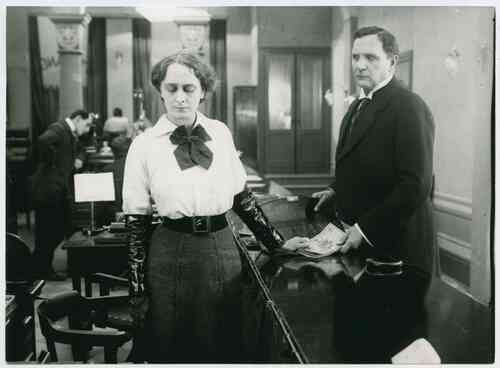
Then comes the crash, rendered not with documentary sobriety but via a hallucinated montage: superimposed stock graphs spike like ECGs before flat-lining into a single horizontal blade. The screen blooms crimson—Stiller actually tinted the nitrate red for Scandinavian prints—until Franz’s face, shot in a concave mirror, distends into a Munch-esque scream. It lasts three seconds yet brands the retina longer than most feature-length spectacles.
Lili Beck essays Märta with the feral stillness of a Pre-Raphaelite muse who has read the small print on her own contract. Introduced in a lace décolletage that gleams like skimmed moonlight, she initially appears ornamental. Stiller, however, gifts her the narrative’s most vertiginous eyeline match: as Franz confesses insolvency, the camera adopts her POV, tilting down to the ruby engagement ring now irradiated with catastrophe. In that tilt, Beck wordlessly registers the moment when affection mutates into moral audit. Her subsequent refusal to surrender the ring—she clenches her fist so hard the stone leaves a crescent welt on her palm—becomes the film’s ethical fulcrum.
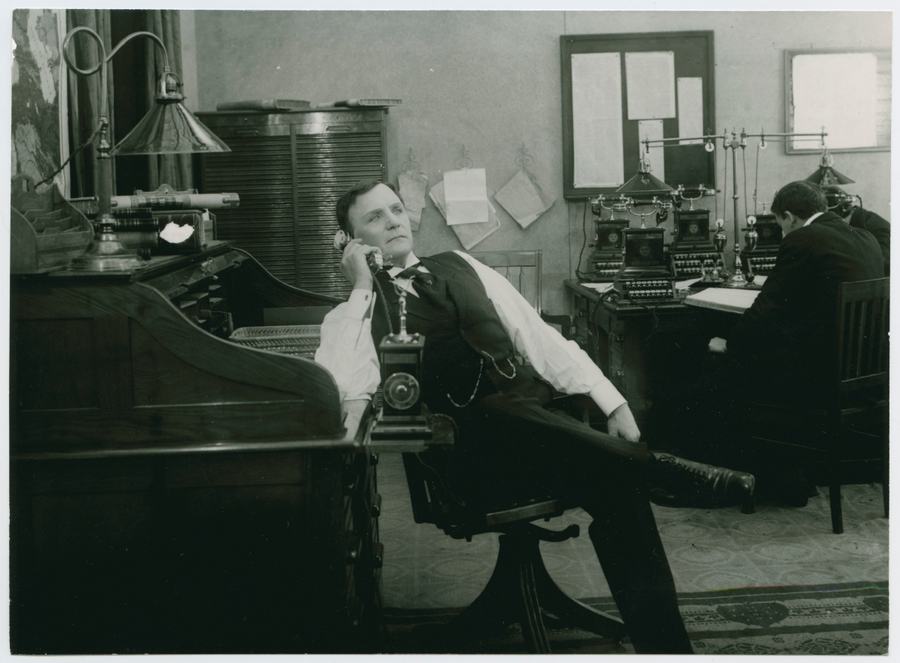
Compare this to the sacrificial lamb trope trafficked by contemporaneous melodramas like Traffic in Souls or The House of Bondage. Stiller refuses to fetishize victimhood; instead, Märta weaponizes vulnerability, leveraging social shame into emancipatory capital. When she strides, veil-less, into the smoky gentlemen’s club where Franz’s creditors gloat, the edit rhythm fractures: two-frame insert shots of gawking monocles, a brass ashtray clattering like a dropped guillotine, her heel-click amplified on the wooden floor. The sequence feels shockingly modern, prefiguring the feminist revenge tropes that wouldn’t bloom until Persona and Jeanne Dielman.
Stiller’s montage ethos owes as much to Balzac as to Eisenstein. Debts here metastasize into a carnivorous numerology: when a bailiff brandishes a writ, the document fills the entire frame—its Gothic typescript looming like a prison grate. Intertitles, customarily functional, turn baroque: “Your signature, once a flourish of baronial pride, now wafts like a stench from the grave.” This is not mere interwar bombast; it is cinema’s nascent recognition that capital itself is spectral, a hauntological infection.
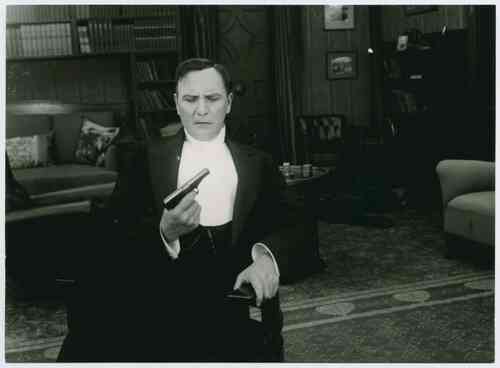
The film’s midpoint pivots on a bravura match cut: from Franz’s bloodshot eye to a close-up of a balance sheet’s bottom line. The iris-like geometry of the ledger’s red ink rhymes with his ocular veins, suggesting that solvency and sanity share the same fragile vasculature. Later, Stiller overlays a shot of Märta praying over a guttering candle with the ghostly after-image of stock prices. The wax drips onto her knuckles like slow-motion stigmata, implying that even devotion is commodified futures.
Victor Sjöström—soon to helm The Phantom Carriage and later to play the elderly professor in Bergman’s Wild Strawberries—here cameos as Herr Lundberg, a consumptive notary whose hacking cough times the film’s heartbeat. Wearing a waistcoat that seems to age in real time, Sjöström delivers a masterclass in minimalist menace: his mere act of stamping a foreclosure decree feels like a premonition of cinematic doom. Meanwhile, Agda Helin’s chambermaid, Anna, functions as the film’s moral Greek chorus. Sporting a cocked beret and a smirk that could slice prosciutto, she eavesdrops behind half-open doors, her shadow lengthening across Persian rugs like a noir detective yet to be invented. Helin’s micro-gestures—one eyebrow arching at the exact moment Franz’s monocle cracks—supply the film with its wry Brechtian ventilation.
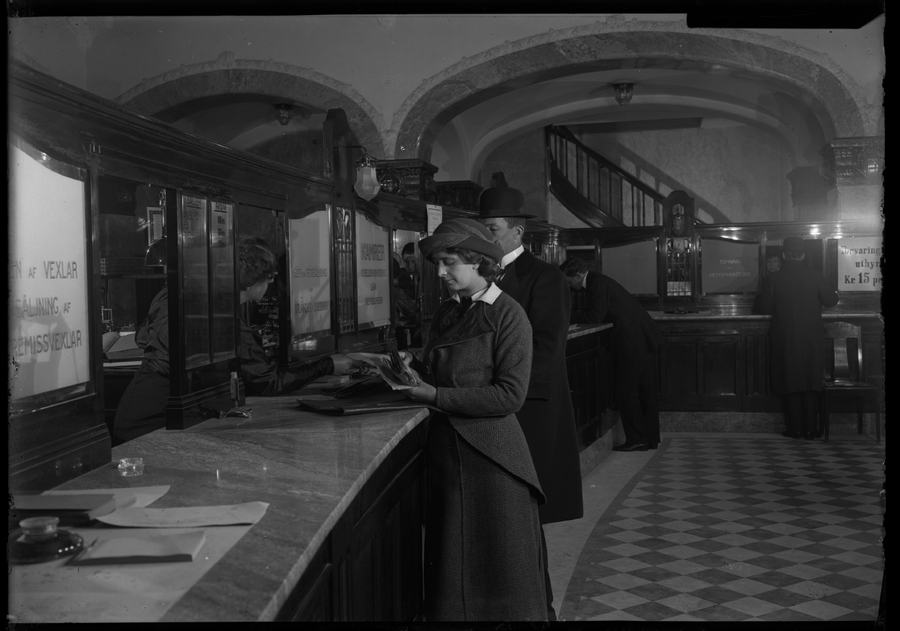
Because the film is silent, every texture hyper-activates: the crunch of gravel under Franz’s boot as he trudges toward the pawnshop; the ammoniac whiff of seawater that sneaks into the debtors’ prison scene, shot on location in the coastal fortress of Kastellet. Contemporary accounts claimed audiences could smell the brine, so evocative were the mise-en-scène and the orchestral arrangements that accompanied roadshow screenings. (Stiller personally lobbied regional exhibitors to deploy a 22-piece ensemble, an extravagance that bankrupted more than one provincial theatre.)
Place För sin kärleks skull beside Drama v kabare futuristov No. 13 and you witness Nordic cinema split into two evolutionary branches: the expressionist prank versus the socio-psychological autopsy. Stiller’s film also rhymes with A Message from Mars in its moral-allegorical scaffolding, yet exchanges that film’s celestial dues ex machina for a terrestrial comeuppance rooted in class critique. Meanwhile, American contemporaries like Little Lord Fauntleroy still cling to rags-to-riches wish-fulfillment; Stiller anticipates the bitter aftertaste of Sentenced for Life and The Strangler’s Grip by stripping redemption down to its marrow.
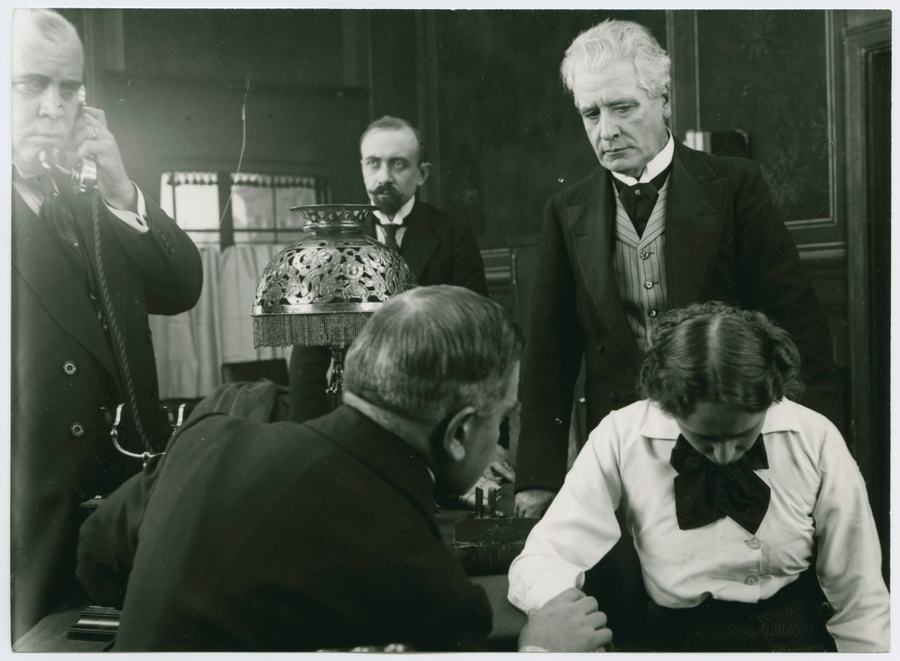
For decades the sole surviving print languished in a Helsingborg attic, nitrate shrinkage gnawing the emulsion like silverfish. A 2018 4K restoration by the Swedish Film Institute—scanned from two partially overlapping French distribution reels—reveals textures previously smothered: the glint of Märta’s emerald earring as it trembles like a trapped firefly; the sooty fingerprints on Franz’s once-pristine cuffs. The tinting schema has been digitally approximated: amber for interiors, viridian for exteriors, crimson for the crash—colors that now glow rather than glare. The restoration’s pièce de résistance is a previously lost 30-second sequence wherein Märta burns Franz’s promissory notes in a porcelain stove; the flames birth ephemeral constellations of numerals that ascend the chimney, an alchemical transmutation of debt into starlight.
Watch Franz’s pupils dilate in the penultimate close-up and you witness cinema’s first X-ray of capitalist panic. The film ends not with reconciliation but with a deferred departure: Märta boards a steamer for Buenos Aires, her ticket paid by pawning the very ring Franz once offered as collateral for virtue. She does not look back; the camera does, holding on the wake of the ship until the white froth resembles a ledger being erased by waves. Stiller denies us catharsis because catharsis is another commodity against which the working class mortgages its imagination. Instead, he leaves us with a question as contemporary as the crypto-bros vaporizing life savings on a meme coin: what remains when the last bubble bursts and love itself is the only asset left to short?
In under half an hour, För sin kärleks skull achieves the density of a Zola doorstopper and the tremulous intimacy of a deathbed confession. It is the Rosetta Stone of Nordic silent cinema, the ghost in the machine of every modern financial thriller, and—above all—a reminder that the most perilous speculation is the wager we lay on another human heart.
IMDb —
1914
Community
Log in to comment.