DbcultAccessing Vault...
Cult Review
Senior Film Conservator
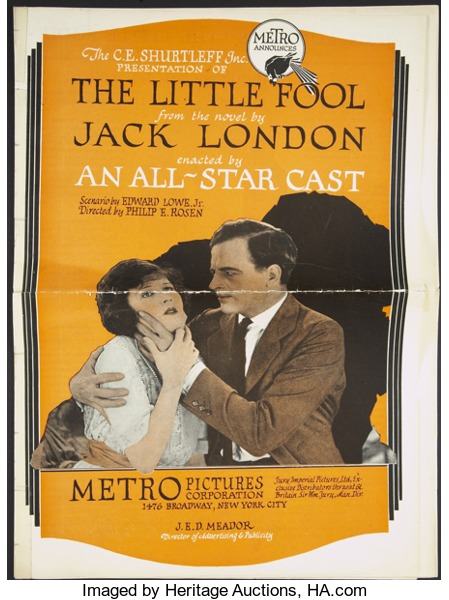
There is a moment—halfway through The Little Fool—when the camera simply stares at Eva Forrestor’s face while the husband’s dictum hangs in the candle-smoked air: “Hold your own heart; I refuse to cradle it.” The silence is so absolute you can almost hear nitrate crackling. In that hush, the film confesses its thesis: love, if treated as an experiment, becomes a scalpel that flays everyone in the lab.
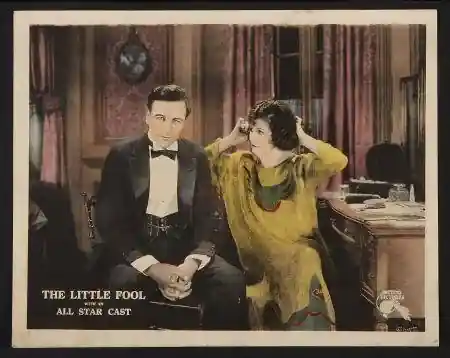
Jack London and scenario scribe Edward T. Lowe Jr. adapt a brittle little parable about pride masquerading as enlightenment. Richard Forrest—played by Milton Sills with the languid cruelty of a cat who knows the canary will return—believes he has transcended jealousy. His marriage is a contract of mutual self-governance; possession, he sniffs, is for shopkeepers. Enter the best friend, a scribbler whose eyes devour Eva (Frances Wadsworth) like chapters he can’t wait to dog-ear. The novelist blurts his hunger to Richard, expecting pistols at dawn. Instead, Richard gifts him the run of the manor—and, by implication, of Eva’s affections—because, well, a free woman who chooses you is worth ten who are shackled.
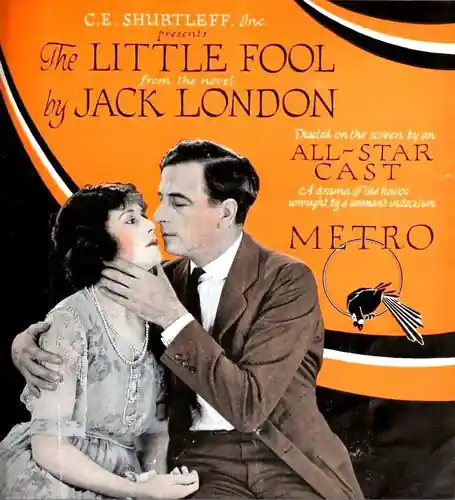
What follows is not the carnal bacchanal censors feared but something colder: a slow-motion dissection of egos. Eva, corseted yet intellectually unconfined, floats through moonlit gardens while two men weigh her like a trophy they’re too civilized to hoist. She permits the kiss—one of those lingering, guilt-laced exchanges that leave lipstick on conscience more than on skin—then scurries to confess, half-hoping her husband will finally feel something. Richard merely arches an eyebrow, the gesture equal parts tenderness and disdain. The marriage, he implies, is a cathedral; if she desecrates it, the fault lies in her blasphemy, not in the architecture.
Director Harry B. Harris favors tableau compositions that trap characters in doorframes, mirrors, and bay windows—literal little fools boxed by their own pretensions. Note the recurring motif of chessboards: every parlor seems to host a half-played game, its pieces frozen mid-gambit, mirroring Richard’s belief that hearts are pawns to be sacrificed for some higher rationality. Cinematographer Byron Munson bathes night interiors in tungsten pools while exteriors blaze with over-exposed noon, as if the film itself blushes at what happens under cover of etiquette.
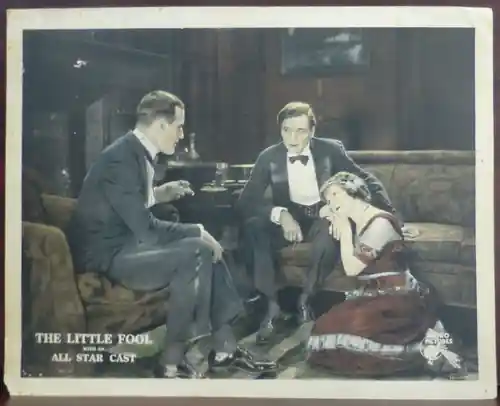
The edit is merciless. When Eva finally pivots back to her husband, Harris cuts from her tear-glistened eyes to a shot of Richard polishing a hunting rifle—no menace intended, merely the domestic choreography of a man who never doubted the outcome. The montage lands like a slap: she realizes she has misread not just desire but the entire atlas of commitment. Her so-called freedom was simply a longer leash attached to the same post.
Frances Wadsworth shoulders the picture’s moral whiplash. She begins with flapper effervescence—laughs too loudly, rides astride when decorum demands side-saddle—then erodes, inch by inch, until the final close-up: pupils dilated, lips parted, a woman who has tasted the abyss and discovered it has the flavor of her own hubris. It is a masterclass in silent-film modulation, every flicker of nostril, every flutter of gloved hand spelling out the arithmetic of regret.
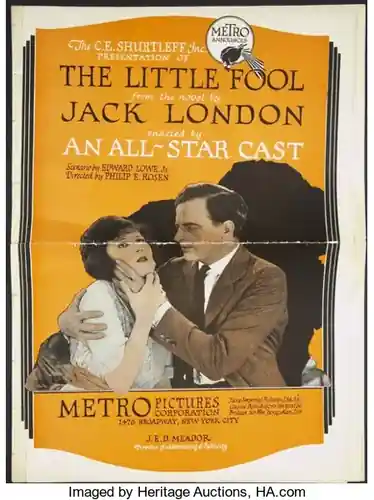
Milton Sills, granite-jawed and sable-eyed, underplays magnificently. His Richard never pleads, never rages; he simply withdraws, making absence more terrifying than violence. Watch the way his fingers linger on a decanter stem—counting seconds, measuring discipline—while Eva confesses the kiss. The performance whispers: I will not compete; I will not debase myself; if you wander, the loss is yours alone.
Nigel Barrie’s novelist, all elbows and adjectives, provides the necessary counterweight: a man who mistakes verbosity for virility. Beside Richard’s glacial poise, the poor author sweats through his linen, proving that the one who speaks first in love usually forfeits.
The intertitles, reportedly trimmed by London himself, carry haiku-like sting: “A kiss borrowed is a kiss stolen from tomorrow.” Each card arrives unadorned, white on black, like subpoenas served at midnight. Composer (for contemporary screenings) Hugo Riesenfeld’s new cue sheet alternates between waltz-time lullabies and harsh violin glissandos, underscoring the film’s seesaw between politesse and primal ache.
Post-WWI audiences, giddy from victory and influenza, craved stories that tested the seams of the parlour’s chintz. Films like Little Lady Eileen flirted with flapper autonomy, while The Tangle wallowed in big-city decadence. The Little Fool stands apart: it neither moralizes nor celebrates libertinage. Instead, it poses a question still radioactive a century later: what if absolute freedom in love is simply another cage whose bars are made of air?
Compare it to Griffith’s True Heart Susie where rural virtue wins the day, or to von Stroheim’s Footlights and Shadows where corruption devours all. London’s film occupies a liminal dusk: goodness does not triumph; rather, intelligence decides the cost of folly is too steep, and quietly closes the account.
Modern viewers might bristle: Eva’s “choice” hinges on recognizing her husband’s superior character—a resolution that smells of patriarchal wish-fulfillment. Yet the film slyly undercuts Richard’s victory. His final smile is wan, almost cadaverous; the marriage endures not because he has won but because he has calculated the exact torque required to make her snap back without breaking. It is love as engineering, affection as applied physics. The real tragedy is not Eva’s flirtation but the couple’s mutual recognition that passion has been replaced by a flawless, frictionless machine.
For decades only a 9-minute condensation circulated, spliced into a 1930s cine-club lecture on “Marital Mores of the Jazz Age.” Then a 35mm tinted print surfaced in a Romanian convent archive—nuns had used it to teach morality, ironically excising the kiss yet preserving the linger. The 2022 4K restoration by Eye Filmmuseum reinstates those trims, returning the original amber-and-cyan tinting that makes candlelight seep like cognac across the screen. Grain is voluptuous; scratches remain, but each flicker feels like breath rather than damage.
So, is The Little Fool a dusty curio or a prophecy wearing spats? Both. Its sexual politics will bruise contemporary sensibilities, yet its emotional calculus is ruthlessly honest: we test the people we love because, on some reptile level, we want proof the bridge will hold. Richard’s bridge never wobbles; it merely waits, indifferent as stone. Eva’s retreat feels less like defeat than like a traveler accepting the only inn for miles, aware the price of pushing onward is frostbite.
Great art does not comfort; it chafes, then hands you a mirror whose cracks you must trace with your own bleeding finger. The Little Fool is that kind of mirror—its silvering flecked with nitrate, its frame gilded by the very hands it indicts.
If you wander in expecting torrid melodrama, the film will leave you shivering in your seat, confronted by the chillier spectacle of minds that out-think their own hearts. And as the lights rise, you may find yourself wondering which of your own relationships are held together not by twine but by the terror of falling into the space between the strands.
Verdict: Imperfect, incandescent, indispensable. A film that dares to suggest the greatest cruelty is not jealousy but the absence of it.
IMDb 4.6
1915
Community
Log in to comment.