DbcultAccessing Vault...
Cult Review
Senior Film Conservator
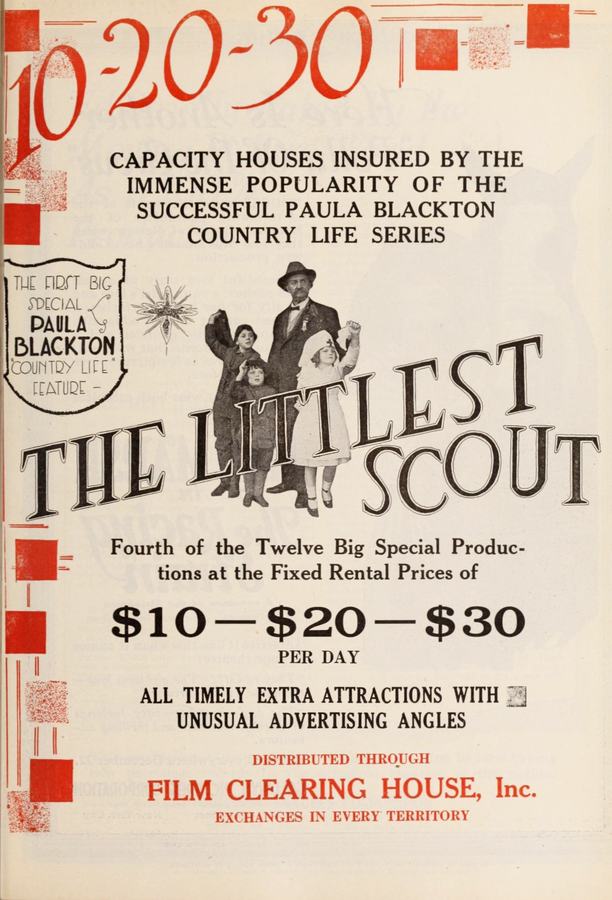
Stepping back into the cinematic landscape of the 1910s, particularly during the tumult of World War I, offers a fascinating glimpse into a society grappling with global conflict, shifting ideologies, and the pervasive need for national unity. It's within this charged atmosphere that The Littlest Scout, a film penned by Paula Blackton, emerges not merely as entertainment, but as a potent cultural artifact. This isn't just a children's adventure; it's a meticulously crafted narrative that intertwines youthful innocence with the gravitas of war, national duty, and even burgeoning romance, all filtered through a distinctively patriotic lens. To truly appreciate its layers, one must consider the era in which it was conceived—a time when cinema was rapidly evolving and often served as a powerful tool for shaping public opinion and morale.
At its core, the film presents a domestic sphere profoundly impacted by the distant roar of battle. We are introduced to the Wyngate household, presided over by a recently widowed mother, Mrs. Wyngate, whose personal loss fuels her fervent patriotism. Her children, Charles Stuart Wyngate, a spirited three-year-old, and Violet, his seven-year-old sister, embody the era's idealized youth. Charles, played with endearing earnestness by Charles Stuart Blackton, harbors an almost preternatural longing to join the Boy Scouts, a desire that speaks volumes about the pervasive influence of such organizations in shaping young male identity during wartime. His enthusiasm is palpable, a charming, if somewhat naive, reflection of the national call to duty. Then there's Violet, portrayed by Violet Virginia Blackton, a character far more complex than her tender years might suggest. Her wish to be a boy named "Bill" and her aspiration to contribute to the Red Cross effort transcend simple tomboyishness; they signify a nascent yearning for agency and purpose, a subtle critique of the restrictive gender roles of the period, even as she aims to serve within conventionally acceptable female domains.
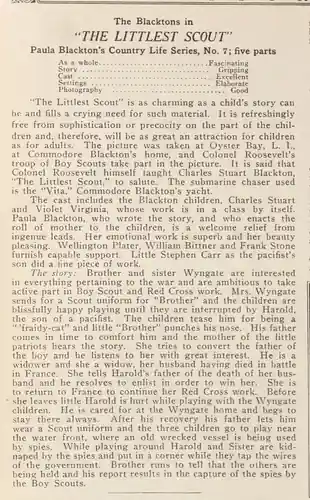
The initial scenes paint a picture of domestic harmony, with Mrs. Wyngate indulging Charles's dreams by sending for a scout uniform. This simple act sets the stage for the film's central ideological conflict. The arrival of Harold, a new playmate whose father, William Bittner, is a staunch pacifist, shatters this bucolic tranquility. The ensuing playground skirmish, culminating in Charles's impulsive punch to Harold's nose, is more than mere childish roughhousing. It's a microcosm of the larger global conflict, a symbolic clash between aggressive patriotism and principled non-violence. This moment, delivered with a directness that belies the children's age, is surprisingly impactful, forcing a confrontation between the adults that drives much of the film's thematic exploration.
The ensuing dialogue between Mrs. Wyngate and Harold's father is where The Littlest Scout truly distinguishes itself beyond a simple children's story. Mrs. Wyngate, played by Paula Blackton herself, attempts to convert the pacifist to her cause, recounting the poignant sacrifice of her husband in France. Her grief is palpable, her conviction unshakeable. It’s a powerful scene, demonstrating the emotional weight of war, even on those far from the front lines. Harold's father, also a widower, listens with what initially appears to be polite interest, but gradually transforms into profound contemplation. His conversion is not merely intellectual; it is deeply personal, driven by shared loss and Mrs. Wyngate's unwavering spirit. He resolves to enlist, not just for the national cause, but seemingly to win her affection, adding an unexpected layer of romantic drama to the wartime narrative. This subplot, while perhaps melodramatic by modern standards, would have resonated deeply with audiences of the time, offering a glimmer of hope and renewed purpose amidst widespread sorrow. It’s a narrative device that echoes the sentimental arcs seen in other films of the era, such as Zaza, which often explored themes of love and sacrifice against challenging backdrops, albeit with different kinds of conflict.
The film then shifts gears, moving from domestic drama to espionage thriller. After Harold is hurt during play and cared for at the Wyngate home—a gesture of reconciliation and burgeoning family—his father permits him to wear Charles's scout uniform. This act is symbolic, marking Harold's symbolic embrace of the very ideals his father once rejected. It’s a visual representation of his father’s transformation, a powerful endorsement of the Boy Scout ethos. The children's renewed camaraderie, however, is short-lived. A seemingly innocent outing near the waterfront takes a sinister turn when Harold and Violet are kidnapped by spies. This sudden escalation injects a thrilling urgency into the narrative, transforming the children from symbols of patriotism into active participants in the war effort.
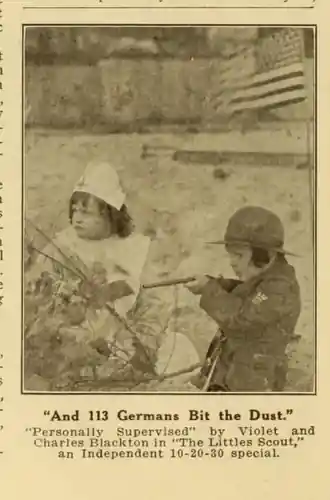
It's at this juncture that Charles, the titular littlest scout, rises to the occasion. Despite his tender age, he demonstrates remarkable presence of mind, alerting the Boy Scouts. This pivotal moment underscores the film's celebration of youthful heroism and the efficacy of organizations like the Boy Scouts in fostering courage and civic duty. The subsequent pursuit of the spies and the dramatic climax, involving sub chasers and airplanes culminating in the destruction of a German submarine, is pure wartime adventure. It’s a thrilling, albeit simplistic, portrayal of good triumphing over evil, designed to rally patriotic sentiment and reassure audiences that vigilance, even from the youngest citizens, can make a difference. The spectacle of the submarine's destruction, while likely achieved through rudimentary special effects for the time, would have been a powerful visual for contemporary viewers, akin to the grand action sequences in other patriotic films like American Buds, which similarly aimed to stir national pride through dramatic wartime scenarios.
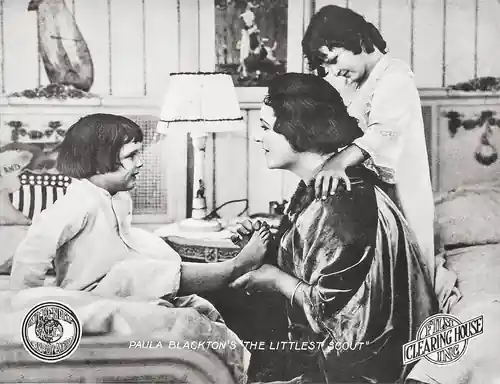
From a technical perspective, Paula Blackton's writing demonstrates a keen understanding of narrative pacing, balancing moments of quiet domesticity with bursts of high-stakes action. The film's direction, typical of the era, relies heavily on visual storytelling and intertitles to convey dialogue and exposition. The performances, particularly from the child actors, are noteworthy. Charles Stuart Blackton as Charles captures the boundless energy and innocent idealism of his character, while Violet Virginia Blackton imbues Violet with a compelling blend of youthful spirit and a yearning for purpose. Stephen Carr as Harold and William Bittner as his father, alongside Paula Blackton herself, contribute solid performances that anchor the more dramatic aspects of the plot. Their portrayals, while sometimes broad by today's standards, were effective in conveying emotion and character to a silent film audience. The challenges of directing child actors, especially in a period piece with serious undertones, are considerable, and the film largely succeeds in making their contributions feel authentic to the narrative. One might draw parallels to the powerful child performances in films like A Little Princess, where young protagonists carry significant emotional weight, demonstrating the enduring appeal and talent of child stars in early cinema.
The film's exploration of gender roles, particularly through Violet's character, is subtly progressive for its time. Her desire to be "Bill" and engage in Red Cross work, while still within the confines of wartime service, hints at a desire to break free from purely domestic expectations. This thematic thread is not fully developed, but its presence is a fascinating detail that adds depth to a seemingly straightforward patriotic narrative. It suggests a burgeoning awareness of women's capabilities beyond the home, even as the film ultimately reinforces traditional notions of heroism and family.
Historically, The Littlest Scout serves as a powerful piece of wartime propaganda, albeit one wrapped in an engaging adventure story. It champions patriotism, community involvement (through the Boy Scouts and Red Cross), and the unwavering spirit of the American family. The conversion of the pacifist father is a particularly telling detail, reflecting the societal pressure to conform to a pro-war stance and the demonization of anti-war sentiments during a period of national crisis. It subtly suggests that true patriotism is not just about fighting, but about unifying under a common cause, even if it means abandoning deeply held personal beliefs. The film's message is clear: everyone, from the smallest child to the most reluctant adult, has a role to play in safeguarding the nation.
In conclusion, The Littlest Scout is far more than a quaint historical curiosity. It's a vibrant, multi-layered film that deftly weaves together themes of childhood adventure, national duty, romantic entanglement, and espionage. Its depiction of the home front during WWI, the roles children were expected to play, and the prevailing patriotic fervor offers invaluable insight into the American psyche of the era. While some elements, like the rapid conversion of the pacifist, might feel overly simplistic to a modern audience, they were likely potent and persuasive at the time. The film's enduring appeal lies in its ability to capture a specific moment in history with earnestness and dramatic flair, reminding us of the enduring power of cinema to reflect and shape societal values. It’s a testament to the talent of its creators and cast, especially the young actors, who managed to deliver compelling performances that resonated with audiences then, and still offer a captivating window into the past today. For those interested in the evolution of early cinema and the societal narratives it championed, The Littlest Scout remains a significant and utterly engaging watch, a small film with big historical resonance, showcasing how even the most innocent narratives could carry profound national messages. Its blend of heartwarming family dynamics and thrilling spycraft makes it a standout example of early silent film storytelling, a true gem for enthusiasts of cinematic history.
IMDb 7.1
1916
Community
Log in to comment.