DbcultAccessing Vault...
5/10
Senior Film Conservator
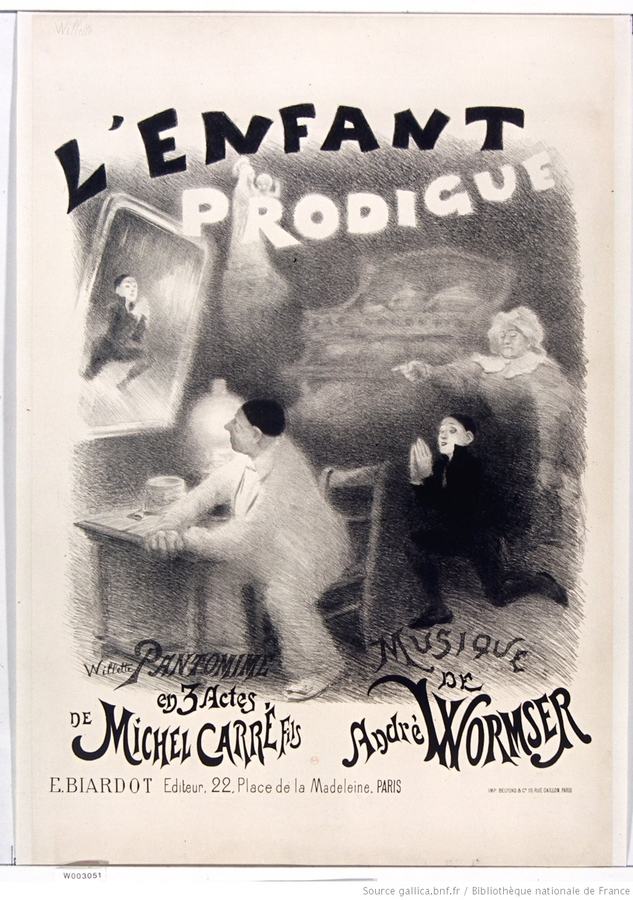
A definitive 5/10 rating for a film that redefined the boundaries of cult cinema. The Prodigal Son remains a cornerstone of transgressive art.
Stepping back into the nascent years of the 20th century, a period when cinema was still finding its voice, its grammar, and its very purpose, we encounter a monumental work that often lurks in the shadows of popular film history: 'The Prodigal Son' (1907). More than just a film, this is a historical artifact, a daring experiment, and a profound statement on the potential of the moving image. Credited by many as Europe's first feature-length narrative film, it stands as a towering testament to the ambition and foresight of its creators, particularly writer Michel Carré and its cast, including Georges Wague, Christiane Mandelys, Henri Gouget, and Gilberte Sergy. In an era dominated by brief actualities, vaudeville sketches, and rudimentary trick films, 'The Prodigal Son' dared to tell a complex, multi-act story, laying crucial groundwork for the cinematic art form we know today.
To truly appreciate the magnitude of 'The Prodigal Son', one must contextualize it within the landscape of early cinema. Before 1907, the cinematic experience was largely fragmented. Audiences were captivated by fleeting glimpses of reality, like the workers pouring out of a factory in Saída dos Operários do Arsenal da Marinha or the ceremonial grandeur of 69th Regiment Passing in Review. Narrative films, when they existed, were typically single-reel affairs, often relying on theatrical conventions and exaggerated pantomime to convey simple plots. The idea of sustaining a story across multiple reels, demanding prolonged audience engagement, was revolutionary. It was a leap of faith, a gamble on the evolving attention span and intellectual appetite of the public.
Michel Carré's original play, a three-part dramatic exposition, provided the robust framework for this ambitious cinematic adaptation. The biblical parable of the prodigal son, a timeless narrative of rebellion, hedonism, destitution, and ultimate redemption, offered a rich tapestry of human experience perfectly suited for a medium craving depth. The film's brilliance lies not just in its length, but in its commitment to exploring the emotional arc of its protagonist. We observe the initial hubris, the lavish expenditure of inherited wealth, the inevitable descent into squalor, and the harrowing journey back to familial grace. This was a narrative journey, not just a series of events, a crucial distinction that elevated it beyond mere spectacle.
Unlike the brute force spectacles of the era, such as the various reproductions of boxing matches like The Corbett-Fitzsimmons Fight or Reproduction of the Corbett and Fitzsimmons Fight, which, while lengthy, focused on repetitive action rather than character development, 'The Prodigal Son' sought emotional resonance. Even extended actualities like Birdseye View of Galveston, Showing Wreckage, while offering compelling visual information, lacked the internal drama that Carré's narrative provided. The film's structure, broken into distinct acts, allowed for a more gradual unfolding of consequences and character transformation, a significant departure from the rapid-fire succession of events typical of earlier films.
The cast of 'The Prodigal Son' faced a unique challenge. In the absence of spoken dialogue, their performances had to be meticulously crafted through gesture, facial expression, and physical presence. Georges Wague, Christiane Mandelys, Henri Gouget, and Gilberte Sergy were not merely actors but silent storytellers, translating the nuances of human emotion into a visual language. This era demanded a particular theatricality, a larger-than-life portrayal that could bridge the gap between the stage and the nascent cinematic frame. Their work here would have been instrumental in defining early screen acting, moving beyond the simple 'demonstrations' of character seen in earlier shorts to a more sustained and developing portrayal.
Consider the expressive demands placed upon Wague as the titular prodigal. His journey from youthful arrogance to humbled despair, and finally to contrite hope, would have required a nuanced command of pantomime. Mandelys, Gouget, and Sergy, in their supporting roles, would have had to anchor the emotional weight of the family's suffering and eventual forgiveness, conveying complex sentiments without a single uttered word. This collective effort in visual storytelling was a significant step away from the more functional, less emotionally driven performances often found in actualities or even early narrative shorts like Dressing Paper Dolls or short comedic pieces. Their work laid a foundation for character-driven drama on screen.
While detailed accounts of the film's specific directorial techniques are scarce, we can infer much about its visual approach given the technology and artistic conventions of the time. Early films largely employed a static camera, resembling a theatrical proscenium arch. The staging of actors, their movements within the frame, and their interactions would have been carefully choreographed to convey meaning. Editing, while still rudimentary, would have been crucial in transitioning between the 'three parts' of the play, maintaining continuity and pacing the emotional beats of the story. The very act of cutting between scenes to advance a sustained narrative was, in itself, a developing art form.
The use of intertitles, though not explicitly mentioned in the sparse plot summary, would have been essential for conveying dialogue, setting, and internal monologue, bridging the narrative gaps that visual action alone could not fill. This blend of theatrical staging and emerging cinematic techniques marked a crucial period of experimentation. It diverged significantly from the purely observational style of films like O Campo Grande or A Rua Augusta em Dia de Festa, which prioritized capturing reality over constructing a fictional world. Even the early attempts at narrative, such as the numerous 'Passion Plays' like Life and Passion of Christ or S. Lubin's Passion Play, often presented a series of tableaux rather than a fluid, developing narrative arc that 'The Prodigal Son' aimed for.
The significance of 'The Prodigal Son' cannot be overstated. As a potential vanguard of the European feature film, it was a bold declaration that cinema was capable of more than fleeting amusement. It was an art form with the power to tell epic stories, to explore the complexities of the human condition, and to evoke deep emotional responses over an extended duration. This film, alongside other early ambitious narratives like The Story of the Kelly Gang (an Australian production from 1906, often cited as the world's first feature), helped to establish a new paradigm for filmmaking globally. It shifted the industry's focus from mere novelty to sustained narrative engagement, paving the way for the golden age of silent cinema.
Its very existence challenged the prevailing wisdom that audiences would tire of a film lasting longer than a single reel. It was a crucial step in legitimizing cinema as a serious artistic and commercial venture, attracting greater investment and encouraging more sophisticated storytelling. Without such pioneering efforts, the evolution of film might have taken a much slower, more circuitous path. It provided a blueprint for how to structure a longer story, how to develop characters over time, and how to build dramatic tension across multiple sequences. This was a critical divergence from earlier, simpler narratives or the direct adaptations of single theatrical scenes.
Viewing 'The Prodigal Son' today presents its own set of challenges. Surviving prints, if any, are likely to be incomplete, damaged, or of poor quality. The pacing, acting styles, and visual grammar would feel alien to a contemporary audience accustomed to a century of cinematic evolution. Yet, it is precisely in this temporal disjunction that its true value lies. To watch it is to peer into the very crucible of filmmaking, to witness the raw ambition and ingenuity of early pioneers grappling with a new medium. It reminds us that every sophisticated technique we now take for granted had to be invented, tested, and refined through bold experiments like this.
It’s a stark contrast to the more immediate, less narratively complex 'actualities' that populated the screens of the time, such as O Lançamento ao Tejo do Cruzador 'Rainha D. Amélia' or The Republican National Convention, which, while historically significant, offered little in the way of character development or narrative arc. Even the 'trick films' and early comedies, like Solser en Hesse, were designed for instant gratification, not sustained emotional engagement. 'The Prodigal Son' demanded more from its audience, and in doing so, it offered more.
In conclusion, 'The Prodigal Son' stands as a monumental achievement in the annals of European cinema. It represents a pivotal moment when filmmakers dared to dream bigger, to tell longer, more intricate stories, and to push the boundaries of what the nascent medium could achieve. It is a testament to the collaborative vision of its writer, director (if one was formally credited beyond Carré's writing), and its cast, who collectively embarked on an artistic journey into uncharted cinematic territory. This film is not merely a historical footnote; it is a foundational pillar, a courageous experiment that helped define the very language of narrative cinema and set the stage for the countless masterpieces that would follow. Its influence, though perhaps subtle and indirect in modern viewing, resonates through every feature film produced since, a silent echo of its pioneering spirit.
IMDb —
1932
Community
Log in to comment.