DbcultAccessing Vault...
Cult Review
Senior Film Conservator
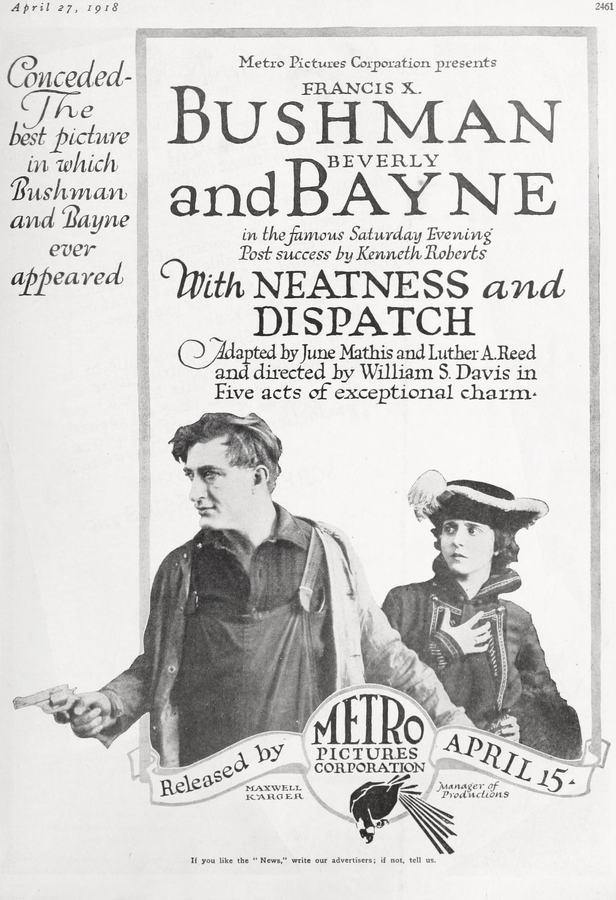
Stepping back into the hallowed halls of silent cinema, one occasionally unearths a gem that, despite the passage of a century, retains an astonishing vivacity and charm. With Neatness and Dispatch, a 1918 offering, is precisely such a discovery. It’s a film that dances on the razor's edge between farcical comedy and genuine thriller, all while weaving a delicate thread of romance through its intricate narrative. In an era often characterized by melodramatic flourishes, this picture distinguishes itself with a narrative ingenuity that feels remarkably fresh, even today. It’s a testament to the collaborative genius of writers Luther Reed, K.L. Roberts, and June Mathis, who concocted a plot so delightfully convoluted yet utterly engaging, it defies the simplistic categorizations one might typically assign to films of its vintage.
The premise itself is an audacious flight of fancy, beginning with the classic trope of a thwarted elopement, but quickly veering into uncharted territory. Mary Ames, played with a delicate balance of vulnerability and spirited resolve by Adella Barker, finds her romantic aspirations abruptly curtailed by the formidable Aunt Letitia, embodied with an almost palpable sternness by Ricca Allen. Mary is confined, a bird in a gilded cage, awaiting a fate dictated by familial decree rather than personal desire. This initial setup, while familiar, serves as a mere launching pad for the story's true brilliance: the intervention of Mary's sister, Geraldine, portrayed with captivating vivacity by Beverly Bayne. Geraldine is no shrinking violet; she's a woman of action, possessed of an unconventional mind, whose solution to her sister's predicament is as daring as it is ludicrous: she decides to 'borrow' a criminal from a police commissioner friend.
This is where the film truly begins to sparkle, introducing the element of mistaken identity and romantic subterfuge that would become a beloved hallmark of cinematic comedy. The commissioner's nephew, Paul, brought to life with an irresistible blend of charm and earnestness by the iconic Francis X. Bushman, witnesses Geraldine’s peculiar request. He is instantly captivated, ensnared by her audacious spirit and singular beauty. In a move that defines his character's romantic impulsiveness, he seizes the opportunity to be near her, deciding to impersonate the very criminal Geraldine intends to employ. Bushman’s performance here is a masterclass in silent film acting – his expressions convey a spectrum of emotions, from lovestruck infatuation to cunning improvisation, all without uttering a single word. His Paul is not merely a hero; he’s a romantic rogue, a man willing to bend the rules of society and law for the sake of love, echoing the charming rogues found in other romantic adventures of the era, though perhaps with a more comedic bent than, say, the more straightforward heroics often seen in films like A Man and His Mate.
The initial stages of Paul’s masquerade are a delightful exercise in comedic timing and suspense. The audience is privy to his deception, creating a delicious tension as he navigates the perilous waters of his self-appointed role. The plan to free Mary unfolds with a precision that belies its inherent absurdity, a testament to the film's title, With Neatness and Dispatch. Mary is released, her elopement with her true love proceeds as intended, and for a fleeting moment, it seems as though the elaborate scheme will conclude without a hitch. This segment, with its clever execution of a seemingly impossible plan, showcases the ingenuity of the screenwriters, who managed to craft a narrative that, while fantastical, maintains a certain internal logic within its comedic framework. It’s a delicate balance, one that the film manages to maintain with remarkable dexterity.
However, just as the audience settles into the comfortable resolution of the romantic escapade, the film executes a masterful pivot, transforming from a lighthearted romantic comedy into a genuine thriller. The arrival of the actual criminal, the one Paul has been impersonating, accompanied by a disgruntled former chauffeur and gardener, injects a sudden surge of real danger into the proceedings. This unexpected twist elevates the stakes considerably. No longer is Paul merely playing a part; he is now confronted with authentic peril, a stark contrast to the simulated threats he had so confidently navigated. The house, once a stage for a romantic deception, becomes the scene of an actual attempted robbery. This shift in tone is handled with remarkable skill, avoiding narrative whiplash by building on the established tension and character motivations.
Paul's transition from imposter to genuine hero is seamless and immensely satisfying. Francis X. Bushman's portrayal of this transformation is compelling. He sheds the playful guise of the borrowed criminal and confronts the real threats with courage and resourcefulness, saving not only the jewels but also, implicitly, the entire household from a far more sinister outcome. The physical comedy and action sequences that ensue are well-staged, demonstrating a proficiency in cinematic storytelling that speaks volumes about the directorial choices made in an era without synchronized sound. The visual language of silent film, relying heavily on exaggerated gestures, facial expressions, and dynamic staging, is utilized to its fullest extent here, creating a thrilling climax that is both exhilarating and genuinely funny in its resolution.
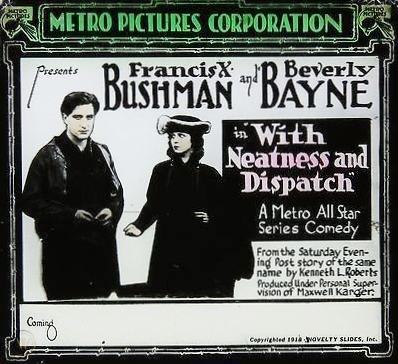
The eventual arrival of the police commissioner, portrayed by Frank Currier, and a cadre of policemen, brings the chaotic events to a tidy, if somewhat convoluted, close. The explanations that follow, untangling the web of deception, mistaken identity, and genuine villainy, are delivered with a sense of comedic relief, allowing the audience to exhale after the thrilling climax. The happy ending, culminating in a second elopement, this time presumably free from criminal impersonations and last-minute robberies, provides a satisfying emotional arc for all involved, particularly for Paul and Geraldine, whose romance blossomed amidst the most unusual of circumstances. The film successfully ties up all its loose ends, leaving the viewer with a sense of joyous closure.
Beyond the captivating plot, With Neatness and Dispatch stands as a fascinating artifact of its time. The ensemble cast, including contributions from Sidney D'Albrook, Arthur Housman, Sylvia Arnold, John Charles, Walter Miller, and Hugh Jeffrey, each contribute to the film’s vibrant tapestry. While specific roles might be brief, the collective energy they bring to the screen enhances the overall atmosphere of comedic chaos and romantic entanglement. The direction, while uncredited, demonstrates a keen understanding of pacing and visual storytelling, crucial elements in a medium devoid of spoken dialogue. The film never lags, consistently propelling its intricate plot forward with a brisk and engaging rhythm. One might draw parallels to the tight narrative structures of other contemporary thrillers like The Third Degree, though With Neatness and Dispatch layers its tension with a more pronounced comedic intent.
The screenplay by Luther Reed, K.L. Roberts, and June Mathis is particularly noteworthy. June Mathis, in particular, was a prolific and influential figure in early Hollywood, often credited with shaping narratives and careers. Her involvement here, alongside Reed and Roberts, suggests a sophisticated approach to storytelling that transcends the simple slapstick often associated with silent comedies. Their script manages to be both intricate and accessible, delivering genuine laughs and thrills without sacrificing character development or thematic coherence. The film subtly critiques societal expectations and the constraints placed upon young women, while ultimately championing love and individual agency, themes that resonate across different eras, much like the underlying social commentaries found in dramas such as The Straight Road.
The film's title itself is a subtle nod to the efficiency and cleverness with which the various schemes, both benevolent and nefarious, are carried out. There's a certain elegance to the unfolding chaos, a testament to the meticulous planning (or spontaneous improvisation) of its characters. The visual aesthetics, while perhaps not as grand or experimental as some of the more avant-garde films of the period, are perfectly suited to the narrative. The sets are functional, the costumes appropriate, and the cinematography clear, allowing the audience to fully immerse themselves in the unfolding drama without distraction. It’s a film that understands its purpose: to entertain, to charm, and to thrill, and it accomplishes these goals with remarkable efficacy.
In an age dominated by special effects and elaborate soundscapes, revisiting a film like With Neatness and Dispatch is a refreshing reminder of the enduring power of pure storytelling. It demonstrates that compelling characters, an inventive plot, and skillful performances can transcend technological limitations. It’s a vibrant piece of cinematic history that showcases the nascent artistry of filmmaking in its most fundamental form. The comedic elements, particularly the delightful absurdity of Geraldine's plan and Paul's eager participation, still elicit genuine smiles, while the sudden pivot to a high-stakes robbery keeps the audience on the edge of their seats. This blend of genres, executed with such finesse, is a hallmark of truly engaging cinema, proving that even a century ago, filmmakers were adept at crafting multifaceted viewing experiences.
Comparing it to other films of its time, one can appreciate its unique blend. While films like The Avenging Conscience delved into more psychological horror, or A Romance of the Air focused on wartime heroics, With Neatness and Dispatch manages to carve its own niche by embracing the lighter side of human foibles and romantic pursuits, even when those pursuits lead to confrontations with genuine danger. It doesn't take itself too seriously, yet it never descends into pure silliness, maintaining a clever wit throughout. This delicate balance is what makes it so enduringly watchable. Its narrative complexity, while playfully presented, is far from simplistic, offering layers of mistaken identity and unexpected turns that keep the audience guessing until the very end.
Ultimately, With Neatness and Dispatch is more than just a historical curiosity; it is a film that stands on its own merits as a highly entertaining and skillfully crafted piece of cinema. It’s a delightful reminder of the talent and ingenuity that thrived in the silent era, showcasing how effective storytelling, coupled with charismatic performances, could captivate audiences without the need for spoken dialogue. For fans of silent film, or indeed anyone with an appreciation for clever plotting and heartfelt performances, this film offers a charming escape into a bygone era, proving that a good story, told with neatness and dispatch, truly is timeless. Its narrative audacity, combined with the magnetic presence of its lead actors, particularly Francis X. Bushman and Beverly Bayne, cements its place as a minor masterpiece worth rediscovering and celebrating.

IMDb —
1914
Community
Log in to comment.