DbcultAccessing Vault...
Cult Review
Senior Film Conservator
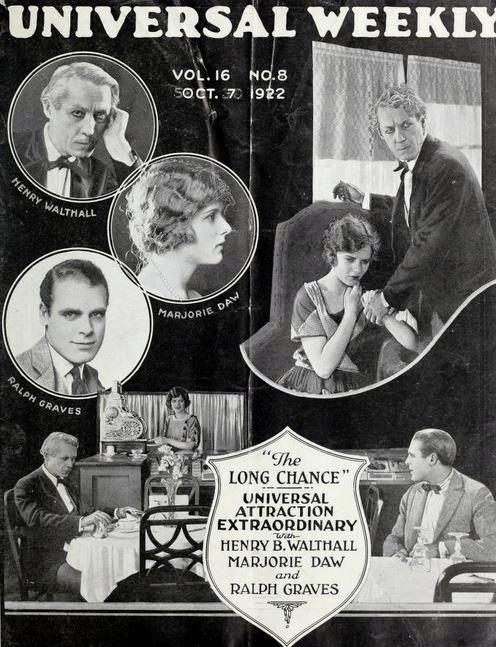
The Long Chance, a film from 1922, is a masterful tale of love, deception, and redemption, set against the backdrop of a small town plagued by greed and corruption. As the story begins to unfold, we are introduced to Harley P. Hennage, a town gambler with a heart of gold, who takes Dana Corbaly under his protection after her mother's passing. Hennage's motivations, though seemingly altruistic, are soon called into question as Bob McGraw, a young engineer, arrives in town to investigate the mining claim of Dana's father, John Corbaly.
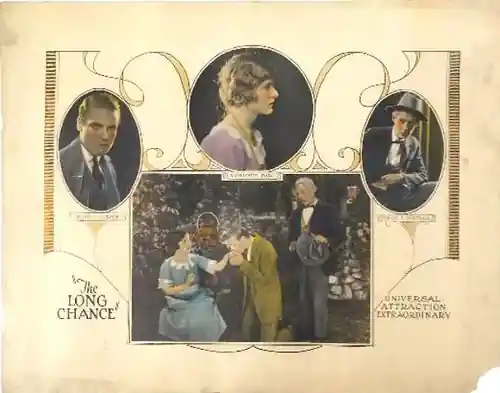
As the narrative progresses, Hennage's suspicions of McGraw's intentions grow, and he begins to unravel the complex web of deceit that surrounds the young engineer. However, it soon becomes apparent that McGraw is merely a pawn in the game of T. Morgan Carey, a cunning capitalist and former partner of Dana's father. Carey's true intentions are slowly revealed, exposing a deep-seated desire to exploit the land for his own gain, regardless of the cost to those around him.
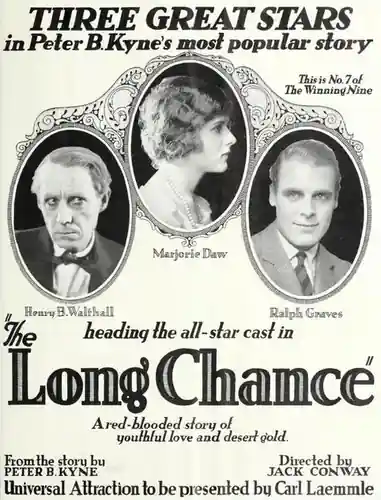
The film's exploration of the human condition is both poignant and thought-provoking, as it delves into the complexities of trust, loyalty, and the unrelenting pursuit of power. Through the characters of Hennage, McGraw, and Carey, we are presented with a nuanced examination of the gray areas that exist between right and wrong. The performances of the cast, including George A. Williams, Boyd Irwin, and Marjorie Daw, bring depth and emotion to the story, drawing the viewer into the world of the film.
In comparison to other films of the era, such as The Tenderfoot and A Jewel in Pawn, The Long Chance stands out for its thoughtful pacing and well-developed characters. The film's use of visual motifs, such as the contrast between light and dark, adds an extra layer of depth to the narrative, highlighting the moral ambiguities that exist within the world of the film.
The cinematography, handled by an uncredited director, is remarkable for its time, capturing the rugged beauty of the landscape and the intense emotions of the characters. The use of high-contrast lighting and dramatic shadows adds to the overall atmosphere of tension that permeates the film.
In the end, The Long Chance is a gripping tale of love, deception, and redemption, one that explores the complexities of human relationships and the unrelenting pursuit of power. With its thoughtful pacing, well-developed characters, and remarkable cinematography, this film is a must-see for fans of classic cinema. For those interested in exploring more films from this era, Go West, Young Woman and The Fatal Wedding are also worth checking out.
IMDb —
1919
Community
Log in to comment.