DbcultAccessing Vault...
7.1/10
Senior Film Conservator
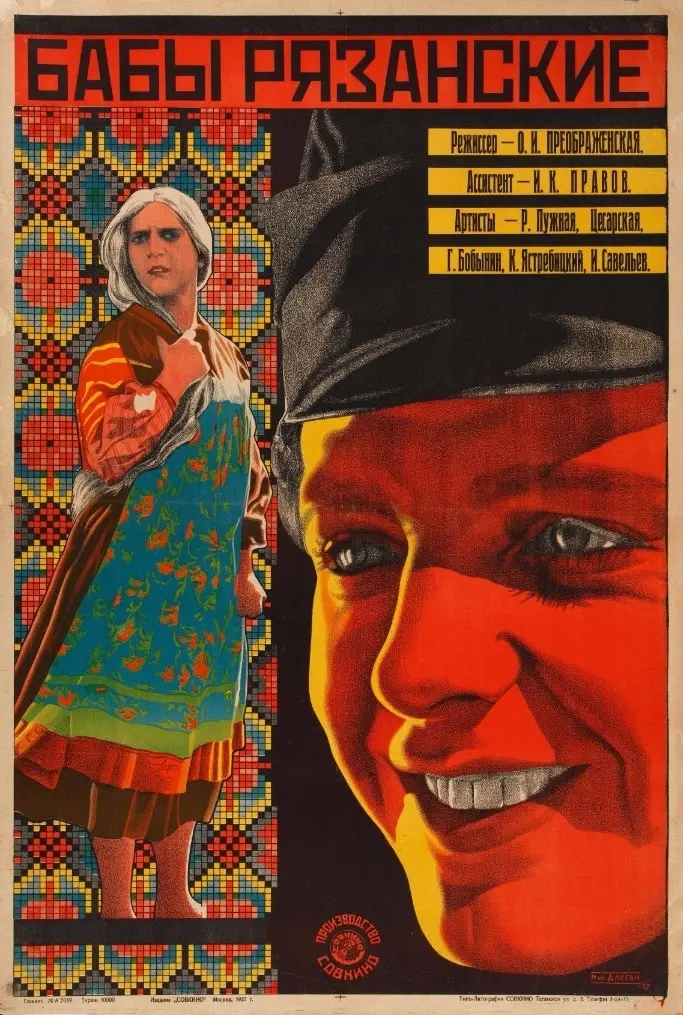
A definitive 7.1/10 rating for a film that redefined the boundaries of cult cinema. Women of Ryazan remains a cornerstone of transgressive art.
Is Women of Ryazan a forgotten relic or a necessary revelation? Short answer: It is a vital, albeit painful, document of pre-revolutionary tradition clashing with early Soviet ideology. This film is for viewers who appreciate raw social realism and the 'female gaze' in silent cinema; it is not for those seeking a lighthearted pastoral escape.
This film works because it refuses to romanticize the Russian countryside, opting instead for a gritty, ethnographic accuracy that feels modern. This film fails because its final act succumbs to the didacticism common in early Soviet cinema, sacrificing character nuance for political messaging. You should watch it if you want to see one of the few silent-era films directed by a woman (Olga Preobrazhenskaya) that actually centers female suffering without being purely exploitative.
Directing in 1927, Olga Preobrazhenskaya achieved something that many of her male contemporaries—even the greats like Eisenstein—often missed: the internal life of the domestic sphere. While the men were busy with the mechanics of revolution and the geometry of montage, Preobrazhenskaya was looking at the dirt under the fingernails and the fear in a young bride's eyes. In Women of Ryazan, the camera doesn't just observe; it indicts. It looks at the village structure not as a quaint community, but as a prison of tradition.
Take, for instance, the scene where Wassily organizes the meeting of the 'frauleins.' In a typical film of the era, such as The Country Heir, this might be played for light comedy or romantic tension. Here, it is filmed with a cold, transactional distance. The women are framed in groups, their individuality erased by the collective pressure to perform for the patriarch. Preobrazhenskaya uses close-ups not to beautify, but to reveal the anxiety beneath the headscarves. It is a masterclass in tension.
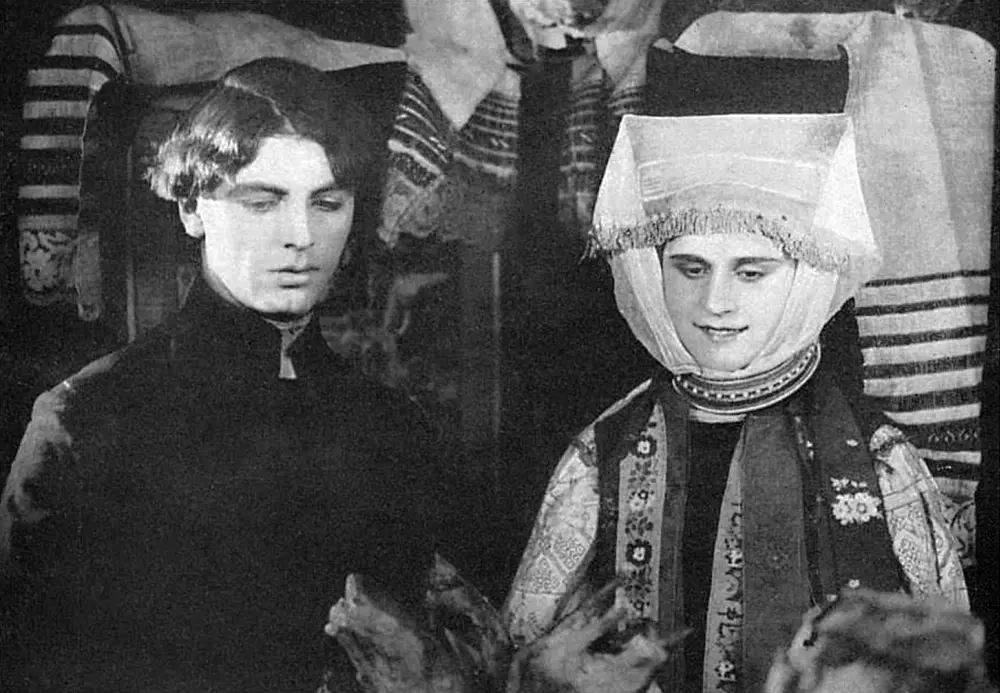
The direction is remarkably grounded. Unlike the frantic energy of J'accuse!, which uses cinematic language to scream against the horrors of war, Women of Ryazan whispers its horrors. The horror is in the silence of the fields and the darkness of the izba (peasant hut). It is a slow-burn tragedy that relies on the audience’s growing realization that Anna has no escape. The pacing is deliberate, reflecting the cyclical, unchanging nature of rural life before the storm of change arrived.
Yelena Maksimova, as Anna, delivers a performance that is devastating in its restraint. In an era often characterized by theatrical overacting, Maksimova remains remarkably internal. Her Anna is not a weeping willow; she is a girl trying to survive a system that views her as property. When she is reunited with Ivan, there is a brief flicker of hope, but Maksimova plays it with a wary edge. She knows that in Ryazan, joy is a fleeting commodity.
The real standout, however, is Kuzma Yastrebitsky as Wassily. He is the personification of the 'Old World'—sturdy, religious, and utterly corrupt. There is a specific moment after the wedding where his gaze shifts from fatherly to predatory. It is a subtle shift in his posture, a slight lingering of the eyes, that makes the skin crawl. It is a performance of terrifying normalcy. He isn't a mustache-twirling villain; he is a man who truly believes his power is divinely ordained. This makes him far more dangerous.
The supporting cast, particularly Emma Tsesarskaya as the more defiant daughter-in-law, provides a necessary foil to Anna. Tsesarskaya brings a fiery energy to the screen that contrasts with Anna’s quiet suffering. Her performance signals the coming shift in the Soviet social fabric. While Anna represents the tragedy of the past, Tsesarskaya’s character represents the resilience required for the future. It works. But it’s flawed by the script's need to make her a symbol rather than a human.
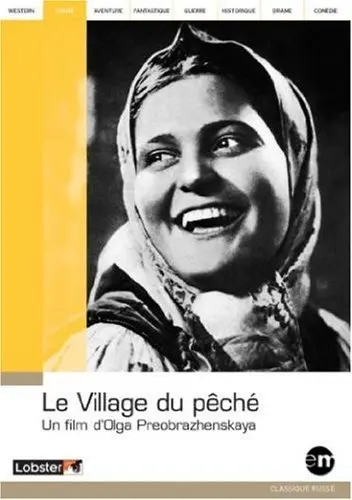
The film’s visual language is deeply rooted in the soil of the Ryazan district. The cinematography captures the vastness of the Russian plains, but it never feels empty. Every shot of the wheat fields or the river is loaded with meaning. The river, in particular, serves as a recurring motif—a place of baptism, a place of labor, and eventually, a place of finality. The use of natural light gives the film a documentary-like quality that was ahead of its time.
Consider the wedding sequence. It is shot with an emphasis on the claustrophobia of the interior spaces. The low ceilings and the crowded frames create a sense of entrapment that mirrors Anna’s situation. Outside, the world is wide and beautiful, but inside, the traditions of the village squeeze the life out of the characters. This visual dichotomy is more effective than any dialogue could be. It is a silent film that understands the power of the frame to tell the story of a soul.
The editing is less 'experimental' than other Soviet films of 1927, but it is more purposeful in its storytelling. It doesn't use montage to shock the viewer; it uses it to build a sense of inevitable doom. The way the film cuts between the labor in the fields and the domestic tensions creates a rhythm that feels like a heartbeat—sometimes steady, sometimes racing with fear. It is a sophisticated use of the medium that respects the viewer's intelligence.
Yes, Women of Ryazan is worth watching for anyone interested in the evolution of feminist cinema and the history of the Soviet Union.
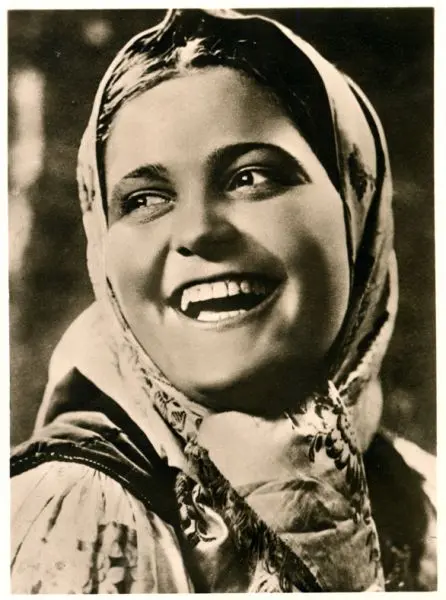
It provides a rare, unvarnished look at the lives of peasant women during a period of massive social upheaval. While some of the ideological messaging in the final act feels forced, the core human tragedy is universal. It is a film that demands your attention and rewards it with a profound sense of empathy. It is not 'entertainment' in the modern sense, but it is a powerful piece of art that still has the power to provoke and disturb.
Pros:
1. Exceptional lead performance by Yelena Maksimova.
2. Authentic, non-romanticized depiction of rural Russian life.
3. Strong directorial vision that centers female experience.
4. Beautiful, atmospheric cinematography that uses the landscape as a character.
Cons:
1. The pacing can feel sluggish for modern audiences.
2. The shift from personal tragedy to political allegory is jarring.
3. The patriarch’s villainy, while realistic, makes for a very bleak viewing experience.
Women of Ryazan is a haunting, essential piece of cinema that refuses to look away from the darker corners of human tradition. It is a film about the cost of progress and the weight of the past. While it lacks the stylistic pyrotechnics of some of its contemporaries, its emotional honesty and directorial precision make it a standout of the silent era. It is a brutal reminder that behind every 'traditional' value, there is often a hidden victim. Preobrazhenskaya didn't just make a movie; she made a witness statement. It is uncomfortable, it is beautiful, and it is absolutely necessary. It remains a towering achievement in the 'village film' genre, far surpassing the more simplistic narratives found in films like The Country Heir. Watch it for the history, but stay for the heart-wrenching humanity.
IMDb 7.5
1923
Community
Log in to comment.