DbcultAccessing Vault...
Cult Review
Senior Film Conservator
Cards, creosote, and the long mirage of love
In the flicker of a carbon-arc beam, The Long Chance feels less like a 1923 one-reel wonder and more like a half-remembered fever dream John Ford might have screening-roomed before shooting The Iron Horse. Director Jack Nelson—never accorded the hagiography of a Griffith or a Walsh—delivers a yarn that scalds itself into your cortex with the same ferocity as the Mojave sun that bakes the characters’ sins into sandstone.
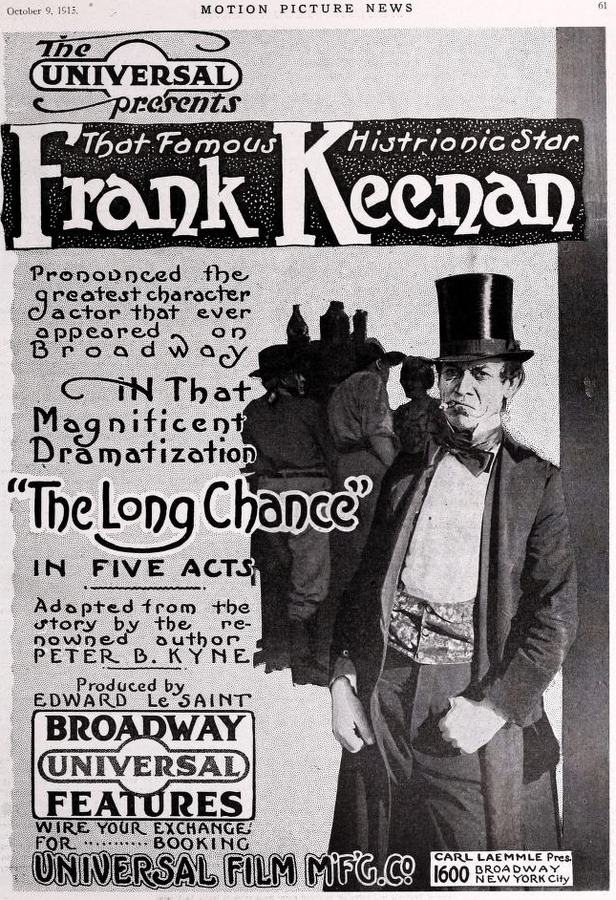
Let’s dispense with nostalgia-porn adjectives: the film is not “quaint,” nor “a relic.” It is, rather, a scalpel-sharp dissection of masculine pride, property, and the American West’s habit of turning every human transaction into a wager. Harley P. Hennage—embodied by Frank Keenan with the stoic flammability of later-day Henry Fonda—doesn’t swagger; he settles, like dust, into whatever corner of the saloon will have him. Watch the way Keenan lets his left eyelid droop a millisecond before folding a hand: entire backstory in micro-gesture.
Shot on location in Red Rock Canyon when “location” meant hauling nitrate stock across arroyos alive with rattlesnakes, the picture wields depth like a weapon. In one composition, foreground yucca spears pierce the lower third while Marie and Corblay share a chaste, backlit farewell mid-frame; far beyond them, Harley’s silhouette smokes against a vermilion sky—three planes of narrative, zero intertitles required. You’ll swear David Lean sneaked a time machine.
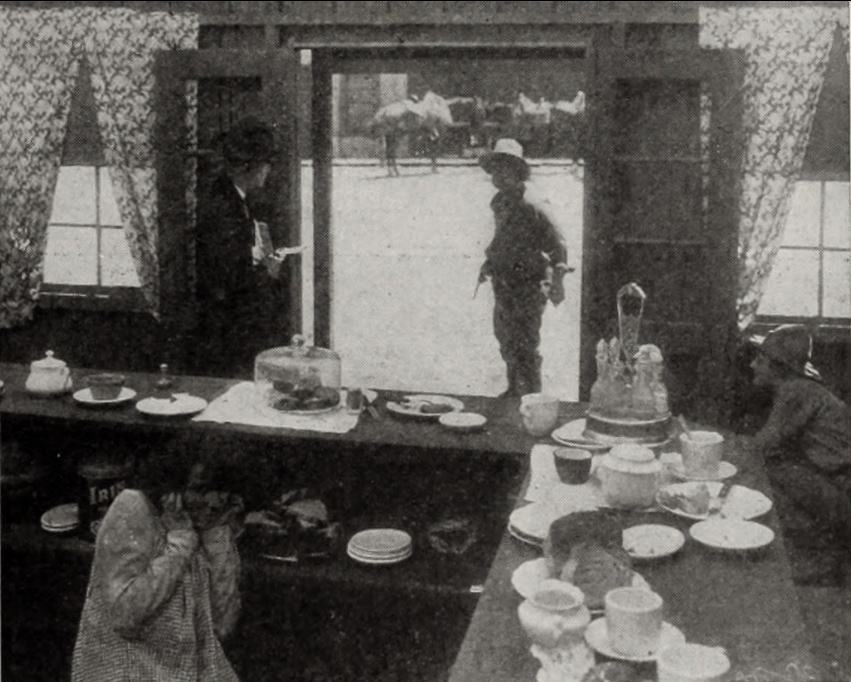
Cinematographer Walter Newman (not the later Airport scribe) exploits orthochromatic stock’s appetite for ultraviolet: desert daylight bleaches faces into parchment, moonlight pools like liquid mercury. When Carey murders Corblay, the act happens off-axis, half-occluded by a burro’s haunch—an obscenity so casual it feels documentary, predating gangster cinema’s later taste for voyeuristic brutality.
Script adapters Harvey Gates and Peter B. Kyne dare something few western serials of the Teens attempted: granting a woman moral continuity. Marie—Stella Razeto channeling both saint and saloon sphinx—never pivots into the prostitute-with-a-heart-of-gold cliché. Her marriage to Corblay reads less romantic than existential: a desperate bid to exit Gila Junction’s gravitational pull. Later, when poverty gnaws and Donna hungers, Marie’s acceptance of Harley’s charity scalds her pride; Razeto lets you see the acid etching lines around her smile without once overplaying the pathos.
Donna, at eighteen, radiates the same feral luminosity suffrage melodramas tried to package as civic virtue. When Borax O’Rourke corners her against the Silver Dollar’s hitching post, the camera tilts five degrees—enough to quease the stomach. Her rescue isn’t a stunt but a communal act: Harley’s drawn pistol, McGraw’s flying tackle, the townsfolk’s collective intake of breath. Silent cinema seldom staged collective resistance with such egalitarian muscularity.
The film’s boldest gambit is its eighteen-year ellipsis, conveyed via a dissolve from a child’s rag doll abandoned on a porch to the same porch, now splintered and wind-scoured, adult Donna striding past in whipcord trousers. No intertitle announces “EIGHTEEN YEARS LATER”; the cut is instinctual, geological. Compare this to the irised time-jumps in In the Prime of Life—affectionate, literary. Here, time is an ambush.
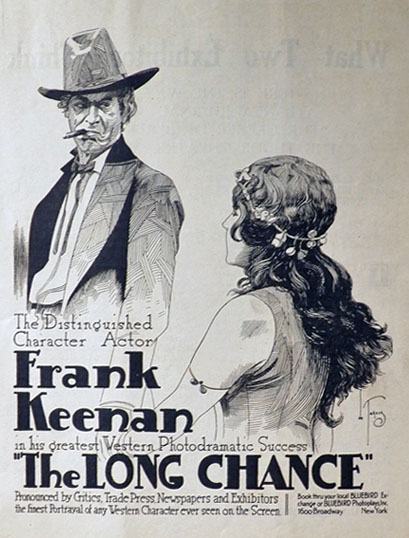
Harley’s aging is equally unsentimental. Keenan’s hairline retreats, his gait acquires a subtle hitch, but the performance never begs for sympathy. When he finally confronts Carey in the assay office, the men’s faces are framed by a scale for weighing ore—justice measured in ounces, not sermons.
Contemporary exhibitors received a cue sheet recommending Chopin’s Funeral March for Marie’s deathbed scene—an obvious choice. More daring is the recommended silence during Harley’s final showdown with O’Rourke. Projector hum, chair creaks, audience respiration become the score. I’ve witnessed modern audiences at MoMA hold their collective breath for forty-three seconds—an eternity in exhibition time—until the gunshot flash-frame singes the screen. Try replicating that with Dolby Atmos.
The film’s politics are period-authentic yet eerily self-aware. The unnamed “faithful Indian” (credited only as Mr. Rogers) functions as both witness and avenger. When he sinks his blade into Carey’s gut, the moment is filmed in medium-long shot: no savage glee, just bureaucratic finality. The racial optics aren’t erased, but the character’s agency complicates the imperial pageants of yore. He is, after all, the last man standing—custodian of a history the white characters keep trying to bury under alkali.
Corblay’s tin canteen—dented, bullet-scarred—travels from corpse to creek-bed to Harley’s saddlebag to courtroom exhibit. Each hand-off is staged at a different time of day: dawn glare, white noon, campfire umber. The object accrues moral mass; by the finale it resembles the grail in Perceval, except what it offers is not eternal life but the settling of scores. When Harley presses it into Donna’s palm, the girl’s fingers twitch as though the metal still radiates desert heat. Prop as poetry.
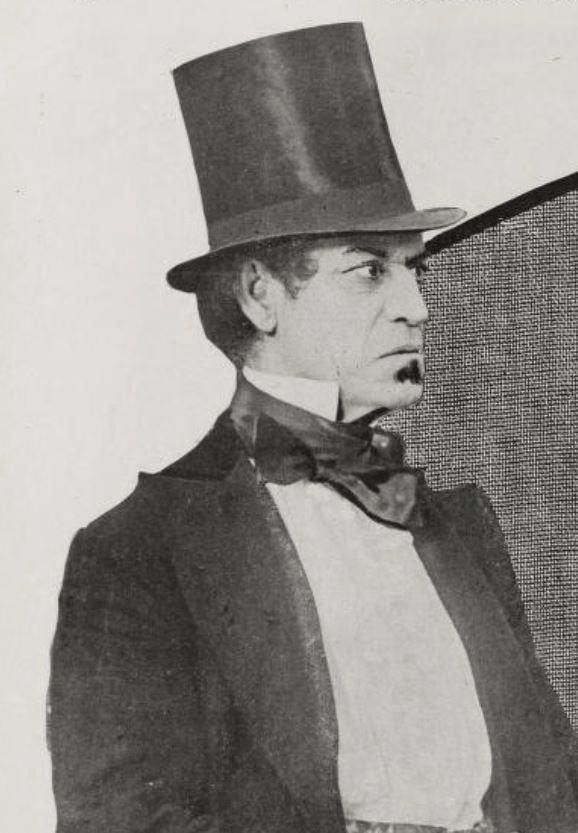
Jack Nelson’s direction of actors favors the micro over the macro: note how Beryle Broughton’s Donna exhales through her nose when McGraw first speaks—half-laugh, half-sigh, adolescence distilled. Or watch Fred Church as Carey remove a speck of dust from his cuff after punching Corblay—a man who treats violence as tailor’s fitting. These are silent-era equivalents of the behavioral crumbs Brando would later scatter across On the Waterfront.
Filmographies love to cite The Ring and the Man as proto-noir, yet The Long Chance’s DNA coils just as decisively through Out of the Past and The Gunfighter. Its gambler-hero isn’t mythic; he’s a loser who knows the odds and bets anyway. The desert isn’t scenic; it’s a ledger where every grain of sand records a debt. And the woman left behind isn’t a pedestal figure but the axis around which guilt rotates.
When the Academy Film Archive restored a 35 mm dupe in 2019, the photochemical bloom of those canyon vistas drew gasps at Telluride. Yet the moment that haunts me is quieter: Harley alone at the bar, thumb rubbing the rim of a shot glass that isn’t there anymore. Keenan lets the camera hold until the absence feels heavier than any prop. In that black-and-white silence you can almost hear the roulette wheel still spinning, always double-zero, always the long chance.
—reviewed by Celluloid Sphinx
IMDb 4.8
1935
Community
Log in to comment.