DbcultAccessing Vault...
6.2/10
Senior Film Conservator
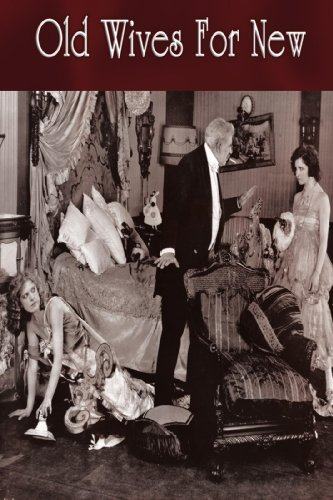
A definitive 6.2/10 rating for a film that redefined the boundaries of cult cinema. Old Wives for New remains a cornerstone of transgressive art.
In the nascent days of cinema, when the flickering images on screen held a potent, almost magical sway over audiences, certain films dared to tread paths considered scandalous, provocative, and deeply resonant with the social anxieties of the era. Cecil B. DeMille, though not credited as director for 'Old Wives for New', was an auteur synonymous with such audacity, and the film, penned by the perceptive Jeanie Macpherson and David Graham Phillips, certainly embodies this spirit. Released in 1918, amidst the turmoil of a world war and the burgeoning movements for social change, this silent drama plunges headfirst into the tumultuous waters of marital dissatisfaction, societal expectation, and the pursuit of personal happiness, even if it meant shattering conventions.
It’s a fascinating artifact, not just for its narrative daring but for its candid portrayal of a domestic landscape fraught with unspoken resentments and unfulfilled desires. One might compare its boldness in depicting marital strife to later, more explicit dramas, but for its time, it was a profound statement. The film, in its essence, asks uncomfortable questions about the nature of commitment, the superficiality of appearances, and the lengths to which individuals will go to escape a life of quiet desperation.
At the heart of 'Old Wives for New' lies the predicament of Charles Murdock, portrayed with a compelling blend of weary resignation and simmering longing by the esteemed Theodore Roberts. Murdock is a man suffocating within the confines of a marriage that has long since ceased to offer solace or companionship. His wife, Mrs. Murdock, played by Edythe Chapman, is depicted with an unsparing realism as 'fat and lazy' – a characterization that, while crude by today's standards, was meant to instantly convey her perceived failings and the source of Charles's profound discontent. This isn't merely a physical description; it's a symbolic representation of a relationship that has grown stagnant, heavy, and devoid of vitality. Chapman's performance, though constrained by the silent medium, effectively communicates a woman perhaps oblivious to her husband's growing alienation, or perhaps too comfortable in her inertia to care.
The film doesn't shy away from presenting this domestic decay as a catalyst for Charles's wandering eye, rather than simply a moral failing. It subtly suggests that societal pressures, which often dictated women's roles primarily within the domestic sphere, could inadvertently lead to a kind of complacency that ultimately alienated their partners. This nuanced perspective, for a film of its era, is remarkably progressive. It invites the audience to consider the complexities of marital breakdown, moving beyond simple villain-hero dichotomies.
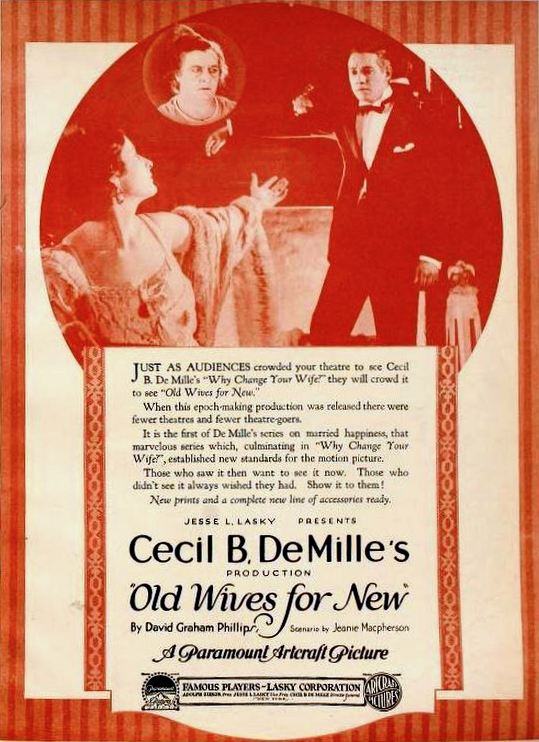
Into this tableau of domestic ennui steps Juliet Raeburn, a figure embodying everything Charles perceives his wife to lack. Portrayed by Florence Vidor, Juliet is depicted as vibrant, alluring, and a stark contrast to the stultifying atmosphere of the Murdock home. Vidor, a prominent actress of the silent era known for her elegance and expressive eyes, imbues Juliet with an irresistible charm that makes Charles’s attraction entirely understandable, if morally questionable. The film uses visual storytelling to emphasize this contrast: the dim, cluttered interiors of the Murdock residence versus the bright, airy spaces Juliet inhabits, or the lively social gatherings she attends. This visual rhetoric is a masterclass in silent film technique, conveying character and mood without a single spoken word.
The burgeoning relationship between Charles and Juliet is not merely a tale of infidelity; it's a narrative exploration of longing, second chances, and the pursuit of a happiness that societal norms often denied. It forces the audience to confront their own biases regarding attraction and the ethics of seeking fulfillment outside conventional boundaries. The screenplay, crafted by Jeanie Macpherson and David Graham Phillips, delves into the emotional landscape of these characters, allowing their motivations to feel authentic, even when their actions challenge the moral fabric of the time. The film doesn't necessarily condone Charles's choices but rather seeks to understand them, pushing the boundaries of what was considered acceptable subject matter for public consumption.
Just as the affair between Charles and Juliet reaches a critical juncture, the narrative takes a dramatic, unexpected turn: Juliet becomes embroiled in a murder investigation. This plot device, while seemingly a convenient contrivance, serves a crucial purpose. It elevates the stakes beyond mere marital discord, thrusting Juliet into a crucible of public suspicion and legal peril. The accusation of murder transforms Charles’s passive longing into active, desperate commitment. His determination to clear Juliet’s name becomes a testament to his genuine affection and belief in her innocence, solidifying their bond in the face of extreme adversity.
The courtroom drama, or rather, the investigation surrounding the murder, would have been a gripping sequence for audiences of the time, providing both suspense and a platform for Charles to demonstrate his loyalty. It's in these moments that Theodore Roberts truly shines, conveying Charles's anguish and resolve through subtle gestures and powerful expressions. The film uses this dramatic interlude not just for thrills, but to test the very foundation of Charles and Juliet's relationship, proving that their connection runs deeper than mere superficial attraction. It’s a narrative strategy reminiscent of how melodramas often used external crises to reveal internal truths, a technique employed in various silent films, though perhaps with less moral ambiguity than seen here. Compare this sudden, life-altering event to the more subtle, character-driven tensions in a film like The Painted Madonna, and you appreciate the different ways silent cinema could build suspense and character development.
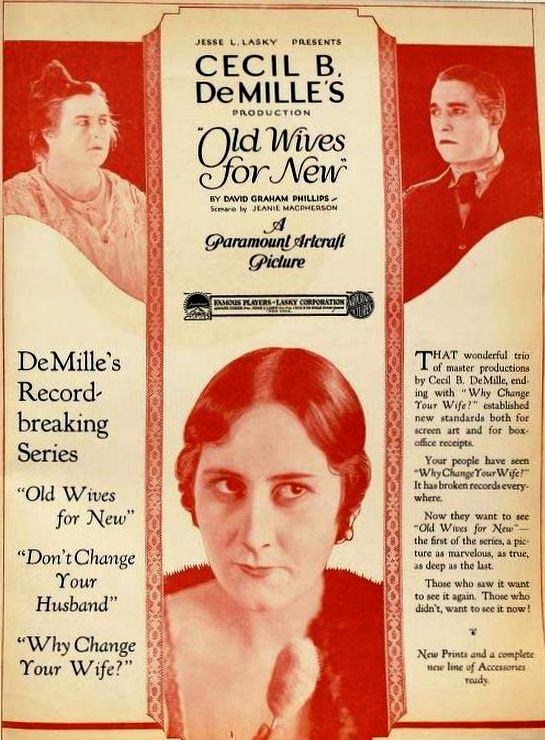
With Juliet’s name cleared, the path is set for Charles to finally pursue the happiness he craves. The film culminates in his divorce from Mrs. Murdock and his subsequent marriage to Juliet. This resolution, while perhaps satisfying from a romantic perspective, carried significant social weight in 1918. Divorce was still largely stigmatized, especially when initiated for reasons of infidelity or dissatisfaction rather than extreme abuse. The film’s portrayal of a man leaving his 'old wife' for a 'new' one, and finding a measure of contentment, was a bold statement, challenging the deeply ingrained Victorian ideals of lifelong, immutable marriage.
It speaks to a shifting cultural landscape, where individual happiness was slowly gaining ground against rigid societal expectations. One could draw parallels to the broader discussions around women's rights and evolving social roles, as seen in documentaries like What 80 Million Women Want, which explored the burgeoning feminist movement. While 'Old Wives for New' focuses on Charles's journey, its implications for women – both the 'old wife' left behind and the 'new wife' who risked social ostracism – are profound. It's a testament to the writers, Macpherson and Phillips, that they crafted a narrative that, while entertaining, also engaged with such complex social issues.
Beyond the central trio, 'Old Wives for New' boasts a rich ensemble cast that adds depth and texture to its world. Actors like Sylvia Ashton, Wanda Hawley, Helen Jerome Eddy, Tully Marshall, Julia Faye, Lillian Leighton, Mayme Kelso, Guy Oliver, J. Parks Jones, Charles Ogle, Raymond Hatton, William Boyd, Larry Steers, Edna Mae Cooper, Lloyd Hughes, Noah Beery, Madame Sul-Te-Wan, Elliott Dexter, Gustav von Seyffertitz, and Alice Terry, each contribute to the tapestry of societal judgment, gossip, and moral support that surrounds Charles and Juliet. While their roles might be secondary, their collective presence reinforces the idea that personal dramas rarely unfold in a vacuum; they are always observed, commented upon, and influenced by the broader community.
Tully Marshall, often a character actor of great distinction, might have played a legal figure or a moralizing friend, adding a layer of realism to the societal reactions. Noah Beery, known for his imposing screen presence, could have embodied a menacing figure connected to the murder plot, or a judgmental community member. The presence of such a vast and talented cast, even in smaller roles, speaks to the production values of the time and the desire to create a fully realized world for the narrative to unfold within. Each face, each gesture, each reaction shot, would have contributed to the audience's understanding of the film's moral landscape. The meticulous attention to casting, even for minor parts, ensured that the film felt robust and authentic, a hallmark of many successful silent era productions.
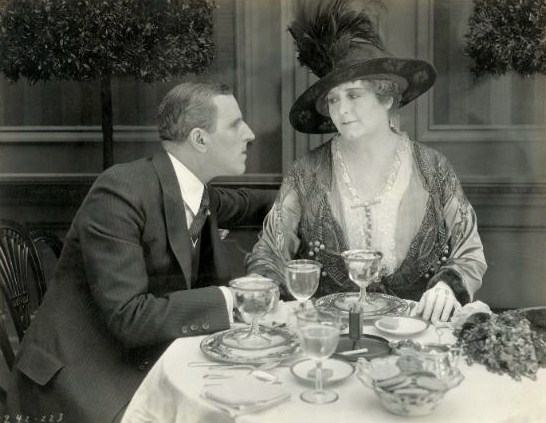
The strength of 'Old Wives for New' lies significantly in its screenplay. Jeanie Macpherson, a prolific writer for Cecil B. DeMille and a significant figure in early Hollywood, had a knack for crafting narratives that were both dramatically engaging and socially relevant. Her collaboration with David Graham Phillips, a journalist and novelist known for his progressive views and critiques of societal corruption, likely infused the film with its sharp commentary on marriage, class, and gender roles. Phillips's novelistic background, combined with Macpherson's cinematic acumen, created a script that was rich in character development and thematic depth, yet perfectly suited for the visual medium of silent film.
The use of intertitles, while a necessity of the era, is handled with precision, providing just enough dialogue and exposition to guide the audience without interrupting the flow of visual storytelling. The film relies heavily on the actors' expressive performances, the careful staging of scenes, and the evocative power of cinematography to convey emotions and narrative beats. This is where silent cinema truly shines, demanding a different kind of engagement from its audience – one that involves active interpretation of non-verbal cues. The film stands as a testament to the power of visual rhetoric, proving that complex human dramas could be effectively communicated without spoken words, a skill that writers like Macpherson honed to perfection.
Over a century after its release, 'Old Wives for New' continues to resonate, not merely as a historical curiosity but as a compelling piece of social commentary. Its exploration of marital dissatisfaction, the allure of new love, and the courage required to defy societal norms remains as relevant today as it was in 1918. While the specifics of its setting and the visual language of silent film might feel distant, the underlying human emotions and dilemmas are timeless. The film offers a valuable window into the moral complexities of an era grappling with rapid social change, and it reminds us that the pursuit of personal happiness often comes at a cost, both personal and societal.
It's a film that deserves to be rediscovered, studied, and appreciated for its daring narrative and its contribution to the evolving art of cinema. In a landscape of films that often shied away from challenging the status quo, 'Old Wives for New' stands out as a bold, unflinching examination of the human heart's capacity for both complacency and profound transformation. It reminds us that stories of personal liberation, even those fraught with moral ambiguity, have always been a powerful force in cinematic expression.
IMDb —
1924
Community
Log in to comment.