DbcultAccessing Vault...
Cult Review
Senior Film Conservator
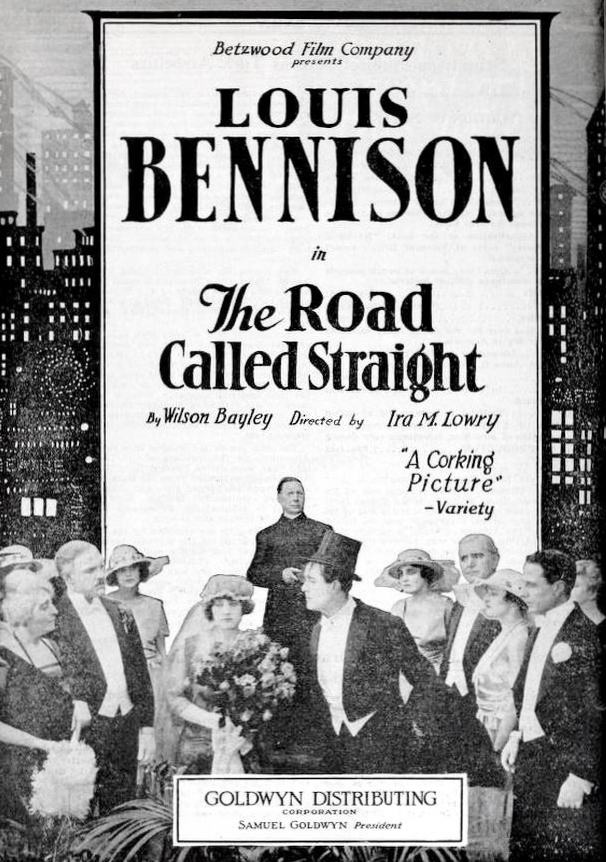
Ah, the silent era! A time when narratives unfolded through the eloquent ballet of gesture, expression, and the potent power of visual storytelling. Amidst the myriad cinematic offerings of its time, a film like The Road Called Straight (1919) emerges not merely as a historical artifact, but as a compelling exploration of human nature, societal stratification, and the arduous path to genuine affection. Directed with a keen eye for dramatic tension and character development, and penned by Wilson Bayley, this feature plunges us into a world where the rugged sincerity of the American West collides head-on with the often-hollow sophistication of Eastern high society.
At its heart, The Road Called Straight is a quintessential tale of contrasts. We are introduced to Al Boyd, portrayed with earnest conviction by Henry Mortimer, a character who embodies the self-made American dream, albeit one forged in the dust and toil of a cattle ranch. Boyd is a man of substance, not merely in wealth but in character, possessing an unwavering moral compass and a heart brimming with genuine emotion. His foil, or rather, his object of affection, is Betty Swiftmore, brought to life by the nuanced performance of Ormi Hawley. Betty is the epitome of refined Eastern elegance, accustomed to the opulent trappings and superficial pleasantries of her social circle. Her world, however, is on the precipice of collapse, threatened by a looming lawsuit that could dismantle her family's meat-packing empire. This precarious situation forces her hand, compelling her to accept Al's marriage proposal – a pragmatic decision rather than one born of ardent love. This arranged union, a frequent trope in silent melodramas, sets the stage for a profound character arc, particularly for Betty, as she navigates the chasm between her preconceived notions and the authentic virtues embodied by her new husband.
The initial chapters of their marriage are steeped in a palpable chill. Al's rough-hewn charm, his unpolished manners, and his inability to seamlessly blend into Betty's rarefied social milieu only serve to widen the emotional gulf between them. The film masterfully uses visual cues – Al's discomfort in a tuxedo, the raised eyebrows of Betty's society friends – to underscore this societal dissonance. This period of estrangement is fertile ground for the film's antagonist, Harrison Stevens, played by Louis Bennison. Stevens is the archetypal cad, charming on the surface but utterly devoid of integrity. He represents the very superficiality that Al's character stands against. Stevens, seizing upon Betty's discontent and her lingering affection for him, embarks on a deceitful scheme, luring her to a secluded mountain cottage under the false pretense of a chaperoned retreat. This manipulation is a classic plot device, not dissimilar to the moral quandaries explored in films like One Touch of Sin, where characters grapple with temptation and the consequences of moral compromise. The tension escalates dramatically as Al, driven by an instinctual love and an unwavering determination, sets out in pursuit, culminating in one of the film's most memorable sequences.
The strength of any silent film rests heavily on the shoulders of its performers, and The Road Called Straight is no exception. Henry Mortimer, as Al Boyd, projects an admirable stoicism and a quiet strength. His portrayal conveys a man who might be awkward in a ballroom but is utterly resolute in his convictions. Mortimer's Al isn't a caricature of the Westerner; he's a deeply feeling individual whose love for Betty transcends her initial disdain. He communicates vulnerability and determination through subtle shifts in posture and intensely focused gazes, making Al's pursuit and ultimate confrontation both believable and emotionally resonant.
Ormi Hawley's performance as Betty Swiftmore is equally critical. Her journey from a frigid, society-bound debutante to a woman capable of genuine love is the film's emotional fulcrum. Hawley masterfully conveys Betty's initial snobbery and discomfort, her internal struggle with her arranged marriage, and the gradual thawing of her heart. The transformation isn't instantaneous but a carefully paced evolution, making her eventual acceptance of Al feel earned and authentic. Her expressions of disdain, confusion, and finally, dawning realization are pivotal to the film's success. Louis Bennison, as Harrison Stevens, delivers a performance that perfectly encapsulates the alluring danger of a manipulative character. He is suave and superficially charming, making his betrayal all the more insidious. His ability to project duplicity without uttering a single word is a testament to the power of silent film acting.
The narrative flow, orchestrated by Wilson Bayley's screenplay, is a testament to the era's storytelling prowess. Bayley constructs a plot that, while leaning into familiar melodramatic arcs, maintains a compelling pace and introduces significant character development. The film’s direction leverages the visual medium to its fullest. The contrasting settings – the bustling, artificial world of the Eastern elite versus the raw, untamed beauty of the mountains – are not merely backdrops but integral components of the narrative, reflecting the internal conflicts of the characters. The sequence involving Al’s pursuit, partially on an iceboat, is a particularly thrilling highlight, showcasing the capabilities of silent cinema to deliver dynamic action. This dramatic chase sequence, a hallmark of many adventure films of the era, serves as a powerful metaphor for Al's relentless drive and the obstacles he must overcome, akin to the perilous journeys depicted in films like The Primitive Call, where characters are tested by the harshness of nature.
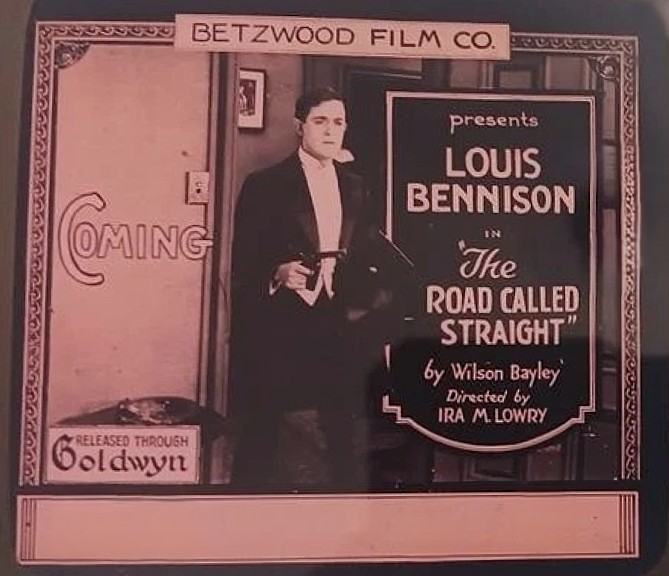
The cinematography, though perhaps not groundbreaking by today's standards, effectively uses light and shadow to enhance mood and delineate character. Close-ups are employed to capture the subtle nuances of emotion, essential for conveying dialogue without sound. The visual language is clear, ensuring that audiences of the time, and indeed today, can easily follow the intricate emotional currents and plot developments. The film’s ability to evoke strong feelings through purely visual means is a powerful reminder of the artistry inherent in silent cinema. The contrast between the rigid, formal environments of society balls and the expansive, natural landscapes of the ranch and mountains is starkly drawn, emphasizing the thematic clash of authenticity versus artifice.
Beyond its surface as a romantic drama, The Road Called Straight delves into several enduring themes. The most prominent is the clash between social classes and values. Al Boyd represents the rugged individualism and inherent goodness often associated with the American frontier, a stark contrast to the perceived decadence and superficiality of the Eastern elite. Betty's initial repulsion by Al is rooted in this societal conditioning, a prejudice that the narrative slowly but surely dismantles. This theme resonates with other silent era films that explored the disparities between urban and rural life, such as The Plow Girl, which often championed the virtues of simplicity and honest labor over metropolitan artifice.
Another significant theme is the nature of true love and commitment. Betty's marriage to Al begins as a transaction, a means to an end. Her journey is one of realizing that genuine affection is not predicated on social standing or superficial charm, but on integrity, loyalty, and a deep, unspoken understanding. Al's unwavering devotion, despite Betty's coldness, ultimately proves to be the catalyst for her transformation. The film subtly argues that true character shines through adversity, and that the 'straight road' is one paved with honesty and moral rectitude. The climax, where Al intervenes to save Betty from Harrison Stevens, is not just a moment of physical rescue but a profound emotional turning point, solidifying Betty's understanding of Al's true worth. This moment of redemption and clarity is a common thread in morally driven narratives, echoing the consequences and revelations found in films like As a Man Sows, where actions ultimately dictate destiny and character is forged in the crucible of difficult choices.
The film also touches upon the idea of personal growth and self-discovery. Betty's journey is not just about falling in love with Al, but about shedding the restrictive layers of her upbringing and discovering her own capacity for genuine emotion and appreciation for qualities beyond the material. Her acquiescence to Al's request to 'travel the straight road together' signifies a profound shift, a commitment not just to a man, but to a way of life defined by honesty and shared purpose. This evolution makes her character arc particularly satisfying and provides a powerful message that transcends the immediate plot.
While perhaps not as widely known as some of its contemporaries, The Road Called Straight is a valuable piece of early American cinema. It offers a fascinating glimpse into the social mores and narrative conventions of the late 1910s. The film's themes of class conflict, the triumph of genuine character over superficiality, and the transformative power of love remain perennially relevant. For enthusiasts of silent films, it provides an excellent example of how complex emotions and intricate plots were conveyed without the aid of spoken dialogue, relying instead on the artistry of performance, direction, and visual storytelling. The film’s ability to evoke empathy for its characters and to build genuine suspense speaks to its enduring quality. It's a reminder that compelling narratives and universal human experiences have always been at the heart of cinematic art, regardless of technological advancements. The simplicity of its title belies the richness of its character development and the depth of its emotional journey.
In conclusion, The Road Called Straight is a commendable silent film that successfully marries melodrama with insightful character study. Its performances by Henry Mortimer and Ormi Hawley are particularly noteworthy, breathing life into a narrative that explores the arduous journey from societal expectation to authentic connection. It serves as a poignant reminder that the path to true happiness often requires abandoning preconceived notions and embracing the genuine, even if unpolished, virtues that lie beneath the surface. For anyone seeking to delve deeper into the rich tapestry of silent film history, this compelling drama offers a rewarding and thought-provoking experience, demonstrating that the road to understanding, much like the road to true love, is often winding but ultimately leads to a profound and meaningful destination.
IMDb —
1921
Community
Log in to comment.