DbcultAccessing Vault...
Cult Review
Senior Film Conservator
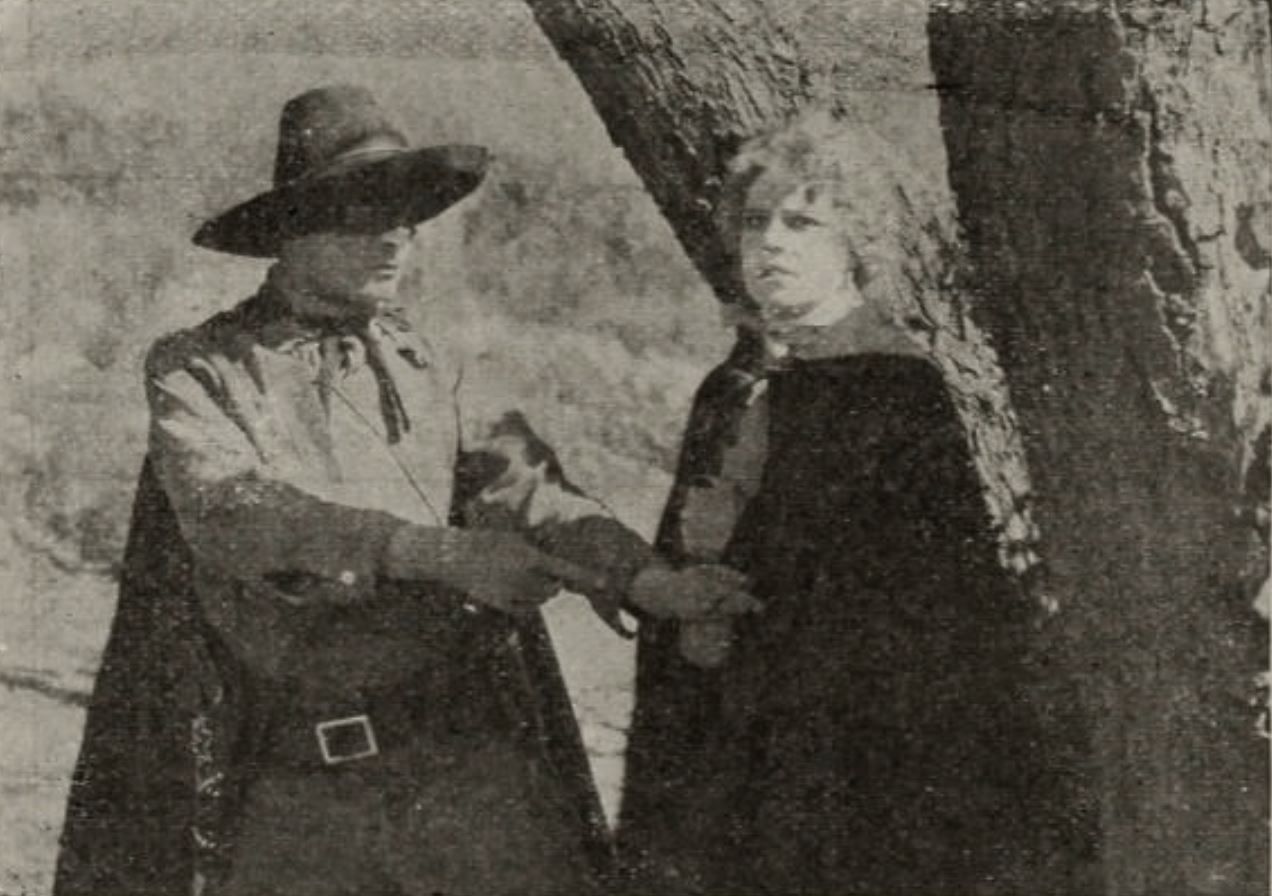
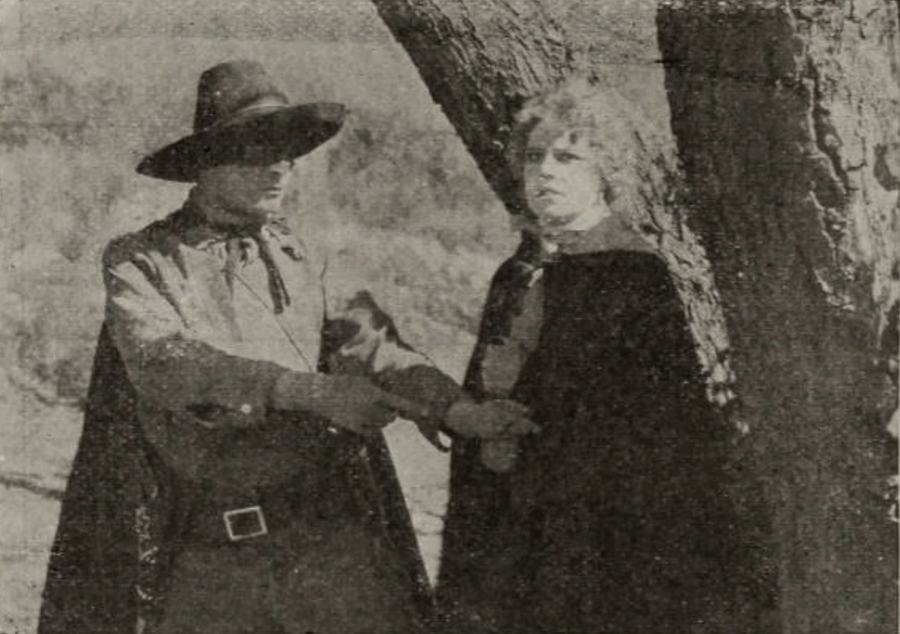
The flickering nitrate of The Love Mask—a 1923 Paramount release that somehow slipped through the cracks of collective memory—unspools like a fever dream stitched from equal parts gold dust and gun-powder. Cecil B. DeMille, still years away from biblical elephants and Technicolor pageantry, here refines the syntax of suspense: every iris-in feels like a leering eye, every double-exposure a moral fracture. Jeanie Macpherson’s scenario, lean yet barbed, weaponizes the mythic persona of the masked outlaw, turning the Western’s masculine sandbox into a hall of mirrors where identity itself becomes negotiable currency.
Wallace Reid, Hollywood’s doomed golden boy, plays Sheriff Dan Deering with the kind of easy carnality that pre-dates the Hays Code by a heartbeat—his smile is a sunrise over a scaffold. Opposite him, Cleo Ridgely radiates flinty pragmatism; her Kate Kenner is no school-marmish placeholder but a tectonic force whose gaze can fracture granite. When four syphilitic ne’er-do-wells (Earle Foxe, Bob Fleming, Lucien Littlefield, and a deliciously weaselly Dorothy Abril) trample her claim, the film stages capital accumulation as sexual assault: shovels become phallic bludgeons, the sluice box a metallic womb violated in daylight.
The transformation sequence—Kate slicing up a black crinoline to fashion the domino mask of the feared bandit Silver Spurs—is lit like a Caravaggio: chiaroscuro slashes carve sin from salvation. DeMille intercuts her needlework with close-ups of a rattlesnake coiling, a visual rhyme that coils around the viewer’s subconscious long after the lights come up. Once masked, Kate rides through moon-washed canyons while organ chords on the soundtrack mimic hoof-beats; it’s erotic kineticism masquerading as moral reckoning.
The saloon hold-up, centerpiece of the picture, explodes in a cataract of visual wit: poker cards snow-flake the air, a croupier’s waxed moustache wilts like a dying fern, and Ridgely’s stunt double vaults from balcony to bar-top in one gravity-defying glide. The camera, freed from its tripod, hurtles alongside her—an early, proto-Steadicam miracle achieved by strapping the apparatus to a beer-dolly. Note how DeMille rhymes this kineticism with the static tableau of the town’s makeshift courtroom: same space, different moral velocity.
Yet the film’s true subversion lies in its dénouement. The real Silver Spurs—until now a campfire rumor—materializes like a deus ex machina, spiriting away both bullion and blame. It’s a narrative hand-off that anticipates the post-modern anti-hero: law and outlaw collapse into one jittery quantum state. When Dan chooses connubial bliss over pursuit, the badge on his chest mutates from emblem of order to souvenir of compromise, a thematic sting that would reverberate through later Westerns from The Girl of the Golden West to Anthony Mann’s psychologically fractious 1950s oeuvre.
Compare this moral liquidity to the granite certitudes of The Great Divide or the spectral absolutism of The Governor’s Ghost. Where those films posit the frontier as cosmic testing-ground, The Love Mask insists it’s a bordello where conscience trades favors and every sunrise demands hush-money.
Technically, the picture brims with micro-revelations: tinting shifts from amber daytime to cyanic nightscapes without warning, as if the emulsion itself suffers mood-swings; intertitles, hand-lettered by Macpherson, crackle with dime-novel pungency (“Justice wore a veil tonight—and her lips were cold as lead”). The 35mm print screened at Pordenone revealed marginalia: thumb-prints, water-rings, even a lipstick smooch—ghosts of 1923 audiences annotating the text with their own hungry lives.
Contemporary critics, drunk on Fairbanksian swashbuckle, dismissed the film as “a curio for the fairer sex.” How wrong they were. Beneath its pulpy veneer, The Love Mask stages an early referendum on gendered power: Kate’s mask is not concealment but revelation, a Lacanian assertion that Woman is always already the phallus she appropriates. When Dan rips it away, the exposed face—stripped of both civility and criminality—becomes a terrifying tabula rasa, a frontier Eve who will name her own sins, thank you very much.
Wallace Reid’s final close-up—eyes shining with erotic complicity rather than moral clarity—prefigures his own tragic coda: within months he would be dead from morphine, a casualty of studio-sanctioned addiction. Knowing this lends the film’s last shot (the lovers silhouetted against a sunrise that looks suspiciously like a hemorrhage) an aching premonition of Hollywood’s coming body-count.
So seek out The Love Mask if you crave a Western that trades heroic bombast for velvet-gloved subversion, where every gun-crack echoes like a slammed door on the 19th century. And while you’re at it, double-feature it with The Sunny South or The Whirlwind of Fate for a seminar on how early cinema weaponized melodrama to dissect the very myths it pretended to celebrate.
Verdict: a rediscovered gem whose black silk mask still smells of gunpowder, perfume, and the metallic tang of betrayal. Wear it at your own risk.
IMDb 6.1
1933
Community
Log in to comment.