DbcultAccessing Vault...
7/10
Senior Film Conservator
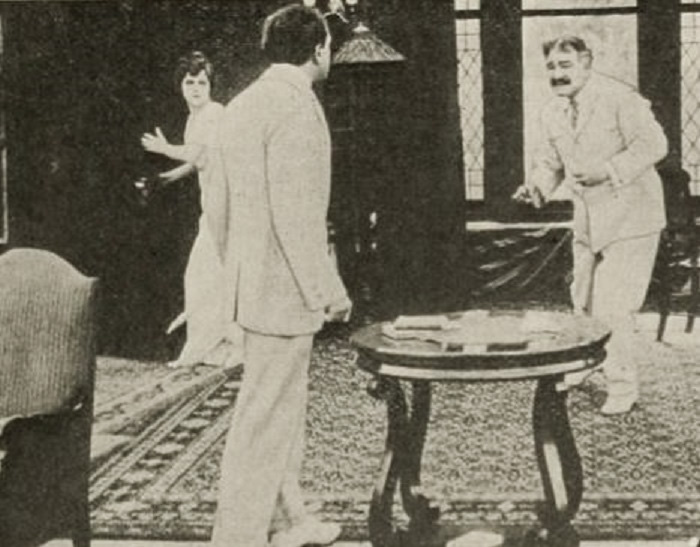
A definitive 7/10 rating for a film that redefined the boundaries of cult cinema. A Prince of India remains a cornerstone of transgressive art.
Picture the moment: a locomotive exhales cinders onto a snow-dusted platform while, through its steam, a turbaned sovereign steps down—his slippers embroidered with peacocks, his gaze already mapping lecture halls and soda counters. The year is 1914; the place an anywhere-USA college town still smelling of harvest hay and pool-hall cigars. In his jewel-casket rides a diamond so incandescent it seems to prefigure technicolor, yet its facets refract the unease of empire: every sparkle is a debt to somewhere darker. The maharajah’s mission—American enlightenment for the heir—collides with the republic’s hunger for spectacle, and the first to sniff blood are the newspapermen, collars up, pencils twitching like dowsing rods.
What follows is less a linear plot than a prism held to gaslight: motives split, recombine, dazzle. The prince—let’s call him Ravi because the film never does—wants jazz-age assimilation. Billy, cub reporter with ink in his veins, wants a scoop. Nell wants deliverance from a past that once crowned her “badger queen” inside some lurid carnival tent. Moreland, the gentleman crook, wants the rock for the oldest reason: to own something indestructible in a world of pawnshops. The diamond thus becomes capitalism’s punch-line—everyone chasing liquidity wearing the mask of destiny.
Most of the story unfolds inside a three-story clapboard hotel whose wallpaper sprouts roses like an afterthought. Corridors bend inward, recalling German expressionism before Germans bothered; doors squeal moral uncertainty. When the prince secretly unlocks his father’s strongbox, the camera does not cut—an audacious choice for 1914—allowing us to register every tremor of filial betrayal. Later, Billy’s discovery of the gem inside his cuff unfolds in silhouette; the diamond rolls across the floorboards like a tiny comet while shadows ripple, suggesting Fate’s hand playing marbles with mortals.
“Silent cinema at its most eloquent whispers rather than declaims; the floorboard creak is its iambic pentameter.”
Thurlow Bergen’s prince exudes silk-shirt vulnerability—eyebrows perpetually asking forgiveness for a crime not yet committed. Opposite him, Elsie Esmond’s Nell balances world-weary pragmatism with flickers of tenderness; when she removes her Countess Mirska diadem, you sense the exhalation of a woman stepping out of her own mythology. M.O. Penn’s Moreland glides with reptilian grace, part club-chair philosopher, part switchblade. Meanwhile Billy Mason, as the reporter, embodies American striving: elbows, teeth, and a conscience that will not shut up.
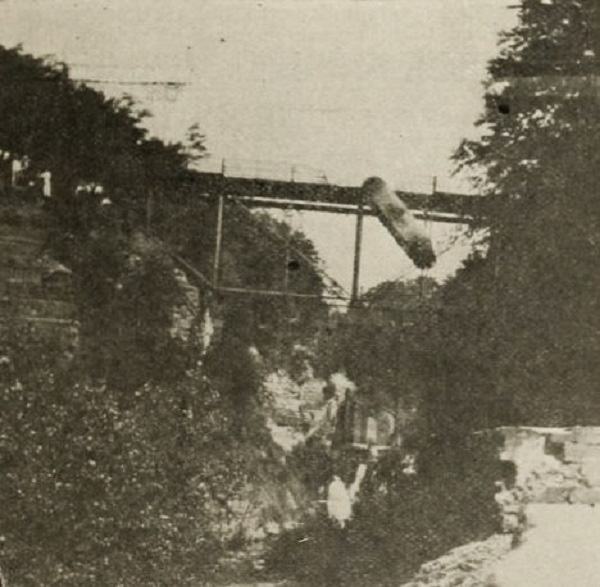
Watch for the scene where Nell first fingers the diamond: her pupils dilate like ink in water, then contract the instant she hears Moreland’s voice-off. No intertitle intrudes—none needed. Or study Billy in bed, tormented by responsibility: he tosses, the camera looms, and a single bead of sweat catches the studio’s carbon arc, turning into a bead of liquid fear. Such minutiae, monumental on a big screen, remind us that close-ups were still a novelty; directors used them like exclamation marks.
Underneath the heist mechanics lies a morality play about possession. The diamond is India’s geological memory, yet once it crosses the ocean it morphs into pure commodity—every handshake raises its price. The film slyly asks: can a colonial artifact ever be private property, or does it carry the subcontinent’s breath in every reflection? Each character who briefly owns the stone inherits also a doom: insomnia, suspicion, fractured friendship, physical peril. Only when the prince reclaims it—bloodied yet wiser—does the cosmic ledger feel rebalanced.
Directors Theodore and Leopold Wharton splice Keystone-style slapstick with noir tension: waiters perform pratfalls while pickpockets patrol, a drunk philosopher recites Sanskrit love couplets as a trolley clangs toward a gap-toothed bridge. The tonal whiplash anticipates Hitchcock’s “tears in the rain” aesthetic forty years early, proving that early audiences were more elastic than we sometimes credit.
Nell’s arc straddles exploitation and empowerment. Blackmailed into crime, she weaponizes charm, but the script grants her the final choice: she flings crucial information to Billy, gambling on redemption. In a medium where women often functioned as trussed-up mise-en-scène, Nell’s volition feels radical—she is both damsel and deus ex machina.
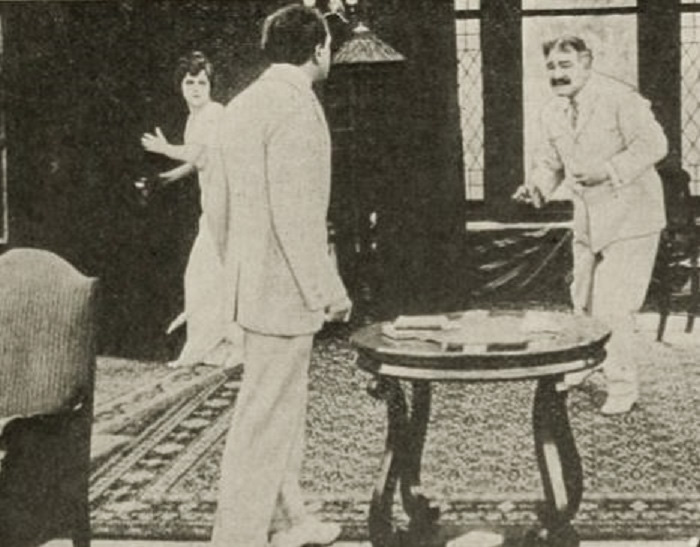
Surviving prints lack original musical cues, yet the rhythm is innate: the diamond’s tumble syncopates with projector chatter, the trolley collision lands like a timpani strike. Modern accompanists often deploy sitar glissandi during Indic references then pivot to ragtime when flappers appear, forging a sonic bridge across which colonial melancholy jostles with jazz exuberance.
Think of The Rajah’s Diamond Rose (same gemstone obsession, more orientalist frosting) or The Mystery of the Black Pearl (another colonial jewel unleashing chaos). Yet A Prince of India predates both, and its hybrid DNA—campus comedy plus crime thriller plus colonial critique—renders it a mutant ancestor to later capers from Hitchcock’s Saboteur to Indiana Jones.
A 4K restoration premiered at Pordenone 2019, scanned from a 35 mm nitrate print discovered beneath a Montana courthouse. Tints follow archival notes—amber for interiors, viridian for exteriors, rose for the diamond’s POV shots. While the third reel shows water damage resembling frostbite, the image pulsates with renewed life. Streaming rights currently rotate between Criterion Channel and a boutique label specializing in pre-1920 rarities; Blu-ray rumored for 2025.
This is not a quaint relic but a kinetic Rorschach test: colonial guilt, American bravado, and human greed swirl in a prism whose shards still draw blood. Direction, though bound by two-reel economy, brims with visual audacity; performances thread melodrama with modern ambiguity; thematic undertow interrogates ownership in ways contemporary blockbusters rarely dare. Approach expecting primitive clowning and you’ll exit chastened—like Billy discovering that a single mislaid stone can tilt the planet.
Direction: 8.5/10 – Tonal juggling worthy of a carnival knife-thrower.
Cinematography: 9/10 – Shadows that prefigure German silents.
Performances: 8/10 – Nuanced under the greasepaint.
Script Economy: 7.5/10 – Every intertitle a haiku of plot.
Thematic Heft: 9.5/10 – Post-colonial conversation starter.
Overall: 8.8/10
When the trolley splinters and Moreland vanishes into ravine fog, the diamond returns to its velvet cushion but leaves a hairline fracture in the prince’s faith—enlightenment cuts both ways. A century later, the film invites us to ask what priceless fragments we still smuggle across oceans, what bargains we strike with our own Countess Mirskas, and whether the stories we chase like headlines might one night chase us back through feverish dreams.
IMDb 6.4
1928
Community
Log in to comment.