DbcultAccessing Vault...
4.9/10
Senior Film Conservator
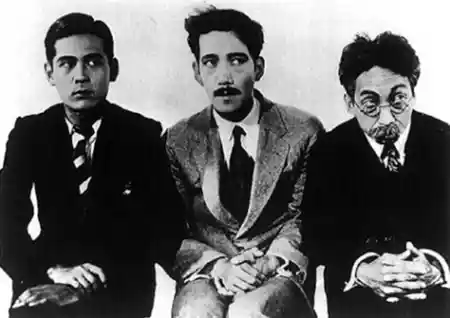
A definitive 4.9/10 rating for a film that redefined the boundaries of cult cinema. The Luck Which Touched the Leg remains a cornerstone of transgressive art.
Alright, look, if you’re coming into The Luck Which Touched the Leg expecting big drama or some kind of sweeping narrative, you’re gonna be bored stiff. This one? It’s for the patient crowd. The folks who enjoy watching a quiet afternoon unfold, who like their films to breathe a little. If you appreciate classic Japanese cinema, the kind that lets you just *sit* with characters, then yeah, this is worth your time. But if you need explosions or even just rapid-fire dialogue, you’ll probably be scrolling through your phone within the first fifteen minutes. It’s not for everyone, and that's okay. 😌
The film opens with Mr. Tanaka (played by Teruo Môuri), a man whose routine is his whole world. He walks to work, he bows, he sits at his desk. It’s all very precise, almost like a ritual. You can almost feel the weight of his daily grind, even in the smallest gestures.
Then, this little thing happens. I won't spoil it, but it’s something so small, so easy to miss, that you might wonder if it even *matters*. But it does. It touches his leg, metaphorically speaking, and suddenly, his whole outlook just… shifts. It’s not a huge change, mind you. Just a subtle lean.
There's this scene, maybe twenty minutes in, where Tanaka is eating his dinner. His wife, Mitsuko Ichimura, is across from him. Usually, their meals are silent, a shared quiet. But after his 'luck,' he looks at his rice bowl a bit differently. He even smiles a tiny, almost imperceptible smile. It’s the kind of thing you’d blink and miss, but it tells you *everything*.
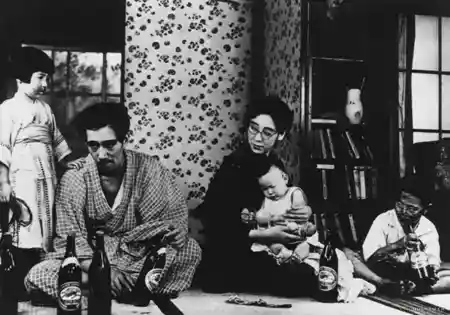
The pacing here is what really gets you. It’s slow, definitely. But it’s not *dragging*. It feels like the film itself is taking its time, inviting you to observe. Like watching a leaf fall from a tree, you could rush it, but where's the joy in that?
One particular moment stuck with me: Tanaka is walking home, and he passes this small street vendor selling persimmons. He’s passed him a thousand times. But *this* time, he pauses. He buys one. The way the vendor (I think it was Tokio Seki, just a guess, his face was kinda shadowed) hands it over, it’s a small transaction, but it feels like a significant exchange. Like the world itself is a little bit softer for Tanaka now.
The camera work, too, is very understated. It just sits there, watching. No fancy zooms, no quick cuts. It’s like a respectful observer, letting the scene play out. You really get a sense of the time period, the way houses looked, the way people carried themselves. The houses often feel like another character in themselves, with their wooden frames and sliding doors. 🏠
His interactions with his son, played by Ikkō Ōkuni, are also telling. Before, it felt a bit distant, formal. After, there’s a moment where Tanaka helps him with his homework, and his hand rests on his son’s shoulder a beat longer than usual. It's not a big hug or anything demonstrative, but it’s there. A quiet shift in the family dynamic.
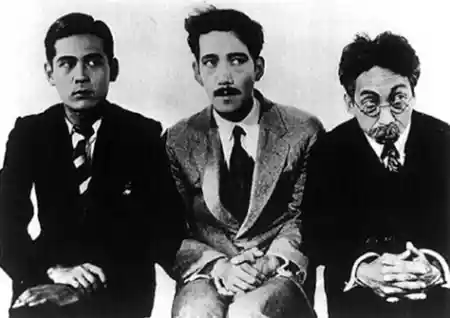
The film isn't trying to tell you that this one moment of luck changes everything forever. That would be too neat, too Hollywood. Instead, it suggests that these tiny, unexpected sparks can make us see the *same old things* in a slightly new light. It’s about the internal shift, not the external fireworks.
Sometimes, the silence in a scene goes on just long enough that you start to feel a bit uncomfortable. But then you realize, that’s the point. It makes you lean in. It makes you *listen* to the small sounds: the distant street noise, the rustle of clothes, a sigh. It's quite effective.
There's also a scene at the local bathhouse. You see Tanaka with other men, all of them just… being. And again, you might catch him looking at an old friend (maybe Tomio Aoki?) with a softer gaze than before. It's those almost invisible changes that give the film its real heart. It's not a movie about big pronouncements, but about small, internal hums.
And honestly, that’s its strength. It doesn’t try to be anything it isn’t. It’s a humble story about humble people, and it asks you to just *be present* with them. It doesn’t demand your attention with spectacle; it earns it through sincerity. ✨
So, yeah. If you've got a quiet evening and a fondness for films that don't shout, give The Luck Which Touched the Leg a watch. Just don’t expect a roller coaster. Expect a gentle stroll. And maybe, just maybe, you'll find yourself looking at your own small moments of 'luck' a bit differently afterward.

IMDb 6.3
1928
Community
Log in to comment.