DbcultAccessing Vault...
6.2/10
Senior Film Conservator
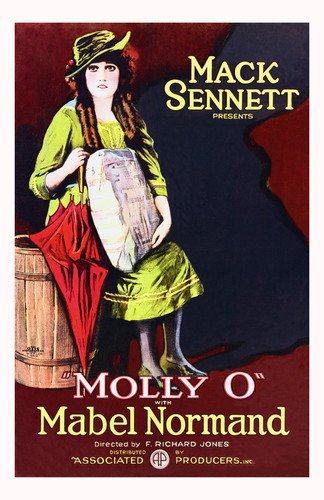
A definitive 6.2/10 rating for a film that redefined the boundaries of cult cinema. Molly O' remains a cornerstone of transgressive art.
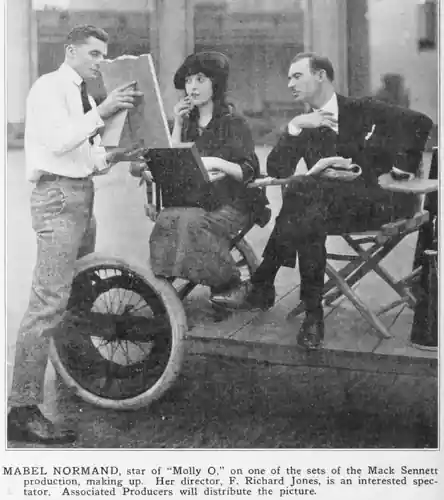
In the pantheon of silent cinema, few figures radiate the sheer unadulterated charisma of Mabel Normand. While the industry often relegated women to the roles of the porcelain ingenue or the tragic martyr, Normand carved a niche that was uniquely her own—a blend of slapstick athleticism and soulful pathos. Molly O', a 1921 production from the Mack Sennett stable, serves as a quintessential vessel for this talent. It is not merely a romantic comedy; it is a sprawling, often chaotic exploration of the American class divide through the lens of a kinetic melodrama. Unlike the heavy-handed historical gravity found in Anna Boleyn, Molly O' finds its power in the grit of the everyday, transforming the mundane labor of a laundry into a stage for operatic yearning.
The plot functions as a mechanism of social friction. Molly, living in the shadow of her mother's washboards, is a character who refuses to be dampened by her environment. Her world is one of suds and steam, a stark contrast to the sterile, manicured gardens of the elite. When she catches the eye of Dr. John Bryant (Jack Mulhall), the film shifts from a character study into a high-stakes social collision. Bryant represents the 'eligible bachelor'—a trope that would become a staple of the genre, yet here he is portrayed with a sincerity that avoids the typical cardboard cutouts of his contemporaries. The tension is amplified by the presence of his fiancée, a woman whose disdain for the lower classes is portrayed not as a caricature, but as a rigid adherence to the social hierarchies of the era.
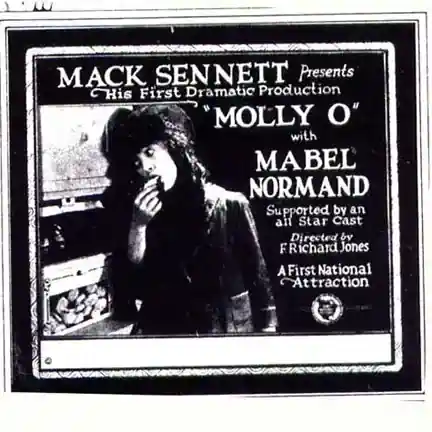
"The film operates on a frequency of visual storytelling that requires no translation, where a single glance from Normand carries the weight of a thousand intertitles."
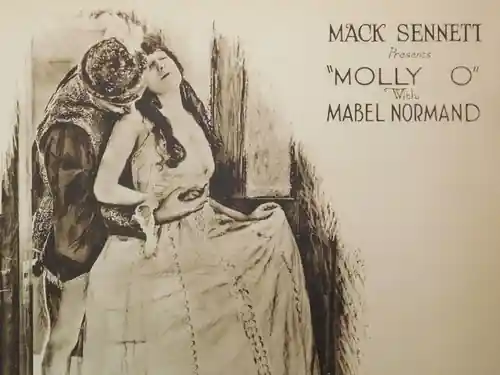
The centerpiece of the film—and perhaps its most enduring sequence—is the masked ball. This is where the director, F. Richard Jones, exhibits a mastery of spatial geography. The ball is a labyrinth of silk and shadow. The decision to have Molly and her rival wear identical costumes is a brilliant narrative pivot. It forces the audience to engage with the concept of identity as something fluid and easily manipulated by the trappings of wealth. While a film like Dante's Inferno uses visual spectacle to explore metaphysical punishment, Molly O' uses the spectacle of the ball to explore the psychological punishment of social exclusion. Molly, in her finery, is indistinguishable from the elite, proving that the only thing separating the washerwoman from the socialite is the fabric on her back and the invitation in her hand.
Mabel Normand’s performance is a masterclass in physical comedy tempered by dramatic restraint. She possesses an elastic face capable of transitioning from a wide-eyed wonder to a sharp, cynical wit in a fraction of a second. This versatility is what keeps the film from descending into the saccharine territory of typical 'poor girl meets rich boy' stories. She brings a sense of agency to Molly that was rare for the time. Even in moments of vulnerability, there is an underlying current of defiance. This is not the passive suffering seen in Ashes of Embers; this is a woman actively navigating a world designed to keep her in her place.
The supporting cast provides a sturdy framework for Normand’s brilliance. Lowell Sherman, as the villainous cad, brings a level of oily sophistication that makes the stakes feel genuinely dangerous. His presence introduces a darker element to the film, reminiscent of the atmospheric dread found in The Tarantula. The interplay between the comedic elements—often provided by the eccentric characters surrounding Molly’s home life—and the high-society drama creates a rhythmic pacing that keeps the 100-minute runtime feeling brisk and purposeful.
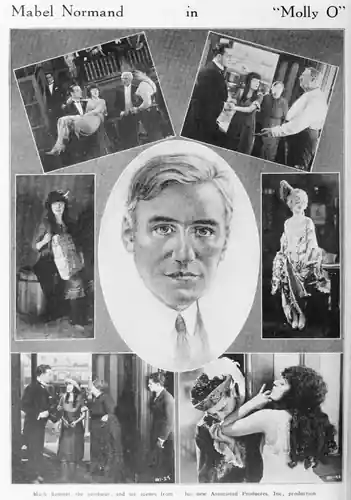
Mack Sennett is often remembered for the 'Keystone Kops' and broad slapstick, but Molly O' demonstrates a significant evolution in his production house's capabilities. The cinematography is remarkably sophisticated for 1921. The use of depth of field during the crowded party scenes and the intimate close-ups in the laundry room create a visual dichotomy that reinforces the film's thematic core. The lighting, particularly in the evening scenes, has a soft, ethereal quality that elevates the romance without stripping away the realism of the setting. It lacks the experimental abstraction of Nachtgestalten, but it replaces it with a warmth and accessibility that is undeniably human.
One must also consider the screenplay, credited to a team including Mary Hunt and John Grey. The dialogue—delivered through intertitles—is surprisingly sharp. It manages to capture the Irish-American vernacular without falling into offensive caricature, providing a texture of authenticity that grounds the more fantastical elements of the plot. The writing understands that for the comedy to work, the stakes must feel real. The threat of poverty and the sting of social rejection are ever-present, making the eventual triumphs feel earned rather than orchestrated.
Comparing Molly O' to other contemporary works like The False Code or The Primal Lure, one notices a distinct lack of cynicism. While many silent films of the early 20s were beginning to lean into the 'jazz age' disillusionment, Molly O' remains a bastion of optimistic resilience. It doesn't ignore the harshness of the world—the grueling labor of the washerwoman is depicted with a gritty honesty—but it insists on the possibility of transcendence through character and courage. It shares a certain thematic DNA with Pasquale in its focus on the immigrant experience and the search for a place in the American sun.
The film also serves as a poignant reminder of Normand’s career before it was tragically derailed by scandal and ill health. Watching her here, at the height of her powers, is a bittersweet experience. She is the engine that drives the film, a whirlwind of energy that makes even the most predictable plot beats feel fresh and urgent. Her ability to command the screen is comparable to the greatest stars of any era, and Molly O' stands as one of her most complete and satisfying works.
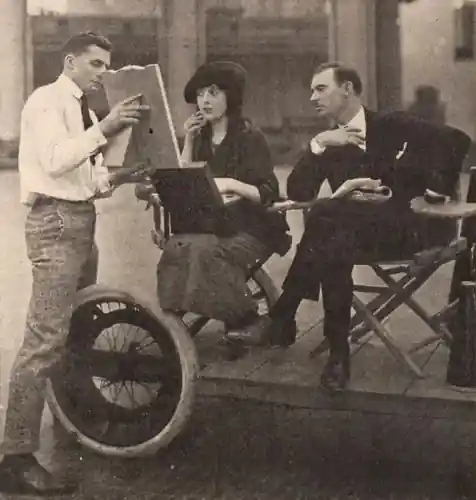
Returning to the ball, the sequence is a masterclass in suspense. As Molly navigates the room, the camera follows her with a fluidity that anticipates the more mobile cinematography of the late 1920s. The confusion caused by the costumes is handled with a deft hand, avoiding the pitfalls of over-explanation. We see the doctor’s confusion, the fiancée’s mounting rage, and Molly’s own mix of terror and exhilaration. It is a sequence that captures the essence of the silent film medium: the ability to convey complex emotional states and narrative shifts entirely through movement, expression, and light. It is as much a dance as it is a scene, a choreographed chaos that perfectly encapsulates the film's central conflict.
In the broader context of 1921 cinema, which saw the release of propaganda-adjacent works like Allies' Official War Review, No. 25 or the moralistic posturing of The Breath of a Nation, Molly O' feels remarkably modern. It prioritizes character and emotion over message, yet in doing so, it delivers a more profound message about the human condition than its more overtly didactic peers. It understands that the personal is political—that the struggle of a single girl to find love and respect is a reflection of the larger struggles of a nation trying to define itself.
The film concludes not with a simple marriage, but with a sense of validation. Molly has not just won the heart of the doctor; she has forced the world around her to acknowledge her existence. The final frames, which I will not spoil for the uninitiated, possess a quiet dignity that lingers long after the screen goes dark. It is a far cry from the melodramatic intensity of Isterzannye dushi or the tragic finality of The Last Chapter. Instead, it offers a glimmer of hope—a rare commodity then and now.
For those who dismiss silent film as a primitive precursor to modern cinema, Molly O' is a necessary corrective. It is a sophisticated, emotionally resonant, and technically impressive work that showcases a legendary performer at her zenith. It manages to be both a product of its time and a timeless exploration of class, identity, and the enduring power of the human spirit. Whether you are a fan of Mabel Normand, a student of silent film history, or simply a lover of well-told stories, Molly O' is a film that demands—and deserves—to be seen. It is a vibrant, breathing piece of art that continues to shine even a century after its initial release, much like the suds in Molly’s laundry tub reflecting the bright, distant sun.
Recommended for fans of: Romantic melodrama, early 20th-century social history, and the incomparable Mabel Normand. Also check out The Dutiful Dub for another look at early 20s character comedy.
IMDb 5.2
1924
Community
Log in to comment.