DbcultAccessing Vault...
Cult Review
Senior Film Conservator
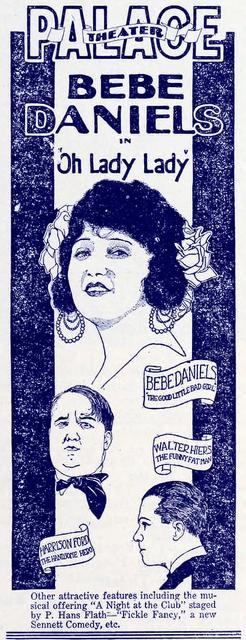
In the annals of silent cinema, where grand gestures and physical comedy often held sway, a particular strain of intellectual farce occasionally emerged, demonstrating that wit and intricate plotting could transcend the absence of spoken dialogue. One such delightful exemplar is the 1920 film adaptation of P.G. Wodehouse's 'Oh, Lady, Lady', a comedic marvel that orchestrates a symphony of misunderstandings with a precision that would make a Swiss watchmaker blush. This isn't merely a film; it's a finely-tuned clockwork of romantic entanglement, a testament to the enduring power of a well-crafted narrative, even when conveyed through title cards and expressive visages.
At its core, 'Oh, Lady, Lady' is a masterclass in the comedy of errors, a genre P.G. Wodehouse, alongside his collaborators Guy Bolton and Edith M. Kennedy, practically perfected. The narrative pivots around Willoughby Finch, portrayed with a magnificent blend of earnestness and escalating panic by Jack Doud, a man on the cusp of marrying the seemingly unflappable Molly Farringdon, played by Barbara Maier. Their imminent nuptials, however, are shadowed by Finch’s past: a lingering memory of his former country sweetheart, May Barber. A simple, innocuous phone message from May ignites a spark of dread in Finch’s anxious mind, leading him down a rabbit hole of mistaken assumptions. He becomes convinced that May, a phantom of relationships past, intends to descend upon his wedding like a vengeful spirit, intent on sowing discord and derailing his carefully planned future. Doud's performance here is a study in silent film anxiety, his wide eyes and increasingly flustered demeanor conveying a man trapped in a self-made web of paranoia.
This initial premise, a staple of Wodehousian farce, sets the stage for a delightful cascade of misinterpretations. The beauty lies in the audience's privileged perspective: we are privy to the truth, observing Finch's unfounded fears with a knowing chuckle as the characters on screen stumble blindly through the comedic labyrinth. It’s a narrative technique that builds anticipation and amplifies the eventual payoff, a hallmark of well-executed screwball comedy long before the term was even coined. The film's structural integrity, attributable to the formidable writing team, ensures that each twist and turn feels earned, each misunderstanding a logical (albeit comically exaggerated) consequence of the preceding event.
While Finch frets, the true May Barber, embodied with effervescent charm by Lillian Langdon, has undergone a metamorphosis. No longer merely a country sweetheart, she has blossomed into Rilla Rooke, a celebrated actress fresh off a triumphant tour. Langdon imbues Rilla with a captivating blend of innocence and worldly sophistication, a duality crucial to the film's comedic engine. It is on a train journey home that destiny, with its characteristic flair for dramatic irony, intervenes. Rilla encounters Hale Underwood, played by the dashing Harrison Ford (not the Han Solo, but a prominent silent film star of the era), who happens to be Finch's best man. Their meeting is a spark of genuine romance amidst the brewing chaos. Ford’s portrayal of Underwood is effortlessly charming, a grounded counterpoint to Doud’s frenetic Finch. Their burgeoning affection, depicted through subtle glances and shared smiles, forms a parallel narrative of authentic connection that contrasts sharply with the frantic misunderstandings unfolding elsewhere.
The juxtaposition of these two romantic trajectories—Finch’s fear-driven pursuit of marital stability and Rilla and Hale’s organic, blossoming love—is a brilliant stroke of screenwriting. It allows the audience to invest emotionally in both the comedic plight and the genuine romance, making the eventual resolution all the more satisfying. The silent film medium, often relying on exaggerated expressions, here benefits from Langdon's nuanced performance, conveying Rilla's genuine affection for Hale and her well-meaning but ultimately disastrous intentions to help Finch.
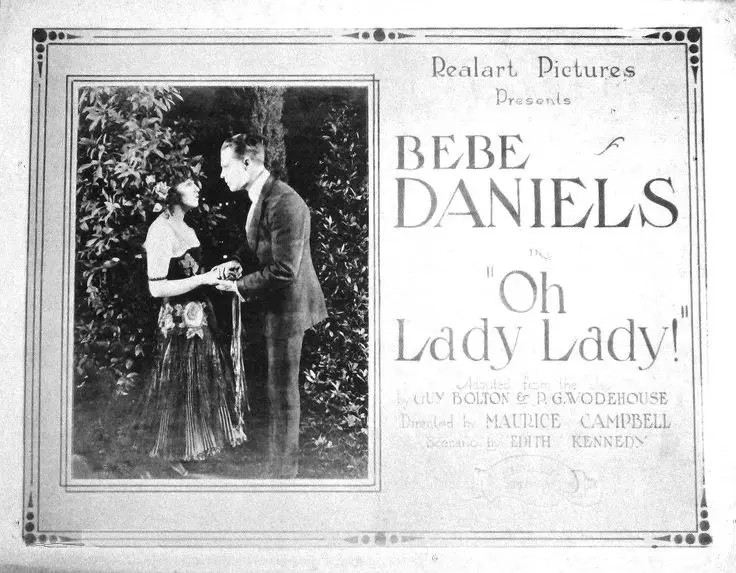
The plot thickens when Rilla, learning of Finch's distress from a mutual friend, misunderstands the nature of his predicament. She is told he fears a 'vamp' — a seductive, disruptive woman — is threatening to ruin his wedding. In a gesture of misguided altruism and theatrical panache, Rilla offers to impersonate Finch’s lover, believing her dramatic appearance will scare off the supposed interloper. This decision, predicated on incomplete information and a touch of heroic impulse, is the linchpin of the film’s escalating farce. The audience, armed with the full context, can only watch with a mixture of amusement and dread as Rilla, with the best of intentions, barrels towards a spectacular collision course with reality.
The genius of the Wodehouse narrative here is in building suspense not through overt danger, but through the inevitability of social embarrassment and emotional chaos. Unlike the more dramatic stakes in films like The Vital Question or the intense emotional journeys found in Humoresque, 'Oh, Lady, Lady' thrives on the exquisite discomfort of its characters. The concept of the 'vamp' itself was a popular trope in early cinema, often used to signify dangerous female allure, as seen in more dramatic contexts in films like The Tempting of Justice. Here, however, it is brilliantly subverted, becoming merely a phantom of Finch's imagination, a catalyst for Rilla's well-meaning but ill-fated intervention.
The climax of the comedic tension arrives at the wedding rehearsal, a scene ripe for theatrical grandstanding and public humiliation. Rilla, in her assumed role as Finch's scandalous lover, makes a dramatic entrance, designed to deter the perceived 'vamp.' Instead, her appearance serves only to confirm Finch's deepest, most irrational suspicions. In a moment of exquisite dramatic irony, he mistakenly identifies Rilla – his former sweetheart and current unwitting savior – as the very 'vamp' he fears. Doud’s portrayal of Finch’s horrified realization is priceless, a silent scream of incredulity and despair that resonates through the frame. The entire sequence is a masterclass in silent film performance, relying on exaggerated expressions, rapid cuts, and the audience’s superior knowledge to generate maximum comedic impact.
The fallout is immediate and widespread. Not only does Rilla’s charade plunge Finch’s wedding plans into further disarray, but it also inadvertently alienates Hale Underwood. Observing Rilla’s performance, Hale, unaware of her true intentions, sees only a woman seemingly attempting to sabotage his best friend’s happiness. His growing sense of betrayal, conveyed with a subtle yet potent disappointment by Ford, adds a layer of genuine emotional stakes to the otherwise farcical proceedings. Barbara Maier, as the bewildered Molly Farringdon, perfectly captures the fiancée caught in the crossfire, her initial confusion slowly giving way to dismay. The supporting cast, including the contributions of Walter Hiers, Bebe Daniels, and Charlotte Woods, deftly navigate the ensuing chaos, each adding to the intricate tapestry of comedic reactions and bewildered expressions.
The tangled skein of misunderstandings, like a perfectly knotted theatrical rope, begins to unravel later that evening at a jazz party hosted at Underwood’s apartment. The setting itself, vibrant with music and social energy, provides a dynamic backdrop for the resolution. It’s a distinctly modern touch for a 1920 film, signaling a shift in social mores and providing a lively contrast to the more formal settings of the wedding rehearsal. Here, amidst the spirited revelry, Rilla finally has the opportunity to clarify the situation. Through earnest explanations and impassioned pleas, she disentangles the knot of misapprehensions, revealing her true motivations and the comedic irony of her actions. The scene is a testament to the power of communication, albeit belatedly, to cut through the thickest fog of misunderstanding.
The resolution is twofold, a satisfying conclusion that sees both pairs of lovers reunited. Finch, relieved and sheepish, reconciles with Molly, his paranoia dispelled. More importantly, Hale, understanding Rilla’s true intentions and the depth of her affection, finds his faith in her restored, leading to their joyous reunion. The film concludes on a high note of restored harmony, a testament to the enduring power of love to overcome even the most elaborate of comedic blunders. This double resolution, a characteristic of well-structured romantic comedies, provides a sense of complete narrative closure, leaving the audience with a feeling of warmth and satisfaction. It's a far cry from the more singular dramatic focus of films like The Eyes of the World or the epic scope of Way Down East, firmly establishing 'Oh, Lady, Lady' in its own charming niche of sophisticated farce.
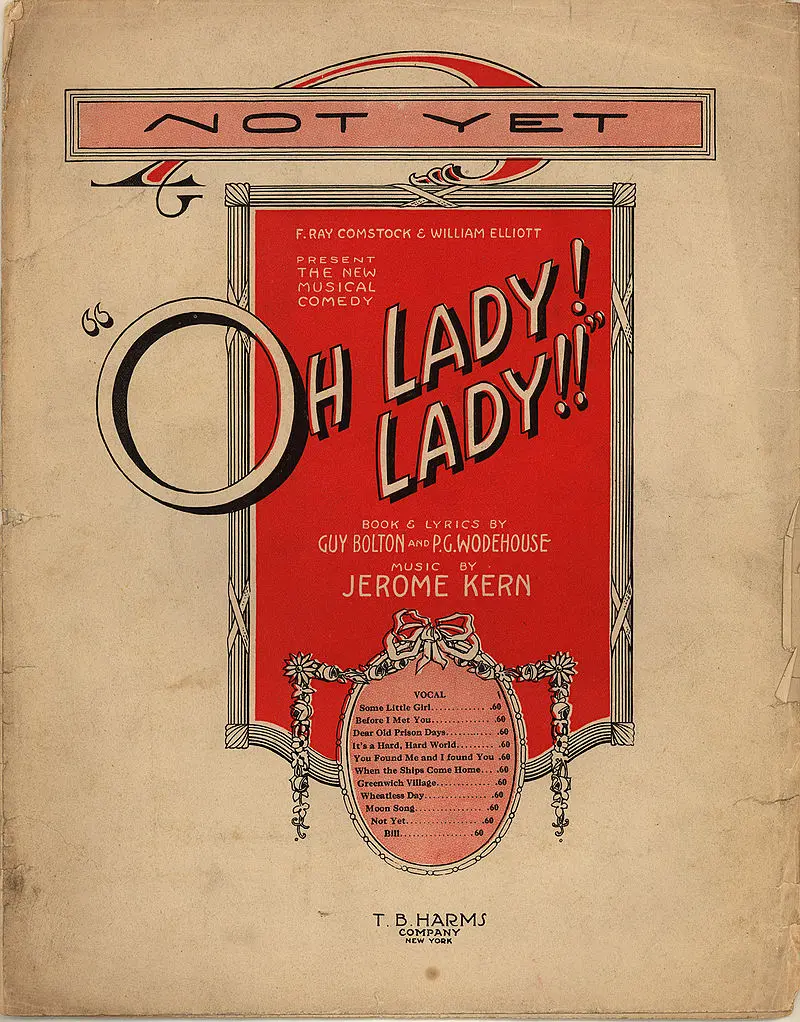
The true brilliance of 'Oh, Lady, Lady' lies in its screenplay, adapted from the stage musical by Guy Bolton, Edith M. Kennedy, and the incomparable P.G. Wodehouse himself. Wodehouse’s distinctive literary voice, characterized by its intricate plotting, dry wit, and a keen understanding of human foibles, translates remarkably well to the silent screen. His narratives are often built like elaborate contraptions, with each character’s well-meaning but misguided actions contributing to a larger, increasingly complex comedic tapestry. The challenge of adapting such a dialogue-heavy, witty source for a silent medium is immense, yet the writers succeed by distilling the essence of Wodehouse's humor into visual cues and meticulously crafted title cards.
The film relies heavily on the actors' ability to convey character and emotion through expression and gesture, a skill that Langdon, Doud, and Ford demonstrate with admirable proficiency. The pacing is expertly handled, allowing the misunderstandings to build gradually, then accelerate into a delightful frenzy before settling into a satisfying resolution. This intricate dance of plot and character distinguishes 'Oh, Lady, Lady' from simpler silent comedies, elevating it to a more sophisticated plane. It's a testament to the writers' ability to leverage the visual storytelling capabilities of cinema, making the unspoken dialogue resonate with wit and humor. The theatrical background of Wodehouse and Bolton is evident in the film's precise blocking and the clear delineation of character motivations, much like one might observe in 45 Minutes from Broadway, another adaptation with strong stage roots.
The ensemble cast, particularly the central trio, delivers performances that are both authentically human and perfectly suited for the silent era's demands. Lillian Langdon as May Barber/Rilla Rooke is the emotional anchor, navigating her character's transformation from country girl to stage star with grace and comedic timing. Her expressive eyes and subtle gestures convey both her genuine affection and her character's occasional clumsiness in social situations. Jack Doud's Willoughby Finch is a marvel of escalating neuroses, his transformation from mildly anxious groom to utterly distraught fiancé being a comedic highlight. His physical reactions to each new layer of misunderstanding are meticulously choreographed, drawing hearty laughs from the audience. Harrison Ford, as Hale Underwood, provides the necessary grounding, his sincere portrayal of a man genuinely falling in love, then feeling betrayed, adding depth to the romantic subplot. His charm is undeniable, making his eventual reunion with Rilla all the more heartwarming.
Barbara Maier, as Molly Farringdon, expertly portrays the bewildered fiancée, her quiet dignity providing a contrast to the surrounding chaos. The supporting cast, including the recognizable faces of Bebe Daniels, Walter Hiers, and Charlotte Woods, each contribute their distinct comedic flair, ensuring that no character feels superfluous to the intricate plot. Their reactions to the central misunderstanding often serve as a Greek chorus, mirroring the audience's own amusement and disbelief
IMDb —
1923
Community
Log in to comment.