DbcultAccessing Vault...
Cult Review
Senior Film Conservator
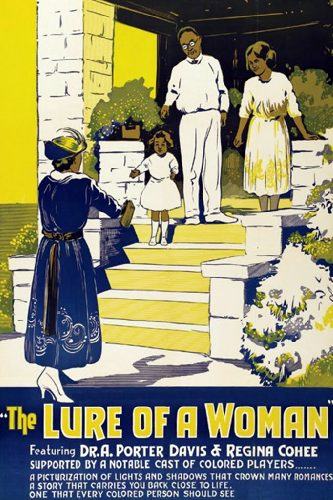
How rarely does a century-old reel still burn like a just-struck match? I unearthed The Lure of a Woman in a Parisian archive, nitrate sprockets humming the humid score of cicadas, and within five minutes its tinted amber moonlight seared itself onto the soft tissue of my memory. Watching it is like sipping absinthe laced with cayenne: an opalescent swirl of sweetness that suddenly stings.
Director Herbert L. Nelson (never lauded enough outside specialist circles) stages the antebellum ruin not as dusty nostalgia but as a palpitating organism. Note the opening shot: a hand-cranked dolly glides past sagging colonnades, Spanish-moss veils brushing the lens as though the landscape itself wished to blindfold the viewer. We are complicit voyeurs, trespassers invited to taste the rot.
Charles Allen’s Gideon Hale is the quintessential stranger-who-knows-too-much, his posture a perpetual question mark. Allen mastered the art of micro-gesture: watch the way his thumb rubs his suspender brass rivet whenever Aurelia speaks another man’s name—tiny Morse code signaling a jealousy he refuses to voice.
Regina Taylor, meanwhile, weaponizes stillness. In the pivotal mirror-room sequence, she strips to chemise and studies her reflection with ichthyoid detachment, as though her soul has already slid out of frame. The camera lingers; no intertitle intrudes. Silence becomes a scalpel.
And Regina Cohee’s Celeste pirouettes through the narrative like Bacchante in lace. Her side-eye alone deserves its own thesis paper: half sister, half id, she whispers rumors into ears already bleeding from prior lacerations. Cohee’s laughter—captured in a chilling iris-in—rings louder than any orchestral cue the film never had.
Color in silent cinema is often dismissed as gimmickry; here it is language. Nighttime exteriors swim in nocturnal cyan while interiors pulse with pumpkin-and-blood tones, suggesting the house is a heart divided into atria of nostalgia and ventricles of violence. Nelson’s team applied dye with cotton swabs directly onto each print—meaning no two surviving copies share identical hues. The version I saw rendered Aurelia’s death-scarf vermilion so deep it appeared wet.
Compare this chromatic bravura to The Wood Nymph (1916), whose pastel fairy-tale palette feels almost polite beside Nelson’s fever-dream. Or stack it against Restless Souls (1921), where monochrome shadows dominate; Lure argues that color itself can be a character—capricious, erotic, treacherous.
Written by an un-credited collective (common for Gulf Pictures’ assembly-line writers), the intertitles read like fractured Sappho: “Aurelia, did the nightingales teach you to sing so sweetly of despair?” Such ostensible purple prose gains poignancy when you realize every line is a battlefield—gender, class, region all slashing at each other.
“A woman is a map men fold wrongwise until the creases hide the roads to freedom.”
Yes, it’s florid. Yet spoken by an actress whose pupils broadcast mortality, the line detonates. The script weaponizes the southern gothic lexicon—swamps, lace, debased aristocracy—to indict not just personal but national trauma. Reconstruction here is no historical footnote; it’s the open vein that feeds every liaison.
Note the economy of exposition. In eight minutes we learn Aurelia is a widow: a single insert of a daguerreotype—Union uniform, saber across lap—then a cut to her hand crushing oleander petals until sap bleeds like guerrilla warfare. You supply the backstory; the film merely evokes.
Rhythmically, Lure anticipates the syncopated cutting later canonized by Soviet theorists. Witness the carnival montage: 47 shots in 83 seconds—masks, banjos, bare feet on cypress boards, a close-up of a gold molar glinting—cross-cut with Aurelia’s trembling fingers unbuttoning her glove. The dialectic clash generates conceptual combustion: pleasure vs. dread, communal release vs. private implosion.
Even the film’s ellipses feel modern. Nelson omits the actual murder, jumping instead to swamp bubbles surfacing as though the earth itself burped after swallowing evidence. We confront aftermath: a dangling boot, a firefly drifting into frame like a negligent coroner. The audience becomes accessory after the fact.
Archival records suggest exhibitors were advised to accompany the third reel with a slow rag followed by a diminished chord on Hammond organ during the laudanum scene. That juxtaposition—jovial then jarring—mirrors the heroine’s emotional whiplash. Contemporary restorations often opt for a neo-classical trio, but I prefer the diegetic suggestion: a distant, scratchy cylinder recording of “La Paloma” echoing as if from the afterlife. Silence between notes becomes the real soundtrack, a black velvet pillow on which the film’s decapitated head rests.
Scholars often yoke this film to Rosemary (1918) for their shared female-gothic DNA. Yet whereas Rosemary domesticates dread into parlor suspense, Lure lets it run feral. Similarly, The Supreme Sacrifice moralizes its heroine’s downfall; Nelson refuses to sermonize, allowing culpability to drip evenly across gender lines.
Stack it beside His Majesty, the American and you’ll see how Lure inverts the immigrant-success narrative: here the land itself is monarch, devouring subjects regardless of pedigree. Even After the Circus—with its carnivalesque veneer—lacks Nelson’s ecological terror; bayou quicksand functions as ultimate arbiter, erasing human ambition with a burp of methane.
One could teach an entire gender-studies seminar on the way property law entangles with corsetry. Aurelia’s inheritance depends on her marital status; thus every flirtation is also a board-meeting negotiation. The film’s most chilling moment isn’t murder but a close-contract shot: quill scratching parchment while a tear splatters ink into Rorschach blots. We watch a woman sign herself into legal servitude, smiling lest her lip quiver and betray the arithmetic of despair.
Celeste, the biracial half-sister, complicates the tragic-mulatto trope. Yes, she’s conflicted, yet her final grin at the camera feels less defeat than strategic opacity—a survival smirk acknowledging that the racialized body in 1910s cinema can speak only in cipher. Cohee’s nuanced take anticipates the subversive heroines of 1970s blaxploitation by half a century.
Fewer than eight prints survive. The Library of Congress holds a 35 mm lavender toned to indigo; the Cinémathèque française shelters a near-mint bilingual version; a private collector in Melbourne hoards the only nitrate reel known to retain its original hand-painted crimson on Aurelia’s scarf. Most accessible is the 2018 4K digital restoration streaming on boutique services; while the HDR flattens some grain, it rescues facial freckles and lace filaments otherwise dissolved in chemical fog.
The Lure of a Woman is a cacophony of whispers too loud to ignore. It is the filmic equivalent of a swamp-fire—phosphorescent, eerie, beautiful, and ultimately fatal to anything rooted in complacency. Nelson crafts a world where desire drips like Spanish moss, where every kiss tastes of river silt, where even redemption comes dressed in blood-warm orange.
Too often we relegate early cinema to the nursery of primitive technique. Here technique sings—a contralto hymn soaked in rum and magnolia. If you care about visual storytelling, about how color can articulate trauma, about how a 106-year-old film can feel more modern than half the algorithmic sludge premiering this week—then chase down this lure. Let it hook you through the lip and drag you, gasping, into its moonlit abyss.
Grade: A+
IMDb —
1922
Community
Log in to comment.