Summary
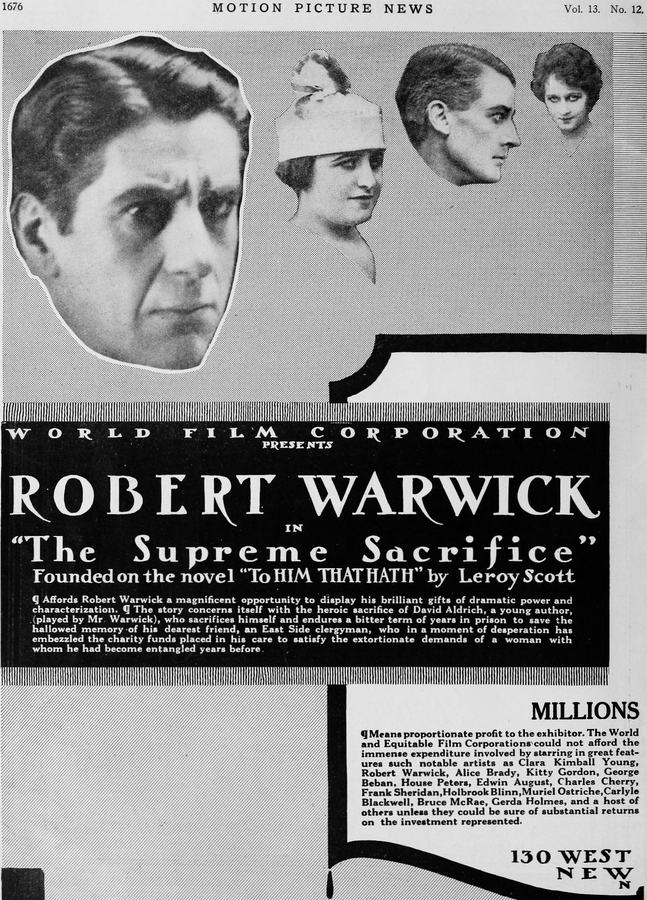
A nascent literary voice, David Aldrich, grapples with the publishing world's demand for authenticity, his creative spirit buoyed by the unwavering affection of Helen Chambers and the steadfast camaraderie of Reverend Phillip Morton. Unbeknownst to David, Morton, a venerated figure ministering to the East Side's populace, is ensnared in a corrosive web of blackmail, a relic of a youthful indiscretion with the opportunistic Lillian Drew. Driven to desperation, Morton embezzles from his charity, his desperate gamble on speculative stock collapsing into worthlessness, triggering a fatal cardiac event. David, shattered by this abrupt loss, unearths the sordid truth that precipitated his friend's demise. When the charity's deficit is exposed, suspicion converges on David. He stoically endures a wrongful conviction, opting for incarceration rather than sully the memory of his deceased confidant. Four years in prison refine his resolve, while Helen, his steadfast love, dedicates herself to philanthropic endeavors, her faith unyielding. Upon his release, David confronts the pervasive stigma of his past, the relentless scrutiny of law enforcement impeding his pursuit of honest work. Yet, with indomitable spirit, he surmounts these systemic barriers, though he deliberately isolates himself from his former life and the woman he still cherishes. It is through the very architect of Morton's downfall, Lillian Drew, that Helen finally apprehends the profound selflessness underpinning David's 'supreme sacrifice.' Helen seeks him out, compelling him to shed his silence and affirm Morton's culpability and his own unblemished honor. The East Side community, once quick to condemn, ultimately recognizes and reveres the man they had once scorned as a swindler. David, forged by his crucible of suffering, discovers his authentic authorial voice, channeling his bitter experiences into narratives of unvarnished realism, embarking on a path toward both professional triumph and a hard-won, genuine happiness.
Synopsis
David Aldrich aspires to be an author. The publishers reject most of his manuscripts because they seem to lack realism. David struggles on, however, determined to succeed and kept happy by his love for Helen Chambers and for his bosom friend Morton, who is a young minister working among the people on the East Side. Unknown to David and the world at large, the Rev. Phillip Morton, idol of the East Side, is systematically being blackmailed by Lillian Drew, a woman with whom the young minister had had an affair when a college student and who is now a woman of the town. In desperation, Morton appropriates funds from a charity organization of which he is the head, and dies of heart failure when he realizes that the stock certificates, with which he hoped to make up the deficit, are worthless. David, heartbroken by the loss of his friend, discovers to his horror the secret that brought on Morton's sudden death. The Committee of the Charity Society discovers the shortage and suspicion falls on David. He submits in silence to trial and conviction, rather than expose his dead friend. David goes to prison and serves a term of four years. Helen never loses her faith in David and spends the years of waiting in charitable and settlement work. Free at last, David attempts to rebuild his life, only to find himself beset by the police with their customary method of hounding ex-convicts and making it almost impossible for them to hold decent employment. But David at last overcomes all obstacles and forges ahead, though he has steadfastly kept himself from seeking out his old friends and the woman he still loves. It is through Lillian Drew, the blackmailer, that Helen learns at last the secret of her former sweetheart's supreme sacrifice. Helen seeks him and forces David to acknowledge Morton's guilt and his own innocence. In the end the people of the East Side learn to know and reverence the man they thought a despicable swindler, and David, out of his bitter experiences, begins to write of life as it really is and finds himself on the road to success and change, and the latter is forced to accept a true happiness.
Review Excerpt
"
The Enduring Echo of Altruism: A Deep Dive into The Supreme Sacrifice
In an era captivated by grand gestures and the intricate dance of human morality, The Supreme Sacrifice emerges as a profound cinematic testament to the depths of loyalty and the crushing weight of injustice. This narrative, crafted by Leroy Scott, transcends mere melodrama, delving into the very fabric of human character, challenging our perceptions of heroism and the relentless pursuit of truth. It's a sto..."