DbcultAccessing Vault...
Cult Review
Senior Film Conservator
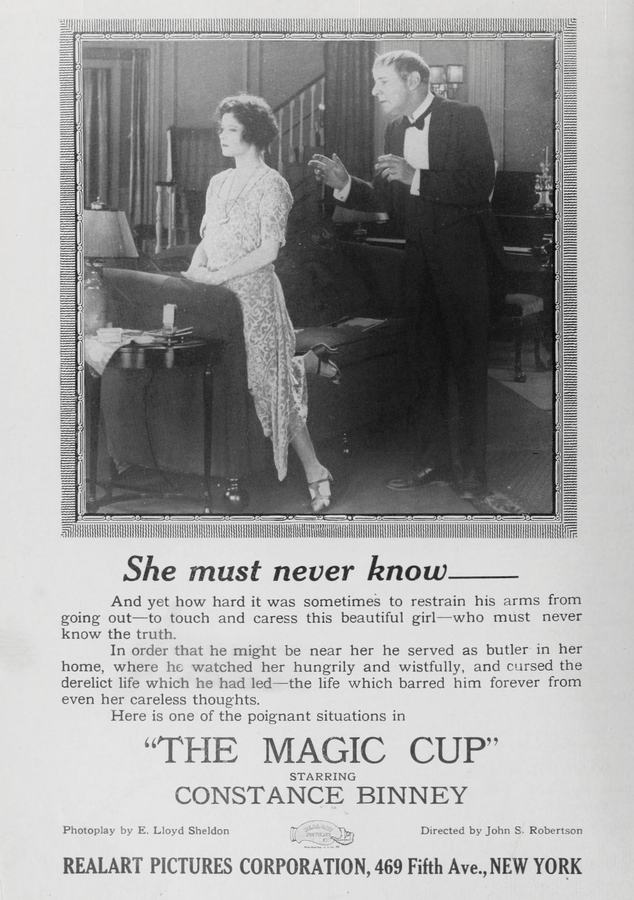
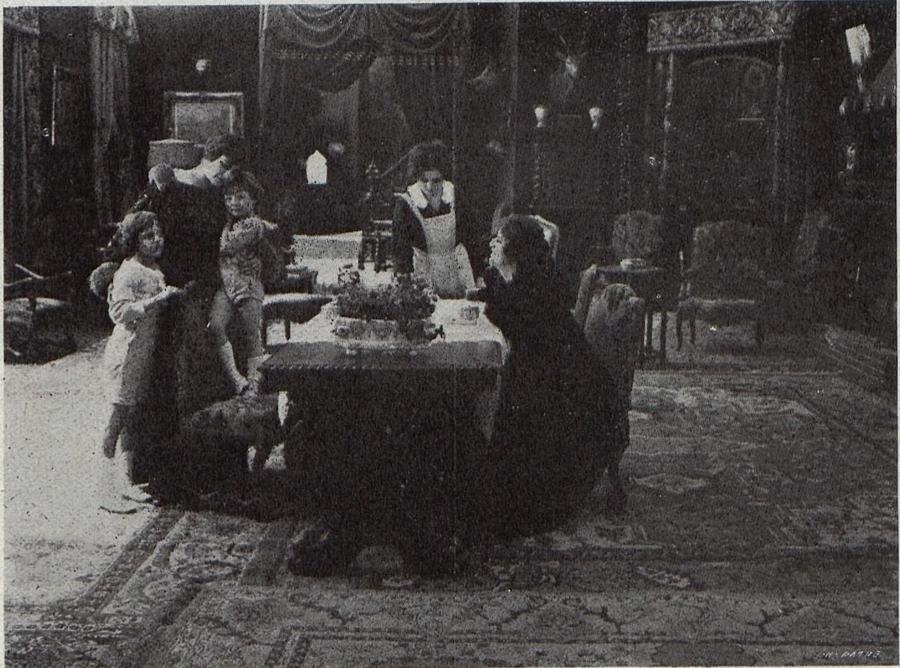
The 1920s film The Magic Cup unfolds like a chiaroscuro painting, its stark contrasts illuminating the fragile morality of its characters. At its core lies Mary Malloy (played with quiet ferocity by Constance Binney), a scullery maid whose life orbits the grimy underbelly of a bustling hotel. Her world, though mundane, is rendered with aching detail—the creak of floorboards, the hiss of steam, the metallic clang of dishware—all serve as aural punctuation to a narrative teetering on the edge of collapse. When Mary pawns her family’s heirloom goblet to save her friend from eviction, the film pivots from domestic realism into a labyrinthine intrigue. The pawnbrokers, sleek and sardonic, exploit her naivety with the calculated precision of a heist in reverse, substituting her goblet’s pearls with fakes while framing her as the thief. This reversal of power dynamics is both a plot twist and a metaphor for the era’s economic anxieties, where the vulnerable are routinely outmaneuvered by the privileged.
Enter Bob Norton, a journalist whose idealism is as fragile as the film’s glassy visuals. Played by Malcolm Bradley with a blend of earnestness and simmering impatience, Bob’s infatuation with Mary becomes a lens through which the film critiques romanticized notions of heroism. His suspicion of the pawnbrokers’ machinations is not born from altruism but from a journalist’s instinct for uncovering truth. Yet, his attempts to aid Mary often backfire, revealing the limits of individual agency in a system designed to crush the weak. The film’s dialogue, sparse yet loaded with subtext, captures the tension between Bob’s public persona and private turmoil. One particularly memorable scene has him pacing his dimly lit office, his shadow stretching across the wall like a portent, while the clatter of typewriter keys underscores his futile chase for a narrative that eludes him.
The silver goblet, adorned with an ornate family crest, is more than a plot device—it is a totem of Mary’s ancestral legacy, a relic that haunts her as much as it defines her. The film’s visual language elevates this object into a character of its own. In close-ups, the goblet’s etched patterns seem to pulse with the weight of forgotten generations, while its absence in later scenes mirrors Mary’s loss of self. The pawnbrokers’ substitution of real pearls with fakes is a cruel irony, transforming the goblet into a symbol of falsehood even as it remains a physical anchor for Mary’s hope. This duality—object as both truth and illusion—echoes themes present in other silent films of the era, such as An Even Break, where material objects similarly serve as metaphors for moral decay.
The pawnbrokers, particularly the suave yet sinister J.H. Gilmour, embody the film’s most incisive critique of capitalist greed. Their schemes are executed with the cold efficiency of a well-rehearsed play, their dialogue laced with veiled threats and honeyed lies. In one sequence, they deliberate over Mary’s fate in a room bathed in artificial light, their faces reflected in a glass of water—a visual nod to their morally murky nature. The film’s score, a haunting blend of accordion and violin, swells as they conspire, the music’s dissonance mirroring the audience’s unease. These antagonists are not mere villains but archetypes, their actions a reflection of the era’s widening inequality. Their manipulation of Mary—a working-class woman with no recourse but to trust the system—calls to mind the themes of La Belle Dame sans Mercy, where love and exploitation are inextricably linked.
Director E. Lloyd Sheldon’s use of chiaroscuro is nothing short of masterful. Shadows play a pivotal role in the film’s visual grammar, often obscuring characters’ faces in moments of moral ambiguity. In a standout scene, Mary stands in the hotel’s boiler room, her silhouette etched against a furnace’s glow, as if the very fire of industry is consuming her. The camera lingers on her face, the light catching the sweat on her brow, before cutting to the goblet’s reflection in a puddle of water—a fleeting moment of clarity in a sea of confusion. These techniques, reminiscent of German Expressionism, elevate the film beyond its plot into a meditation on perception and reality. The absence of intertitles here is telling; the visuals speak volumes about Mary’s internal struggle, a stark contrast to the verbose scenes of the pawnbrokers’ scheming.
The Magic Cup concludes not with a tidy resolution but with a bittersweet reckoning. Mary’s final act—exposing the pawnbrokers’ deceit—is both triumphant and hollow, as she walks away from the hotel, the goblet now a distant memory. The film’s ending, though ambiguous, underscores the futility of fighting systems designed to fail. Yet, in this very futility lies its power. Mary’s resilience, portrayed with understated grace by Binney, becomes a quiet rebellion against the forces that seek to crush her. This nuanced portrayal of resilience is echoed in Vagabond Luck, where survival is depicted as an act of defiance rather than a victory.
Decades after its release, The Magic Cup remains a compelling artifact of silent cinema. Its exploration of class, gender, and morality through visual and narrative means has aged with remarkable poise. The film’s influence can be seen in later works like The Third String, which similarly uses working-class protagonists to critique societal structures. For modern audiences, the film is a reminder of the silent era’s capacity for emotional depth, a time when storytelling relied not on dialogue but on the alchemy of image and sound. In an age of CGI-laden blockbusters, The Magic Cup is a testament to the enduring power of simplicity and subtlety.
IMDb 5.2
1918
Community
Log in to comment.