DbcultAccessing Vault...
Cult Review
Senior Film Conservator
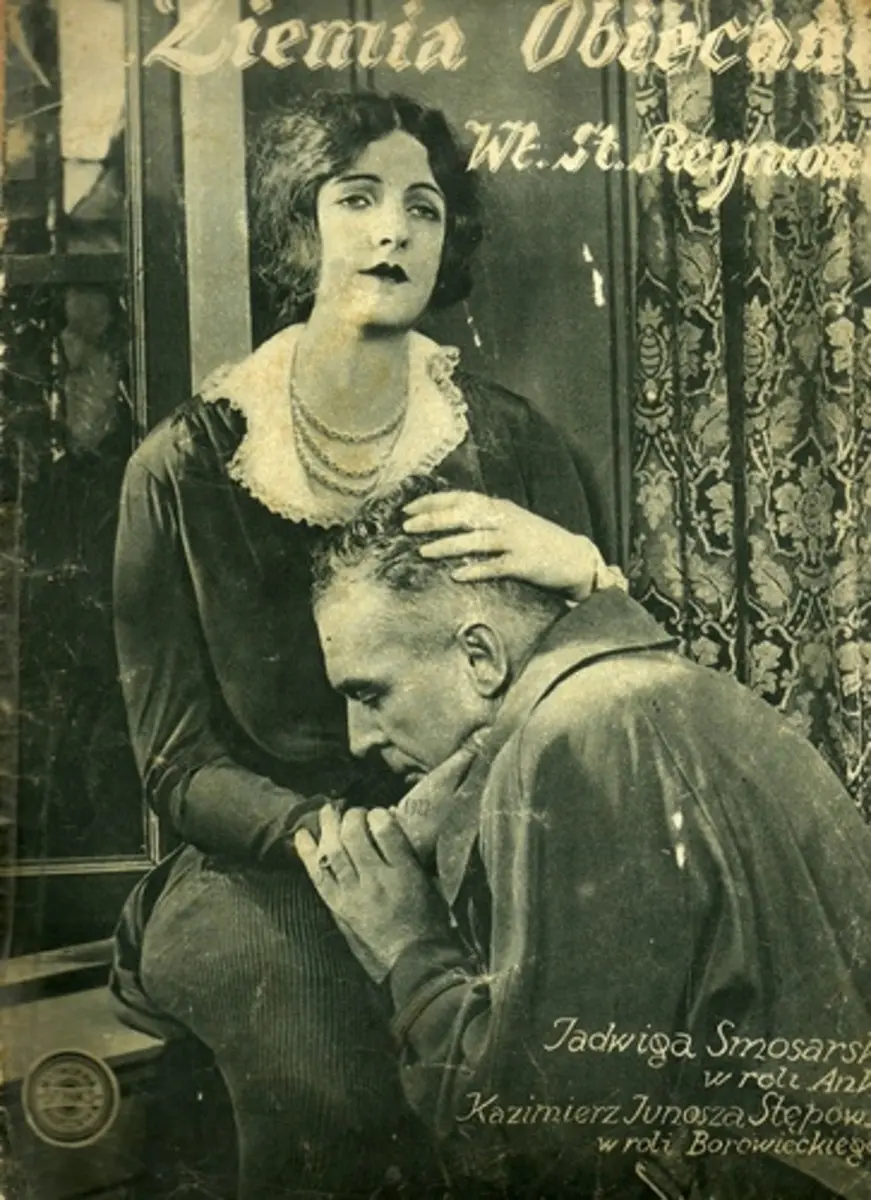
Does the 1927 version of Ziemia obiecana hold up as a piece of dramatic cinema today? Short answer: yes, but only if you appreciate the theatrical intensity of silent-era melodrama and have a stomach for bleak, unyielding social commentary.
This film is specifically for those who want to see the origins of the 'Polish Manchester' on screen and for students of early industrial aesthetics. It is absolutely not for viewers who require fast-paced action or the polished narrative flow of modern historical dramas.
1) This film works because it visualizes the sheer scale of the industrial revolution with a grit that feels authentic and terrifying. 2) This film fails because its episodic structure occasionally loses the emotional thread of the three protagonists in favor of broad social snapshots. 3) You should watch it if you want to understand the cinematic roots of Polish national identity and the crushing weight of early capitalism.
The 1927 adaptation, directed by Aleksander Hertz, is often overshadowed by the later 1975 masterpiece, but that is a mistake. It offers a raw, contemporary-adjacent look at the themes Reymont laid out. The film doesn't just show factories; it shows them as living organisms. The looms move with a rhythmic violence that makes the human characters look like ants. It works. But it’s flawed. The pacing reflects a time when audiences were still being trained to follow complex, multi-strand narratives.
Stanislaw Gruszczynski delivers a performance as Karol Borowiecki that is steeped in the silent era's grandiosity, yet there is a subtle tragedy in his eyes. He represents the death of the Polish landed gentry. When he walks through the soot-covered streets of Lodz, you can see the internal conflict between his aristocratic past and his hunger for a future built on steam and iron. Unlike the characters in Tol'able David, there is no simple heroism here. Borowiecki is a man who chooses to be corrupted.
Jadwiga Smosarska, the undisputed queen of Polish silent cinema, provides the emotional core of the film. Her presence is a stark contrast to the grime of the factory floor. While the male leads are busy measuring their worth in rubles and fabric, Smosarska’s character reminds the audience of the human cost of their ambition. Her scenes are some of the few moments where the film breathes, allowing us to step away from the clatter of the machines.
The cinematography in Ziemia obiecana is surprisingly modern in its use of light and shadow. The interiors of the palaces are lush and overstuffed, mirroring the decadence of the nouveau riche, while the factory scenes are shot with a stark, almost documentary-like coldness. It lacks the stylized expressionism of Underworld, opting instead for a gritty realism that emphasizes the physical labor of the era.
One standout moment involves a wide shot of the Lodz skyline, dominated by chimneys that look like spears piercing the sky. It’s a haunting image that establishes the setting as a place where nature has been completely subjugated. This isn't the romanticized view of wealth found in The Money Mill; this is a city that eats people. The camera lingers on the smoke, making it a character in its own right.
Ziemia obiecana is worth watching because it is a vital historical document that captures the soul of a nation in transition. While many silent films of the 1920s focused on escapist fantasies or simple moral tales, this film dives headfirst into the complexities of class, ethnicity, and greed. It challenges the viewer to find a hero in a world where everyone is selling a piece of themselves.
However, be prepared for the technical limitations. The transition between scenes can be jarring, and the intertitles occasionally heavy-handed. If you can look past the 1927 production values, you will find a story that is surprisingly cynical and relevant to today’s discussions about the ethics of unchecked growth.
Pros:
Cons:
The relationship between Karol, Max, and Moryc is the film's most fascinating element. In an era where nationalism was often portrayed in black and white, Ziemia obiecana presents a transactional alliance that crosses ethnic lines. They are not friends; they are business partners. This cynical view of human connection is what sets the film apart from more sentimental works like The Beloved Impostor. In Lodz, the only language that matters is profit.
Kazimierz Junosza-Stepowski is particularly effective as the calculating Moryc. He avoids the caricatures often found in films of this period, playing the role with a sharp, nervous energy. His chemistry with Gruszczynski is built on tension rather than camaraderie. Every time they share the screen, you feel the weight of their mutual suspicion. It is a masterclass in silent-era ensemble acting.
When looking at other films from the same decade, such as Forbidden Fruit, one can see how Ziemia obiecana leans much further into social critique. While many American films were exploring the morality of the individual, the Polish cinema of this time was preoccupied with the fate of the collective and the nation. The 'Promised Land' is a lie, and the film doesn't try to sugarcoat the ending with a romantic resolution. It is a cold, hard look at a cold, hard world.
The film also shares some DNA with the experimental nature of Kino-pravda no. 21 in its obsession with the machine. However, where the Soviet filmmakers saw the machine as a tool of liberation, Hertz and Reymont saw it as a tool of dehumanization. This ideological clash makes for a fascinating viewing experience for anyone interested in the history of political cinema.
Ziemia obiecana is a monumental achievement of early Polish cinema. It is not an easy watch, nor is it a particularly pleasant one, but it is an essential one. The film captures a specific moment in time when the old world was being crushed by the gears of the new, and it does so with a visual flair that still resonates. It is a story of greed, yes, but also of the tragic loss of identity in the pursuit of progress. If you can handle the silence, the grime, and the despair, you will find a film that is as powerful as the machines it depicts.
"A haunting, industrial ghost story that proves the 'Promised Land' was always a factory of broken dreams."

IMDb 6.9
1931
Community
Log in to comment.