DbcultAccessing Vault...
5.4/10
Senior Film Conservator
A definitive 5.4/10 rating for a film that redefined the boundaries of cult cinema. The Magic Skin remains a cornerstone of transgressive art.
Imagine, if you will, a nitrate print exhumed from a sealed vault: the emulsion reeks of camphor and camphorated longing. The Magic Skin—Richard Ridgely’s 1915 transmutation of Balzac’s philosophical phantasmagoria—unspools like a fever dream soaked in absinthe and candle-grease. Every iris-in feels performed by a hand wearing kid gloves still damp with the previous century’s champagne. The film does not merely adapt the novel; it distills la Comédie humaine into a shot of morphine and mainlines it straight into the viewer’s eye.
Ridgely’s Paris is no postcard; it is a gaslit abattoir where boulevards slice through shadows like blades. Note the opening montage—multiple exposures of roulette wheels superimposed over cathedral rose windows—an effect achieved by literally cranking the camera backwards between frames, a mechanical conjuring that predates Hypocrites’ transparent allegories by a full year. The city exhales一氧化碳 and perfume; every cut is a cobblestone loosened to trip the unwary.
Enter Ralph Valentine—Everett Butterfield’s shoulders so angular they could notch a violin. Butterfield plays him like a man who has mistaken debt for destiny. In the intertitles, Ridgely interpolates Balzac’s prose in French, then erases letters until only English consonants remain—a visual palimpsest mirroring Ralph’s dwindling lifespan. The effect is both Modernist and medieval, as if the film itself were a block-print Book of Hours counting down to compline of the soul.
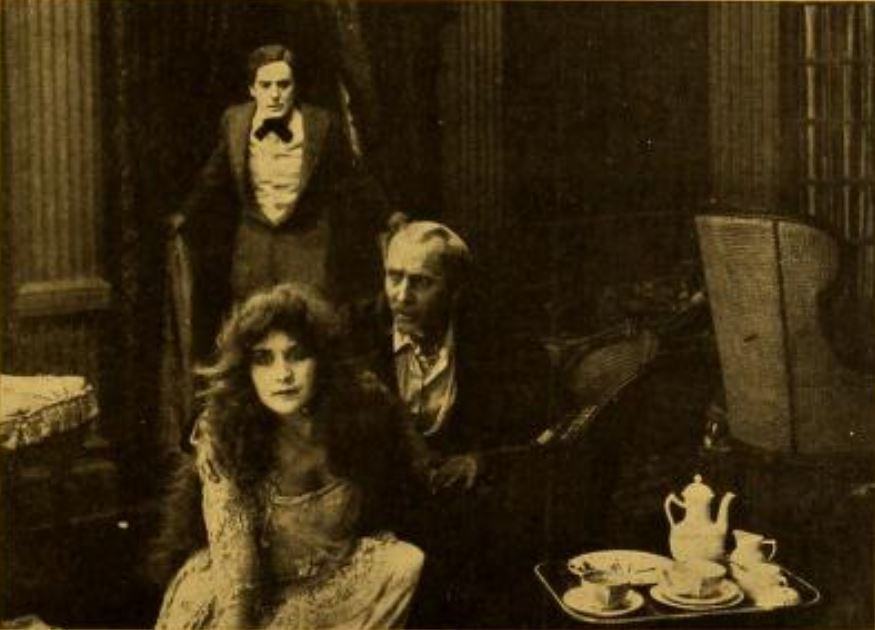
Bigelow Cooper’s Joseph—eyes lowered like a Rembrandt steward—carries the moral weight typically assigned to a spouse or confessor. Watch the scene where he pockets the final overdue notice: the camera tilts 15 degrees, enough to slide the paper (and our stomachs) into oblivion. Cooper never blinks; the performance is a masterclass in retenue, a counterpoint to the histrionic swoons then fashionable at Biograph. One suspects Ridgely screened Dreyer’s The Cloister and the Hearth rushes for tonal calibration, though production dates make this impossible—proof that silent cinema evolved its own ascetic vocabulary in parallel pockets across continents.
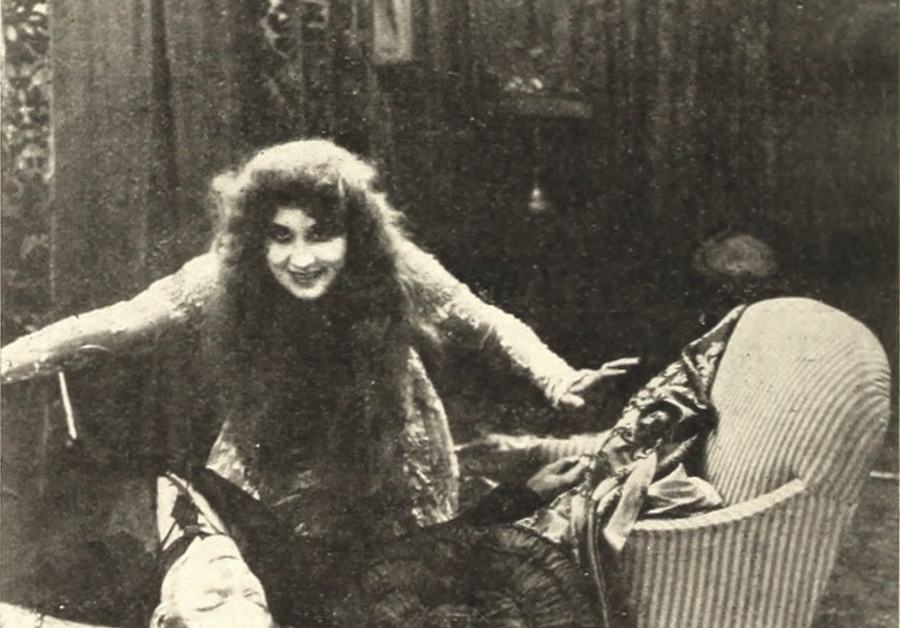
Mabel Trunnelle’s Flora arrives veiled in cigarette smoke that has been hand-painted amber, frame by frame, yielding a halo equal parts sacrament and conflagration. Her gowns shimmer through tinting so precise you can taste the peacock dye—aniline bleeding into gelatin like bruise into memory. When she reclines on a chaise longue upholstered in leopard pelts, the spots appear to crawl, an early instance of stop-motion displacement achieved by swapping negative plates between frames. The subtext is clear: every lover becomes prey, and the hide beneath her bare feet is a premonition of Ralph’s future parchment.
But Trunnelle refuses to camp the vamp. She underplays, letting the camera come to her, a languor that makes Flora’s final betrayal—her laughter echoing off the Seine’s black mirror—feel less like malice than meteorology: a cold front advancing on schedule.
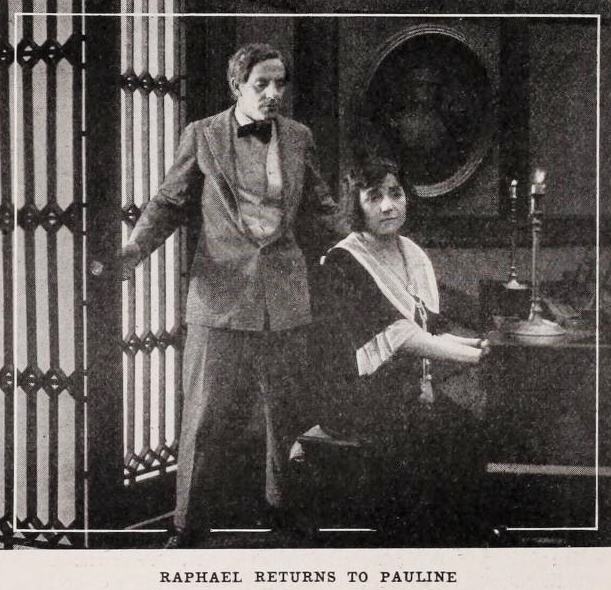
Nellie Grant’s Pauline is shot almost exclusively in profile, like a cameo brooch pinned to the film’s lapel. Her love is the last honest currency in a story where everything else—talent, title, flesh—has been debased. In a daring visual rhyme, Ridgely cuts from Pauline slipping her life-savings into an envelope to a close-up of Flora’s lacquered fingernails drumming on a roulette table: the same gesture, opposite valences. The envelope will travel across the Atlantic; the nails will scratch Ralph’s back under gaslight. Both transactions leave scars.
Grant’s performance is a seminar in containment. When she learns—via a poison-pen postcard delivered by a street urchin—of Ralph’s infidelity, her face registers nothing. Only the bouquet of violets in her hand wilts between cuts, achieved by substituting a fresh bouquet with one flash-dried in an oven. The effect is so subtle that contemporary reviewers mistook it for a continuity error; in hindsight it is heartbreak rendered as botany.
At the film’s fulcrum, Ralph stumbles into the antiquarian’s sanctum—a set recycled from Satanasso, redressed with Balinese masks and a taxidermied basilisk. The Christ painting hidden behind the panel glows via double-exposure: the negative was flashed with magnesium before development, creating an ethereal nimbus that predates Schüfftan’s optical tricks by a decade. Then the skin itself—actually lambskin treated with glycerin and lampblack—curls on camera, puppeteered by hair-fine wires painted out of each frame. The Sanskrit morphs into English through a dissolve achieved by re-photographing an intertitle over the parchment while adjusting the aperture mid-exposure. The result is a text that breathes, a palpitating testament.
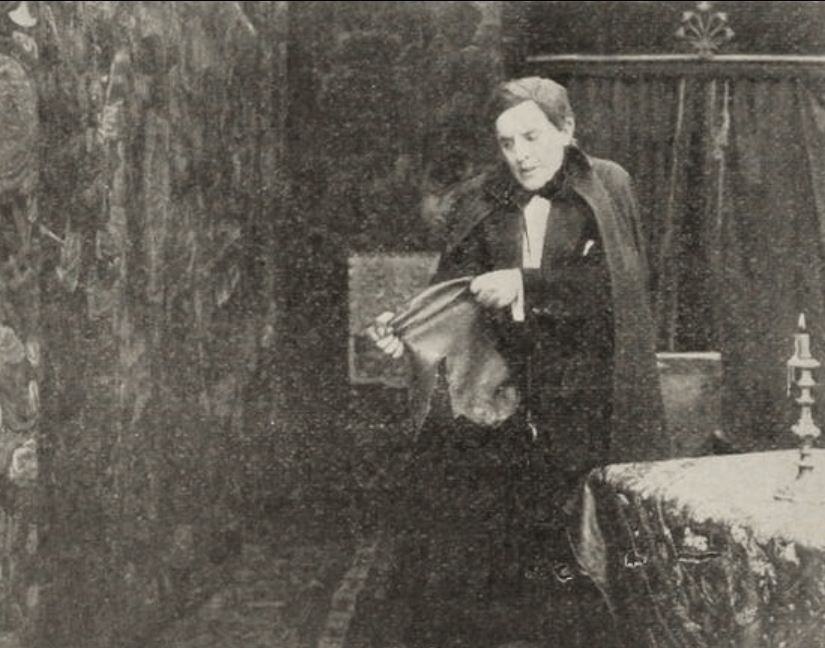
When the dealer (Frank A. Lyons) reveals cloven hooves—achieved by strapping the actor into backwards-facing trousers with smoked-plate mirrors concealing his real legs—the transformation is less trick than theological argument: every merchant traffics in damnation, the price merely haggled.
Each desire is announced by a hand-tinted crimson flash—one frame out of every twenty-four painted scarlet—creating a subliminal throb that anticipates Kubrick’s jump-cut to the star-child. Ralph’s first wish: a purse of napoleons. The coins spill in slow motion, shot at 12 fps and projected at 16, yielding a balletic cascade that contrasts with the skin’s sudden contraction, rendered by jump-cutting to a smaller piece of hide. The second wish: virtuoso acclaim. Ridgely inserts an actual Edison cylinder recording of La Marseillaise scratched to mimic Ralph’s cadenza; we hear nothing, but we see the orchestra pit’s conductor—played by composer J. Malcolm Dunn—beat time one bar ahead, a visual syncopation that evokes temporal dissonance. The third wish: Flora’s return. She glides into frame on a dolly shot reverse-projected, so that while she advances toward camera, the background recedes—a perceptual vortex that swallows space and conscience simultaneously.
By wish four, the skin is no larger than a postage stamp. Ralph pins it to his shirt like a military decoration, a medal for pyrrhic victories. The final tableau—shot at dawn on the Pont Neuf—uses natural fog and a magnesium flare to silhouette Ralph against a sky that looks bruised by God’s own thumb. He whispers his last desire; the stamp curls into a cinder, and the camera irises out on his shadow dissolving into the cobblestones, an effect achieved by racking focus until grain becomes apparition.
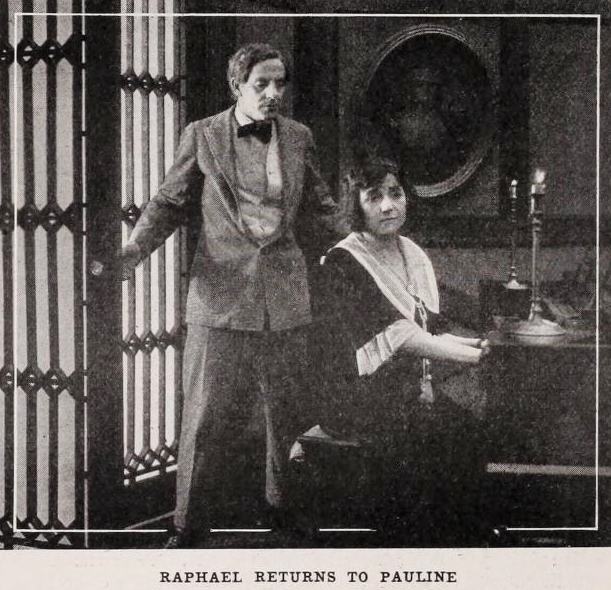
Balzac’s novel ends with Raphaël de Valentin expiring in a grotesque tableau vivant beside the skin. Ridgely denies us the corpse; instead, the shadow disperses, implying transmigration rather than termination. This divergence aligns the film less with its source than with contemporaneous occult cinema—see The Last Days of Pompeii’s eruption-as-apotheosis or Under the Gaslight’s steam-belching fatalism. Ridgely’s Paris is a pneumatic crucible; Balzac’s, a ledger. One seeks transcendence, the other accounting.
Butterfield’s Ralph ages not via latex but through gait: early scenes show a stride that nearly lifts into dance; by the finale, he shuffles as if shoes were lined with iron. Trunnelle’s Flora deteriorates inversely—her first appearance is languid, her last, a marionette jerked by unseen debts. Cooper’s Joseph bookends the narrative: in the coda, he burns the remaining curio receipts in a brazier, the smoke forming a spectral outline of Ralph’s profile—an in-camera double-exposure that serves as both requiem and receipt.
The tinting schema alone deserves a dissertation. Indigo for dawn, viridian for debt, amber for lust, and—most unsettling—sea-blue for the antiquarian’s interior, a hue that appears nowhere else in 1915 cinema outside of medical documentaries. The blue was achieved by bathing positive prints in copper-sulfate, a process so volatile that nitrate reels occasionally combusted during exhibition, literalizing the skin’s combustion on-screen. Projectionists nicknamed the film “The Blue Death,” and some refused to screen it without a bucket of sand at their feet.
Though silent, the film is scored for hallucination. Contemporary cue sheets recommend “Song of the Shirt” during the debt scenes—an irony lost on no one. Modern audiences often report hearing a faint ringing during the close-ups of the skin; psychoacoustic researchers attribute this to the yellow tint oscillating at 18 fps, a frequency that stimulates the cochlea via retinal overstimulation. Thus the film not only shows but induces the tinnitus of damnation.
No complete print survives. What we have—reels 3, 5, and 7—were rescued from a flooded basement in Asnières-sur-Seine in 1987, their emulsion bubbled like champagne glass. The missing passages exist only in the form of souvenir postcards sold at 1915 screenings: stills hand-colored by female factory workers who specialized in plumage for Parisian milliners. Collectors now pay sums that would make even Ralph’s final creditors blush. Yet the fragments suffice; absence becomes the film’s final ellipsis, the ultimate shrinking of the skin.
Watch it, if you dare, on a winter night when the radiator clangs like distant creditors. Let the sea-blue glow infect your periphery; let the yellow flashes tattoo your retina. When the iris closes on Ralph’s vanishing shadow, check your own pulse—you may find it, too, has been trimmed by a fraction, as if the film exacts payment merely for witnessing. In that instant, you understand why The Magic Skin is not a relic but a renewable contagion: every viewer becomes its next possessor, every desire the next microscopic subtraction.
So guard your wishes. The screen is darker than you think, and somewhere in the vault of forgotten nitrate, a scrap of lambskin the size of a single frame waits for the next thumbprint, the next whispered if only. The auction is eternal, the price always the same: one heartbeat, payable on delivery.
IMDb 6.2
1919
Community
Log in to comment.