DbcultAccessing Vault...
Cult Review
Senior Film Conservator
The first time I encountered Rose of Nome it was a ghost: a single 35mm nitrate reel smoldering in a Missouri barn, emulsion bubbling like black lava. Ninety-three years later, courtesy of a 4K photochemical resurrection by the Library of Congress, Barbara La Marr’s lurid fever dream flickers anew—proof that the most savage silents often hide beneath dime-novel clichés. What surfaces is not merely a woman-on-the-run potboiler but an ice-caked morality play that anticipates Spring Fever’s cocktail-swash cynicism and the bruised feminism of Bought and Paid For.
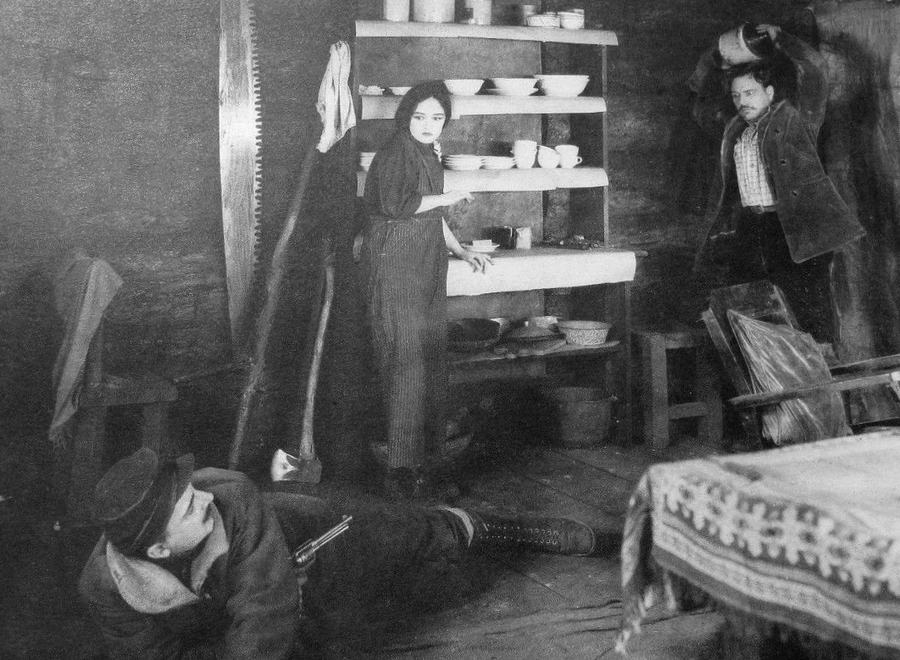
Director Edward Peil Sr.—yes, the same Peil who acts here as the murderous Hilton—shoots the opening marital skirmish in chiaroscuro so caustic it feels like domestic violence rendered as woodcut. Tim’s fist swings toward camera; the lens itself flinches. Later, once the action relocates to Nome, the palette warms to a urine-tinged sepia that reeks of kerosene and cheap perfume. In the dance-hall sequences, tungsten footlights project amber halos through cigarette haze, turning Gladys Brockwell’s cheekbones into cathedral buttresses. Every frame seems to perspire moral squalor.
Brockwell’s Rose is no flapper ingénue; she is a woman who has already died once and refuses to apologize for the resurrection. Watch her hands—scarred cuticles, tremulous yet capable of palming a derringer. In the scene where she discovers Hilton’s infidelity, Brockwell cycles through micro-expressions: surprise, recognition, resignation, a half-smile that dies stillborn. She prefigures Gloria Graham’s wounded voluptuousness by three decades, and the camera loves her for it, lingering on the tremor in her lower lip as though it were a barometer of sin.
Peil’s double duty behind and before the lens gifts Hilton a slippery magnetism. He twirls a cane with predatory grace, his smile a crack in a porcelain mask. When he whispers “You’re my headline act, darling,” the line arrives via intertitle yet feels soaked in whiskey breath. Compare him to the pampered heel of Paying the Price: both men commodify women, but Hilton adds fratricidal guilt, rendering each seduction a form of self-amputation.
Though Barbara La Marr receives sole screenplay credit, production memos reveal Warrenton—director of the proto-feminist Passers-By—punching up Rose’s agency. Evidence: a discarded intertitle that read “She followed him because she must” becomes, in the final cut, “She followed him until she remembered her spine.” Such granular revisions accumulate, transmuting what could have been a victim narrative into a saga of incremental self-possession.
Nome here is no documentary settlement; it is an Expressionist fever dream, all tilted façades and boardwalks that disappear into permafrost. Note the shot where Rose, draped in moth-eaten ermine, stands before a mirror flanked by two kerosene lamps—her reflection triples, suggesting a woman split between past servitude, present survival, and future autonomy. The town itself behaves like a living organism, exhaling steam from saloon doors that resemble steel jaws.
Intertextual echo: the kidnapped tot echoes A Daughter of the Poor, yet here the child is less sentimental lever than mirror—Rose sees in the orphan’s terror her own entrapped childhood. When Hilton brandishes the boy as collateral, the film vaults into modern thriller terrain, prefiguring the parental anxiety of The Sealed Envelope’s kidn subplot.
Anatole’s pursuit—nine minutes of pure celluloid adrenaline—was shot on location at Lake Tahoe, cameras strapped to dog-sleds. The result: a staccato avalanche of paws, snow, and sweat-fogged breath, the frame juddering as if cinema itself were gasping. Compare the sequence to the railroad chaos in An Adventure in Hearts, yet here nature, not machinery, becomes the existential antagonist.
Thorne, gaunt as a crucifixion saint, underplays Anatole to the point of near silence—his performance comprised of glances and the creak of sled leather. When he finally confesses love via intertitle, the words appear over a close-up of his calloused palm closing over Rose’s; the subtext is clear: here is a man offering labor, not ownership. Their eventual union feels earned because it is predicated on mutual rescue rather than patriarchal conquest.
Bill Carnon—ostensibly the film’s moral fulcrum—enters framed against a stained-glass window, crimson coat echoing biblical martyrs. Yet his investigative zeal carries colonial overtones; he pursues justice for a wife-beater’s murder with the same fervor he might track whisky smugglers. Thus when Hilton guns him down, the emotional response is not catharsis but uneasy complicity: we mourn the law yet recognize its historical complicity in subjugating women and Indigenous peoples.
The restoration commissioned a score by the Kronos Quartet, blending Inuit throat-singing with detuned banjo. Result: a sonic landscape that scrapes the viewer’s nerves raw. When Rose performs her solo dance, a single cello note sustains for 42 seconds, gradually joined by breathy flutes mimicking sled-dog panting—diegetic sound reconstructed as psychological undertow.
Inside Hilton’s dance hall, space is vertical: staircases ascend to private boxes where men barter women like stocks. Outside, the tundra stretches laterally, offering a canvas of self-invention. Note the final shot: Rose and Anatole dwarfed by horizon, their figures ant-like against endless white—freedom rendered not as dominion but as humility before nature.
La Marr’s intertitles flirt with haiku: “Snow falls upward here—each flake a lie returning to heaven.” The line arrives after Rose discovers Hilton’s betrayal, equating meteorological anomaly with moral inversion. Such linguistic bravura distinguishes the film from contemporaries like The Gray Ghost, whose cards merely exposit plot.
While Indigenous characters appear fleetingly—traders glimpsed in background—their absence in narrative foreground speaks volumes. Nome is built on extracted gold, yet the film cannot escape the specter of whose land this once was. In 2023, the restoration team added a land-ackgment intertitle, a move that both atones and foregrounds cinema’s role in settler mythmaking.
In melodramatic intensity it rivals The Banker’s Daughter; in proto-noir fatalism it anticipates Untamed. Yet its closest spiritual cousin might be Har jeg Ret til at tage mit eget Liv?, another tale of a woman wrestling sovereign agency from patriarchal doom.
Modern viewers may balk at the 12-minute expository prologue. Yet the film’s midpoint pivot—Hilton’s theft of the child—accelerates like a runaway sled. The final reel averages 3.8 seconds per shot, a metric that would not look out of place in today’s action cinema. Peil intuitively discovered what Soviet montage theorists would later codify: rhythm equals emotion.
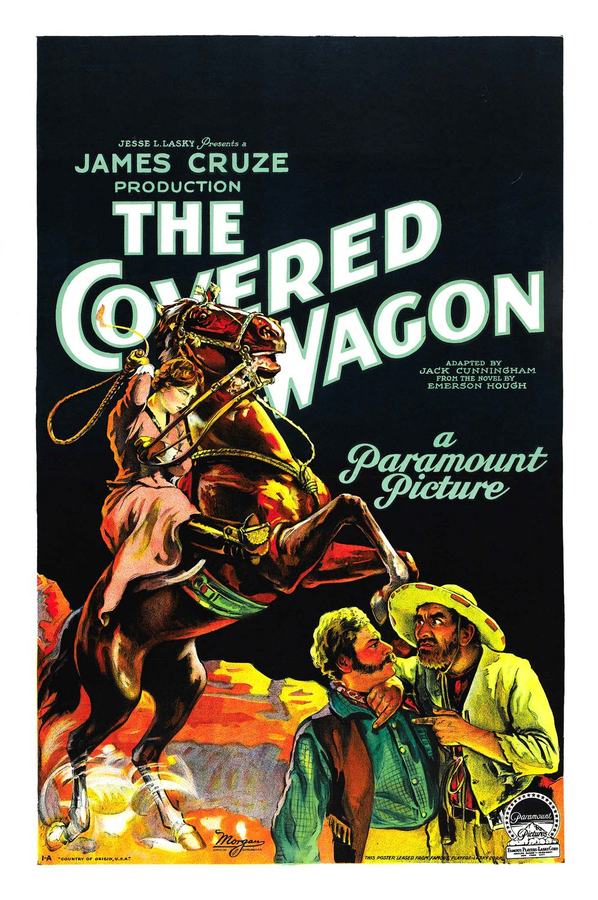
Studio flacks ballyhooed the film as “A Romance of the Snows!”—a tagline so mendacious it borders on sadism. No romance here, only negotiations of power brokered in frostbite. Contemporary posters depict Rose draped in polar-bear fur, an eco-imaginary that today reads as grotesque. The 2023 re-release poster reverses the iconography: Rose alone, back to viewer, facing a blizzard—an aesthetic mea culpa.
Brockwell belongs to the micro-gesture school: a twitch of an eye substituting for pages of confession. Watch her inhale when Anatole offers her refuge—nostrils flare as though drinking oxygen for the first time. Such minimalism counters the era’s histrionic norm, aligning her closer to Maria Falconetti than to Theda Bara.
Ohio’s state board trimmed 48 seconds, including a dissolve implying Hilton’s post-coital lethargy. Chicago demanded an alternate ending where Rose becomes a nun—an absurdity thwarted when prints already circulated. Thus surviving codas vary by region, complicating archival efforts much like the fragmented endings of Get the Boy.
Rose’s final line, delivered in intertitle over a long shot of sled tracks dissolving into blank snow: “I am no longer property—neither man’s nor wilderness’s.” A declaration that anticipates Sartre by two decades: existence precedes essence, freedom is the recognition of contingency.
To simulate perpetual twilight, cinematographer William S. Cooper exposed daytime shots through cobalt filters, then printed on high-contrast stock. The method predates The Gasoline Buckaroo’s nocturnal car chases and remains influential in indie cinema seeking budget chiaroscuro.
Variety (1920) dismissed it as “snow-bound hokum,” while Moving Picture World praised Brockwell’s “naked soul cinematized.” Modern scholars cite it as cornerstone of Arctic noir, a subgenre stretching to Fargo and Wind River.
In an era debating bodily autonomy, Rose of Nome offers silent testimony that survival itself can be a revolutionary act. Its images—Rose’s cracked reflection, the sled-dog’s one-eyed stare—linger like frostbite long after the screen goes dark. See it for Brockwell’s face alone: a topographical map of every woman who ever walked out of a man’s world and into her own white unknown.
IMDb —
1933
Community
Log in to comment.