DbcultAccessing Vault...
Cult Review
Senior Film Conservator
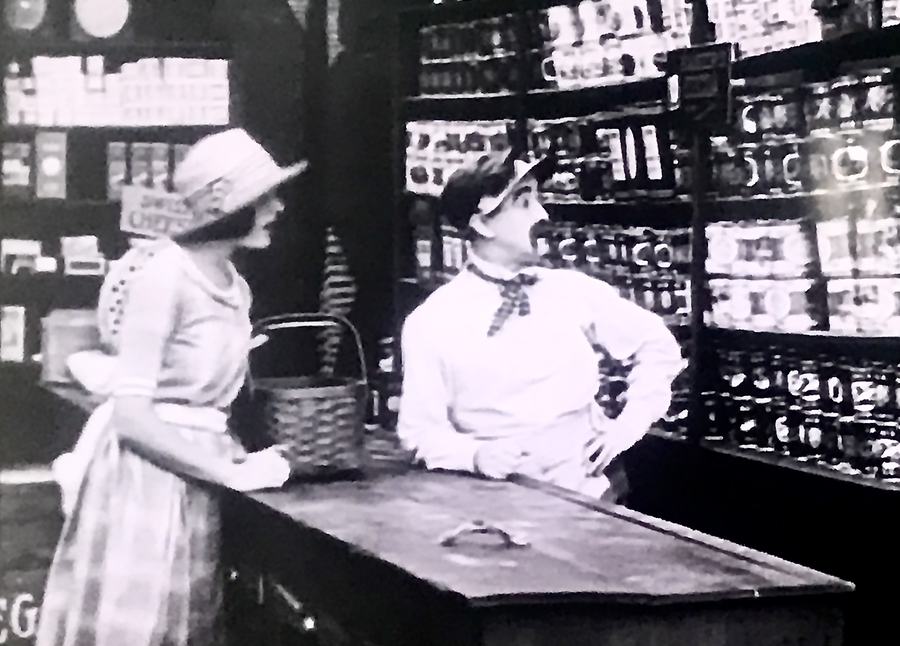
*Spot Cash* (1924) is a film that thrives on the paradox of being both meticulously planned and utterly chaotic. Directed by Ernest Morrison with the unflinching eye of someone who believes that farce is the purest form of truth, it follows a grocer named Snub (played by the titular 'Snub' Pollard) who is driven to extremes when his former employee sets up a competing store. The story is a masterclass in how to transform a mundane conflict into a spectacle of theatricality, where the stakes are low but the execution is high. The film’s enduring appeal lies in its ability to make us care about a man’s crusade against a grocery list.
From its opening shot—a close-up of a dusty cash register clattering with the weight of nickels and dimes—it establishes a world where commerce is both a comedy and a tragedy. Snub is not a villain but a comic antihero, his motivations as petty as they are relatable. When his inventory is pilfered by the upstart shop, he doesn’t call the sheriff or negotiate. Instead, he enlists his boys, outfits them in firemen’s gear, and stages a fake emergency to reclaim his goods. The sequence is a marvel of silent-era ingenuity: a mock firefighting brigade, complete with hoses and a siren, parades through town while the groceries are swiped under the noses of the bewildered townsfolk. It’s a heist that’s less about theft and more about reclaiming narrative control.
What elevates *Spot Cash* beyond mere slapstick is its deft handling of social satire. The film doesn’t just lampoon Snub’s pettiness; it critiques the very systems that enable such behavior. The rival grocer, a smug interloper in the town’s economic ecosystem, is portrayed with a smirk that suggests he’s as complicit in the absurdity as Snub. Similarly, the townspeople—bystanders, customers, and even the sheriff—are caught in a web of passive complicity, their indifference to the chaos around them a quiet commentary on the apathy of small communities. The film’s humor is rooted in this tension between individual agency and collective inertia.
The performance of 'Snub' Pollard is a revelation. As both actor and character, he embodies the duality of the silent screen: his face is a canvas of exaggerated emotions, yet his body moves with the precision of a marionette. His portrayal of Snub is less a performance than a pantomime of capitalism itself—overreaching, self-aggrandizing, and ultimately self-defeating. The firemen’s costumes, with their oversized helmets and comically short trousers, are less disguises than symbols of Snub’s delusions of grandeur. When he marches through town, groceries in tow, he’s not just reclaiming his stock; he’s asserting his dominance in a world that has little sympathy for his grievances.
Comparisons to other comedies of the era are inevitable. Like *The Big Show* (1935), *Spot Cash* uses spectacle to critique societal norms, though its scope is more intimate. While *Persuasive Peggy* (1926) leans into romantic farce, *Spot Cash* is a study in economic farce, its humor derived from the mechanics of trade rather than the whims of love. The film’s structure—setup, escalation, payoff—echoes the three-act simplicity of *The Greater Profit* (1925), but with a more anarchic spirit. It’s a film that refuses to take itself seriously, yet its critique of capitalist absurdity is as incisive as it is humorous.
Visually, *Spot Cash* is a treat. The use of shadow and light in the firehouse sequence is particularly effective, with the flickering glow of the fake flames casting Snub’s face in an almost demonic hue. The editing is brisk, the transitions seamless, and the sound design (despite the film’s silent nature) is evoked through intertitles and exaggerated physical comedy. The climax—where the groceries are delivered to Snub’s home in a literal parade—is staged with the grandeur of a Broadway finale, as if the entire town has become an audience to his private farce.
However, the film is not without its flaws. The pacing, while generally brisk, falters in the second act, where the conflict between Snub and his rival feels underdeveloped. The rival’s motivations are left unexplored, reducing him to a mere obstacle rather than a full-fledged character. Similarly, the resolution—Snub’s triumph—lacks the emotional resonance of a more nuanced narrative. It’s a film that ends where it begins, a loop of farce with no real transformation for its protagonist.
In the context of early 20th-century cinema, *Spot Cash* is a minor but significant work. It reflects the era’s fascination with industrial efficiency turned into artifice, and its themes of ownership and theft resonate with the anxieties of a rapidly modernizing world. The film’s enduring relevance lies in its ability to make us laugh at the same time we recognize the truth in its satire. It’s a reminder that farce is not merely frivolous; it is a genre that dares to expose the absurdities of society without pretense.
For modern viewers, *Spot Cash* is a time capsule of a bygone era, yet its humor is surprisingly accessible. The physical comedy transcends language, and the visual gags are as effective now as they were nearly a century ago. It’s a film that rewards attention not just to the plot but to the texture of its world—the clatter of the cash register, the jaunty tune of the fire siren, the way Snub’s face contorts in both rage and triumph. These details are the lifeblood of the film, and they elevate it from a simple joke to a layered exploration of human folly.
In conclusion, *Spot Cash* is a testament to the power of comedy as a form of critique. It may be a small film, both in runtime and scope, but its impact is disproportionate to its size. It’s a work that invites viewers to see the humor in humanity’s contradictions and to find joy in the ridiculous. For those seeking a film that marries wit with whimsy, this is a must-watch. And for those who appreciate the art of the prank, it’s a masterclass in how to pull one off with style.
IMDb 4.8
1935
Community
Log in to comment.