DbcultAccessing Vault...
Cult Review
Senior Film Conservator
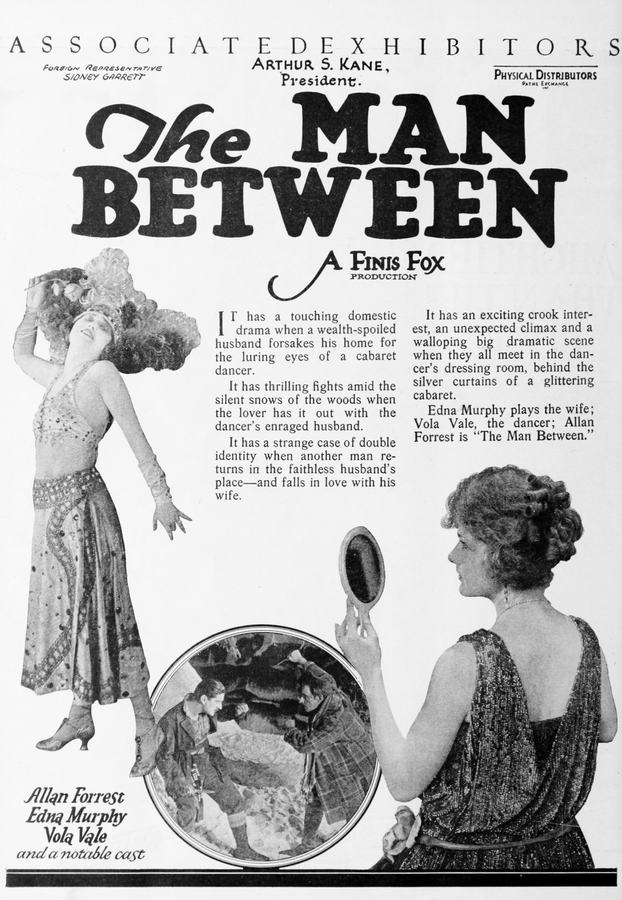
Stepping back into the hallowed halls of silent cinema often feels like unearthing a forgotten treasure, a poignant whisper from an era when visual storytelling reigned supreme. ‘The Man Between’, a compelling drama from the early 20th century, is precisely such a find, a narrative tapestry woven with threads of passion, deception, and the relentless hand of fate. It’s a film that, despite its lack of spoken dialogue, communicates with an emotional intensity that transcends the decades, proving that the universal themes of love, loss, and identity are indeed timeless.
At its heart, the film unravels a tale of profound human fallibility and the intricate consequences that ripple outward from impulsive decisions. We are introduced to Jules Lamont, a Canadian woodsman whose life with his wife, Zephne, is violently disrupted by a seemingly minor misunderstanding. This initial rupture, a mere crack in their domestic foundation, quickly escalates into an unbridgeable chasm. Jules, driven by a volatile cocktail of pride and resentment, abandons Zephne, seeking solace or perhaps distraction in the arms of another. His subsequent infatuation with a showgirl, who happens to be the bride of a man named Joe Cateau, acts as the catalyst for the film's central tragedy. The ensuing confrontation between Jules and Joe is not merely a fight; it is a primal clash of male egos, a desperate struggle for dominance that ends in Joe's death and Jules's incarceration. This sequence, though brief, sets a grim tone, establishing the stakes and the irrevocable path down which our protagonist has stumbled. The swiftness of these events underscores the fragility of life and reputation in an unforgiving world, a sentiment echoed in many silent era melodramas, where characters often find themselves victims of circumstance as much as their own flaws.
It is within the bleak confines of the prison walls that the true machinations of the plot begin to unfurl. Here, Jules encounters Pierre Lebec, a fellow inmate whose physical resemblance to Jules is uncanny, almost preternatural. This serendipitous meeting sparks a desperate, audacious plan in Jules's mind. With Pierre on the verge of release, Jules, consumed by a desire to escape his predicament and perhaps reclaim some semblance of his former life, persuades Pierre to assume his identity. It's a gamble rooted in desperation, a Faustian bargain struck not with the devil, but with a man who could be his mirror image. This premise of mistaken identity, while a classic trope, is handled with a nuanced hand here, setting the stage for a psychological drama rather than mere farce. It invites the audience to ponder the very nature of identity – is it defined by appearance, or by the soul within?
Pierre, a man seemingly without strong ties or a definitive path, agrees to the charade. His journey to Jules's home and his subsequent immersion into Zephne's life are fraught with moral complexity. Zephne, heartbroken and unsuspecting, accepts Pierre as her long-lost husband. What begins as a calculated deception soon morphs into something far more profound: Pierre, living as Jules, genuinely falls in love with Zephne. This is where the film truly shines, delving into the emotional quagmire of a man trapped by his own benevolent lie. He becomes 'the man between' – caught between his true self and his assumed identity, between loyalty to Jules and his burgeoning affection for Zephne, and ultimately, between a past that isn't his and a future he desperately desires but cannot claim honestly. The performance of the actor portraying Pierre (Allan Forrest) in these scenes is particularly crucial, conveying the internal conflict and the gradual shift from impersonation to genuine emotion through subtle gestures and powerful expressions, a hallmark of excellent silent acting. His internal struggle, communicated through his eyes and posture, is palpable, giving the audience a window into his tortured psyche.
The narrative tension builds inexorably towards the inevitable collision of these two worlds. The return of the real Jules Lamont shatters the fragile peace Pierre and Zephne have found. This moment is not merely a plot point; it is the explosive culmination of all the preceding deceptions and emotional entanglements. The confrontation is visceral, raw, and tragically predictable, ending with the death of the original Lamont. This violent resolution serves as a stark reminder of the destructive power of secrets and the futility of attempting to outrun one's past. It’s a dramatic climax that leaves the audience breathless, pondering the moral implications of what transpired.
The aftermath of Jules’s death is perhaps the most emotionally charged segment of the film. Zephne, now confronted with the shocking truth of Pierre's deception, must grapple with the profound betrayal. Her initial heartbreak and confusion are understandable, yet the film masterfully navigates her journey towards understanding and forgiveness. The revelation is not a simple plot twist but a catalyst for Zephne's own emotional evolution. She recognizes the genuine love Pierre holds for her, a love that transcended the lie, and ultimately chooses to embrace a future with the man who, despite his deception, proved himself worthy of her affection. Their eventual marriage, while perhaps a tidy resolution, feels earned through the crucible of shared trauma and genuine emotional connection. It speaks to the idea that true love can emerge from the most unlikely and morally ambiguous circumstances.
The performances in 'The Man Between' are a testament to the unique demands of silent film acting. Fred Malatesta, in the dual roles of Jules and Pierre, faced the unenviable task of portraying two distinct personalities with only subtle shifts in demeanor and expression. His ability to convey Jules's initial arrogance and later desperation, juxtaposed with Pierre's quiet sincerity and internal torment, is commendable. Kitty Bradbury as Zephne delivers a portrayal rich in emotional depth, her face a canvas for heartbreak, confusion, and eventual acceptance. Her ability to convey the profound shifts in her character’s emotional landscape without uttering a single word is a masterclass in silent film acting. Doreen Turner, Allan Forrest, Edna Murphy, Philo McCullough, and Vola Vale round out the cast, each contributing to the film's dramatic texture, their roles often pivotal in advancing the intricate plot and heightening the emotional stakes. The ensemble works in concert, relying on exaggerated gestures, expressive eyes, and precise blocking to communicate the narrative nuances, a style that, while initially jarring to modern sensibilities, quickly becomes captivating.
Lois Zellner and Finis Fox, the writers behind this intricate narrative, deserve significant credit for crafting a story that balances melodrama with genuine psychological insight. The screenplay's structure is remarkably robust, building suspense effectively and allowing for significant character development despite the constraints of the medium. They understood the power of visual storytelling and the necessity of clear, impactful intertitles to guide the audience through the emotional labyrinth. The pacing of the film, expertly guided by the director (though uncredited in the prompt, the visual execution speaks volumes), ensures that the audience remains fully invested, moving from moments of quiet contemplation to sudden bursts of dramatic action with fluidity.
The film's visual language is equally compelling. Silent cinema, by its very nature, relies heavily on cinematography and set design to convey mood and atmosphere. The Canadian wilderness setting, though perhaps not extensively explored, provides a rugged backdrop that mirrors the untamed passions and moral wilderness of the characters. Lighting is employed to great effect, often casting characters in shadows that reflect their internal conflicts or illuminating moments of clarity and truth. The use of close-ups on the actors' faces is particularly effective in drawing the audience into their emotional states, a technique that was refined throughout the silent era but already demonstrating its power here.
Comparing 'The Man Between' to other films of its era, one can see common threads of dramatic storytelling and thematic exploration. The theme of mistaken identity, for instance, finds echoes in films like ‘The Misleading Lady’, where comedic misunderstandings drive the plot, albeit with a lighter touch. However, 'The Man Between' leans into the darker, more tragic implications of such a deception, exploring the profound moral quandaries it creates. The intense, often fatal conflicts between men, driven by love, jealousy, and honor, can be seen in the rugged narratives of films like ‘Wagon Tracks’ or ‘The Conflict’, which also delved into the harsh realities of frontier life and human nature. The emotional entanglement of a woman caught between two men, or two versions of the same man, also brings to mind the romantic complexities explored in a film like ‘The Mistress of Shenstone’, though 'The Man Between' injects a unique twist with its doppelgänger plot device. The film stands out for its commitment to exploring the psychological toll of its central premise, rather than merely using it for sensationalism. It doesn't shy away from the messy moral ambiguities, which gives it a depth that many contemporaries, focused more on spectacle, might have overlooked.
What truly elevates 'The Man Between' beyond a simple melodrama is its nuanced exploration of redemption. Pierre, though initially complicit in a deception, undergoes a significant moral transformation. His love for Zephne is genuine, and his suffering under the weight of his assumed identity is palpable. He doesn't merely replace Jules; he becomes a better version of the man Zephne thought she married, embodying virtues that the real Jules lacked. This journey of redemption, fraught with peril and emotional agony, is what truly resonates. The film asks profound questions about identity: can one truly become another? Can love blossom from a lie? And can forgiveness truly heal the deepest wounds?
The legacy of 'The Man Between' lies in its ability to transcend its era. While it is undeniably a product of early 20th-century filmmaking, its themes remain strikingly relevant. The complexities of human relationships, the allure of deception, the weight of guilt, and the transformative power of love and forgiveness are universal constants. It reminds us that even without spoken words, cinema possesses an unparalleled capacity to convey the deepest human emotions and dilemmas. The film serves as a poignant reminder of the artistry and narrative sophistication that defined the silent era, an era that, despite its technical limitations, produced stories of enduring power and emotional resonance. Revisiting such films is not merely an exercise in historical appreciation; it is an opportunity to reconnect with the foundational elements of cinematic storytelling and to witness the raw, unfiltered emotional power that characterized the medium's nascent years. It’s a compelling piece of cinematic history that continues to speak volumes without uttering a single sound, echoing the timeless struggles of the human heart.
In conclusion, 'The Man Between' is more than just a silent film; it is a profound dramatic experience. It challenges viewers to look beyond the surface, to understand the intricate motivations that drive human actions, and to appreciate the delicate balance between truth and illusion. Its narrative, though seemingly straightforward, is layered with moral ambiguities and emotional depth, making it a compelling watch for anyone interested in the rich tapestry of cinematic history. The film’s ability to create such a vivid and emotionally resonant world, using only visuals and intertitles, is a testament to the talent of its cast and crew, and a powerful reminder of the enduring magic of silent cinema. It’s a journey into the heart of human conflict and connection, presented with an artistry that continues to captivate and provoke thought long after the final frame.
IMDb —
1932
Community
Log in to comment.