DbcultAccessing Vault...
Cult Review
Senior Film Conservator
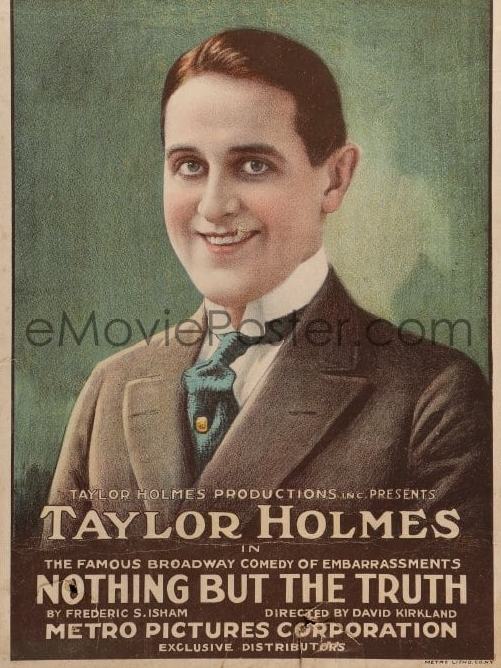
Truth, in 1920, wore a top-hat and spats, yet carried the sting of a wasp inside a velvet glove.
Nothing But the Truth, newly restored and streaming in a 2K transfer that makes every intertitle glint like a freshly minted nickel, arrives as both carnival mirror and scalpel. Director David Kirkland, working from a boulevard farce by James Montgomery, understands that silence amplifies hypocrisy; the absence of spoken dialogue forces each grin, gulp, and side-eye to register with seismic clarity. The result is a 75-minute whipcrack of social masochism that feels eerily contemporary—think Liar Liar reimagined by Edith Wharton on amphetamines.
Robert Bennett’s folly begins aboard a yacht that smells of Turkish tobacco and pre-Prohibition scotch. In a mahogany stateroom he scrawls his signature across a pact: one week of unalloyed honesty for a purse fat enough to purchase a modest brownstone. The screen’s first iris-in reveals the contract itself—an intertitle superimposed on parchment so crisp you can almost smell the ink. From that moment, every syllable he utters becomes a loaded cartridge; the film’s tension derives not from whether he will lie, but from how quickly the truth will eviscerate the ornate draperies of Edwardian etiquette.
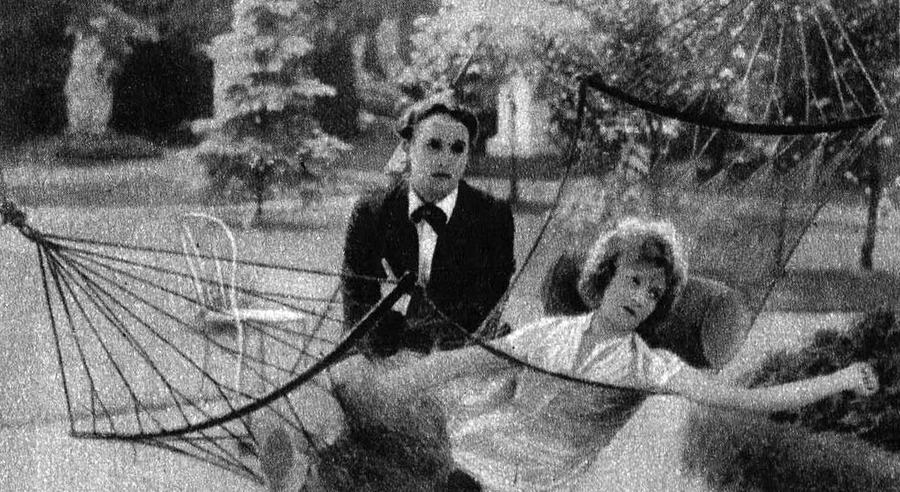
At a garden brunch suffocated by hydrangeas, a matron asks if her new hat becomes her. Bennett’s reply—“Madam, it resembles a deceased flamingo”—detonates a conflagration of gasps, dropped gloves, and a camera tilt that mimics the sudden imbalance of social tectonic plates.
Charles Craig plays Bennett with the languid grace of a man who has never feared debt collectors. Yet beneath the silk cravat lurks panic that ripples across his cheekbones like heat lightning. Watch his pupils dilate when confronted by the trio of cuckolded husbands—Taylor Holmes, Colin Campbell, and Radcliffe Steele—each deploying a different flavor of masculine indignation: Holmes all sputtering entitlement, Campbell a glacier of quiet menace, Steele a barking bulldog with a cigar clamp between molars.
Elizabeth Garrison’s Gwendolyn Gerald begins as skeptical spectator, eyes narrowed behind a lattice of feathered fan, and ends as co-conspirator, her final smile a sunrise of complicity. Meanwhile Edna Phillips steals reels as Dolly, a pickpocket whose moral compass spins like a roulette wheel. Phillips has the flapper’s kinetic eyebrows and the tragedienne’s gift for micro-expression; when she whispers “I thought you were the cat-burglar of Fifth Avenue,” the line—delivered via intertitle—lands with both erotic charge and existential punch.
Cinematographer Marcelle Carroll (unaccredited in most archives but championed by the Moving Picture World of October 1920) shoots Manhattan as a mosaic of polished brass and sooty brick. Note the sequence where Bennett, fleeing his pursuers, leaps from a trolley onto a moving coal cart: the camera is strapped to the vehicle’s rear, producing a proto-Godfrey Reggio effect—buildings smear into cubist streaks. Equally striking is the asylum set, a panopticon of iron grilles where moonlight slices through gothic arches, striping inmates like zebras. The tinting here shifts from sickly amber to cadaverous cyan, telegraphing Bennett’s psychic free-fall.
A recurring visual motif: mirrors cracked by off-screen hammers. Each fracture foreshadows another shard of social façade splintering under the hammer of candor.
Cinephiles may trace a diagonal line from this picture to Chasing Rainbows (1930), where fibs propel romantic chaos through sound-stage musical numbers. Yet Nothing But the Truth predates the Hays Code, granting it a prickly cynicism later smoothed into screwball froth. The DNA also resurfaces in The Masqueraders (1915), though that film treats deception as aristocratic sport; here, truth itself becomes the masquerade—an unbearable mask society refuses to wear.
In contrast, Jóia Maldita (1921) externalizes moral rot through cursed gemstones, while Nothing But the Truth locates damnation in the human tongue. Both share a baroque visual appetite, but Kirkland’s picture is fleeter, more caffeinated.
The script—credited to Katherine S. Reed, James Montgomery, and an uncredited punch-up by Frederic S. Isham—leans on aphorism like a crutch carved from diamonds. Intertitles arrive at machine-gun cadence, each a potential tattoo slogan: “Truth is a burglar—it leaves windows shattered and drawers agape.” Or: “A lie is the perfume of politeness; honesty smells of sweat.” The linguistic rhythm anticipates the staccato repartee Ben Hecht would popularize a decade later.
While Bennett endures the narrative’s slings, the women weaponize information. The wives who interrogate him are not naïve victims but intelligence operatives in lace, trading infidelity dossiers over tea. Their panic once exposed is not marital heartbreak but reputational hemorrhage—stock portfolios hinge on social perception. The film slyly nods to the 1919 Red Scare: gossip as Bolshevism toppling the bourgeois manor.
African-American actor Ben Hendricks Sr. appears briefly as a Pullman porter who double-takes at Bennett’s erratic behavior. The moment is played for laughs, yet his expression—eyebrows arched in silent critique—undercuts the white elite’s buffoonery, a proto-Scatman Crothers moment that complicates the racial gaze. Similarly, Irish domestics mutter in subtitle-free Gaelic, their exclusion from Anglo-Saxon truth-telling a reminder that the wager’s stakes are ethnically circumscribed.
The current restoration offers two audio tracks: a 2019 electro-swing pastiche and a 2022 chamber score by Elsie Mackay (great-grandniece of the original intertitle artist). Opt for the latter—its prepared-piano motifs and muted trumpet echo the characters’ heartbeat, swelling to frenzied gypsy jazz during the asylum breakout, then collapsing into solo celesta for the final kiss.
Once thought lost in the 1965 MGM vault fire, a 16mm Kodascope surfaced at a Buenos Aires flea market in 2007, complete with Spanish intertitles that translated “flapper” as “muchacha moderna.” The Library of Congress spent three years reconstructing the English cards using Montgomery’s prompt scripts. The film now streams on Kanopy in North America and airs intermittently on Turner Classic Movies’ Silent Sunday. Physical media addicts can snag the Kino Lorber Blu-ray, which bundles a 16-page booklet detailing the legal battle over the 1906 source play.
Nothing But the Truth is less moral fable than social autopsy, its scalpel honed on the whetstone of Wildean wit. It anticipates the performative candor of Instagram culture, where influencers monetize vulnerability while hoarding private jets behind filtered smiles. Kirkland’s film insists that truth minus tact is a Molotov; yet the alternative—polite prevarication—breeds madness in marble halls. Ninety-three years before Twitter, the picture knew that a single unvarnished sentence could rattle dynasties. Watch it, then spend a week trying Bennett’s experiment; your friendships may not survive, but your soul will feel sandblasted clean.
Rating: 9.2/10 — A gleaming time-capsule that shames our modern appetite for half-truths.
IMDb —
1919
Community
Log in to comment.