DbcultAccessing Vault...
4.9/10
Senior Film Conservator
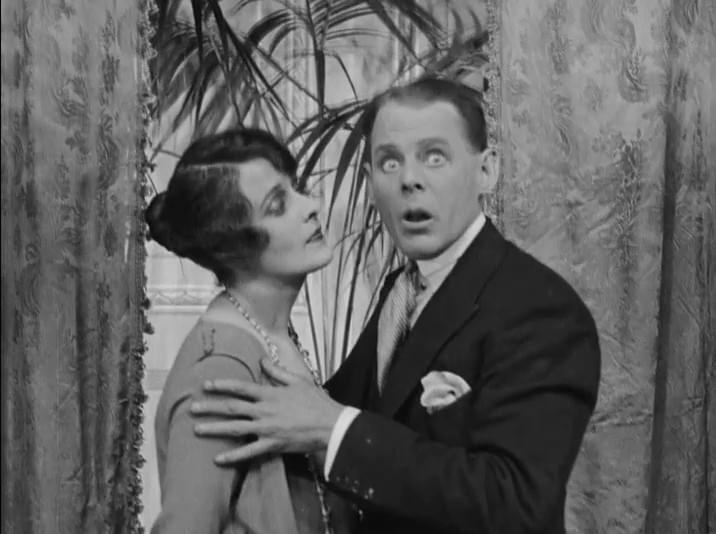
A definitive 4.9/10 rating for a film that redefined the boundaries of cult cinema. Beauty and the Beast remains a cornerstone of transgressive art.
In the annals of early cinema, where narratives often relied on bold gestures and clear-cut morality, Guy Newall's 'Beauty and the Beast' (1920s) presents a fascinating anomaly. Stripped down to an almost minimalist premise – a theatre patron unraveling a girl’s woolen vest – this film, even in its barest description, invites an intellectual excavation far beyond its apparent simplicity. It is not merely a story; it is an allegorical whisper, a cinematic haiku challenging the very nature of perception, vulnerability, and the unseen forces that dictate our public and private selves. The brilliance, or perhaps the enduring enigma, of this piece lies in its commitment to the profound implications of a singular, seemingly mundane action.
The act of unraveling, at the heart of Newall’s vision, is immediately striking. It is an inverse creation, a systematic dismantling of something meticulously crafted. A woolen vest, often a symbol of warmth, comfort, and domesticity, becomes a proxy for the girl’s carefully constructed persona, her defenses, perhaps even her very identity. Douglas Munro, as the theatre patron, embodies the 'beast' not of monstrous physicality, but of critical, perhaps even cruel, intellectual scrutiny. His hands, methodically pulling at a thread, become instruments of a dispassionate judgment, dissecting not just the garment but the soul of its wearer. This isn't a violent act, but one of unsettling precision, a quiet usurpation of control that speaks volumes without a single intertitle.
Ivy Duke’s performance as the girl is, by necessity, a masterclass in silent expression. Her journey from clothed composure to exposed fragility must be conveyed through subtle shifts in posture, the widening of eyes, the tremor of a lip. The loss of her vest is not just a physical chill; it is a psychological stripping bare. She becomes 'beauty' in her rawest, most vulnerable state, divested of the societal shields we all employ. This transformation forces the audience to confront their own complicity in the patron’s gaze, challenging us to look beyond the superficial and into the fragile essence of humanity. The film, therefore, becomes a commentary on the audience itself, positioning us as fellow patrons, witnesses to this quiet, profound violation.
Winifred Sadler’s role, though perhaps less central, is crucial in establishing the film’s atmosphere. As an observer, a silent witness to Munro’s calculated act, she represents the societal reaction, the bystander effect, or perhaps even the quiet judgment passed by those who watch. Does she empathize? Does she condemn? Her stillness, her reaction (or lack thereof), becomes a mirror reflecting the audience's own moral compass. In the silent era, such nuanced performances, relying entirely on pantomime and facial expressions, carried immense weight, shaping the emotional landscape of the narrative through unspoken cues. Sadler's presence anchors the scene in a shared human experience, making the patron's act not just a personal transgression but a public spectacle.
Guy Newall, as both writer and likely a guiding force in the film's direction (given his dual credit), infuses 'Beauty and the Beast' with an intellectual rigor that elevates it beyond a simple fable. He understands that the true 'beast' is often not external, but internal – the critical eye, the judgmental mind, the societal pressures that demand conformity and then punish vulnerability. His narrative choice to focus on such a specific, almost perverse act of deconstruction speaks to a keen awareness of human psychology and the power dynamics inherent in observation. This is a film that asks profound questions about artistic integrity, the critic's role, and the artist's exposure, themes that resonate powerfully even a century later.
The silent film era, often dismissed for its perceived lack of sophistication, was in fact a crucible of visual storytelling. Without dialogue, filmmakers like Newall were compelled to master the art of the visual metaphor, the evocative close-up, and the power of mise-en-scène. 'Beauty and the Beast' would have relied heavily on these techniques: the camera lingering on Munro’s meticulous fingers, then cutting to Duke’s subtly shifting expressions, perhaps a slow zoom to capture the growing chill or shame on her face. The use of light and shadow would have been paramount, perhaps casting Munro in stark, imposing shadows, while Duke's figure becomes increasingly illuminated, her vulnerability literally brought into the light. This deliberate pacing and visual emphasis would have amplified the psychological tension, making the audience acutely aware of every thread unraveled, every layer shed.
The very setting of a theatre, a place of performance and illusion, adds another layer of complexity. The girl is ostensibly a performer, or at least a patron in a public space, suggesting that her 'vest' is her public facade. Munro, the patron, represents the audience, the consumer of art, who feels entitled to dissect and expose. This dynamic draws parallels to films like A Coney Island Princess, which also explored themes of public spectacle and the performance of identity. The theatre itself becomes a microcosm of society, where roles are played, and appearances are everything, until they are meticulously undone.
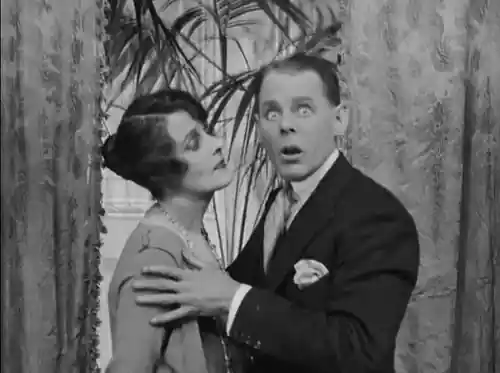
'Beauty and the Beast' (1920s) can be interpreted as a poignant commentary on societal pressures and the vulnerability of the individual in the face of collective scrutiny. In an era grappling with modernity, changing gender roles, and the nascent power of mass media, the film speaks to anxieties about authenticity and exposure. The girl, stripped of her protective layer, becomes a symbol of anyone subjected to public judgment, whether in a court of law or the court of public opinion. This theme of societal judgment and its often-devastating consequences finds echoes in other films of the period, such as The Black Stork, which unflinchingly examined moral dilemmas and public shaming.
The film's title itself, 'Beauty and the Beast', is a brilliant misdirection. It conjures images of a literal monster and a damsel in distress, yet Newall subverts this expectation. The 'beast' is not a creature of fur and fangs, but the insidious force of critical deconstruction, the cold indifference of an observer, or perhaps even the beast within us all that seeks to expose flaws. The 'beauty' is not merely physical attractiveness, but the inherent dignity and fragility of the human spirit, revealed once all external coverings are removed. This intellectual twist is what elevates the film from a simple morality play to a sophisticated psychological drama, even without spoken words.
The genius of Newall's conception lies in its ability to provoke profound thought with minimal exposition. It’s a testament to the power of suggestion and symbolism in cinema. One could argue that its succinctness forces the viewer to engage actively, to fill in the narrative gaps, becoming a co-creator of meaning. This is a characteristic shared with other works that rely on visual storytelling and metaphor, perhaps even some of the early, more abstract shorts that challenged traditional narrative structures. The film's lasting impact, despite its obscurity today, lies in its audacious simplicity and its capacity to resonate on multiple interpretative levels.
In an era where films like The Idle Class offered overt social satire through slapstick, 'Beauty and the Beast' opted for a more unsettling, introspective critique. It is a film that champions the power of the subtext, the potency of the unspoken. The tension doesn’t come from dramatic chases or grand pronouncements, but from the slow, deliberate stripping away of a personal shield, revealing the raw nerve beneath. This makes it a surprisingly modern film in its psychological depth, anticipating later cinematic explorations of the voyeuristic gaze and the fragility of identity under scrutiny.
The film also subtly touches upon the concept of value and perception, akin to the themes explored in The Greatest Gift, where the true worth of something is often overlooked or misunderstood. Here, the vest, a simple garment, holds immense symbolic value for the girl, representing protection and perhaps even comfort. Its methodical destruction by the patron devalues it in a material sense but elevates its symbolic significance, transforming it into a powerful emblem of lost innocence or violated trust. The patron's act is a commentary on how society often dismisses or devalues what is precious to an individual, especially when that individual is powerless.
What 'Beauty and the Beast' ultimately offers is not a story with a neat resolution, but an enduring question. It challenges us to reconsider what constitutes 'beauty' – is it the perfectly adorned exterior, or the courageous vulnerability revealed beneath? And what defines the 'beast' – is it the grotesque exterior, or the chillingly indifferent intellect that seeks to dismantle and judge? This film, with its minimal plot and maximal symbolic weight, stands as a testament to the profound artistry possible even in the nascent stages of cinema, proving that sometimes, the most resonant narratives are those that speak loudest in their silence.
The performances of Ivy Duke, Douglas Munro, and Winifred Sadler, under Guy Newall's astute guidance, must have been masterclasses in non-verbal communication, conveying layers of emotion and intent through subtle gestures and expressions. Their work, viewed through the lens of a century, reminds us of the power of early cinema to transcend technological limitations and delve into the complex tapestry of human experience. It is a film that, despite its potential obscurity today, deserves recognition for its bold thematic exploration and its enduring contribution to the art of cinematic storytelling. Its quiet rebellion against conventional narrative structures makes it a timeless piece, continually inviting new interpretations and discussions about the nature of art, critique, and the human condition.
IMDb 5.8
1930
Community
Log in to comment.