DbcultAccessing Vault...
2.5/10
Senior Film Conservator
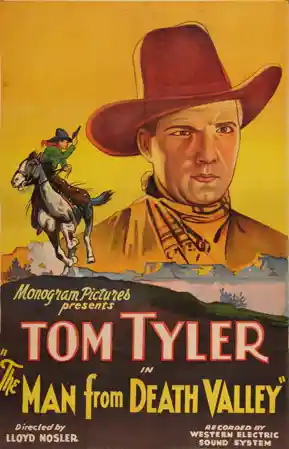
A definitive 2.5/10 rating for a film that redefined the boundaries of cult cinema. The Man from Death Valley remains a cornerstone of transgressive art.
You should watch this if you have an hour to kill and you like movies where the plot moves so fast it forgets to make sense. It’s great for people who love Tom Tyler looking stern on a horse or anyone who finds 1930s B-movies cozy. If you hate scratchy audio and people yelling in the desert for no reason, you’ll probably want to skip it.
The whole thing starts with Dave and Hank just riding along. They stop at a place called Alkali Springs and happen to be standing right by an open window. Inside, two guys are basically screaming their secret plan to rob the Mesa bank. It’s lucky, I guess, but also kind of hilarious how loud these criminals are being.
One of the voices belongs to a guy named Ortego and the other is the local Sheriff. Dave realizes the Sheriff is actually engaged to his ex-sweetheart, Ann. When Dave finds out, the script literally says "Dang." That’s the level of emotional depth we are dealing with here.
Dave and Hank decide they have to stop the robbery. But instead of telling the law—which makes sense since the law is the one robbing the place—they decide to rob the bank themselves. They figure if they have the gold, the bad guys can’t have it. It’s the kind of logic you only see in these old dusty westerns.
The middle of the movie is basically a long game of gold-potato. Dave buries the gold because it’s too heavy for the horse. But the Sheriff is watching from behind a rock. Then the Sheriff digs it up, but Hank sees him and takes it back. I actually lost track of who had the bag for about five minutes.
There is a scene where a mob wants to hang Dave. Ann steps in and slaps the Sheriff, which is pretty satisfying. She tells the mob that if they kill Dave, they’ll never find their money. She’s basically using Dave as a human treasure map.
The Sheriff tries to set Dave up by letting him escape, but he puts three guys in the bushes to shoot him. They miss. Of course they miss. Dave just keeps riding like it’s a normal Tuesday afternoon.
Eventually, everyone ends up back in Mesa. There is a lot of finger-pointing. Ortego thinks the Sheriff double-crossed him because Dave told him the gold was under the floor of the office. It wasn't actually there, but Dave is apparently a very good liar.
The ending is a total mess in the best way possible. The villains just shoot each other because they're so grumpy. Then Dave pulls out his badge and says he’s a United States Marshal. It feels like a total cheat, but you kind of expect it from a movie this short.
It reminds me a bit of The Heritage of the Desert, but with more confusing gold-hiding. It’s definitely not as polished as something like Mata Hari from the same year. But it doesn't try to be fancy.
One thing that’s weird is how Ann just switches back to Dave at the end. She was literally about to marry the Sheriff, but once he’s dead and Dave has a badge, she’s all in. Absence makes the heart grow fonder, Dave says. Or maybe just having a job that isn't "bank robber" helps.
The sets look like they might fall over if a horse sneezes too hard. You can see the dust flying off everyone’s clothes every time they move. It feels very real in that specific, low-budget way. There’s no movie magic here, just guys in hats in the sun.
The pacing is actually pretty good because it doesn't have time to be boring. At 54 minutes, it’s shorter than most episodes of modern TV. It gets in, does some riding, some shooting, and then it’s over. I appreciate that.
If you watch it, pay attention to the scene where the gold box is empty. The Sheriff’s face is priceless. He looks like he just realized he left the stove on at home. It’s probably the most honest emotion in the whole film.
Overall, it’s a goofy, fast-paced relic. It isn't a masterpiece, but it’s a fun way to see how they used to churn these out. Just don't expect the logic to hold up if you think about it for more than ten seconds. 🤠🌵
IMDb —
1925
Community
Log in to comment.