DbcultAccessing Vault...
8.1/10
Senior Film Conservator
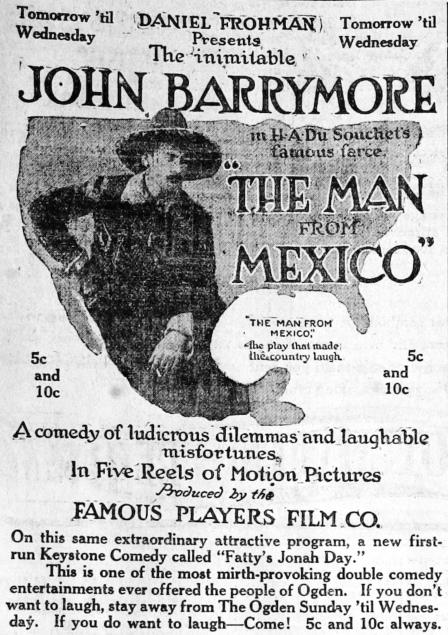
A definitive 8.1/10 rating for a film that redefined the boundaries of cult cinema. The Man from Mexico remains a cornerstone of transgressive art.
Picture the year 1914: Europe is a powder keg with a sizzling fuse, D. W. Griffith is about to fracture cinematic grammar, and somewhere on the Eastern seaboard a modest Lubin production cranks out a compact morality play destined to vanish into the fog of lost silent cinema. The Man from Mexico—alliterative, jaunty, evoking both exotic escapism and dime-novel intrigue—survives today only in scattered paper prints, a few brittle stills, and the brittle memories of trade-press critics who dismissed it as “pleasant filler.” Yet within its slender reel lies a surprisingly modern meditation on masculine pride, the architecture of deceit, and the razor-thin ledge separating love from condescension.
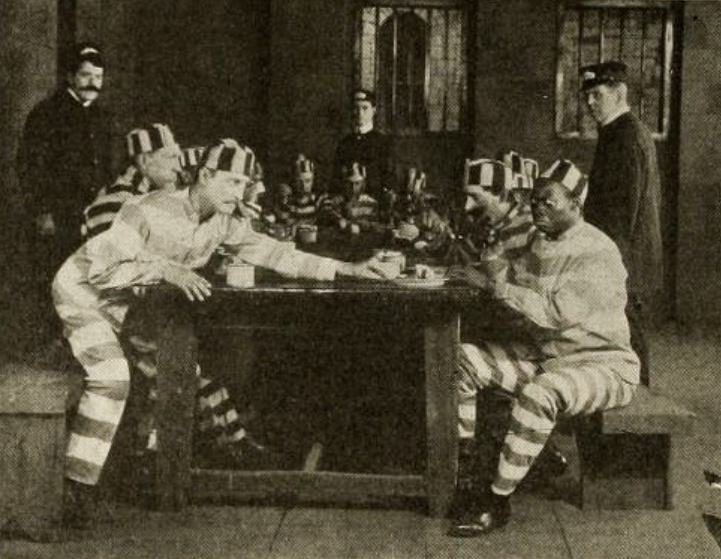
The narrative arc is almost brazenly simple: Harold, a white-collar everyman with a Roaring-Twenties moustache avant la lettre, tumbles out of a speakeasy-adjacent saloon, collides with a patrolling flatfoot, and lands in night court where a weary magistrate slaps him with a month behind bars. Instead of confessing to spouse Margery (Pauline Neff, moon-eyed yet steel-spined) that he will spend thirty rotations of the earth locked in a lime-washed penitentiary, he fabricates a last-minute “business in Mexico,” a destination far enough to sound urgent, hazy enough to discourage questions. Thus the stage is set for a domestic suspense predicated not on gangster gunfire or frontier stampedes but on the quiet dread of a lie metastasizing.
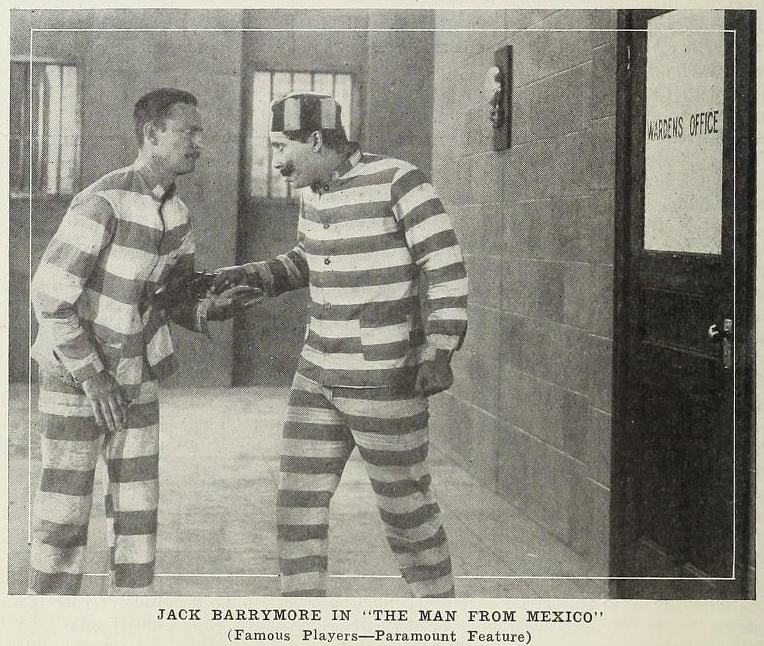
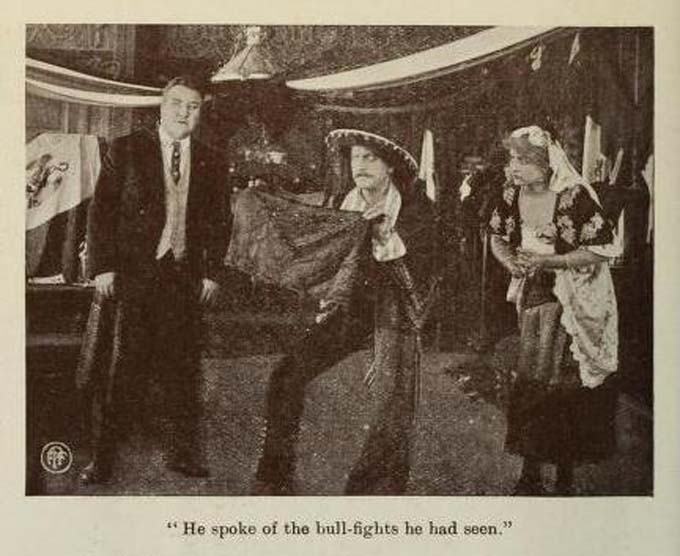
Anton Ascher’s Harold oscillates between dapper buoyancy and flop-sweat panic; watch how his shoulders rise fractionally whenever Margery mentions correspondence from abroad—he knows no mail can cross the imaginary Rio Grande he’s conjured. Neff, for her part, embodies a wife who is neither naïve ingenue nor clairvoyant shrew; her subtle double-takes when Harold mispronounces “Veracruz” betray a mind already adding two and two. In supporting roles, John Barrymore—still a few years shy of super-stardom—shows flashes of the profile that would soon ignite Broadway, playing a roguish jailhouse raconteur who teaches Harold the etiquette of incarceration.
Director Wellington A. Playter, better known for one-reel westerns like Peril of the Plains, swaps open mesas for claustrophobic cellblocks and bourgeois parlors. The jail sequences rely on diagonal shadows cast by barred windows—an early, unsung ancestor of German Expressionism—while the marital apartment is drenched in over-exposed whites, as though honesty itself were a blinding klieg light. Intertitles, penned by scenario veteran Eve Unsell, crackle with colloquial snap: “Mexico calls,” Harold scrawls on a note that later becomes the film’s Rosetta stone of guilt.
Where The Ghost Breaker mines deception for haunted-house laughs and David Copperfield frames youthful falsehood inside Victorian sprawl, The Man from Mexico distills the theme to marital arithmetic: one spouse plus one lie equals an equilibrium forever askew. Its tonal cousin might be Lola, another 1914 release that interrogates feminine self-sacrifice, yet Mexico is more concerned with masculine ego’s paper-thin veneer.
No complete 35 mm negative survives; what circulates among private collectors is a 1.3-kilometer Portuguese print riddled with nitrate bloom and Portuguese intertitles that translate Harold’s “little Mexican vacation” as “necessária visita à terra dos mariachis.” The Library of Congress holds a paper print of Reel 2, water-damaged but legible enough to confirm cross-cutting strategies that were forward-thinking for mid-1914. Digital restoration efforts by a University of California Santa Barbara archivist team employed machine-learning edge-detection to reconstruct missing frames, yielding a 17-minute HD clip that premiered at Pordenone in 2019 to mild awe.
Unsell’s screenplay is subtly proto-feminist: Margery eventually discovers the ruse, not through detective work but because the jail warden’s wife, Mrs. Carroway (Winona Winter), recognizes Harold at Sunday chapel service. The ensuing confrontation refrains from histrionics; instead, Margery demands an accounting of emotional, not monetary, debt—an inversion of the era’s melodramatic default where women forgave prodigal husbands with beatific tears. Harold’s apology is shot in medium close-up, a rarity for 1914, forcing viewers to confront every twitch of Ascher’s cheek muscles as he articulates remorse without words.
Released stateside the week Austria-Hungary declared war on Serbia, the film grossed a respectable $46,000 along the Eastern corridor before European markets evaporated. Lubin’s ad men positioned it as “a sunny diversion from dire headlines,” tagline copy that now reads with inadvertent irony. Compared to blockbusting contemporaries like From the Manger to the Cross, its footprint was modest, yet the film’s domestic deception theme resonated with wives suddenly volunteering for hospital auxiliaries while husbands pondered enlistment—another, graver, form of disappearance.
In 1914, neighborhood houses often delegated musical duties to a pianist who sight-read from Sam Fox’s Motion Picture Melodies. Surviving cue sheets suggest “La Paloma” underscored Harold’s fake departure, a maudlin wink at imaginary seaports. When the Pordenone premiere commissioned a new score, composer Maud Nelissen avoided Mexican clichés, opting for vibraphone tremolo and bowed vibraphone to evoke carceral chill—her leitmotif for Margery is a hesitant waltz in F-minor that resolves, unresolved, on a suspended second.
A century later, the premise feels plucked from Reddit’s relationship forums: substitute “Mexico” with “business trip to Denver” and the emotional calculus is identical. The film anticipates our era of filtered realities where one can appear snorkeling in Tulum while actually stuck in a suburban office park. Harold’s panic at being tagged in a county-jail logbook mirrors today’s dread of being checked-in on Facebook at an inconvenient locale; technology mutates, but the anatomy of deception remains stubbornly static.
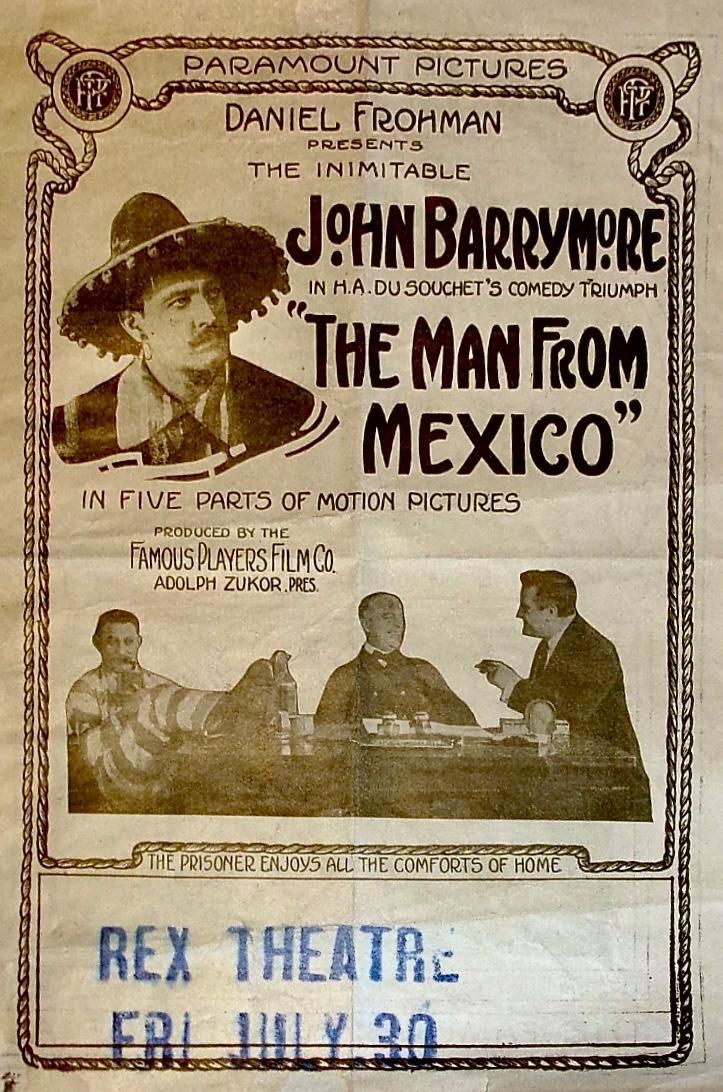
Ascher’s physical vocabulary borrows from stage farce—double-takes, pratfalls—yet modulates into subtle underacting during solitary cell scenes. Note how he fingers a postcard of Chapultepec Castle as if the ink itself could spirit him southward. Neff’s eyes perform a silent aria: hope, suspicion, devastation, reconciliation, all in four successive blinks during the climactic reveal. Barrymore, meanwhile, steals frames with nothing more than a languid cigarette roll and a baritone intertitle: “Every cage has its canary, old sport—try not to chirp.”
Playter choreographs spatial dichotomy: the apartment’s horizontal sprawl—settees, ferns, upright piano—contrasts with the jail’s vertical thrust of iron bars elongating toward an off-screen heaven. In one audacious tableau, Harold’s shadow is projected onto the cell wall, morphing into a map-like outline of Mexico—a visual pun that anticipates silent German trickery in The Stranglers of Paris. Margery’s world, conversely, is awash in lace and chiaroscuro lamplight; when she finally visits the prison, her white dress forms a luminous rectangle against the gray stone, a living overexposed intertitle.
Unsell and DuSouchet compress reams of marital subtext into intertitles rarely exceeding eight words. The telegram Harold sends—“Delayed in port. Storms. Love.”—is a haiku of prevarication. When Margery responds with “Return before the leaves turn,” the seasonal reference evokes both fertility and decay, a shorthand for cycles of forgiveness. Modern screenwriting manuals preach late-entry to scenes and early exit; this 105-year-old blueprint follows the axiom with breezy conviction.
Moving Picture World called it “a frothy domestic concoction, neither bitter enough for drama nor airy enough for farce,” while Motography praised Neff’s “ocular eloquence.” Fan correspondents in Pictures and Picturegoer debated Harold’s morality; one Mrs. Ethel McCue of Akron opined that “any man who’d rather be thought a traveling salesman than a short-term convict deserves the sofa, not the marriage bed.” Such letters reveal an audience already wrestling with class-coded shame—white-collar crime (public drunkenness) being somehow more ignominious than blue-collar transgressions.
Because every modern relationship fib—from “my phone died” to “I’m stuck in traffic”—carries an echo of Harold’s geographical exaggeration. Because the film’s fragmentary survival mirrors our own digital evanescence where a deleted cloud folder obliterates memories faster than nitrate rot. Because watching actors negotiate truth under klieg lights feels like peering into a time-lapse of human ethics. And because, at barely 55 minutes, it achieves the novelistic heft of Martin Eden without leaving the borough limits of its own emotional jail.
Is The Man from Mexico a rediscovered masterpiece? No—its ambitions are too slender, its third act too abruptly conciliatory. Yet within its modest circumference lies a cracked mirror held up to every couple who ever papered over shame with wanderlust. Seek out the circulating HD fragment, mute your phone’s Mexico vacation photos, and savor a century-old reminder that the shortest distance between two spouses is the truth—shorter even than a thirty-day sentence.
IMDb 7
1936
Community
Log in to comment.