DbcultAccessing Vault...
7.2/10
Senior Film Conservator
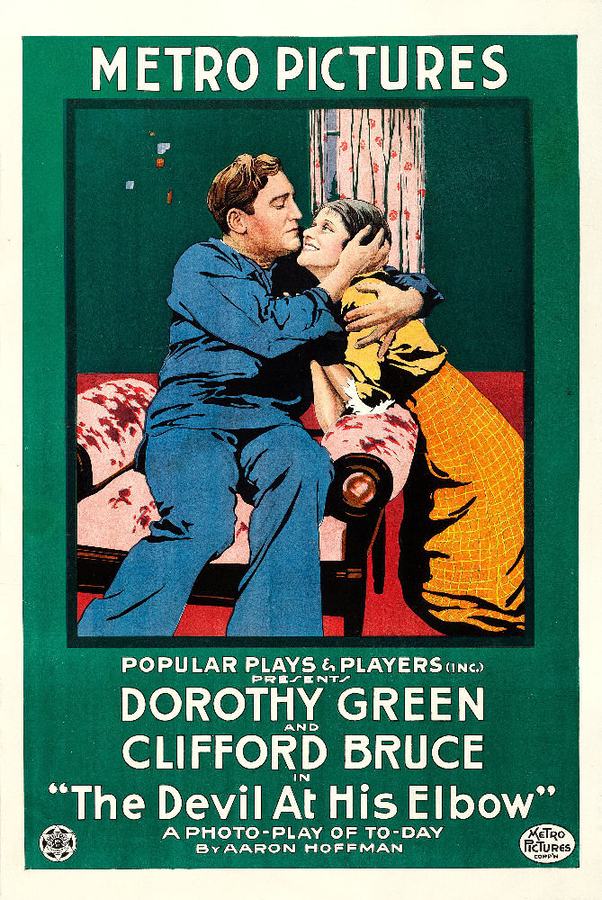
A definitive 7.2/10 rating for a film that redefined the boundaries of cult cinema. The Devil at His Elbow remains a cornerstone of transgressive art.
In the burgeoning landscape of 1916 cinema, where the medium was rapidly evolving from mere spectacle to a sophisticated vehicle for social commentary, The Devil at His Elbow stands as a remarkably prescient exploration of the human psyche. Directed with a keen eye for atmospheric tension, this film transcends the typical temperance narratives of its era, opting instead for a structural complexity that mirrors the fragmented mind of its protagonist, John Ashton. Ashton, portrayed with a desperate, sweating intensity by John K. Roberts, is not merely a caricature of a drunkard; he is a symbol of the modern man—an engineer of the future whose internal machinery is grinding toward a catastrophic stall.
The film’s central conceit—the frantic completion of submarine plans—serves as a poignant metaphor for the subterranean depths of the subconscious. In an age where the submarine represented the apex of technological terror and ingenuity, much like the high-stakes world seen in The Lion and the Mouse, Ashton’s blueprints are the physical manifestation of his intellectual worth. The pressure to deliver these plans to the government within six days creates a ticking-clock mechanism that drives the narrative forward with an almost claustrophobic momentum. It is this pressure that introduces the 'devil'—the amber bottle of whiskey that promises focus but delivers only delusion.
What elevates The Devil at His Elbow above contemporary melodramas like The Children in the House is its daring use of a sprawling dream sequence that occupies a significant portion of the second act. This narrative choice allows the film to explore the 'what-if' scenarios of moral failure without permanently alienating the audience from its hero. The dream is a masterpiece of early surrealism, beginning with a social catastrophe at a dinner party that feels as socially devastating as the betrayals in Hamlet. When Ashton is cast out into the 'unknown streets,' the cinematography shifts to a grittier, more tactile realism, capturing the grime of the waterfront with a documentary-like honesty.
The sequence where Ashton is shanghaied is particularly striking. It evokes the maritime harshness found in An Odyssey of the North, but adds a layer of psychological horror. On the freighter, the captain—a man who weaponizes alcohol—becomes a literal manifestation of Ashton's addiction. He is told he can have all he wants to drink, a promise that sounds like a reward but functions as a prison. This reversal of the 'shanghaied' trope—where the victim is kept compliant through vice rather than force—is a sophisticated touch that highlights the film's thematic depth.
The female leads in the film represent two distinct poles of Ashton’s existence. Grace Sealey, the fiancée, is the ideal—the lighthouse toward which he should be steering. Her presence in the film is associated with light, order, and the domestic tranquility of the upper class. Conversely, Meg, the 'human derelict' played with surprising nuance, represents the reality of the gutter. Yet, in a subversion of the 'fallen woman' archetype seen in films like The World and the Woman, Meg becomes the catalyst for Ashton's temporary redemption. Her meager quarters are a sanctuary where he regains his self-respect, suggesting that true character is forged in the shadows rather than under the bright lights of high society.
However, the film’s most chilling turn occurs when Meg, feeling neglected by a now-successful Ashton, deliberately induces him to drink again. This sequence is a harrowing look at the toxicity of codependency. She prefers his 'society in idleness and sordid surroundings' to his success in a world where she feels invisible. This psychological complexity is rare for 1916; it suggests that addiction is not just an individual failure but a relational one. The tragedy that follows—the drowning of the submarine crew due to faulty plans made while intoxicated—is the ultimate manifestation of the 'devil's' work, a scene that rivals the high-stakes tension of The Perils of Pauline but with far more somber consequences.
From a technical perspective, the film utilizes lighting to distinguish between the 'real' world and the dream state. The office of John Ashton is often bathed in a stark, industrial light, while the dream sequences utilize soft focus and deeper shadows to suggest the unreliability of the intoxicated mind. The editing, particularly during the climax of the dream when Ashton 'flies at her throat,' is jagged and visceral, capturing the loss of control that defines the final stages of alcoholism. This is a far cry from the more linear storytelling of Arizona or the slapstick rhythms of Tillie's Punctured Romance.
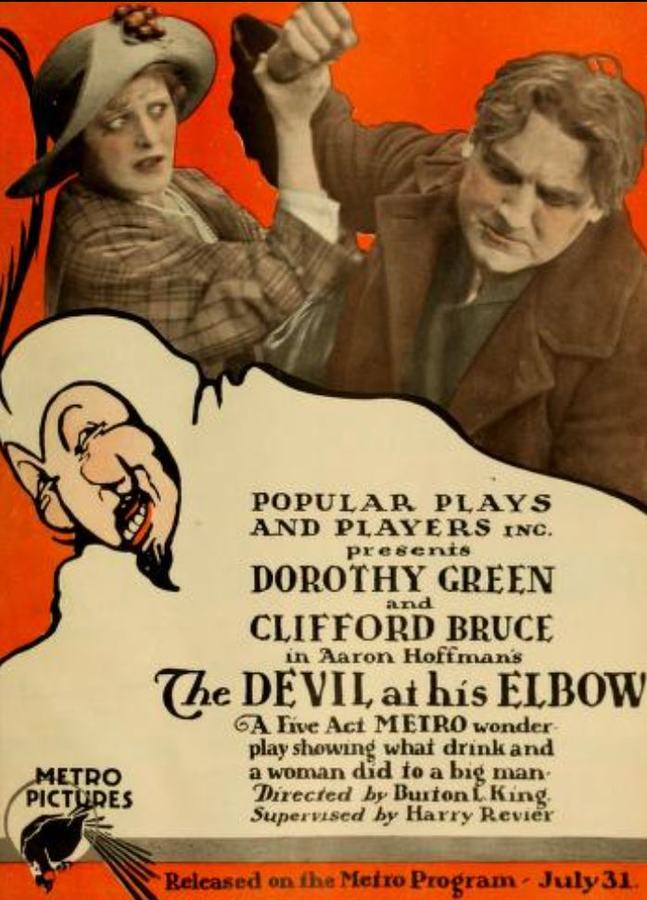
A noteworthy aspect for modern cinephiles is the presence of a young Adolphe Menjou. Though his role here is early in his career, one can already see the seeds of the sophisticated, often cynical screen presence he would later perfect. His inclusion adds a layer of historical weight to the production, anchoring this moral fable in the broader context of Hollywood's evolution. The ensemble cast, including Dorothy Green and Francis McDonald, perform with a restraint that avoids the more histrionic tendencies of the era, making the emotional stakes feel grounded and authentic.
The resolution of the film—Ashton waking up and realizing the nightmare was a product of his own guilt and fear—might seem like a convenient 'deus ex machina' to modern viewers. However, in the context of early cinema, this was a powerful instructional tool. It positions the film not just as entertainment, but as a mirror. By allowing the protagonist to see the end of his path before he finishes the journey, the film empowers him (and the audience) with the agency to change. It is a cinematic exorcism of the 'devil at his elbow.'
In comparison to other social dramas of the time, such as The Children Pay or The Deep Purple, The Devil at His Elbow is uniquely focused on the internal psychological state rather than external villainy. There is no mustache-twirling antagonist here; the enemy is a bottle and the weakness of the human will. This internal focus makes the film feel surprisingly modern, prefiguring the noir and psychological thrillers of the 1940s.
Ultimately, the film is a testament to the power of ambition when tempered by sobriety. The final promise of a 'life full of achievement and ambition that is not clouded by an enemy which steals away the brains' serves as a hopeful coda to a narrative that spends much of its time in the dark. It is a reminder that while progress—be it in the form of a submarine or a career—is noble, it must be built on a foundation of clarity. For any student of silent film or the history of social drama, The Devil at His Elbow is an essential, if haunting, chapter that proves the 'devil' has always been in the details of our own choices.
Whether viewed as a historical curiosity or a timeless cautionary tale, the film's impact remains undiminished. It captures a specific moment in American history—the intersection of industrial expansion and the temperance movement—and weaves it into a narrative that is as technically impressive as it is emotionally resonant. It is a work that demands to be seen, not just for its place in the filmography of its stars, but for its bold exploration of the shadows that haunt the edges of the American dream.
Critic's Rating: 8.5/10
A landmark in psychological storytelling for the silent era. The dream sequence remains a masterclass in narrative tension and moral weight. Essential viewing for fans of early 20th-century social dramas and those interested in the cinematic portrayal of addiction.
IMDb 6.6
1921
Community
Log in to comment.