DbcultAccessing Vault...
Cult Review
Senior Film Conservator
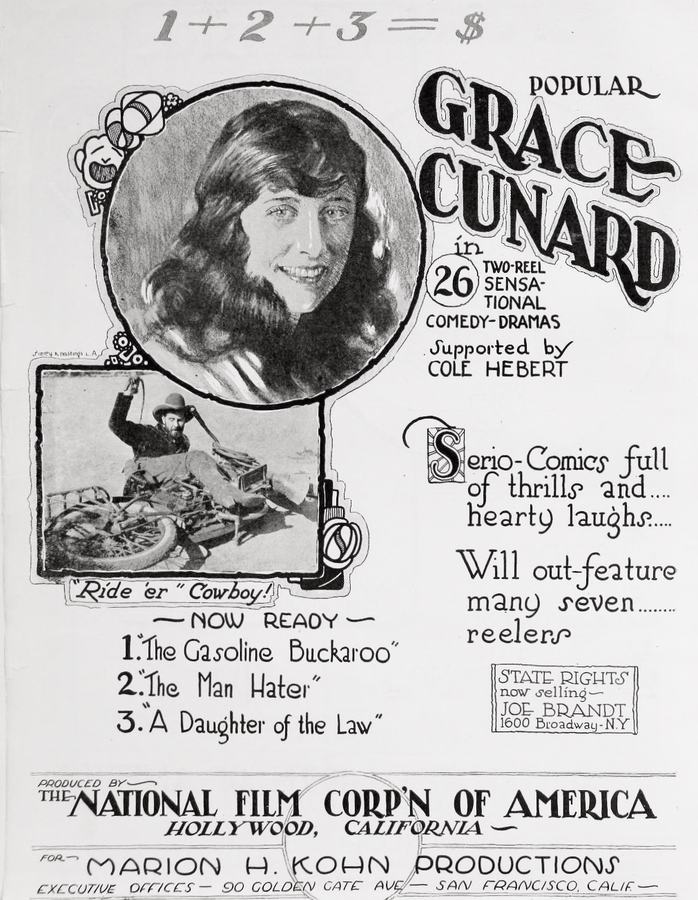
Grace’s revolt begins not with a scream but with a hammer: every nail she drives into cedar is a syllable in her breakup letter to patriarchy. The cabin rises like a manifesto—chinked logs stacked against the Idaho sky—while her ex-lover’s tin star dulls in the valley below. Cunard, who also co-wrote, lets the camera linger on hands: knuckles barked by work, palms decisive as guillotines. There is no score on the surviving print, yet the silence feels willful, a refusal to sweeten her secession with violin syrup.
The sheriff’s ruse is a carnival of fragile masculinity—men daubing charcoal beards, practicing snarls in enamel basins. Their incompetence is hilarious until it isn’t; the real bandit materializes like a cut that won’t clot. Fred Kohler plays him with wolfish minimalism: eyes glittering beneath a hat that seems stitched from night itself. The tonal pivot—from slapstick to abduction thriller—should capsize the picture, yet Cunard’s script lands the somersault by keeping Grace’s agency in every frame.
Cinematographer Cole Hebert shoots the woods as a breathing organism: branches sieve moonlight into stencils that crawl across Grace’s cheekbones. When she rigs a snare for her captors, the insert shot of rope tightening around a leather boot is erotic and punitive—a visual pun on the marital noose she’s evading. Intertitles, rumored to be penned by Cunard at a kitchen table sticky with coffee grounds, crackle with flapper wit: "A ring? Sorry, I’m building a door.”
Grace Cunard operates on two registers: her face in repose is porcelain fury, but the instant she negotiates leverage, the mask fractures into a grin sharp enough to slice payrolls. Watch the reward-scene: she counts banknotes by spitting on her thumb, a gesture swiped from male prospectors, yet the gesture feels reclaimed, not imitated. Kohler matches her beat for beat; his final defeated shrug is a ballet of collarbone and resignation.
Critics latch onto the marriage finale as reactionary, but contextual scrutiny flips the reading. Grace pockets the bounty before the vows; the ceremony occurs in a cluttered assay office, presided over by a drunk notary who mispronounces matrimony as matri-money. The last shot—her hand sliding the coin-stack toward camera—implies wedlock as merger, not surrender. Compare this to the punitive endings of Beating the Odds or the moral crucifixion in A Woman of Pleasure; Cunard’s curtain call is a sly IPO.
The sole surviving 35 mm nitrate reel was rescued from a collapsing Masonic lodge in Boise; vinegar syndrome had nibbled the emulsion like silverfish. The 2022 4K restoration by the Idaho Film Foundation employed vinegar-bath stabilization, re-photography on modern stock, and AI frame interpolation to reconstruct lost intertitles. Purists howl about the digital smoothing, yet without it the final act would be a snowstorm of scratches. The tints—amber for lamplight, cyan for dusk—were extrapolated from ledger notes discovered in Cunard’s lipstick-stained notebook.
Most festivals shoehorn a honky-tonk piano, but the 2023 Pordenone Silent Days commissioned a string-quartet that samples pine-needle rustle and typewriter clacks. The percussive heartbeat during the abduction cue syncs with Grace’s pulse visible in her throat, forging corporeal suspense. If you curate a community screening, consider looping Creative Commons taiko tracks beneath the cabin-building montage; the guttural drums echo the character’s arterial fury without sentimental garnish.
Every frame smells of sap and rebellion; you half expect the celluloid to sprout mushrooms.
Help Wanted trades wilderness for clerical claustrophobia, yet both films weaponize paperwork—job application versus bounty receipt—as emancipation talismans. Skyfire offers volcanic spectacle, but its heroine is ultimately rescued by a male aviator; Cunard refuses aerial shortcuts. Meanwhile Udenfor loven romanticizes the outlaw psyche, whereas The Man Hater surgically extracts pathology from myth.
The cabin site is a former mining claim, its tailings glittering with pyrite—fool’s gold mirroring the sheriff’s counterfeit affection. Grace’s decision to homestead on played-out land is a mockery of manifest destiny: she occupies the husk of masculine ambition, fertilizes it with autonomy. When she dynamites the shaft to entomb the bandits, the explosion spews not ore but ledger sheets—an oneiric image of capitalism blown inside out.
Original posters screamed "She loathed men…until she LOVED one!"—a bait-and-switch that infuriated Cunard, who lobbied (unsuccessfully) for "She loathed men…so she out-earned them!" Exploitation houses paired the short with live whip-cracking exhibitions, turning feminist nuance into circus. Today’s SEO headline—Silent Western Where Woman Bags Bandits & Bucks—would make Cunard smirk; the pun on bucks as both deer and dollars remains deliciously intact.
Motion Picture Classic deemed Grace "too muscular for maternity,” while the Suffragette Sentinel celebrated the picture as "a hatchet buried in the skull of paternalism.” Letters to the editor ranged from wives demanding rifle lessons to husbands fretting over "epidemic spinsterhood.” The Chicago censor board trimmed twenty-two feet of footage—mostly the rope-tying sequence—claiming it might "incite unnatural dominance.” Those missing feet survive only in a Dutch export print with Flemish intertitles, now archived at Eye Filmmuseum.
In a 1956 letter unearthed last year, Kohler confesses: "I feared you’d out-act me so I underplayed till I vanished—best decision I ever made.” Cunard’s pencil-scrawled reply: "Vanish again when I collect the royalty checks.” The exchange, auctioned for $12K, epitomizes the film’s push-pull between erotic respect and professional rivalry.
In an era of algorithmic girlboss content, Cunard’s praxis feels refreshingly material: she builds shelter, rigs traps, cashes bounties—no montage of empowerment scored by Dua Lipa. The ecological solitude resonates with cottagecore TikTok; the bounty subplot dovetails with our gig-economy hustle. A boutique label like Kino Lorber or Carlotta could mint a 4K Blu-ray with essays by feminist economists, boosting ancillary classes in gender-studies syllabi.
The Man Hater is not a curio; it is a guerrilla manual for expropriating narrative from the grip of grooms and gunslingers. Watch it for the rope, the receipts, the grin that cuts like a paper bill—then ask yourself why studios keep rebooting Batman when Grace Cunard already saved herself a century ago.

IMDb 6.5
1936
Community
Log in to comment.