DbcultAccessing Vault...
Cult Review
Senior Film Conservator
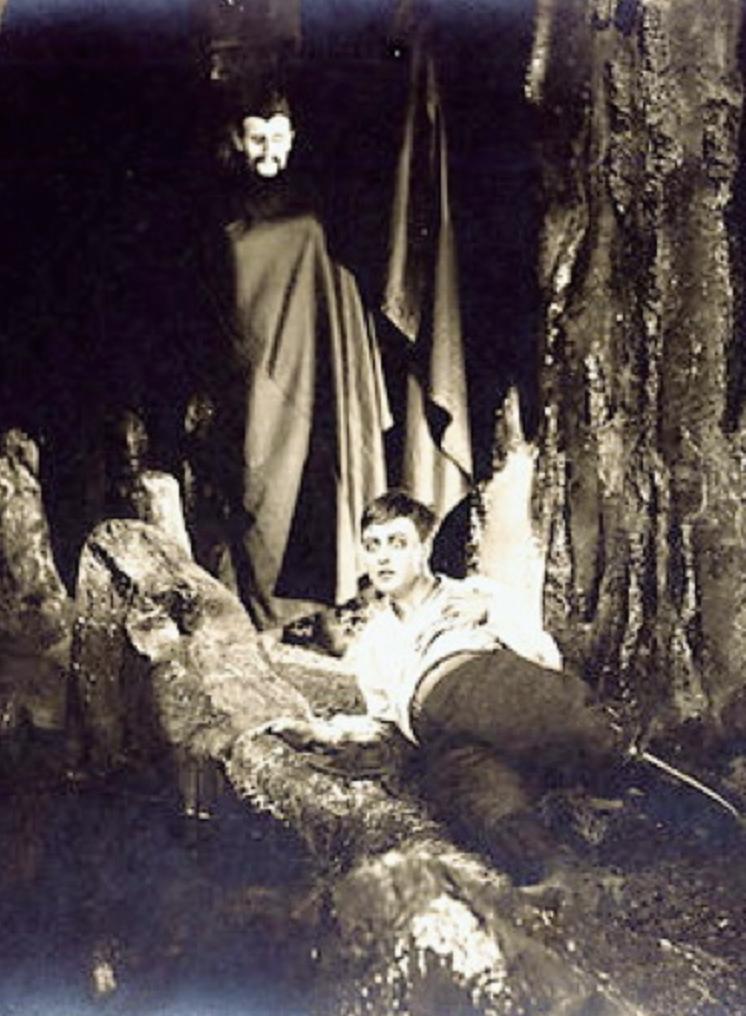
Under Kærlighedens Aag never shouts; it whispers through glaciers. Aage Barfoed’s 1919 melodrama—long misfiled as a mere polar adventure—turns out to be Denmark’s coldest fever dream about the economies of affection: how love, like ore, is surveyed, extracted, and abandoned once the lode runs dry.
I first encountered the film on a 35 mm print that smelled faintly of herring and nitrate; the projector’s carbon-arc roar felt like a distant dogsled. What unfolded was not the nationalist epic the Danish Film Institute catalogue promised, but a triptych of frozen masculinity: two engineers, one woman, and a continent of ice that refuses to pick sides.
George Brown—played by Kai Lind with the stoic cheekbones of a Renaissance saint—believes the world can be triangulated. His rival, Henry Massie (Hans Dynesen), is all torque and appetite, a man who names landmarks after himself while still trudging across them. Their competition for Phyllis (Johanne Krum-Hunderup) is never dramatized in ballrooms or gardens; instead it is calcified into survey stakes and sextant readings. When Brown inscribes “P–52°” onto a fjord wall, the letter P quivers like a heartbeat carved in stone.
Barfoed’s screenplay, economical as a Morse distress call, lets the landscape perform jealousy. In one sequence, the men race separate sleds toward a copper outcrop; the camera tilts so the horizon slices the frame diagonally, turning the ice into a tilting stage where gravity itself seems partisan. The intertitle reads: "The earth tilts for no man—yet today it leans." Silent-era hyperbole? Perhaps, but the image burns: two silhouettes clawing upward while the world literally tips under their boots.
Phyllis never boards the ship; she arrives by mail pouch, photograph, and once—miraculously—via a gramophone cylinder whose wax has survived the crossing. The men gather in the lantern room to hear her recorded laughter, a sound that crackles like thawing rivers. Massie caresses the horn as if it were a breast; Brown stands ramrod straight, eyes closed, absorbing the acoustic touch like a communion wafer. The scene is so intimate it feels illicit, a ménage à trois with technology as the third body.
Danish critics of the era dismissed Phyllis as a mere MacGuffin, but modern eyes see a radical absence: a woman who refuses to be geography. Her image—printed on postcard stock—acquires freezer burn at the edges, a visual prophecy that affection cannot survive latitude 80°N. When Brown later sacrifices his place on the return sled, the gesture is less martyrdom than acknowledgment: the woman they fought over was never truly transportable; she existed only in the friction between their ambitions.
Charles Willumsen’s camera work anticipates later Scandinavian austerity. He shoots through scrims of frost, creating matte textures that turn human skin into parchment. Faces become maps: every chapped lip a fjord, every frostbitten ear a peninsula of regret. The palette is binary—ultraviolet snow versus umber parkas—until the aurora invades: a sickly lime that bathes the frame in what I can only call moral phosphorescence. The men’s crimes glow, literally, under nature’s interrogation lamp.
Compare this to the studio-bound The Wolf Man where fog is a plush backdrop. Here, weather is co-author; it rewrites the script nightly, burying props, erasing footprints, forcing continuity errors that feel like cosmic editorial notes. When an actor slips on an unseen crevasse, Barfoed keeps the take—the stumble is too honest to discard.
There is no score on the surviving print; instead the Danish Cinematheque projects it with a live percussion trio who rub chunks of quartz together to mimic glacial grind. The effect is unearthly: a score composed by geology itself. Each creak of pack ice becomes a metaphor for emotional tectonics—plates of affection shifting, subducting, shearing.
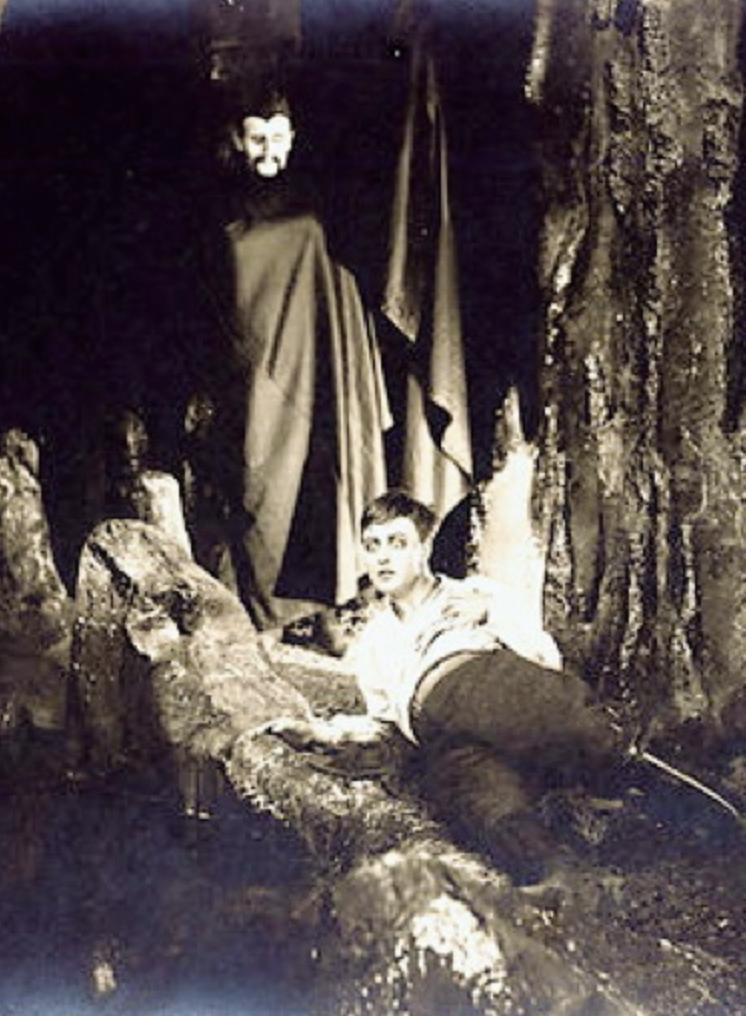
In one pivotal longueur, the screen goes entirely white during a whiteout. For forty-seven seconds we stare at what appears to be blank leader. Gradually, a speck appears: Brown’s sled dog, a black silhouette re-entering the frame. The auditorium held its breath so long I heard someone’s heart—mine—skip. Silence, it turns out, can be a cliffhanger.
Modern viewers cannot ignore the imperial undercurrent. The copper vein they seek will fuel Danish munitions; the local Inuit are glimpsed only as gloved hands guiding sleds, never named, never subtitled. Barfoed’s camera participates in this erasure: when an Inuit hunter points toward the pass, the intertitle translates his gesture as "The savage knows the way." Yet the film’s own visual grammar undercuts the racism: the hunter’s silhouette against the aurora is the most stable, dignified image in the entire narrative. The ice, at least, treats all feet with equal indifference.
Compare this to 1812 where indigenous presence is romanticized into noble savage cliché. Barfoed’s refusal to either exalt or humanize feels, paradoxically, more honest—a void where guilt can crystallize.
Kai Lind’s Brown is a masterclass in minimalist thaw. Watch his pupils when Massie reads Phyllis’ letter aloud: they dilate like compass needles losing north. Without intertitles, we would still know the precise moment love transmutes into geological guilt. Conversely, Hans Dynesen’s Massie is pure kinetic bravado—until the final reel. When he realizes Brown intends to stay behind, his swagger collapses into a shiver that seems to originate from inside the marrow. The two men share no embrace, no handshake; instead they exchange a copper surveying plate—an object now so cold it burns. The metal becomes a sacrament, searing ownership out of their gloved palms.
The film’s most radical device is its jump-cut avalanche: twenty-three frames of pristine cliff, then a jagged splice, then a wall of snow already halfway across the screen. The cut is so abrupt it feels like a film break, but the projector keeps spinning. We infer the disaster rather than witness it, a technique that anticipatesResnais’ atom-bomb montage in Hiroshima mon amour. Causality is severed; only consequence remains. Afterward, Barfoed refuses to show the burial. Instead he cuts to a close-up of Brown’s frost-lashed cheek, a single tear freezing into a bead that catches the lantern light like a miniature planet. Grief, the image insists, is not theatrical; it is chemical.
Trace the lineage and you’ll find Redeeming Love lifting its visual metaphors of purity and taint, or Hasta después de muerta borrowing the trope of the absent beloved who rules the narrative like a ghost shareholder. Yet no later film quite replicates the ethical chill Barfoed engineers: a universe where love is not redemptive but corrosive, where sacrifice registers on a Richter scale of guilt.
Home video remains elusive. The only accessible version is a 2K scan housed at the Danish Cinematheque, screened biannually during the Polar Nights Festival. Tickets sell out in minutes; audiences emerge onto Copenhagen’s winter streets blinking like cavefish, suddenly unsure whether frostbite is meteorological or emotional.
Under Kærlighedens Aag ends with a dedication card: "To those who carry the weight of departure." The words float over an iris that closes not on Brown’s corpse—he lives, after a fashion—but on the empty sled tracks disappearing into horizonless white. The film refuses closure the way ice refuses footprints: by morning, all evidence is drifted over. Yet something in the viewer’s chest refuses to freeze. Call it the thermal inertia of empathy, a residual warmth that outlasts the final fade-out.
I walked home through Nyhavn that night, past gabled houses lacquered in Christmas bulbs. The harbor smelled of tar and salted herring, a sensory echo of the print itself. Snow began to fall—slow, deliberate, like sprocket holes ticking through a projector. I realized Barfoed had engineered the ultimate paradox: a film that leaves its audience colder yet paradoxically less alone, as if the shared act of witnessing had become a kind of communal hearth. The cold, after all, is just another form of company; it reminds you that you have skin, that you can still be touched.
—first published on Nordic Nitrate Reveries, republished with frost intact.

IMDb 5.6
1919
Community
Log in to comment.